Restaurant furniture endures a punishing daily cycle that most residential furniture never faces. Chairs are dragged across floors, tables are wiped down dozens of times with chemical cleaners, and spills ranging from red wine to hot sauce land on metal surfaces constantly. Stacking chairs at closing time creates metal-on-metal contact that chips and scratches lesser finishes within weeks of opening day.
Hospitality
Powder Coating for Restaurant Furniture: Durability Meets Design
Sundial Powder Coating·April 20, 2026·9 min
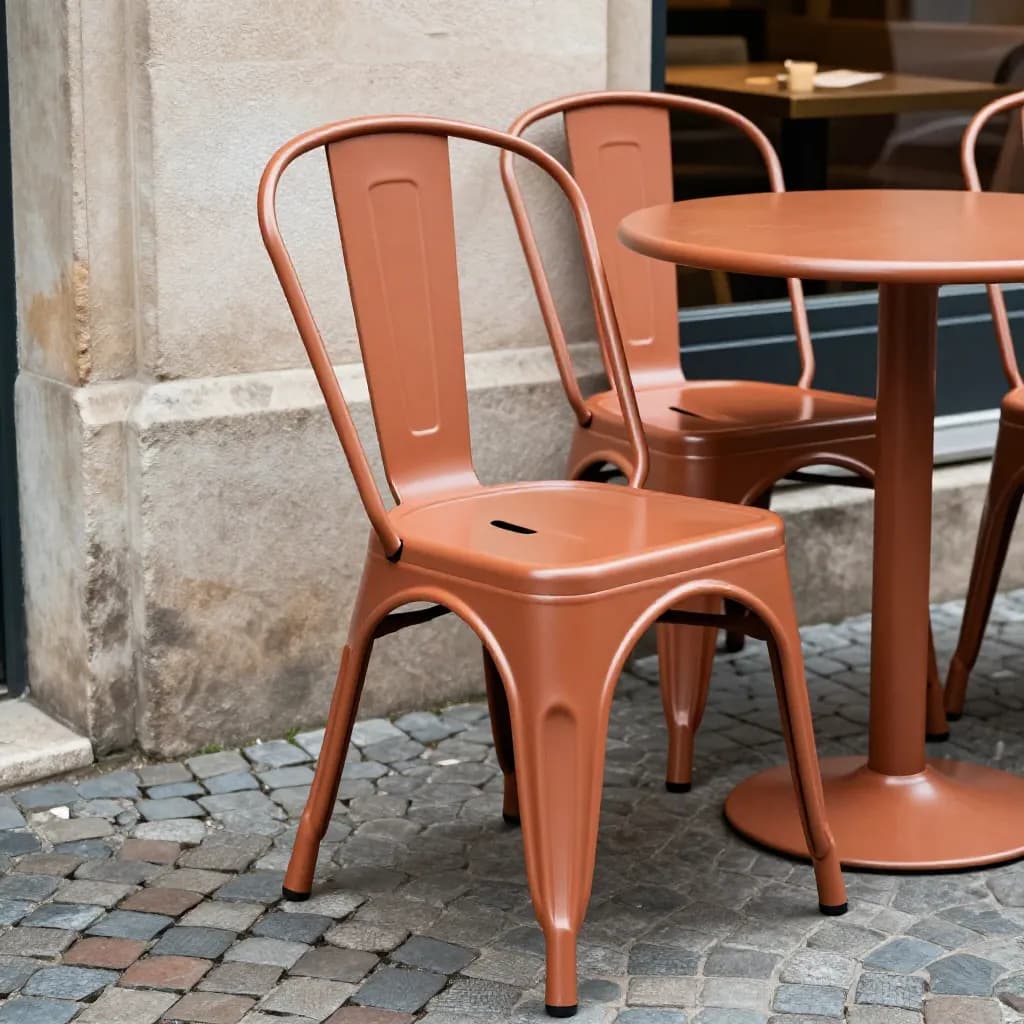
Beyond the physical abuse, restaurant furniture must also withstand aggressive cleaning protocols. Health regulations require frequent sanitization with commercial-grade cleaning agents that can strip or dull conventional paint finishes. The combination of heavy daily use, chemical exposure, and the constant movement of furniture for cleaning and reconfiguration demands a finish that goes far beyond decorative — it must be genuinely industrial in its resilience.
Ready to Start Your Project?
From one-off customs to 15,000-part production runs — get precise pricing in 24 hours.
On This Page
Why Restaurants Need Tough Finishes
For restaurant owners, furniture appearance directly impacts guest perception. A chipped, faded, or peeling chair frame signals neglect, regardless of how good the food is. The finish on dining furniture needs to look as fresh on year three as it did on opening night, even under the relentless demands of commercial food service.
Powder Coating Advantages for Dining Furniture
Powder coating delivers a finish that is purpose-built for the demands of restaurant environments. The electrostatically applied powder is cured at high temperature to form a dense, cross-linked film that is significantly harder and more chip-resistant than conventional liquid paint. This means stacking chairs, sliding table bases, and the inevitable bumps from service trolleys leave the finish intact rather than exposing bare metal.
Chemical resistance is another critical advantage. Powder-coated surfaces shrug off the commercial sanitizers, degreasers, and bleach-based cleaners that are standard in food service operations. Where liquid paint softens, dulls, or lifts after repeated chemical exposure, powder coating maintains its gloss and adhesion through thousands of cleaning cycles.
Powder coating also produces zero volatile organic compounds during application, which matters for restaurant owners who are increasingly conscious of environmental responsibility. The finish is food-safe once cured, contains no solvents, and does not off-gas in the dining environment — a meaningful consideration for enclosed restaurant spaces where guest comfort is paramount.
Popular Colors and Finishes for Restaurants
Matte black remains the dominant choice for restaurant furniture, offering a versatile, contemporary look that complements virtually any interior design scheme. Its popularity stems from practicality as much as aesthetics — matte finishes hide minor surface imperfections and fingerprints far better than gloss, reducing the visible impact of daily wear.
Bronze, textured charcoal, and gunmetal finishes are increasingly popular in upscale casual dining, where they add warmth and sophistication without the maintenance demands of polished metal. Textured powder coatings are particularly well-suited to restaurants because their raised surface profile further disguises scratches and wear marks that would be immediately visible on a smooth gloss finish.
Custom brand colors allow restaurant groups and franchise operations to extend their visual identity to every piece of furniture. Powder coating can be matched to any RAL, Pantone, or custom color reference, ensuring that the signature teal of a seafood chain or the deep burgundy of a wine bar is consistent across every location and every piece of furniture in the fleet.
Indoor vs Outdoor Restaurant Furniture Requirements
Indoor restaurant furniture operates in a relatively controlled environment, so standard polyester powder coatings provide excellent performance. The primary threats are mechanical — stacking, dragging, and cleaning — rather than environmental. Standard formulations handle these demands comfortably while offering the full range of color and finish options.
Outdoor patio and terrace furniture faces an entirely different set of challenges. UV radiation from direct sunlight will fade and chalk inferior coatings within a single season. Rain, humidity, and temperature cycling add moisture-related stress, while coastal locations introduce salt spray corrosion. For these applications, superdurable polyester powder coatings are essential, offering significantly enhanced UV resistance that maintains color and gloss for years of outdoor exposure.
Many restaurants operate both indoor and outdoor seating, and the smart approach is to specify the appropriate coating for each environment rather than over-specifying indoor pieces or under-specifying outdoor ones. This ensures optimal performance and appearance in both settings while keeping the overall finish specification practical and efficient.
Why Liquid Paint Fails in Restaurants
Liquid paint is fundamentally unsuited to the demands of commercial restaurant furniture. The thinner film build — typically 25-40 microns compared to 60-120 microns for powder coating — means less material standing between the metal substrate and the harsh restaurant environment. This thinner barrier chips more easily, wears through faster, and provides less chemical resistance against the cleaning agents used daily in food service.
Stacking is where liquid paint fails most visibly. Every time a chair is stacked, metal contact points bear the full weight of the stack above. Liquid paint chips at these contact points almost immediately, creating bare metal spots that rust on steel frames or simply look unsightly on aluminum. Within months of service, liquid-painted stacking chairs develop a characteristic pattern of chips and wear marks that no amount of touch-up can fully address.
The cleaning chemical issue compounds the problem. Commercial sanitizers and degreasers are formulated to cut through grease and kill bacteria — they are inherently aggressive to organic coatings. Liquid paint softens and loses adhesion under repeated chemical exposure, leading to peeling and flaking that is both unattractive and a potential contamination concern in a food service environment.
Frequently Asked Questions
How long does powder coating last on restaurant furniture?
Powder coating on restaurant furniture typically lasts 5-10 years of heavy commercial use before showing significant wear, compared to 1-2 years for liquid paint under the same conditions. The exact lifespan depends on usage intensity, cleaning frequency, and whether the furniture is used indoors or outdoors.
Can powder-coated restaurant chairs be stacked without chipping?
Yes. Powder coating's superior hardness and adhesion make it highly resistant to the chipping that occurs at metal-on-metal contact points during stacking. While no finish is completely immune to wear, powder coating withstands stacking far better than liquid paint, maintaining its appearance through thousands of stacking cycles.
Is powder coating safe for use on furniture in food service environments?
Powder coating is safe for food-adjacent furniture such as table bases, chair frames, and shelving. Once fully cured, the finish is inert, contains no solvents, and produces zero VOC emissions. It is non-porous and easy to sanitize, making it well-suited to environments where hygiene is critical.
What is the best powder coating finish for restaurant furniture?
Matte and textured finishes are the most practical choices for restaurant furniture because they hide fingerprints, minor scratches, and daily wear better than gloss finishes. Matte black, textured bronze, and charcoal are popular options that combine durability with a contemporary aesthetic suitable for most dining environments.
Ready to Start Your Project?
From one-off customs to 15,000-part production runs — get precise pricing in 24 hours.