The modern coffee shop is as much about atmosphere as it is about coffee. Customers choose their regular cafe based on the overall experience — the warmth of the space, the visual coherence of the design, and the subtle details that communicate quality and care. Powder coating has become an essential tool for coffee shop designers and owners who want to create distinctive, durable interiors that express their brand identity across every metal surface in the space.
Hospitality
Powder Coating for Coffee Shop Interiors: Espresso Machines, Furniture, Fixtures, and Brand Colors
Sundial Powder Coating·April 22, 2026·11 min
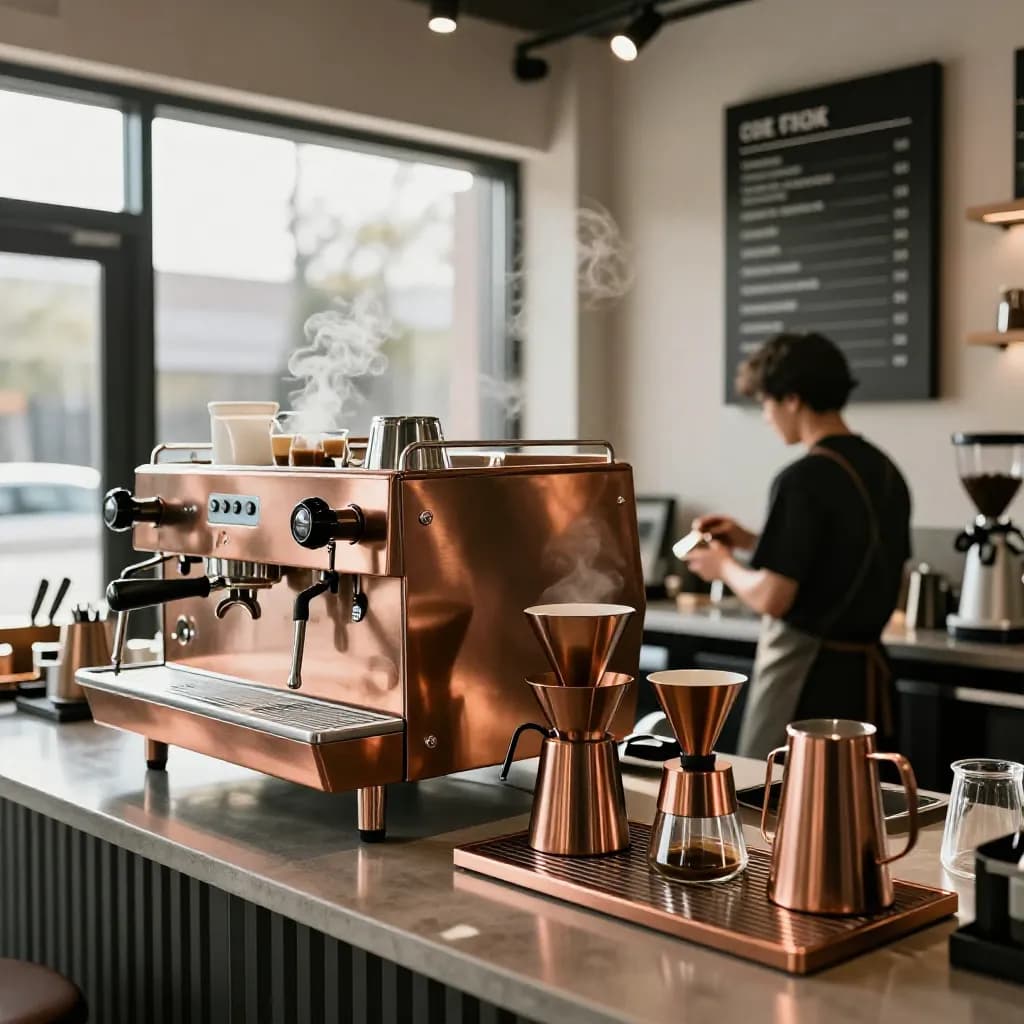
Coffee shop environments present a specific set of finishing challenges. Steam from espresso machines creates localized humidity that attacks unprotected metal. Coffee and milk spills contain acids and proteins that stain porous surfaces. Cleaning chemicals used to maintain food safety standards can degrade inferior finishes. And the constant flow of customers means that furniture and fixtures experience wear rates comparable to much larger hospitality venues.
Ready to Start Your Project?
From one-off customs to 15,000-part production runs — get precise pricing in 24 hours.
On This Page
Coffee Shop Design and the Role of Powder Coating
Powder coating addresses these challenges while providing the design flexibility that coffee shop aesthetics demand. Custom brand colors can be applied consistently across furniture frames, light fixtures, shelving brackets, menu board frames, and equipment housings, creating the visual unity that distinguishes a thoughtfully designed cafe from a generic space. Matte, satin, textured, and metallic finishes expand the design palette beyond what liquid paint can reliably achieve in a high-humidity environment.
The investment in powder-coated fixtures and furniture pays dividends over the life of the business. While liquid-painted furniture may need refinishing within 2-3 years of heavy cafe use, powder-coated equivalents maintain their appearance for 5-8 years or longer, reducing maintenance costs and avoiding the disruption of furniture replacement or refinishing during business operations.
Espresso Machine and Equipment Finishing
Espresso machines are the visual and functional centerpiece of any specialty coffee shop, and their finish sets the tone for the entire space. While many commercial espresso machines come in standard stainless steel or black finishes, powder coating enables custom color matching that integrates the machine into the shop's design scheme. Several espresso machine manufacturers offer custom powder coating as a factory option, and aftermarket powder coating of machine panels is also possible with proper disassembly.
The panels and housings of espresso machines experience a unique combination of heat, steam, and chemical exposure. The group head area generates temperatures of 90-96°C during extraction, while steam wands produce temperatures exceeding 100°C. Milk proteins and coffee oils deposit on surfaces throughout the service day, and baristas clean machines with specialized detergents and descaling acids. Powder coatings for espresso machine applications must withstand this combination of thermal, chemical, and mechanical stress.
High-temperature polyester powder coatings rated for 150-200°C continuous exposure are appropriate for espresso machine panels that experience radiant heat from the boiler and group heads. These formulations maintain color stability and adhesion at temperatures well above the machine's operating range, providing a safety margin that accounts for localized hot spots and the thermal cycling of machine warm-up and cool-down.
Grinder housings, knock box frames, and tamping stations are secondary equipment items that benefit from coordinated powder coating. These items experience less heat than the espresso machine but face constant impact, vibration, and coffee ground abrasion. Standard polyester powder coatings with good impact resistance provide adequate protection for these accessories while maintaining color consistency with the espresso machine finish.
The trend toward open bar designs where customers watch the barista work has elevated the importance of equipment aesthetics. Every piece of visible equipment contributes to the customer's perception of quality and professionalism. Coordinated powder coating across all bar equipment creates a polished, intentional appearance that communicates the same attention to detail that goes into the coffee itself.
Cafe Furniture: Tables, Chairs, and Bar Seating
Coffee shop furniture must balance comfort, durability, and design appeal in a high-traffic environment where each seat may serve 8-12 customers per day. Metal-framed furniture with powder-coated finishes has become the standard for specialty coffee shops because it delivers the industrial-modern aesthetic that the market favors while providing the durability needed for commercial use rates.
Table bases and frames are the workhorses of cafe furniture, supporting everything from laptop computers to ceramic dishware while enduring constant contact with bags, shoes, and cleaning equipment. Powder-coated steel or cast iron table bases resist the scratching, chipping, and corrosion that quickly degrade liquid-painted alternatives. The coating also prevents rust staining on floors — a common problem with bare or poorly finished steel furniture in humid cafe environments.
Chair frames in powder-coated steel tube construction offer the strength-to-weight ratio needed for chairs that are moved frequently by customers and staff. The powder coating provides a comfortable grip temperature — neither cold like bare metal nor sticky like some liquid paint finishes — and resists the abrasion from stacking, dragging, and daily contact with clothing and accessories. For outdoor seating areas, super-durable polyester formulations prevent the fading and chalking that sun exposure causes in standard coatings.
Bar seating along the coffee bar window or counter requires particular attention to footrest durability. The footrest rail on bar-height stools experiences constant abrasion from shoes and boots, making it the first point of coating failure on most cafe furniture. Specifying a minimum film thickness of 100 microns on footrest components and selecting a high-hardness formulation extends the service life of this critical wear point.
Color selection for cafe furniture should consider both brand identity and practical maintenance. Dark colors like matte black and charcoal hide scuffs and minor wear effectively but show dust and fingerprints. Light colors create an airy, spacious feel but reveal every mark and stain. Mid-tone colors in warm earth tones or muted brand colors often provide the best balance of aesthetic appeal and practical maintenance for high-traffic cafe environments.
Shelving, Display Cases, and Retail Fixtures
Coffee shops increasingly operate as retail spaces alongside their cafe function, selling bags of coffee, brewing equipment, merchandise, and food items. The shelving and display fixtures that present these products must be both functional and visually appealing, creating retail moments that drive additional revenue. Powder-coated metal shelving and display systems provide the clean, modern aesthetic that specialty coffee retail demands while offering the strength and adjustability needed for diverse product displays.
Wall-mounted shelving brackets and standards in powder-coated steel create a flexible display system that can be reconfigured as product offerings change. The powder coating provides a consistent finish across all bracket sizes and configurations, maintaining visual coherence even as the display layout evolves. Matte black and brass-tone metallic finishes are particularly popular for coffee shop retail displays, complementing the natural materials — wood, ceramic, paper — that dominate coffee packaging and merchandise.
Pastry display cases and food service counters combine retail presentation with food safety requirements. The metal frames and structural components of display cases benefit from powder coating that resists the humidity generated by refrigerated cases and the cleaning chemicals used to maintain food safety. NSF-listed powder coatings should be specified for any display case components in the food zone or splash zone to ensure health code compliance.
Menu boards, price tag holders, and point-of-sale equipment stands are small but important fixtures that contribute to the overall design coherence. Powder coating these items in coordinated brand colors creates a polished retail environment where every detail reinforces the brand. The durability of powder coating on these frequently handled items ensures that they maintain their appearance through years of daily use without the chipping and wear that degrades liquid-painted alternatives.
Merchandise display racks for bags of coffee, mugs, and accessories should be designed for easy reconfiguration and powder coated for durability. Modular systems with interchangeable components allow the display to adapt to seasonal offerings and new product launches while maintaining a consistent visual standard across all configurations.
Lighting Fixtures and Atmospheric Hardware
Lighting design is fundamental to coffee shop atmosphere, and the fixtures themselves are significant design elements that contribute to the space's character. Powder-coated metal light fixtures — pendant lights, track lighting housings, wall sconces, and decorative cage lights — provide the industrial-artisan aesthetic that defines contemporary coffee shop design while offering practical advantages over plated or liquid-painted alternatives.
Pendant lights over the coffee bar and seating areas are among the most visible fixtures in any cafe. Powder coating these fixtures in matte black, aged bronze, copper metallic, or custom brand colors creates focal points that anchor the design scheme. The powder coating's resistance to heat from lighting elements prevents the yellowing and flaking that can affect liquid paint on fixtures, maintaining the fixture's appearance throughout its service life.
Track lighting and adjustable spot fixtures require finishes that withstand the heat generated by concentrated light sources. While LED technology has reduced fixture temperatures significantly compared to halogen or incandescent sources, the housings still experience elevated temperatures that benefit from heat-resistant powder coating. Matte finishes are preferred for track lighting to minimize glare and visual distraction from the lighting hardware itself.
Decorative metalwork including wall-mounted art, room dividers, and architectural screens creates spatial definition and visual interest in open-plan cafe layouts. Powder coating enables these elements to be finished in colors and textures that complement the overall design while providing the durability needed for fixtures that may be bumped by customers or contacted during cleaning.
Exterior lighting fixtures on the cafe facade and patio area require weather-resistant powder coating that maintains appearance through years of outdoor exposure. Super-durable polyester formulations protect exterior fixtures from UV degradation, moisture intrusion, and temperature cycling. Coordinating exterior fixture colors with interior finishes creates a seamless design transition from street to interior that enhances the cafe's curb appeal and brand presence.
Creating Warmth with Color and Texture
The challenge of using metal extensively in coffee shop interiors is avoiding the cold, industrial feel that bare or poorly finished metal can create. Powder coating transforms metal from a utilitarian material into a warm, inviting design element through strategic use of color, texture, and finish effects that soften the visual impact of steel and aluminum surfaces.
Warm color palettes built around earth tones, muted greens, terracotta, warm grays, and deep blues create the cozy atmosphere that coffee shop customers seek. These colors work particularly well in powder coating because the thermoset finish provides depth and richness that liquid paint struggles to match in a single coat. Matte and satin finishes in warm tones absorb light softly rather than reflecting it harshly, contributing to the relaxed ambiance that encourages customers to linger.
Textured powder coatings add tactile warmth to metal surfaces. Fine texture finishes create a subtle surface variation that catches light differently across the surface, adding visual depth without the roughness that would complicate cleaning. Wrinkle finishes provide a more pronounced texture that evokes artisanal craftsmanship, while sand texture finishes simulate the feel of natural stone or ceramic. These textures make metal surfaces feel less industrial and more handcrafted.
Metallic powder coatings in copper, bronze, brass, and gold tones bring warmth through association with traditional materials. These metallic finishes can be applied to steel or aluminum substrates at a fraction of the cost of actual copper or brass fabrication, achieving a similar visual effect with superior durability and zero tarnishing. A copper metallic powder coating on a light fixture or shelving bracket maintains its warm glow indefinitely, unlike actual copper that develops patina and requires regular polishing.
Wood-grain sublimation transfer over powder coating combines the warmth of wood with the durability of metal, creating surfaces that look and feel like natural timber but resist the moisture, staining, and wear that damage real wood in cafe environments. This technology is particularly effective for table edges, wall panels, and decorative trim where the wood aesthetic is desired but the performance of metal is needed.
Durability Under Daily Cafe Operations
The daily operational cycle of a busy coffee shop subjects every surface to repeated stress. Morning rush hour brings rapid customer turnover with chairs being pulled, bags dropped on tables, and cups placed and removed dozens of times per hour. Throughout the day, baristas clean surfaces with sanitizing solutions, restock shelves, and rearrange furniture for different group sizes. Evening events may involve further furniture reconfiguration and heavier cleaning. This cycle repeats 360 or more days per year.
Powder coating's superior film thickness — typically 60-100 microns compared to 25-40 microns for liquid paint — provides a fundamental durability advantage in this high-cycle environment. The thicker film absorbs minor impacts and abrasion that would penetrate a thinner liquid paint film, maintaining the substrate's protection and the finish's appearance through years of daily use. This thickness advantage is most apparent on chair legs, table edges, and counter fronts where contact frequency is highest.
Chemical resistance is tested daily in coffee shop operations. Espresso machine cleaning chemicals, surface sanitizers, glass cleaners, and descaling acids all contact powder-coated surfaces during routine maintenance. Polyester and polyester-epoxy hybrid powder coatings resist these chemicals without softening, discoloration, or adhesion loss, maintaining their appearance through thousands of cleaning cycles over the fixture's service life.
Beverage spill resistance is a practical concern unique to cafe environments. Coffee, milk-based drinks, fruit juices, and flavored syrups all contain compounds that can stain or damage porous finishes. The non-porous surface of cured powder coating prevents these liquids from penetrating the film, allowing spills to be wiped away without residual staining. This is particularly important for light-colored finishes on tables and counters where staining would be immediately visible to customers.
The long-term economics of powder-coated cafe furniture and fixtures favor the higher initial investment. While powder-coated furniture may cost 15-25% more than liquid-painted equivalents at purchase, the extended service life and reduced maintenance requirements deliver lower total cost of ownership over a typical 10-year cafe lease period.
Specification Guide for Coffee Shop Projects
Specifying powder coating for a coffee shop project requires coordinating multiple application zones with different performance requirements under a unified color and design scheme. A comprehensive specification addresses each zone's specific demands while ensuring visual consistency across the entire space.
For espresso machine panels and equipment near heat sources, specify high-temperature polyester powder coating rated for minimum 150°C continuous exposure, with color matched to the project's brand reference. Film thickness should be 60-80 microns with adhesion verified by cross-cut testing to ISO 2409 Grade 0. The pretreatment system must be compatible with the specific substrate — aluminum, steel, or stainless steel — and stable at the equipment's operating temperature.
For indoor furniture including table bases, chair frames, and bar stools, specify standard polyester powder coating with minimum impact resistance of 80 inch-pounds direct impact per ASTM D2794. Film thickness should be 75-100 microns on general surfaces and 100-125 microns on high-wear areas including footrests and chair leg bottoms. Color and gloss must match approved samples viewed under the cafe's installed lighting.
For outdoor furniture and fixtures, specify super-durable polyester powder coating meeting Qualicoat Class 2 or AAMA 2604 weathering requirements. Film thickness should be 80-100 microns minimum. All outdoor components should receive appropriate pretreatment for their substrate type, with zinc phosphate or zirconium-based pretreatment preferred for steel substrates in outdoor applications.
For food zone and splash zone components including display case frames and service counter hardware, specify NSF-listed powder coating formulations compliant with FDA 21 CFR 175.300. Documentation of NSF listing and applicator quality records should be required as part of the project deliverables.
Quality verification should include film thickness measurement on representative components from each production batch, adhesion testing on witness panels cured alongside production parts, and visual color and gloss verification against approved reference samples. These quality records provide assurance that the installed finishes will perform as specified throughout their intended service life.
Frequently Asked Questions
Can espresso machines be powder coated in custom colors?
Yes, many espresso machine manufacturers offer custom powder coating as a factory option, and aftermarket powder coating of machine panels is possible with proper disassembly. High-temperature polyester formulations rated for 150-200°C are used to withstand the heat from boilers and group heads while maintaining color stability.
How long does powder coating last on coffee shop furniture?
Powder-coated cafe furniture typically maintains its appearance for 5-8 years under heavy commercial use, compared to 2-3 years for liquid-painted alternatives. The thicker film (60-100 microns vs 25-40 microns) provides superior resistance to the scratching, chipping, and chemical exposure that cafe furniture experiences daily.
What powder coating colors work best for coffee shop interiors?
Warm earth tones, muted greens, terracotta, warm grays, and deep blues create the cozy atmosphere coffee shops need. Matte and satin finishes absorb light softly for a relaxed ambiance. Metallic finishes in copper, bronze, and brass tones add warmth. Mid-tone colors balance aesthetic appeal with practical maintenance in high-traffic environments.
Is powder coating on cafe fixtures food-safe?
Powder coating on food zone and splash zone components must use NSF-listed formulations compliant with FDA 21 CFR 175.300 to be food-safe. Standard decorative powder coatings are not automatically food-safe. Specify NSF-listed products for display case frames, service counter hardware, and any surfaces that contact food or beverages.
Can powder coating create a warm, non-industrial look on metal?
Absolutely. Textured finishes add tactile warmth, metallic coatings in copper and bronze tones evoke traditional materials, and wood-grain sublimation transfers create surfaces that look like natural timber. Matte and satin finishes in warm colors soften metal's visual impact, transforming industrial materials into inviting design elements.
Ready to Start Your Project?
From one-off customs to 15,000-part production runs — get precise pricing in 24 hours.