The exterior of a restaurant is its most powerful marketing tool. Before a potential customer reads a menu, checks a review, or speaks to staff, the building's facade, signage, outdoor dining area, and entrance create an impression that determines whether they walk in or walk past. The quality and condition of the exterior metalwork — from shopfront systems and canopies to outdoor furniture and ventilation grilles — communicates the standard of the establishment and the care of its operators.
Architecture
Powder Coating for Restaurant Exterior Design: Outdoor Dining, Brand Identity, and Kitchen Ventilation
Sundial Powder Coating·April 22, 2026·11 min
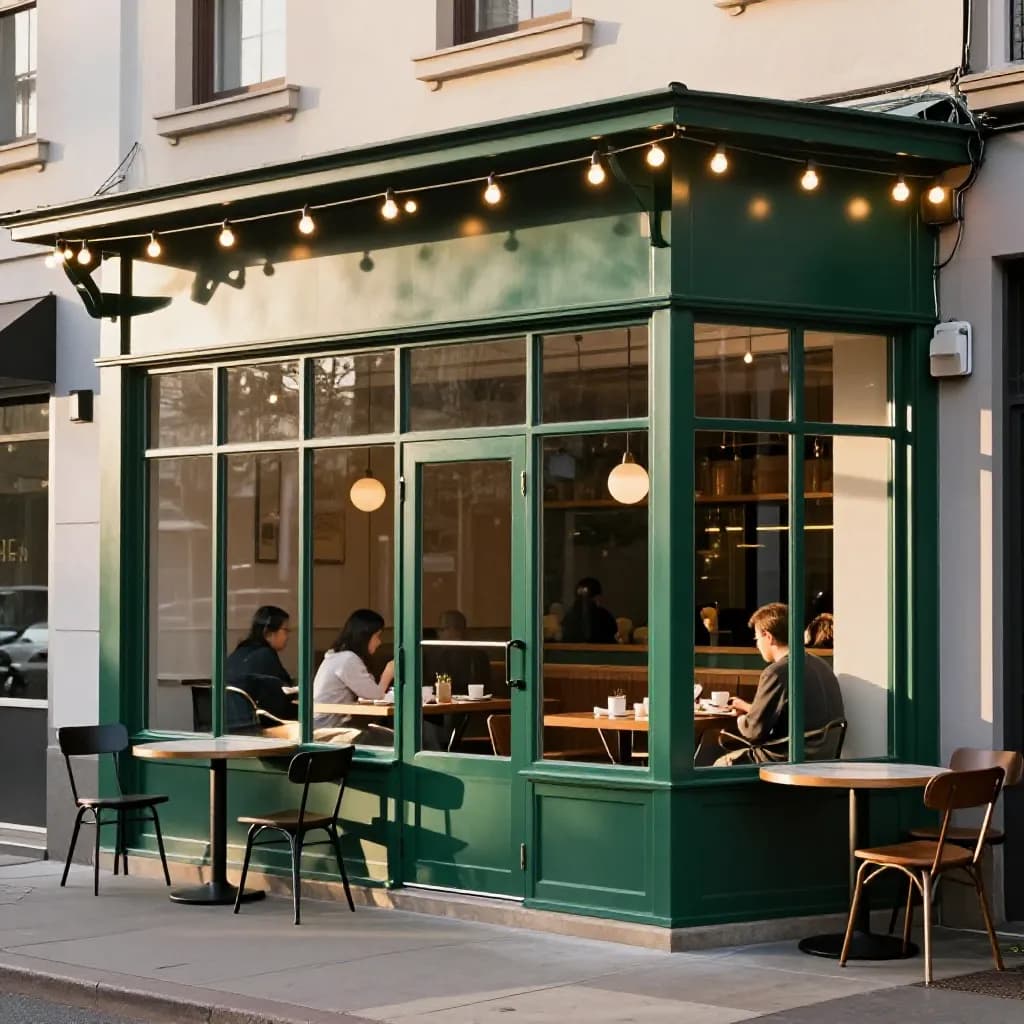
Powder coating has become the preferred finishing technology for restaurant exterior metalwork because it delivers the combination of aesthetic quality, brand precision, and long-term durability that the competitive hospitality sector demands. The 60-120 micron film thickness provides a robust, premium-quality finish that maintains its appearance for 20-25 years, far outlasting the 8-12 year service life of liquid paint in the demanding conditions of restaurant exteriors.
Ready to Start Your Project?
From one-off customs to 15,000-part production runs — get precise pricing in 24 hours.
On This Page
Restaurant Exteriors: The First Impression That Drives Footfall
Restaurant exteriors face a unique combination of challenges: food and beverage spills, cooking grease carried in ventilation exhaust, aggressive cleaning chemicals, weather exposure, and the mechanical wear of daily furniture movement and customer traffic. Powder coating addresses all of these challenges through its inherent chemical resistance, mechanical durability, and UV stability, making it the rational specification choice for restaurant architects, designers, and operators.
Outdoor Dining: Furniture, Barriers, and Terrace Systems
Outdoor dining has become a defining feature of contemporary restaurant culture, and the metalwork that creates these spaces — tables, chairs, barriers, planters, heaters, and canopy structures — must combine aesthetic appeal with exceptional durability. Outdoor dining furniture is subjected to weather exposure, UV radiation, food and beverage spills, aggressive cleaning, and the mechanical stress of daily setup, stacking, and storage.
Powder-coated aluminum and steel outdoor furniture provides the performance needed for commercial dining environments. The hard, smooth powder film resists scratching from chair legs on paving, staining from food and wine spills, and degradation from the cleaning chemicals used in daily furniture maintenance. The 60-120 micron film thickness provides substantially better protection than the 25-50 micron liquid paint films on budget furniture, which typically show visible degradation within one or two outdoor seasons.
Terrace barrier systems — including glass balustrades with powder-coated frames, metal railing systems, and planter-integrated barriers — define the outdoor dining area and must maintain their appearance as the public face of the restaurant. Powder coating's weather resistance ensures that these prominent elements retain their color and finish quality through years of exposure, avoiding the faded, peeling appearance that undermines the dining experience and deters customers.
Retractable canopy and awning structures rely on powder-coated aluminum or steel frameworks for their structural support. These frameworks must resist the mechanical stress of repeated deployment and retraction, weather exposure when extended, and the aesthetic demands of a customer-facing element. Powder coating's combination of hardness, flexibility, and UV stability provides the multi-dimensional performance these structures require, maintaining both function and appearance through thousands of operational cycles.
Brand Identity and Shopfront Design
Restaurant brand identity is expressed through every element of the exterior — from the color of the shopfront system and the style of the entrance door to the finish on outdoor furniture and the design of signage. Consistency across these elements creates a coherent brand impression, and powder coating provides the color precision and finish quality needed to achieve this consistency.
Custom color matching to brand specifications is standard practice in architectural powder coating. Restaurant brands can specify exact colors — whether defined by Pantone, RAL, NCS, or proprietary references — with confidence that the applied finish will match the specification within tight Delta E tolerances. This precision extends across all metalwork elements: the shopfront frame, the outdoor furniture, the signage housing, and the ventilation grille covers can all be finished in exactly the same brand color, creating the visual unity that strong brand identity requires.
For restaurant chains operating multiple locations, powder coating's batch-to-batch consistency ensures that every outlet presents the same brand image. A new restaurant opening in Manchester will match the established flagship in London, with color consistency verified through spectrophotometric measurement at every stage of production. This consistency is maintained over time, with super-durable polyester formulations retaining brand colors for 20-25 years.
The range of finishes available in powder coating supports diverse brand aesthetics. Industrial-chic restaurants may specify raw steel-effect or weathered metal finishes. Fine dining establishments may choose brushed bronze or champagne gold metallics. Casual dining brands may opt for vibrant solid colors that create energy and visibility on the street. Powder coating accommodates all of these design directions with the same underlying durability and performance, allowing brand expression without compromising longevity.
Kitchen Ventilation and Exhaust Systems
Commercial kitchen ventilation systems are essential for air quality, fire safety, and regulatory compliance, but they present significant aesthetic challenges for restaurant exterior design. Exhaust hoods, ductwork, louvre systems, and discharge terminals are functional elements that must be integrated into the building's exterior without compromising its visual appeal. The surface finish on these elements must also resist the specific chemical environment of kitchen exhaust — cooking oils, grease particles, moisture, and heat.
Powder coating on kitchen ventilation metalwork provides both aesthetic integration and functional protection. The ability to color-match ventilation components to the building's facade ensures visual coherence, transforming utilitarian equipment into integrated architectural elements. Louvre systems and discharge terminals finished in facade-matching powder coating blend seamlessly with the building exterior, avoiding the visual disruption of unfinished galvanized steel or mismatched paint colors.
The chemical resistance of powder coating is critical for ventilation components exposed to kitchen exhaust. Cooking oils and grease particles deposited on exhaust system surfaces create a corrosive environment that degrades liquid paint finishes rapidly. Powder coating's dense, non-porous thermoset film resists oil and grease penetration, and the smooth surface facilitates cleaning to maintain both appearance and fire safety compliance. Regular cleaning of grease-laden ventilation components is a fire safety requirement, and the coating must withstand the alkaline degreasing agents used for this purpose without degradation.
Heat resistance is another consideration for ventilation components close to the kitchen exhaust discharge point. Standard polyester powder coatings maintain their properties at continuous temperatures up to 120°C, which is adequate for most ventilation system surfaces. For components directly adjacent to high-temperature exhaust streams, silicone-modified or fluoropolymer powder coatings provide enhanced heat resistance, maintaining color and adhesion at temperatures that would degrade standard formulations.
Signage Integration and Illuminated Elements
Restaurant signage is a critical component of the exterior design, serving both as brand identification and as a tool for attracting passing trade. The metalwork that supports and frames signage — including sign boxes, letter mounting rails, projecting bracket signs, and illuminated fascia panels — must provide a durable, high-quality substrate for the signage elements while integrating seamlessly with the overall facade design.
Powder-coated sign boxes and mounting systems provide the dimensional stability and surface quality needed for professional signage installations. The rigid thermoset film maintains its flatness and surface quality over time, avoiding the warping and surface degradation that can affect liquid-painted sign substrates. For illuminated signs, the powder coating on the sign box interior can be specified in white or reflective finishes to maximize light distribution, while the exterior finish matches the building's facade color scheme.
Projecting signs — blade signs, hanging signs, and bracket-mounted signs — are fully exposed to weather and must maintain their appearance as prominent brand elements. Powder coating's UV stability ensures that sign colors remain vibrant and accurate, while the 60-120 micron film protects the sign structure against corrosion. For coastal or high-pollution locations, enhanced powder coating specifications provide the additional protection needed to maintain sign quality in aggressive environments.
LED-illuminated elements — including backlit channel letters, halo-lit signage, and illuminated menu displays — incorporate powder-coated metalwork as both structural support and visual frame. The interaction between LED light and the powder-coated surface influences the visual impact of the illuminated sign, and the finish specification should consider both daytime and night-time appearance. Matte finishes minimize unwanted reflections around illuminated elements, while metallic finishes can create attractive light-play effects that enhance the sign's visual presence after dark.
Weather Protection and Seasonal Adaptation
Restaurant exteriors must perform through all seasons and weather conditions. Summer heat, winter cold, rain, wind, and UV radiation all stress the exterior metalwork, and the finish must maintain its appearance and protective function regardless of the conditions. For restaurants with seasonal outdoor dining, the metalwork must also withstand the transition between active use and winter storage or exposure.
Super-durable polyester powder coatings provide the all-season weather resistance that restaurant exteriors require. Certified to Qualicoat Class 2 or AAMA 2605, these formulations maintain color and gloss within specified limits through years of weather exposure, ensuring that the restaurant's exterior presents a consistent, well-maintained appearance in every season. The 60-120 micron film thickness provides robust protection against moisture ingress and corrosion, even during extended periods of wet weather.
For restaurants in climates with significant temperature variation, the thermal cycling performance of powder coating is important. Daily and seasonal temperature changes cause metalwork to expand and contract, and the coating must accommodate this movement without cracking or delaminating. Powder coating's inherent flexibility — verified through mandrel bend testing to ISO 1519 — ensures that the film maintains its integrity through thermal cycles that would crack more rigid liquid paint films.
Seasonal furniture storage presents specific challenges. Outdoor furniture stacked or stored during winter months is subjected to prolonged contact between surfaces, moisture entrapment, and temperature extremes. Powder coating's hardness resists the surface marking that occurs when furniture pieces are stacked in contact, and the impervious film prevents moisture-related corrosion during storage. When furniture is returned to service in spring, powder-coated pieces require only cleaning to restore their appearance — unlike liquid-painted furniture that often requires touch-up or repainting after winter storage.
Maintenance Economics and Operational Efficiency
Restaurant operators work with tight margins, and every operational cost must be justified by its contribution to revenue or customer experience. The maintenance cost of exterior metalwork — cleaning, repair, and recoating — is a recurring expense that powder coating minimizes through its superior durability and ease of maintenance.
The 20-25 year service life of powder coating eliminates the frequent repainting cycles that liquid-painted restaurant exteriors require. A liquid-painted shopfront that needs repainting every 5-7 years in a demanding restaurant environment will require 3-4 repainting interventions over the same period that a powder-coated shopfront requires none. Each repainting event involves not only material and labor costs but also potential disruption to trading — scaffolding that obscures the facade, paint fumes that deter customers, and the temporary loss of the restaurant's visual identity during the work.
Daily cleaning of powder-coated surfaces is simpler and faster than cleaning liquid-painted surfaces. The hard, smooth powder film resists food and grease staining, and accumulated soiling can be removed with mild detergent and water. For outdoor dining furniture, the ability to clean quickly between seatings is operationally important, and powder coating's non-porous surface facilitates rapid, effective cleaning.
The 95-98% material efficiency of powder coating application also benefits restaurant operators who commission custom metalwork. Less material waste means lower production costs for bespoke furniture, signage, and architectural elements. Combined with the fast curing cycle that supports rapid production turnaround, powder coating enables restaurant operators to commission custom metalwork efficiently, supporting the unique design identity that differentiates independent restaurants in a competitive market.
Frequently Asked Questions
How long does powder coating last on outdoor restaurant furniture?
Powder coating on outdoor dining furniture lasts 20-25 years with super-durable polyester formulations, compared to 1-2 seasons for budget liquid paint. The 60-120 micron film resists food spills, cleaning chemicals, UV radiation, and the mechanical stress of daily stacking and setup.
Can powder coating match exact restaurant brand colors?
Yes. Custom color matching to Pantone, RAL, NCS, and proprietary brand specifications is standard. Spectrophotometric quality control ensures consistency across all metalwork elements and multiple restaurant locations, maintaining brand identity for 20-25 years.
Is powder coating suitable for kitchen ventilation systems?
Yes. Powder coating resists cooking oils, grease, and alkaline degreasing agents used for fire safety cleaning. The smooth, non-porous surface facilitates grease removal, and color matching allows ventilation components to integrate seamlessly with the building facade.
How does powder coating perform on illuminated restaurant signage?
Powder coating provides a dimensionally stable, weather-resistant substrate for signage. UV-stable formulations maintain sign colors for 20-25 years. Interior white finishes maximize light distribution in illuminated signs, while exterior finishes integrate with the facade design.
Does powder coating reduce restaurant exterior maintenance costs?
Yes. The 20-25 year service life eliminates the 5-7 year repainting cycles typical of liquid-painted restaurant exteriors. Daily cleaning is faster due to the non-porous surface, and the hard film resists the staining and wear that necessitate frequent touch-up painting on liquid-painted metalwork.
Ready to Start Your Project?
From one-off customs to 15,000-part production runs — get precise pricing in 24 hours.