Resort pool areas present one of the most chemically aggressive environments in hospitality. Chlorine and bromine-based sanitizers maintain water hygiene but create an atmosphere that actively corrodes unprotected metal. The air around a pool carries chlorine vapor that settles on every surface, and splashed pool water deposits chlorine directly onto furniture, railings, and fixtures. This chemical exposure is continuous and cumulative, attacking coatings and substrates relentlessly.
Hospitality
Powder Coating for Resort Pool Areas and Leisure Zones
Sundial Powder Coating·April 20, 2026·9 min
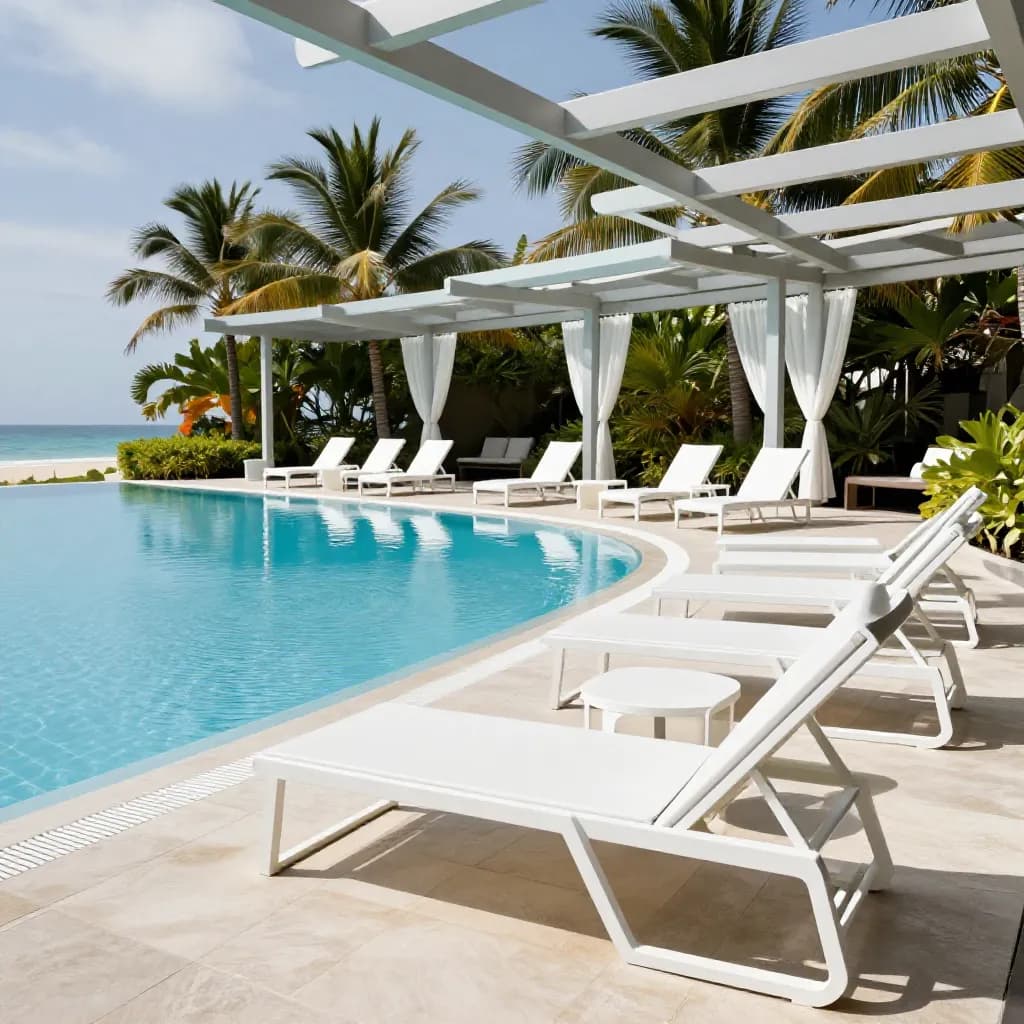
UV exposure in pool areas is typically extreme. Pools are designed to maximize sun exposure, meaning that surrounding furniture and fixtures receive intense, direct UV radiation for hours every day. Sunscreen transferred from guests' skin to furniture surfaces adds another chemical challenge — the oils and active ingredients in sunscreen formulations can stain or degrade sensitive finishes over time.
Ready to Start Your Project?
From one-off customs to 15,000-part production runs — get precise pricing in 24 hours.
On This Page
Pool Area Challenges
The constant wet-dry cycling of a pool environment creates unique stress on coatings. Metal surfaces are repeatedly wetted by splashes, rain, and cleaning, then dried by sun and wind, then wetted again. Each cycle drives moisture into any coating weakness — a pinhole, a thin spot, an edge where coverage is incomplete — and the dissolved chemicals in pool water accelerate corrosion at these vulnerable points. Salt water pools and coastal resort locations add salt exposure to this already demanding chemical environment.
What to Coat in Pool and Leisure Areas
Lounger frames are the most numerous metal items in any resort pool area, and they endure the full range of pool environment challenges. Guests apply sunscreen and then recline on the frames, transferring oils and chemicals directly to the metal surface. Pool water splashes onto frames constantly, and the furniture is moved, stacked, and rearranged by pool staff throughout the day. Powder coating provides the chemical and mechanical resistance these frames need to maintain their appearance through seasons of intensive use.
Shade structures, pergolas, and cabana frames provide essential sun protection and define the pool area's character. These overhead structures are fully exposed to UV and weather while also receiving chlorine-laden moisture from below. Powder coating protects these structural elements from both environmental and chemical attack, maintaining their appearance and structural integrity for years of continuous outdoor exposure.
Railings, shower fixtures, signage, and pool equipment housings complete the inventory of metal elements in the pool area. Safety railings around the pool must maintain their structural coating integrity because corrosion could compromise their strength. Outdoor shower fixtures face direct water contact combined with cleaning chemicals. Every metal element in the pool zone benefits from powder coating's comprehensive resistance to the unique combination of challenges this environment presents.
Chemical Resistance to Pool Chemicals
Chlorine is the primary chemical threat in pool environments, and powder coating provides effective resistance to both chlorine vapor in the air and chlorinated water on surfaces. The dense, cross-linked powder film acts as a barrier that prevents chlorine from reaching the metal substrate, where it would initiate rapid corrosion on steel or pitting on aluminum. This barrier function is maintained over years of continuous chlorine exposure.
Bromine-based pool treatments, salt chlorination systems, and pH-adjusting chemicals add to the chemical complexity of the pool environment. Each of these substances has the potential to attack coatings and substrates, and the combination of multiple chemicals creates a more aggressive environment than any single substance alone. Powder coating's broad chemical resistance handles this cocktail of pool chemicals without selective vulnerability to any particular compound.
Cleaning chemicals used to maintain pool area furniture and fixtures add another layer of chemical exposure. Mildew removers, algae treatments, and general-purpose cleaners are used regularly on pool deck surfaces and furniture. Powder coating withstands these cleaning products without softening or discoloring, allowing maintenance teams to keep the pool area spotless without worrying about damaging the furniture finish.
UV and Weather Resistance for Tropical and Coastal Resorts
Tropical and coastal resorts face the most extreme UV exposure conditions on earth. Near-equatorial locations receive intense solar radiation year-round, and the reflective surfaces of water and light-colored pool decks amplify UV exposure on surrounding furniture and fixtures. Standard powder coatings would fade and chalk under these conditions within a few seasons, making superdurable polyester formulations essential for resort pool applications.
Superdurable powder coatings are engineered with UV-stabilized resin systems and lightfast pigments that maintain color and gloss under prolonged intense sun exposure. These formulations are tested to standards that simulate years of tropical UV exposure, providing confidence that the specified color will remain accurate through multiple resort seasons. This UV performance is critical for maintaining the premium appearance that resort guests expect.
Coastal locations add salt spray to the UV challenge. Airborne salt is highly corrosive and settles on every exposed surface, creating a persistent corrosion risk. Powder coating's sealed film prevents salt from reaching the metal substrate, and regular washing removes salt deposits before they can cause damage. For the most demanding coastal environments, enhanced pretreatment systems such as marine-grade chromate-free conversion coatings provide additional corrosion protection beneath the powder coating layer.
Maintaining a Premium Appearance in Harsh Pool Environments
Resort guests pay a premium for the pool experience, and they expect the environment to reflect that premium. Faded loungers, corroded railings, and stained shade structures undermine the luxury positioning that resorts work hard to maintain. Powder coating helps preserve the premium appearance of pool area metalwork by resisting the degradation mechanisms — UV fading, chemical attack, and corrosion — that cause visible deterioration in lesser finishes.
Regular maintenance maximizes the lifespan and appearance of powder-coated pool furniture. Rinsing furniture with fresh water after pool chemical exposure removes chlorine and salt deposits before they can cause long-term damage. Periodic washing with mild detergent addresses sunscreen residue, body oils, and environmental contamination. This simple maintenance routine, combined with powder coating's inherent durability, keeps pool area metalwork looking fresh and inviting.
Color selection plays a role in long-term appearance management. Lighter colors and earth tones tend to show less visible change from UV exposure than very dark or very bright colors. White, cream, sand, and warm grey are popular choices for resort pool furniture because they look clean, feel cooler in the sun, and maintain their appearance effectively under intense UV conditions. These practical considerations complement the aesthetic preferences that drive resort pool area design.
Frequently Asked Questions
Does powder coating resist chlorine damage around pools?
Yes. Powder coating provides effective resistance to both chlorine vapor in the air and chlorinated water on surfaces. The dense, non-porous film prevents chlorine from reaching the metal substrate, protecting against the corrosion and pitting that chlorine causes on unprotected metal.
What type of powder coating is best for resort pool furniture?
Superdurable polyester powder coatings are recommended for resort pool furniture. These formulations provide enhanced UV resistance for intense sun exposure and chemical resistance to chlorine, salt, and sunscreen. Enhanced pretreatment is also recommended for maximum corrosion protection.
How should powder-coated pool furniture be maintained?
Rinse pool furniture regularly with fresh water to remove chlorine and salt deposits. Periodically wash with mild detergent to remove sunscreen residue and body oils. This simple maintenance routine, combined with powder coating's inherent durability, maintains the furniture's appearance through years of pool area use.
Can powder coating handle salt water pool environments?
Yes. Powder coating resists salt water exposure effectively, and when combined with appropriate pretreatment such as marine-grade conversion coatings, it provides reliable long-term protection in salt water pool and coastal resort environments.
Ready to Start Your Project?
From one-off customs to 15,000-part production runs — get precise pricing in 24 hours.