The resin system is the backbone of every powder coating, determining its mechanical properties, chemical resistance, weathering durability, cure behavior, and application characteristics. Unlike liquid coatings where the resin is dissolved in solvent, powder coating resins must be solid at room temperature (glass transition temperature Tg typically 50-80°C), meltable at moderate temperatures (melt point 80-120°C), and capable of crosslinking into a durable thermoset network during the cure cycle. These requirements constrain the resin chemistry options but have driven the development of highly optimized formulations for every major application segment.
Technical
Powder Coating Resin Chemistry: Polyester, Epoxy, Hybrid, Polyurethane, Acrylic, and Fluoropolymer
Sundial Powder Coating·April 22, 2026·15 min
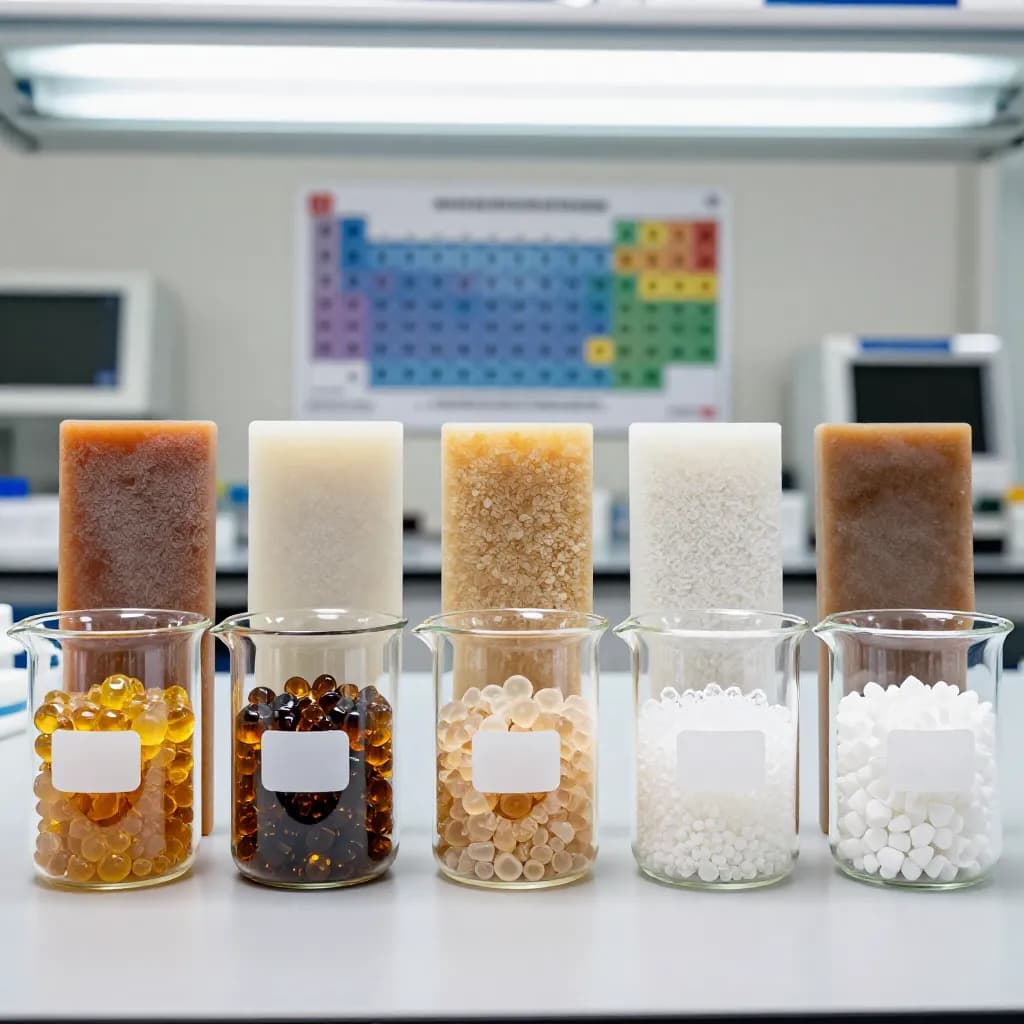
All thermoset powder coatings consist of two reactive components: a base resin (the primary film-forming polymer) and a crosslinker (also called a hardener or curing agent) that reacts with the resin during curing to form a three-dimensional crosslinked network. The crosslink density — the number of crosslinks per unit volume of cured film — determines many of the coating's properties. Higher crosslink density generally increases hardness, chemical resistance, and solvent resistance, while lower crosslink density provides better flexibility, impact resistance, and elongation.
Ready to Start Your Project?
From one-off customs to 15,000-part production runs — get precise pricing in 24 hours.
On This Page
Resin Chemistry: The Foundation of Powder Coating Performance
The choice of resin system is the most consequential decision in powder coating formulation, as it establishes the fundamental performance envelope of the coating. No amount of optimization of pigments, fillers, or additives can overcome the inherent limitations of the base resin chemistry. An epoxy coating cannot be made UV-resistant, a standard polyester cannot match the chemical resistance of an epoxy, and a hybrid cannot achieve the weathering performance of a fluoropolymer. Understanding the chemistry, capabilities, and limitations of each resin type is essential for selecting the right coating for any application.
Epoxy Resins: Maximum Chemical and Corrosion Resistance
Epoxy powder coatings are based on bisphenol-A epoxy resins — solid-grade versions of the same chemistry used in liquid epoxy coatings and adhesives. The epoxy resin contains reactive oxirane (epoxide) groups at each end of the polymer chain, which react with amine, anhydride, or phenolic crosslinkers during curing to form a densely crosslinked network. The most common crosslinker for epoxy powder coatings is dicyandiamide (DICY), which provides a cure schedule of approximately 180-200°C for 10-15 minutes.
The crosslinked epoxy network provides outstanding chemical resistance, solvent resistance, and adhesion to metal substrates. Epoxy coatings resist a wide range of chemicals including acids, alkalis, solvents, and fuels, making them the preferred choice for industrial applications such as pipeline interiors, chemical storage tanks, rebar coating, and electrical insulation. The dense crosslink structure also provides excellent barrier properties against moisture and corrosive species, contributing to superior corrosion protection — epoxy-coated steel panels routinely achieve 2000-4000 hours of salt spray resistance with appropriate pretreatment.
The critical limitation of epoxy resins is their poor UV resistance. The aromatic bisphenol-A structure absorbs UV radiation at wavelengths below 350 nm, causing photochemical chain scission that rapidly degrades the coating surface. Exterior-exposed epoxy coatings chalk severely and yellow within months, losing 50-80% of initial gloss within 200-500 hours of QUV-A exposure. This limits epoxy powder coatings to interior applications, buried or submerged applications, and use as primers beneath UV-resistant topcoats. Functional epoxy coatings for rebar, pipeline, and electrical applications are typically specified at higher film thicknesses (200-500 μm) than decorative coatings, using specialized formulations optimized for barrier properties and cathodic disbondment resistance.
Polyester Resins: The Versatile Workhorse
Polyester powder coatings are the most widely used resin type in the industry, accounting for an estimated 55-65% of all powder coating production globally. Polyester resins are synthesized by condensation polymerization of dicarboxylic acids (typically isophthalic acid and terephthalic acid) with polyols (typically neopentyl glycol and trimethylolpropane). The resulting polymer has carboxyl (-COOH) or hydroxyl (-OH) functional groups that react with crosslinkers during curing.
Two crosslinker systems dominate polyester powder coatings: TGIC (triglycidyl isocyanurate) and HAA (β-hydroxyalkylamide, commonly known by the trade name Primid). TGIC-crosslinked polyesters react through an epoxy-carboxyl mechanism, producing a tightly crosslinked network with excellent weathering resistance, chemical resistance, and mechanical properties. The cure schedule is typically 180-200°C for 10-15 minutes. TGIC has been classified as a mutagen (Category 1B) under EU CLP regulation, leading to restrictions on its use in some European countries, though it remains widely used in North America, Asia, and other regions.
HAA-crosslinked polyesters react through an esterification mechanism, releasing water as a byproduct. HAA systems are TGIC-free and are the dominant polyester crosslinker in Europe. They provide comparable weathering resistance to TGIC systems but with slightly different mechanical properties — HAA-crosslinked films tend to be slightly more flexible but may have marginally lower chemical resistance. The water released during HAA cure can cause pinholes on thick films or porous substrates if not managed through proper formulation and cure conditions.
Standard polyester coatings provide good UV resistance suitable for most exterior applications, with gloss retention of 50-70% after 2000 hours of QUV-A. Super-durable polyester formulations use modified resin structures — typically incorporating cyclohexane dicarboxylic acid or other UV-stable monomers — to achieve gloss retention of 70-90% after 2000 hours, meeting Qualicoat Class 2 and GSB Master requirements for premium architectural applications.
Hybrid (Epoxy-Polyester) Resins: The Interior Standard
Hybrid powder coatings combine epoxy and polyester resins in a single formulation, typically at ratios of 50:50 to 70:30 polyester-to-epoxy by weight. The two resins are co-extruded and react with each other during curing — the carboxyl groups on the polyester react with the epoxide groups on the epoxy, forming a crosslinked network that incorporates both polymer types. No separate crosslinker is needed, as the two resins serve as crosslinkers for each other.
Hybrid coatings offer a balance of properties that makes them the default choice for interior decorative and functional applications. They provide better UV resistance than pure epoxy (due to the polyester component) and better chemical resistance than pure polyester (due to the epoxy component), though they do not match the best performance of either pure resin type in its area of strength. Typical properties include good hardness (pencil hardness H-2H), good flexibility (passing 2-3 mm mandrel bend), moderate chemical resistance, and moderate UV resistance (gloss retention of 20-40% after 1000 hours QUV-A).
The primary advantages of hybrid coatings are their smooth finish quality, excellent overbake resistance, and wide cure window. The epoxy-polyester crosslinking reaction is less sensitive to cure temperature variations than TGIC or HAA crosslinking, meaning that hybrids tolerate a wider range of oven conditions without significant changes in film properties. This makes them forgiving in production environments with variable part geometries and oven loading. Overbake resistance — the ability to withstand higher-than-specified cure temperatures without severe yellowing — is better than pure epoxy because the polyester component dilutes the UV-absorbing epoxy chromophores.
Hybrid coatings are widely used for office furniture, shelving, electrical enclosures, appliance interiors, automotive under-hood components, and general industrial products that are used indoors or in sheltered environments. They are not suitable for exterior applications where UV exposure will cause chalking and color change within 1-2 years.
Polyurethane Resins: Flexibility and Chemical Resistance
Polyurethane powder coatings use hydroxyl-functional polyester resins crosslinked with blocked isocyanate crosslinkers — typically caprolactam-blocked IPDI (isophorone diisocyanate) or uretdione-type crosslinkers. During curing at 170-200°C, the blocking agent is released (in the case of caprolactam-blocked systems) or the uretdione ring opens, freeing the isocyanate groups to react with the hydroxyl groups on the polyester resin and form urethane crosslinks.
The urethane crosslink provides a unique combination of properties: excellent flexibility and elongation (often exceeding 100% elongation at break), outstanding impact resistance, good chemical resistance, and very smooth film appearance. These properties make polyurethane powders the preferred choice for applications requiring both flexibility and appearance quality, such as automotive wheels, exterior automotive trim, agricultural equipment, and ACE (architecture, construction, earthmoving) applications.
Polyurethane coatings also offer excellent UV resistance when formulated with appropriate polyester resins and UV stabilizers, with weathering performance comparable to or exceeding standard polyester-TGIC systems. The combination of flexibility, chemical resistance, and weathering durability makes polyurethane an attractive option for demanding exterior applications where standard polyester may not provide sufficient mechanical performance.
The main limitations of polyurethane powder coatings are related to the crosslinker chemistry. Caprolactam-blocked systems release caprolactam vapor during curing, which can condense on cooler surfaces in the oven and cause contamination. This requires adequate oven ventilation and periodic cleaning. The released caprolactam also represents a material loss and a potential environmental concern, though it is not classified as hazardous. Uretdione crosslinkers avoid the blocking agent release issue but require higher cure temperatures (190-210°C) and are more sensitive to moisture during storage. Polyurethane powders also tend to have shorter shelf life than polyester or hybrid powders due to the reactivity of the isocyanate crosslinker system.
Acrylic Resins: Automotive Clearcoat and Specialty Applications
Acrylic powder coatings are based on glycidyl methacrylate (GMA) functional acrylic resins crosslinked with dicarboxylic acid crosslinkers such as dodecanedioic acid (DDDA). The GMA-acid crosslinking reaction produces a highly transparent, high-gloss film with excellent clarity, UV resistance, and resistance to yellowing — properties that make acrylic powders the standard choice for automotive clearcoat applications.
The optical clarity of acrylic coatings is superior to polyester because the acrylic resin has a lower refractive index and produces a more uniform crosslinked network with fewer light-scattering domains. This clarity is essential for automotive clearcoats, where the coating must be transparent enough to reveal the metallic or effect basecoat beneath it without haze or milkiness. Acrylic clearcoats also provide excellent scratch resistance and acid etch resistance — important properties for automotive exterior surfaces exposed to tree sap, bird droppings, and industrial fallout.
Acrylic powder coatings have excellent weathering resistance, with gloss retention of 80-95% after 2000 hours of QUV-A exposure. Their UV resistance is inherently good because the acrylic backbone does not contain UV-absorbing chromophores, and the addition of UV absorbers and HALS further extends durability.
The primary limitation of acrylic powders is their incompatibility with other powder coating chemistries. Acrylic and polyester powders are mutually incompatible — even trace cross-contamination (as little as 0.1% acrylic in a polyester system) can cause severe surface defects including craters, fisheyes, and loss of gloss. This incompatibility requires dedicated application equipment, booths, and reclaim systems for acrylic powders, with rigorous contamination control procedures during color changes. The incompatibility issue has limited the adoption of acrylic powders outside the automotive industry, where dedicated coating lines can be justified by the production volume.
Fluoropolymer Resins: Ultimate Weathering Performance
Fluoropolymer powder coatings represent the pinnacle of weathering resistance in the powder coating industry. Two fluoropolymer chemistries are used in powder form: PVDF (polyvinylidene fluoride) and FEVE (fluoroethylene vinyl ether). Both leverage the extraordinary strength of the carbon-fluorine bond — the strongest single bond in organic chemistry at 485 kJ/mol — to resist UV degradation, chemical attack, and environmental weathering.
PVDF powder coatings are formulated as blends of PVDF resin (typically 70% by weight of the resin system) with acrylic resin (30%), following the same 70/30 ratio used in liquid PVDF coatings that have a 50+ year track record in architectural applications. The PVDF component provides weathering resistance while the acrylic component provides adhesion and pigment wetting. PVDF powders require cure temperatures of 230-250°C, which limits their use to substrates that can withstand these temperatures — primarily aluminum and steel. The high cure temperature also means that PVDF powders cannot be used with heat-sensitive pretreatments or substrates.
FEVE powder coatings are a newer technology that offers fluoropolymer-level weathering resistance at lower cure temperatures (180-200°C), making them compatible with standard powder coating ovens and pretreatment systems. FEVE resins are true thermoset fluoropolymers that crosslink with conventional crosslinkers (isocyanate or melamine), producing a fully crosslinked network with excellent weathering resistance, chemical resistance, and mechanical properties. FEVE powders can achieve gloss retention of 85-95% after 4000 hours of QUV-A exposure and meet AAMA 2605 requirements.
Fluoropolymer powder coatings are specified for the most demanding architectural applications: high-rise curtain walls, monumental buildings, transportation infrastructure, and any project where 25+ year appearance retention is required. They are also used in industrial applications requiring extreme chemical resistance or non-stick properties. The higher material cost of fluoropolymer powders compared to polyester is offset by the dramatically longer service life and reduced maintenance frequency over the building lifecycle.
Resin Selection Criteria: Matching Chemistry to Application
Selecting the right resin chemistry requires matching the coating's properties to the application's performance requirements, environmental exposure, and regulatory constraints. A systematic selection process considers several key factors.
Exterior UV exposure is the primary differentiator. If the coating will be exposed to sunlight, epoxy and hybrid chemistries are eliminated. Standard polyester is suitable for most exterior applications with 5-15 year appearance expectations. Super-durable polyester is required for architectural applications with 15-25 year expectations. Fluoropolymer is specified for 25+ year premium architectural applications.
Chemical resistance requirements favor epoxy for the most demanding chemical environments (concentrated acids, alkalis, solvents), polyurethane for moderate chemical resistance with flexibility, and polyester for general chemical resistance. Hybrid coatings provide adequate chemical resistance for most interior applications.
Mechanical requirements — particularly flexibility and impact resistance — favor polyurethane and standard polyester over epoxy and hybrid. Applications involving post-forming (bending or shaping after coating) require high-elongation formulations, typically polyurethane or specially formulated flexible polyester.
Cure temperature constraints may limit options. Standard polyester, hybrid, and epoxy cure at 180-200°C. Low-temperature formulations are available at 140-160°C for heat-sensitive substrates. PVDF requires 230-250°C. FEVE fluoropolymer cures at standard 180-200°C temperatures.
Regulatory considerations include TGIC restrictions in some European countries (favoring HAA-crosslinked polyester or hybrid), caprolactam emission limits for polyurethane systems, and food contact regulations that may restrict certain chemistries. The coating specification — whether Qualicoat, GSB, AAMA, or a customer-specific requirement — often dictates the minimum resin performance level and effectively narrows the selection to one or two chemistry options.
Frequently Asked Questions
What is the most common type of powder coating resin?
Polyester is the most widely used resin, accounting for 55-65% of global powder coating production. It offers the best balance of weathering resistance, mechanical properties, and cost for both interior and exterior applications. Polyester is available with TGIC or HAA crosslinkers, and in standard and super-durable formulations for different performance requirements.
Why can't epoxy powder coating be used outdoors?
Epoxy resins contain aromatic bisphenol-A structures that absorb UV radiation, causing rapid photochemical degradation. Exterior-exposed epoxy coatings chalk severely and yellow within months, losing 50-80% of gloss within 200-500 hours of QUV-A exposure. Epoxy is limited to interior, buried, or submerged applications where UV exposure is absent.
What is the difference between TGIC and HAA crosslinkers?
TGIC (triglycidyl isocyanurate) and HAA (β-hydroxyalkylamide) are both crosslinkers for carboxyl-functional polyester resins. TGIC provides slightly higher chemical resistance and crosslink density. HAA releases water during cure and is TGIC-free, making it preferred in Europe where TGIC is restricted as a Category 1B mutagen. Both provide comparable weathering resistance.
What powder coating lasts the longest outdoors?
Fluoropolymer coatings (PVDF and FEVE) provide the longest outdoor durability, with proven performance exceeding 25 years and gloss retention of 80-95% after 4000 hours of QUV-A. They meet AAMA 2605, the most demanding architectural specification. Super-durable polyester is the next tier, lasting 15-25 years and meeting Qualicoat Class 2 requirements.
Why are acrylic powder coatings incompatible with polyester?
Acrylic and polyester resins have fundamentally different surface tension characteristics. Even trace contamination of 0.1% acrylic in a polyester system causes severe surface defects — craters, fisheyes, and gloss loss — because the low-surface-tension acrylic disrupts the leveling of the polyester film. This requires dedicated equipment and rigorous contamination control for acrylic powder operations.
Ready to Start Your Project?
From one-off customs to 15,000-part production runs — get precise pricing in 24 hours.