Residential apartment buildings present a distinctive set of requirements for surface finishes. Unlike commercial buildings where occupants may tolerate utilitarian aesthetics, apartment residents interact with the building's metalwork every day — touching balcony railings, opening windows, passing through entrance lobbies, and viewing the facade from both inside and outside. The quality, durability, and appearance of these finishes directly influence resident satisfaction, property values, and the long-term reputation of the development.
Architecture
Powder Coating for Residential Apartment Buildings: Balconies, Railings, Window Systems, and Lifecycle Value
Sundial Powder Coating·April 22, 2026·12 min
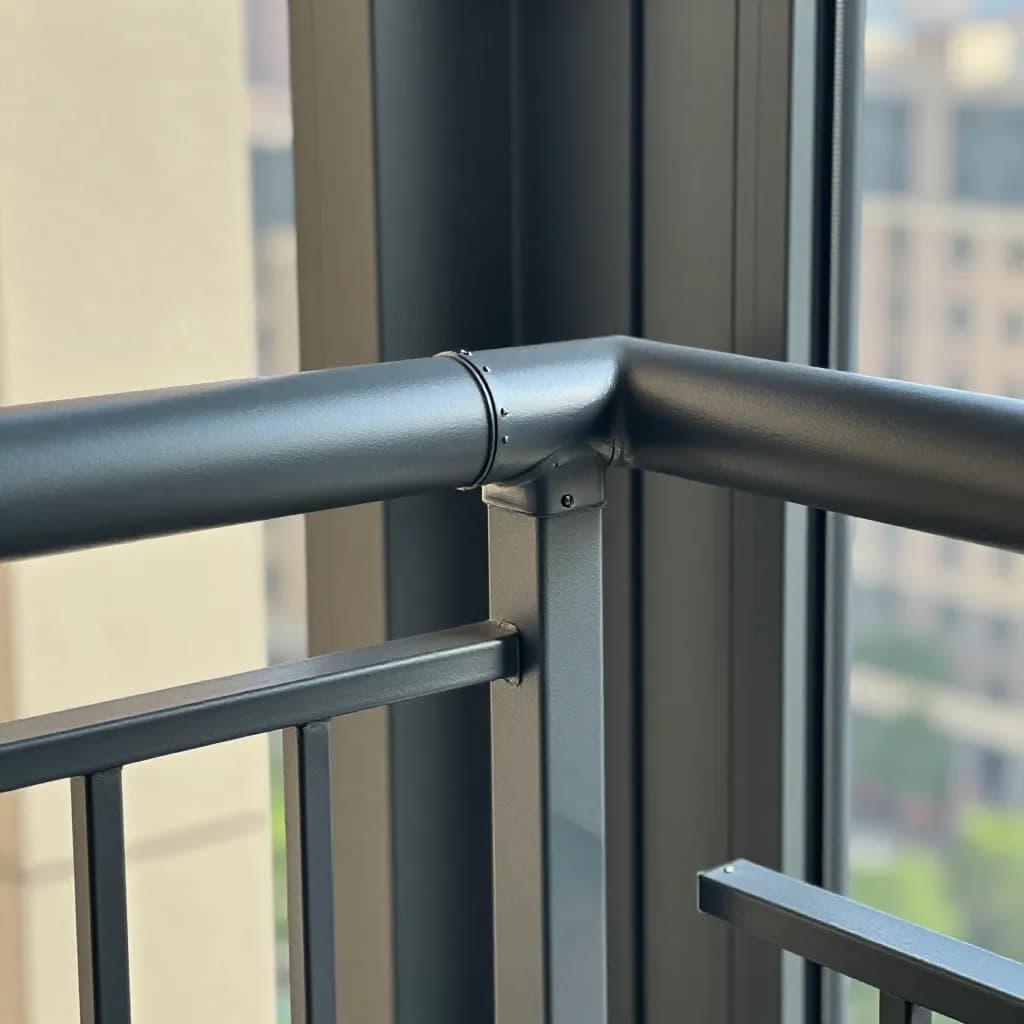
Powder coating has become the standard specification for metalwork in quality residential construction because it delivers the combination of aesthetic refinement, durability, and low maintenance that residents and property managers expect. The 60-120 micron film thickness provides a robust, long-lasting finish that maintains its appearance for 20-25 years — covering the period between major building refurbishments and ensuring that the development retains its visual appeal throughout.
Ready to Start Your Project?
From one-off customs to 15,000-part production runs — get precise pricing in 24 hours.
On This Page
Residential Architecture: Surface Finishes That Residents Live With Daily
The zero VOC characteristic of powder coating is particularly relevant for residential buildings, where indoor air quality directly affects occupant health and wellbeing. Powder-coated window frames, door hardware, and interior metalwork contribute no volatile emissions to the living environment, supporting compliance with indoor air quality standards and green building certifications that are increasingly demanded by residential purchasers and tenants.
Balcony Systems: Durability in Exposed Conditions
Balconies are among the most exposed and heavily used elements of residential apartment buildings. Balcony railings, balustrades, structural frames, and privacy screens are subjected to full weather exposure, UV radiation, temperature extremes, and regular contact from residents. In coastal or industrial locations, salt spray and atmospheric pollutants add further stress. The surface finish on balcony metalwork must withstand all of these conditions while maintaining the aesthetic quality that residents expect from their private outdoor space.
Powder coating provides the performance needed for balcony applications. The 60-120 micron film creates a continuous barrier against moisture, UV radiation, and atmospheric corrosion, protecting the underlying aluminum or steel substrate for 20-25 years. Super-durable polyester formulations certified to Qualicoat Class 2 maintain color and gloss within specified limits throughout this period, ensuring that balcony metalwork retains its intended appearance without the fading, chalking, and peeling that degrades liquid-painted balconies within 8-12 years.
For glass balustrade systems, the powder-coated aluminum or steel frame must maintain its structural integrity and aesthetic quality at the critical interface between glass and metal. The smooth, uniform powder film provides a clean visual line at this junction, and the coating's resistance to moisture ingress prevents the corrosion at glass-to-metal interfaces that can compromise both appearance and structural performance.
Balcony drainage is another consideration. Water pooling on balcony surfaces can create prolonged wet contact with metalwork, accelerating corrosion in poorly protected systems. Powder coating's impervious film prevents moisture penetration even under prolonged wet conditions, and the coating's resistance to the mild acids in rainwater and atmospheric condensation ensures long-term protection. For balconies with integrated planters or green wall systems, the coating must also resist the organic acids and elevated moisture levels associated with planted environments — conditions that powder coating handles effectively.
Window and Door Systems: Thermal Performance Meets Aesthetics
Windows and doors are the most visible and frequently operated metalwork elements in residential apartments. The surface finish on these elements must combine aesthetic quality with resistance to daily handling, cleaning, and weather exposure. For thermally broken aluminum window and door systems — now standard in energy-efficient residential construction — the powder coating must also be compatible with the thermal break assembly process and maintain its integrity across the temperature differential between interior and exterior faces.
Powder-coated aluminum windows achieve the demanding thermal performance requirements of modern building regulations while offering the color flexibility that residential architects require. The ability to specify different colors on interior and exterior faces of window profiles — known as dual-color or bi-color finishing — allows architects to coordinate the external facade color with interior design schemes. Residents benefit from window frames that complement their interior decor, while the building presents a unified external appearance.
The operational durability of powder coating on windows and doors is critical for residential satisfaction. Window handles, locking mechanisms, and hinge covers are touched multiple times daily, and the finish must resist the oils, moisture, and minor abrasion from regular hand contact. Powder coating's hard, smooth surface maintains its appearance under this daily use, while liquid paint on window hardware typically shows visible wear within 2-3 years.
For sliding door systems — increasingly popular in residential apartments for their space efficiency and connection to balconies — the powder coating on track systems and frame profiles must resist the abrasion of repeated sliding operation. The thermoset powder film's combination of hardness and low friction coefficient supports smooth operation while maintaining surface quality, avoiding the scoring and wear marks that develop on liquid-painted sliding door tracks.
Communal Areas: Entrances, Lobbies, and Circulation Spaces
The communal areas of residential apartment buildings — entrance canopies, lobby metalwork, stairwell handrails, elevator surrounds, and corridor fittings — create the first and lasting impression of the development. These spaces are shared by all residents and visitors, and their condition directly influences property values and resident satisfaction. The metalwork finishes in communal areas must maintain a premium appearance despite continuous use by the building's entire population.
Powder-coated entrance canopies and lobby metalwork set the tone for the development. The flawless surface quality achievable with factory-applied powder coating — free from the drips, brush marks, and inconsistencies of on-site liquid painting — communicates the quality standard of the building from the moment of arrival. Metallic and special-effect powder finishes can create the premium aesthetic expected in high-end residential developments, with the durability to maintain that appearance for decades.
Stairwell handrails and balustrades in residential buildings are subjected to continuous contact from residents, visitors, and cleaning staff. The 60-120 micron powder coating film provides substantially better resistance to handling wear than the 25-50 micron liquid paint films that rapidly show polishing and wear patterns on handrail surfaces. For buildings with high resident turnover — such as rental apartments and student housing — this durability is particularly valuable, as the metalwork must maintain its appearance through frequent changes of occupancy.
Mailbox systems, intercom panels, and building signage in communal areas benefit from powder coating's combination of durability and design flexibility. These elements are touched daily and must resist both mechanical wear and the cleaning chemicals used by building maintenance staff. Powder coating's chemical resistance ensures that regular cleaning does not degrade the finish, while the precise color matching capability allows these functional elements to be integrated seamlessly into the lobby's design scheme.
Facade Cladding and Architectural Expression
The facade of a residential apartment building defines its identity in the streetscape and influences the desirability of the development for prospective residents. Powder-coated aluminum cladding, rainscreen panels, and decorative screens provide architects with the design freedom to create distinctive residential facades while delivering the long-term weather performance that protects the building investment.
Color selection for residential facades requires careful consideration of context, planning requirements, and market positioning. Powder coating's extensive color range — encompassing the full RAL Classic and RAL Design systems plus custom matching — allows architects to respond to local planning guidance on facade colors while creating developments with distinctive visual identities. Earth tones, muted metallics, and sophisticated neutrals are popular for residential facades, and powder coating reproduces these subtle colors with the precision and consistency needed for large facade areas where any color variation is immediately apparent.
Textured and patterned cladding panels add visual depth and interest to residential facades. Perforated screens, folded panels, and three-dimensional cassette systems create shadow patterns that change with the sun's position, animating the facade throughout the day. Powder coating's ability to achieve uniform coverage on complex geometries — with electrostatic application wrapping around edges and into recesses — ensures consistent finish quality on these architecturally ambitious elements.
The weather performance of powder-coated residential facades is verified through the same rigorous testing regimes applied to commercial buildings. Qualicoat Class 2 and AAMA 2605 certified coatings provide 20-25 years of color and gloss retention, ensuring that the facade maintains its intended appearance throughout the period between major refurbishments. For residential developers, this long-term performance protects the asset value of the development and reduces the service charge contributions required from residents for facade maintenance.
Parking, Bicycle Storage, and Service Areas
Residential apartment buildings include extensive service infrastructure — parking structures, bicycle storage facilities, waste management areas, and plant rooms — where metalwork must be durable and functional without the premium aesthetic requirements of residential and communal spaces. Powder coating serves these utilitarian applications effectively, providing long-term protection at competitive cost.
Parking area metalwork — including barrier systems, column protectors, signage, and ventilation grilles — is exposed to vehicle emissions, road salt carried on tires, and occasional impact from vehicles. Powder coating's chemical resistance protects against the corrosive effects of vehicle exhaust and de-icing chemicals, while the 60-120 micron film thickness provides better impact resistance than liquid paint. Safety colors on parking area metalwork — yellow for hazard marking, green for pedestrian routes, blue for disabled parking identification — maintain their visibility for the full 20-25 year coating life.
Bicycle storage facilities have become essential amenities in residential developments, and the metalwork in these areas — racks, frames, security enclosures, and access gates — must resist the scratching and impact from bicycle frames and locks. Powder coating's hardness and abrasion resistance make it the natural choice for bicycle storage metalwork, maintaining appearance and corrosion protection despite daily contact with metal bicycle components.
Waste management areas and plant rooms contain metalwork exposed to moisture, cleaning chemicals, and occasional chemical spills. Powder coating's chemical resistance and impervious film provide reliable protection in these environments, and the smooth surface facilitates cleaning to maintain the hygiene standards required in waste handling areas. The ability to color-code waste stream infrastructure — using powder coating's full color range — supports the waste separation and recycling systems increasingly required by residential building regulations.
Lifecycle Value and Property Management Economics
For residential property developers, investors, and management companies, the lifecycle cost of building finishes is a critical economic consideration. Service charges, maintenance reserves, and refurbishment costs all impact the financial performance of residential assets, and the specification of surface finishes directly influences these ongoing costs.
Powder coating's 20-25 year service life between recoating cycles delivers measurable lifecycle cost advantages over liquid paint. For a typical residential apartment building, the metalwork recoating cycle represents a significant service charge expenditure — including scaffolding, access equipment, surface preparation, coating application, and project management. Extending this cycle from 8-12 years (liquid paint) to 20-25 years (powder coating) eliminates one or more complete recoating events over the building's life, reducing cumulative maintenance costs by 40-60%.
The reduced maintenance frequency also benefits residents directly. Recoating projects involve scaffolding that blocks views and natural light, noise and dust from surface preparation, and restricted access to balconies and communal areas. Each avoided recoating event eliminates months of disruption to residents' daily lives — a quality-of-life benefit that, while difficult to quantify financially, significantly influences resident satisfaction and retention.
For property investors and fund managers, the specification of powder coating supports asset value preservation. Buildings with well-maintained, durable finishes command higher valuations and attract quality tenants willing to pay premium rents. The documented performance standards of powder coating — Qualicoat, GSB, and AAMA certifications — provide verifiable evidence of finish quality that supports due diligence processes during property transactions. The 95-98% material efficiency and zero VOC credentials also align with the ESG (Environmental, Social, and Governance) criteria increasingly applied by institutional property investors.
Frequently Asked Questions
How long does powder coating last on apartment balcony railings?
Powder coating on balcony railings lasts 20-25 years with super-durable polyester formulations certified to Qualicoat Class 2. This compares to 8-12 years for liquid paint, significantly reducing maintenance costs and disruption to residents from recoating projects.
Can apartment windows have different colors inside and outside?
Yes. Dual-color or bi-color powder coating allows different colors on interior and exterior faces of aluminum window profiles. This enables architects to coordinate external facade colors with interior design schemes, giving residents window frames that complement their decor.
Does powder coating affect indoor air quality in apartments?
Powder coating improves indoor air quality by producing zero VOC emissions. Unlike liquid paints that can emit solvents for weeks after application, cured powder coatings are chemically inert, contributing no volatile compounds to the living environment.
How does powder coating reduce apartment service charges?
By extending the recoating cycle from 8-12 years to 20-25 years, powder coating eliminates one or more complete recoating events over the building's life. This reduces cumulative maintenance costs by 40-60%, directly lowering the service charge contributions required from residents.
Is powder coating suitable for coastal apartment buildings?
Yes. Qualicoat Seaside certified powder coatings with marine-grade pretreatment systems provide enhanced corrosion protection against salt spray. The 60-120 micron film thickness creates a robust barrier that maintains appearance and protection for 20-25 years in coastal environments.
What finishes are available for residential lobby metalwork?
Powder coating offers solid colors across the full RAL range, metallic finishes, textured effects, and special finishes replicating materials like bronze, copper, and timber. Factory application ensures flawless surface quality free from the inconsistencies of on-site liquid painting.
Ready to Start Your Project?
From one-off customs to 15,000-part production runs — get precise pricing in 24 hours.