The powder coating industry stands at a pivotal moment in its evolution. After decades of steady growth driven by environmental regulations and performance advantages over liquid paint, the technology is entering a new phase of accelerated innovation and market expansion. The convergence of sustainability imperatives, digital manufacturing, advanced materials science, and expanding application possibilities is creating opportunities that will reshape the industry through 2030 and beyond.
Innovation
The Future of Powder Coating Technology: Industry Roadmap to 2030 and Beyond
Sundial Powder Coating·April 22, 2026·13 min
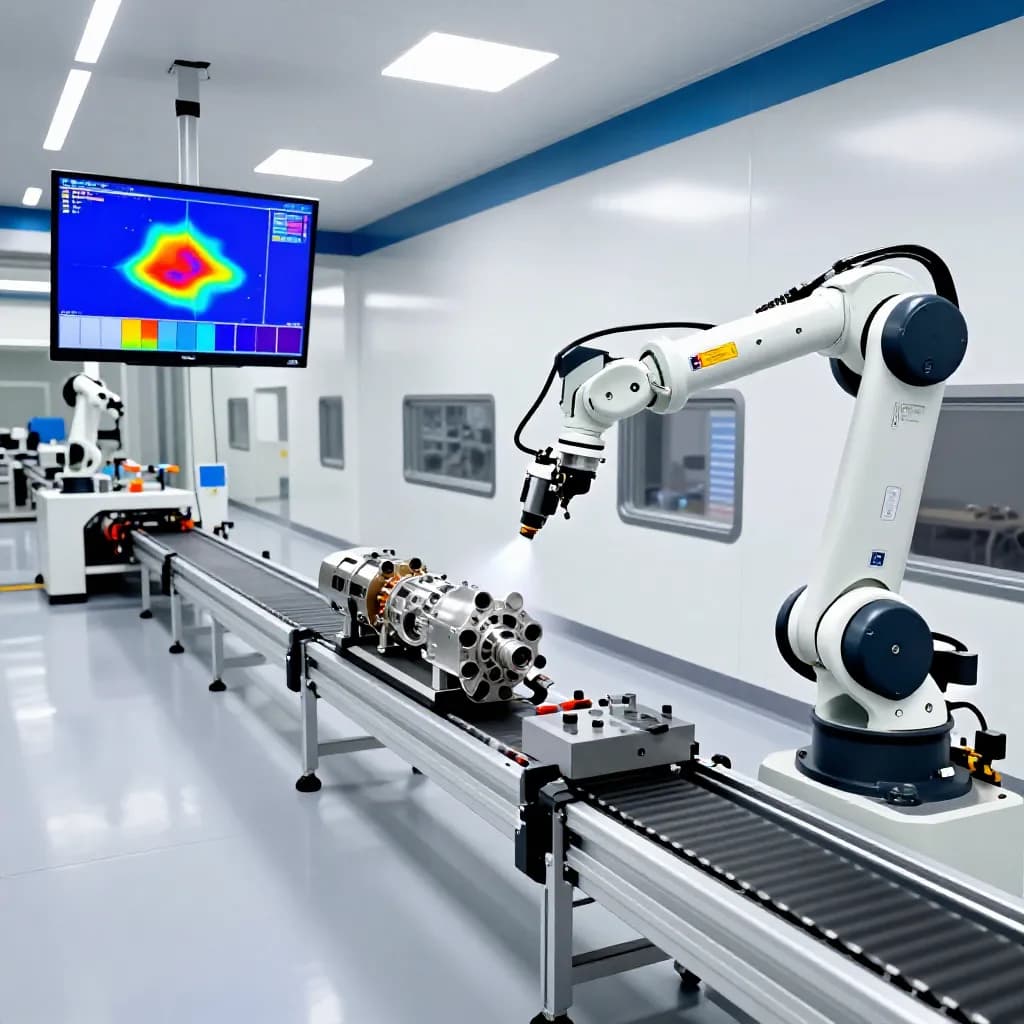
The global powder coating market continues to grow at rates exceeding the broader coatings industry, driven by ongoing conversion from liquid paint to powder in established applications and by the opening of entirely new markets through technological innovation. Automotive body panels, heat-sensitive substrates, functional coatings, and smart surfaces represent growth frontiers that could significantly expand the addressable market for powder coating technology.
Ready to Start Your Project?
From one-off customs to 15,000-part production runs — get precise pricing in 24 hours.
On This Page
Powder Coating at an Inflection Point
However, growth is not guaranteed. The industry faces challenges including raw material supply constraints, energy cost volatility, skilled labor shortages, and competition from alternative technologies such as UV-cure liquid coatings, physical vapor deposition, and advanced anodizing processes. Navigating these challenges while capitalizing on emerging opportunities requires strategic investment in research and development, manufacturing capability, and workforce development. This article examines the key technology trends, market drivers, and strategic imperatives that will define the powder coating industry's trajectory through the end of the decade.
Emerging Resin Chemistries and Bio-Based Materials
The resin chemistry landscape for powder coatings is undergoing its most significant transformation since the introduction of TGIC-free crosslinkers. Bio-based resins — polyesters, epoxies, and polyurethanes derived wholly or partially from renewable feedstocks including plant oils, sugars, lignin, and bio-derived monomers — are moving from laboratory curiosities to commercial products. Several major resin suppliers have launched bio-based polyester resins for powder coatings with renewable content of 20-50%, and research programs are targeting 70-100% bio-based formulations.
The motivation for bio-based resins extends beyond environmental marketing. As carbon pricing mechanisms expand globally, the embodied carbon of coating materials becomes a direct cost factor. Bio-based resins that sequester atmospheric carbon during feedstock growth can achieve significantly lower carbon footprints than petrochemical equivalents, providing both environmental and economic advantages in a carbon-constrained economy. Lifecycle assessment data for bio-based powder coatings is being developed to quantify these advantages and support Environmental Product Declaration development.
Beyond bio-based materials, novel resin architectures are enabling new performance capabilities. Vitrimers — polymer networks with dynamic covalent bonds that can be rearranged under specific conditions — offer the potential for powder coatings that can be reshaped, repaired, or recycled after curing. Supramolecular polymers with non-covalent crosslinks provide self-healing capability through reversible bond reformation. These advanced chemistries are still primarily in the research phase for powder coating applications, but they represent the long-term direction of resin development toward coatings that are not only high-performing but also adaptable, repairable, and recyclable.
Automation and Digital Manufacturing Transformation
The digitalization of powder coating operations will accelerate dramatically through 2030, driven by the maturation of Industry 4.0 technologies and the increasing availability of affordable sensors, computing power, and AI algorithms. The vision of the fully autonomous powder coating line — where parts are identified, spray programs are generated, quality is inspected, and process parameters are optimized without human intervention — is moving from concept to reality.
Robotic powder application will become the standard rather than the exception for medium and large coating operations. Advances in 3D vision systems, real-time path planning algorithms, and collaborative robot technology are making robotic coating accessible to smaller operations and more adaptable to mixed-model production. The integration of digital twin technology with robotic application enables virtual commissioning of new coating programs, reducing setup time and material waste during product changeovers.
AI-driven process optimization will move beyond quality inspection to encompass the entire coating process. Machine learning models trained on historical production data will predict optimal process parameters for each part type, anticipate quality deviations before they occur, and continuously refine their predictions as new data accumulates. The combination of predictive quality, predictive maintenance, and adaptive process control will enable coating operations to approach theoretical limits of quality, efficiency, and uptime. For the workforce, this transformation means a shift from manual operation and visual inspection toward data analysis, system management, and continuous improvement — requiring new skills and training programs that the industry must develop proactively.
Sustainability Targets and Regulatory Drivers
Sustainability will be the dominant strategic driver for the powder coating industry through 2030. The Paris Agreement targets, corporate net-zero commitments, and expanding ESG reporting requirements are creating pressure throughout the value chain to measure, reduce, and report environmental impacts with unprecedented rigor. Powder coating's inherent environmental advantages — zero VOC, high material efficiency, no hazardous waste — provide a strong foundation, but the industry must build on this foundation with measurable improvements in energy efficiency, carbon intensity, and circular economy performance.
Energy consumption in curing ovens remains the largest environmental impact of powder coating operations, and reducing this impact is the highest-priority sustainability opportunity. The pathway includes low-temperature cure formulations that reduce oven energy by 20-35%, infrared and UV curing technologies that provide faster, more efficient energy transfer, electric ovens powered by renewable electricity that eliminate scope 1 emissions from gas combustion, and heat recovery systems that capture and reuse waste heat from the curing process.
Regulatory developments will continue to favor powder coating over liquid paint. Tightening VOC emission limits in the EU, China, and other major markets are making solvent-based liquid painting increasingly expensive and operationally complex, accelerating conversion to powder. Extended producer responsibility regulations that hold manufacturers accountable for end-of-life product management favor powder-coated products that are compatible with metal recycling. Carbon border adjustment mechanisms that impose tariffs on carbon-intensive imports create incentives for lower-carbon manufacturing processes, benefiting powder coating operations that have invested in energy efficiency and renewable energy.
Expanding Application Frontiers
The addressable market for powder coating will expand significantly through 2030 as technological barriers to new applications are overcome. The automotive sector represents the largest growth opportunity, with powder coating penetration of body panels expected to increase substantially as thin film technology, powder-on-powder systems, and appearance quality improvements make powder a viable alternative to liquid paint for Class A automotive surfaces. The transition to electric vehicles accelerates this trend, as EV manufacturers — many of which are new entrants without legacy liquid paint infrastructure — are more willing to adopt powder coating for body finishing.
Heat-sensitive substrates — wood, MDF, plastics, and composites — represent another major growth frontier. Low-temperature cure and UV-cure powder coating technologies are enabling powder finishing of these materials with quality and economics that compete with liquid coating alternatives. The furniture, building products, and consumer electronics industries are adopting powder coating for these substrates at increasing rates, driven by environmental regulations, consumer demand for sustainable products, and the superior finish quality achievable with powder.
Functional coatings — thermal management, EMI shielding, antimicrobial, anti-icing, and sensor-integrated surfaces — are creating entirely new market segments for powder coating technology. As the understanding of surface-function relationships deepens and formulation tools become more sophisticated, the range of engineering problems addressable through powder coatings will continue to expand. The convergence of functional performance with decorative finish in a single coating application creates value propositions that competing technologies cannot easily match.
Market Growth Projections and Regional Dynamics
The global powder coating market is projected to grow at a compound annual growth rate of 5-7% through 2030, reaching a market value significantly exceeding current levels. This growth rate outpaces the broader coatings industry, reflecting ongoing market share gains from liquid paint conversion and expansion into new applications and substrates.
Asia-Pacific will remain the largest and fastest-growing regional market, driven by industrialization, urbanization, and tightening environmental regulations in China, India, and Southeast Asia. China's aggressive VOC emission reduction targets are accelerating the conversion from liquid paint to powder coating across automotive, appliance, furniture, and general industrial sectors. India's growing manufacturing base and increasing environmental awareness are creating strong demand for powder coating technology and infrastructure.
Europe will continue to lead in technology development and premium applications, with the architectural, automotive, and functional coating segments driving growth. The EU's Green Deal and Fit for 55 legislative package create a regulatory environment that strongly favors powder coating's environmental profile. North America will see growth driven by infrastructure investment — including EV charging stations, renewable energy equipment, and transportation infrastructure — and by the reshoring of manufacturing that brings coating operations back to domestic facilities.
Emerging markets in Africa, the Middle East, and Latin America represent longer-term growth opportunities as industrialization and environmental regulation create demand for modern coating technologies. The powder coating industry's ability to serve these diverse regional markets with locally relevant products, technical support, and training will determine its success in capturing global growth opportunities.
Workforce Development and Skills Evolution
The powder coating industry faces a workforce challenge that will intensify through 2030. The current workforce is aging, with experienced operators, formulators, and application specialists approaching retirement. Simultaneously, the skills required for modern powder coating operations are evolving from manual craft skills toward digital literacy, data analysis, and systems management as automation and Industry 4.0 technologies transform the production environment.
Addressing this challenge requires a multi-pronged approach. Industry associations and educational institutions must develop training programs that prepare new entrants for the digital coating factory, covering not only traditional coating science and application technique but also sensor technology, data analytics, robotic programming, and quality management systems. Apprenticeship and internship programs that combine classroom learning with hands-on experience in modern coating facilities provide the most effective pathway for developing skilled coating professionals.
Knowledge management systems that capture the expertise of experienced professionals — through documented procedures, decision support tools, and AI-assisted troubleshooting systems — help preserve institutional knowledge as veteran employees retire. The integration of augmented reality technology into training and operations — where operators see real-time process data, quality alerts, and procedural guidance overlaid on their view of the coating line — can accelerate skill development and reduce the learning curve for new employees.
Diversity and inclusion initiatives are also essential for expanding the talent pool. The coating industry has historically drawn from a narrow demographic, and broadening recruitment to include underrepresented groups — through targeted outreach, inclusive workplace practices, and visible career development pathways — is both a social imperative and a practical necessity for meeting workforce needs in a competitive labor market.
Strategic Imperatives for Industry Stakeholders
The powder coating industry's trajectory through 2030 will be shaped by the strategic decisions made by its key stakeholders — resin and raw material suppliers, powder manufacturers, equipment makers, coating applicators, and end users. Several strategic imperatives emerge from the technology and market trends examined in this article.
For powder manufacturers, investment in R&D capability is essential to develop the next generation of products — bio-based formulations, functional coatings, thin film systems, and smart coatings — that will drive market expansion. Building digital color management and formulation platforms that serve global customers with consistent quality and rapid response will be a competitive differentiator. Sustainability leadership — through carbon footprint reduction, circular economy initiatives, and transparent ESG reporting — will increasingly influence customer purchasing decisions.
For coating applicators, the imperative is digital transformation. Investing in automation, sensor infrastructure, and data analytics capabilities will improve quality, reduce costs, and position the operation for the increasingly data-driven requirements of major OEM customers. Developing expertise in new substrates — wood, plastics, composites, and 3D printed parts — expands the addressable market and reduces dependence on traditional metal coating volumes.
For end users and specifiers, the imperative is to recognize powder coating not just as a finishing process but as an engineering tool that can deliver functional performance, sustainability credentials, and lifecycle value. Engaging with powder coating suppliers early in the product design process — rather than specifying coatings as an afterthought — enables the full potential of modern powder coating technology to be realized. The future of powder coating is not simply more of the same — it is a fundamentally expanded technology platform that will play an increasingly central role in sustainable, high-performance manufacturing.
Frequently Asked Questions
How fast is the powder coating market growing?
The global powder coating market is projected to grow at 5-7% compound annual growth rate through 2030, outpacing the broader coatings industry. Growth is driven by conversion from liquid paint, expansion into new substrates and applications, and increasing demand in Asia-Pacific markets. The market value is expected to increase significantly from current levels.
What are the biggest technology trends in powder coating?
The most significant technology trends include bio-based and sustainable resin chemistries, low-temperature and UV-cure systems for heat-sensitive substrates, thin film application for automotive body panels, nano-ceramic hybrid coatings for enhanced performance, Industry 4.0 automation and AI-driven quality control, and functional coatings that deliver engineering performance beyond decoration.
Will powder coating replace liquid paint in automotive manufacturing?
Powder coating is gaining share in automotive finishing, particularly for clear coats, primers, and under-body coatings. Full replacement of liquid paint for body panels is progressing as thin film technology and appearance quality improve. Electric vehicle manufacturers, without legacy liquid paint infrastructure, are more likely to adopt all-powder finishing. A significant increase in automotive powder coating penetration is expected by 2030.
How will sustainability regulations affect the powder coating industry?
Sustainability regulations will strongly favor powder coating. Tightening VOC limits make liquid painting more expensive, accelerating conversion to powder. Carbon pricing mechanisms incentivize energy-efficient coating processes. Extended producer responsibility regulations favor powder-coated products compatible with recycling. ESG reporting requirements create demand for the quantified environmental data that powder coating operations can provide.
What skills will powder coating professionals need in the future?
Future powder coating professionals will need a combination of traditional coating science knowledge and digital skills including data analytics, sensor technology, robotic programming, and quality management systems. As Industry 4.0 transforms coating operations, the workforce will shift from manual operation toward system management, data interpretation, and continuous improvement roles.
Are bio-based powder coatings a realistic near-term development?
Yes. Bio-based powder coatings with 20-50% renewable content are already commercially available from several major manufacturers, with performance comparable to conventional petrochemical-based formulations. Research programs are targeting higher bio-based content levels. As carbon pricing expands and sustainability requirements tighten, bio-based powder coatings will become increasingly competitive and widely adopted.
Ready to Start Your Project?
From one-off customs to 15,000-part production runs — get precise pricing in 24 hours.