Powder coating damage is inevitable over time, whether from impact, abrasion, environmental exposure, or installation handling. The key to effective repair is accurately assessing the damage and selecting the appropriate repair method. Not every defect requires the same approach, and choosing the wrong method can make the situation worse.
Guides
Powder Coating Repair Field Guide: Touch-Up Methods, Stripping, and Color Matching
Sundial Powder Coating·April 23, 2026·12 min
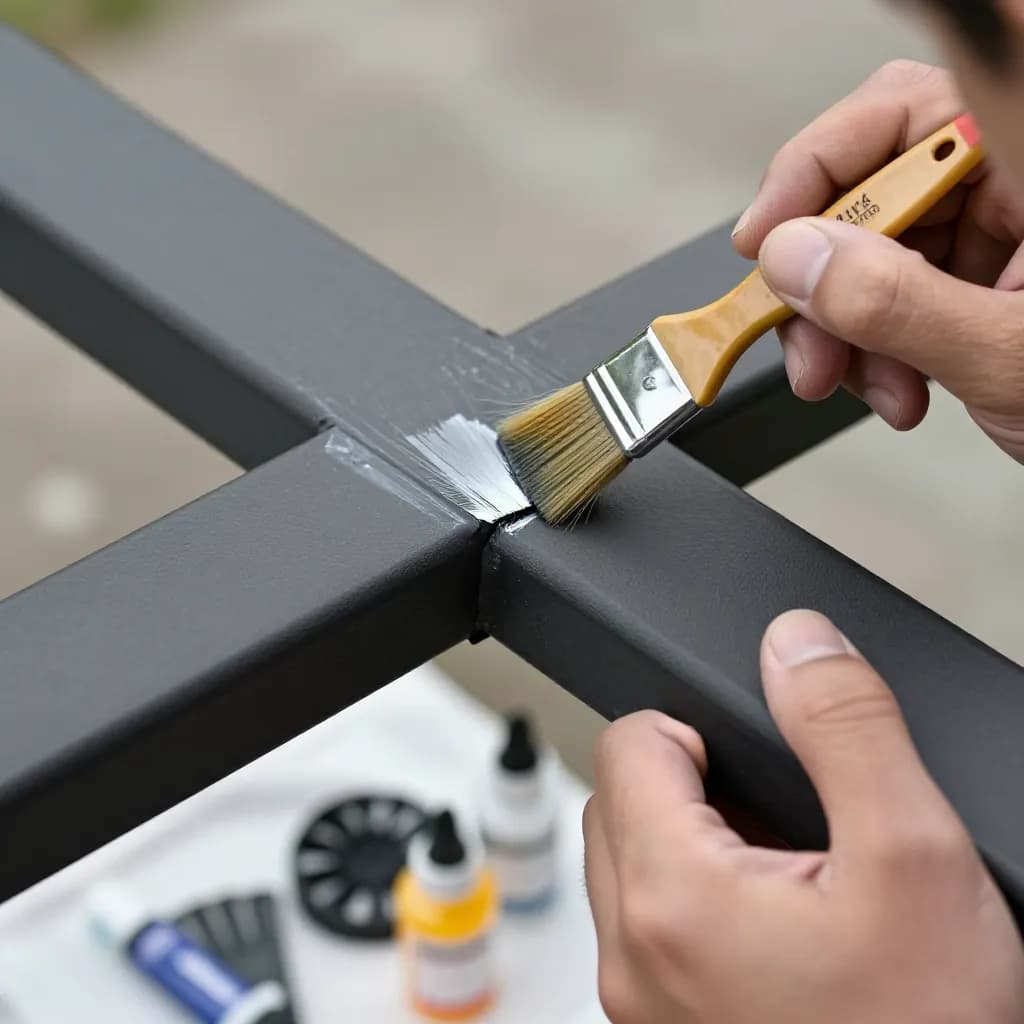
Damage to powder coated surfaces falls into several categories. Surface-level damage includes scratches, scuffs, and abrasion marks that affect the coating's appearance but have not penetrated through to the substrate. These are primarily cosmetic concerns, though deep scratches can become corrosion initiation sites on ferrous substrates if left untreated.
Ready to Start Your Project?
From one-off customs to 15,000-part production runs — get precise pricing in 24 hours.
On This Page
Understanding Powder Coating Damage and Repair Options
Through-coating damage includes chips, gouges, and impact marks that have broken through the powder coating to expose the bare substrate. These require prompt attention because exposed metal, particularly steel and iron, will begin corroding quickly when exposed to moisture and oxygen. The urgency of repair depends on the substrate material and the environment.
Systemic coating failure, including widespread adhesion loss, extensive chalking, or large-area peeling, is beyond the scope of field repair. These conditions indicate that the coating has reached end of life or that the original application had fundamental problems. Full stripping and recoating is the only effective solution for systemic failure.
This guide focuses on practical field repair techniques for surface-level and through-coating damage that can be addressed without removing the item from service. It covers touch-up methods, repair materials, color matching, and the decision framework for determining when field repair is appropriate versus when professional stripping and recoating is needed.
Touch-Up Paint Methods for Minor Damage
Touch-up paint is the most common field repair method for powder coating damage. While touch-up paint cannot perfectly replicate the appearance and performance of the original powder coating, it provides effective corrosion protection and acceptable cosmetic results for localized damage.
The most widely available touch-up option is air-dry liquid touch-up paint matched to the original powder coating color. Major powder coating manufacturers offer touch-up paints in their standard color ranges, and custom color matching is available for non-standard colors. These paints are typically applied with a small brush, and they cure at ambient temperature rather than requiring oven baking.
For the best results, surface preparation before touch-up is critical. Clean the damaged area thoroughly with isopropyl alcohol to remove any dirt, oil, or loose coating material. If the substrate is exposed and any rust has formed, remove it with fine sandpaper or a rust converter product. Feather the edges of the surrounding intact coating with fine-grit sandpaper to create a smooth transition zone.
Apply the touch-up paint in thin layers, building up gradually rather than trying to fill the damage in a single heavy coat. Multiple thin coats produce a smoother finish and better adhesion than one thick application. Allow each coat to dry according to the manufacturer's instructions before applying the next. Typically two to three coats are needed to build sufficient film thickness.
For very small chips and scratches, a fine-tipped artist's brush or a toothpick provides better control than a standard paint brush. The goal is to fill the damaged area without overlapping excessively onto the surrounding intact coating. Some touch-up paints are available in pen-style applicators that make precise application easier.
Touch-up repairs will always be visible on close inspection because the liquid paint has a different texture and sheen than the original powder coating. However, a well-executed touch-up is barely noticeable from normal viewing distances and provides effective protection against corrosion.
Aerosol and Spray Touch-Up for Larger Areas
When damage covers a larger area than a brush can practically address, aerosol spray touch-up paint offers a faster and more uniform repair option. Aerosol touch-up is appropriate for areas roughly the size of a hand or larger, where brush application would leave visible brush marks and take excessive time.
Color-matched aerosol touch-up paints are available from powder coating manufacturers and specialty coating suppliers. Custom aerosol fills can be produced to match virtually any powder coating color, though the match will never be perfect due to differences between liquid and powder coating technologies. The liquid paint may appear slightly different in color, gloss, or texture compared to the original powder finish.
Surface preparation for aerosol touch-up follows the same principles as brush application but covers a larger area. Clean the entire repair zone with isopropyl alcohol. Sand the damaged area and feather the edges of surrounding intact coating with 320 to 400 grit sandpaper. Mask off adjacent areas that should not receive overspray using automotive masking tape and paper or plastic sheeting.
Apply the aerosol in light, even passes at a distance of 8 to 12 inches from the surface. Start spraying before reaching the repair area and continue past it to avoid heavy spots at the edges. Build up coverage gradually with multiple light coats rather than one heavy coat. Three to four light coats typically provide adequate coverage and film build.
Allow adequate flash time between coats, usually 5 to 10 minutes depending on temperature and humidity. After the final coat, remove masking promptly before the paint fully cures to avoid pulling up the fresh paint at tape edges. Allow the repair to cure fully, typically 24 to 48 hours, before exposing it to cleaning, weather, or mechanical contact.
Aerosol repairs are more visible than the original powder coating but provide good corrosion protection and acceptable appearance for maintenance repairs. They are widely used for architectural, automotive, and industrial touch-up work.
When to Strip and Recoat Instead of Repair
Field repair has practical limits, and recognizing when stripping and recoating is the better option saves time, money, and frustration. Attempting to repair damage that exceeds the capabilities of touch-up methods produces poor results and may delay the proper solution.
Stripping and recoating is the appropriate choice when damage covers more than 10 to 15 percent of the total surface area. At this point, the cumulative appearance of multiple touch-up repairs becomes more objectionable than the original damage, and the time spent on individual repairs exceeds the time needed for a complete recoat.
Widespread adhesion failure requires stripping and recoating regardless of the area affected. If the coating is peeling, flaking, or lifting from the substrate in multiple locations, the bond between coating and substrate has been compromised. Touch-up paint applied over a coating with poor adhesion will fail along with the underlying coating.
Significant substrate corrosion beneath the coating also demands stripping and recoating. Surface rust at a chip site can be addressed with touch-up, but if corrosion has spread beneath the surrounding intact coating, creating blisters or undercutting, the affected coating must be removed to access and treat the corroded substrate properly.
Color-critical applications where appearance uniformity is essential may require recoating even for relatively minor damage. Touch-up repairs are always visible on close inspection, and for high-visibility architectural facades, showroom displays, or premium automotive finishes, the only acceptable repair may be a complete recoat.
The stripping method depends on the substrate and coating type. Chemical stripping with methylene chloride-free strippers is effective for most powder coatings on metal substrates. Media blasting with appropriate abrasive removes coating and surface corrosion simultaneously. Burn-off ovens thermally decompose the coating at high temperature and are used primarily for industrial parts and hooks. Each method has advantages and limitations that should be matched to the specific situation.
Field Repair Kits: What to Include and How to Use Them
A well-stocked field repair kit enables prompt response to powder coating damage, preventing corrosion from gaining a foothold while the damage awaits repair. For facilities, fleets, and maintenance teams responsible for significant quantities of powder coated assets, having repair materials on hand eliminates delays.
The essential components of a powder coating field repair kit include color-matched touch-up paint in both brush-on and aerosol formats, isopropyl alcohol for surface cleaning, fine-grit sandpaper in 320 and 400 grits, a rust converter or rust-inhibiting primer for ferrous substrates, masking tape, clean lint-free cloths, disposable gloves, and a small container for mixing or thinning.
For organizations with multiple powder coating colors in service, the kit should include touch-up paint for each color. Label each container clearly with the color code, powder manufacturer, and the assets it corresponds to. Touch-up paints have a limited shelf life, typically 12 to 24 months, so check expiration dates regularly and replace expired products.
A rust-inhibiting primer is a critical component for repairing damage on steel and iron substrates. When the substrate is exposed and any corrosion is present, applying a thin coat of primer before the touch-up paint provides an additional layer of corrosion protection. Zinc-rich primers are particularly effective for this purpose.
Include a simple repair procedure card in the kit that outlines the step-by-step process for common repair scenarios. This ensures consistent repair quality regardless of who performs the work. The procedure should cover surface preparation, primer application when needed, touch-up paint application, and cure time requirements.
Store the field repair kit in a cool, dry location away from direct sunlight and temperature extremes. Aerosol cans and liquid paints are sensitive to temperature, and storage outside the recommended range can affect their performance. Check the kit quarterly to ensure all materials are present, within their shelf life, and in usable condition.
Color Matching Challenges and Solutions
Achieving an acceptable color match between touch-up paint and the original powder coating is one of the most challenging aspects of field repair. Perfect matches are rarely possible due to fundamental differences between liquid and powder coating technologies, but several strategies can minimize the visible difference.
The first step in color matching is identifying the original powder coating color precisely. Check project records, purchase orders, or the original coating specification for the powder manufacturer name and color code. Many powder coated products have color information on labels, tags, or documentation that accompanied the original item. If records are unavailable, the powder manufacturer may be able to identify the color from a sample chip.
Weathering and UV exposure change the color of powder coatings over time, so matching to the original color specification may not match the current appearance of the aged coating. For the best visual match, the touch-up paint should be matched to the coating's current color rather than its original specification. This requires providing a sample of the current coating condition to the paint supplier.
To obtain a color sample, find a protected area of the coating that has the same exposure history as the damaged area. A small chip removed from a hidden location, or a color reading taken with a portable spectrophotometer, provides the most accurate reference. Photographs are unreliable for color matching because camera settings, lighting, and screen calibration all affect color reproduction.
Gloss level is as important as color for a visually acceptable match. A touch-up paint that matches the color perfectly but has the wrong gloss level will still be conspicuous. Specify the gloss level when ordering touch-up paint, and verify it against the existing coating before applying the repair.
Metallic, textured, and special-effect powder coatings are the most difficult to match with liquid touch-up paint. The metallic flake orientation, texture pattern, and visual effects created during powder application and curing cannot be replicated with a brush or aerosol. For these finishes, touch-up repairs should be considered temporary protection until recoating can be scheduled.
Repair Techniques for Specific Damage Types
Different types of damage require tailored repair approaches. Understanding the specific technique for each damage type produces better results than applying a generic repair method to every situation.
For stone chips and small impact damage on automotive and architectural surfaces, the pen-style touch-up applicator provides the best results. Clean the chip with isopropyl alcohol, apply a tiny drop of primer if the substrate is exposed, allow it to dry, then fill the chip with touch-up paint using the pen tip. Build up in thin layers until the paint is level with the surrounding coating. For a smoother finish, the cured touch-up can be carefully wet-sanded with 2000 grit sandpaper and polished.
Scratches that have not penetrated through the coating can sometimes be improved without paint. A light application of automotive polishing compound with a soft cloth can reduce the visibility of fine scratches by smoothing the disturbed coating surface. This works best on gloss finishes and is ineffective on matte or textured coatings.
Edge damage where the coating has chipped away from corners, edges, or cut ends requires careful preparation because these areas typically have thinner coating coverage to begin with. Clean the exposed edge, apply rust converter if needed, then build up touch-up paint in multiple thin coats. Edge repairs are particularly important on ferrous substrates because edges are the most vulnerable points for corrosion initiation.
Weld burn and heat damage from field welding or cutting near powder coated surfaces requires removing the discolored and damaged coating back to sound material before touch-up. The heat-affected zone around a weld can extend several inches, and the coating in this zone may have lost adhesion even if it appears intact. Sand the entire affected area, prime exposed substrate, and apply touch-up paint over the full prepared area.
Fastener hole damage from drilling, bolting, or screw installation should be repaired immediately after the fastener is installed. Apply touch-up paint to any exposed substrate around the fastener, including the inside of the hole if accessible. This prevents corrosion from initiating at the fastener penetration, which is a common failure point.
Quality Assessment and Documentation of Repairs
After completing a field repair, a brief quality assessment ensures the repair meets acceptable standards and provides documentation for maintenance records. This step is often skipped but adds significant value to the repair process.
Visually inspect the repair from normal viewing distance, which is typically 3 to 5 feet for architectural surfaces and arm's length for automotive and industrial parts. The repair should blend reasonably well with the surrounding coating at this distance. Minor differences in texture and sheen are acceptable for maintenance repairs. If the repair is conspicuously visible from normal viewing distance, consider whether additional coats or technique adjustments could improve the result.
Check that the touch-up paint has been applied with adequate film thickness by gently pressing a fingernail into the cured repair. The paint should feel solid and resist indentation. If it feels soft or thin, additional coats are needed. Insufficient film thickness compromises the corrosion protection that is the primary purpose of the repair.
Verify that the repair extends slightly beyond the original damage boundary onto the surrounding intact coating. This overlap ensures that there are no gaps between the touch-up paint and the original coating where moisture could penetrate. The feathered edge should transition smoothly without a visible ridge or step.
Document the repair with a photograph, the date, the location on the asset, the products used, and the name of the person who performed the repair. This documentation serves multiple purposes: it tracks the condition of the asset over time, provides evidence of maintenance for warranty purposes, and helps identify recurring damage patterns that might indicate a systemic problem.
Schedule a follow-up inspection of the repair after 30 to 90 days to verify that the touch-up paint has maintained adhesion and that no corrosion has developed beneath or around the repair. Early detection of repair failure allows prompt corrective action before the substrate is compromised.
Frequently Asked Questions
Can touch-up paint match powder coating perfectly?
No. Touch-up paint is a liquid coating that will always differ slightly from the original powder coating in texture, sheen, and sometimes color. However, a well-executed touch-up is barely noticeable from normal viewing distances and provides effective corrosion protection. Metallic and textured finishes are the most difficult to match.
When should I strip and recoat instead of touching up?
Strip and recoat when damage covers more than 10 to 15 percent of the surface area, when adhesion failure is widespread, when corrosion has spread beneath the coating, or when appearance uniformity is critical. Touch-up is appropriate for isolated chips, scratches, and small damaged areas.
How long does touch-up paint last compared to original powder coating?
Touch-up paint typically lasts 3 to 7 years depending on the product quality, application technique, and environmental exposure. This is shorter than the original powder coating because liquid paint achieves thinner film build and lacks the cross-linked density of oven-cured powder. Plan to re-touch or recoat as needed.
Do I need to prime before applying touch-up paint?
Priming is recommended whenever the substrate is exposed, especially on steel and iron. A zinc-rich or rust-inhibiting primer provides additional corrosion protection beneath the touch-up paint. If the damage is only in the coating surface and the substrate is not exposed, primer is not necessary.
How do I find the color code for my powder coating?
Check project records, purchase orders, product labels, or the original coating specification for the powder manufacturer and color code. If records are unavailable, contact the powder manufacturer with a sample chip for identification. For weathered coatings, match to the current color rather than the original specification for the best visual result.
Ready to Start Your Project?
From one-off customs to 15,000-part production runs — get precise pricing in 24 hours.