The RAL color system is the most widely used color reference standard in the powder coating industry worldwide. Developed in Germany in 1927 by the Reichsausschuss fur Lieferbedingungen, which translates to the National Committee for Delivery Terms, the RAL system was created to standardize color communication between buyers and suppliers, eliminating the ambiguity and inconsistency that plagued color specification when colors were described only by name.
Reference
Powder Coating RAL Color System Explained: Classic, Design, Effect, Specification, and Digital Tools
Sundial Powder Coating·April 22, 2026·12 min
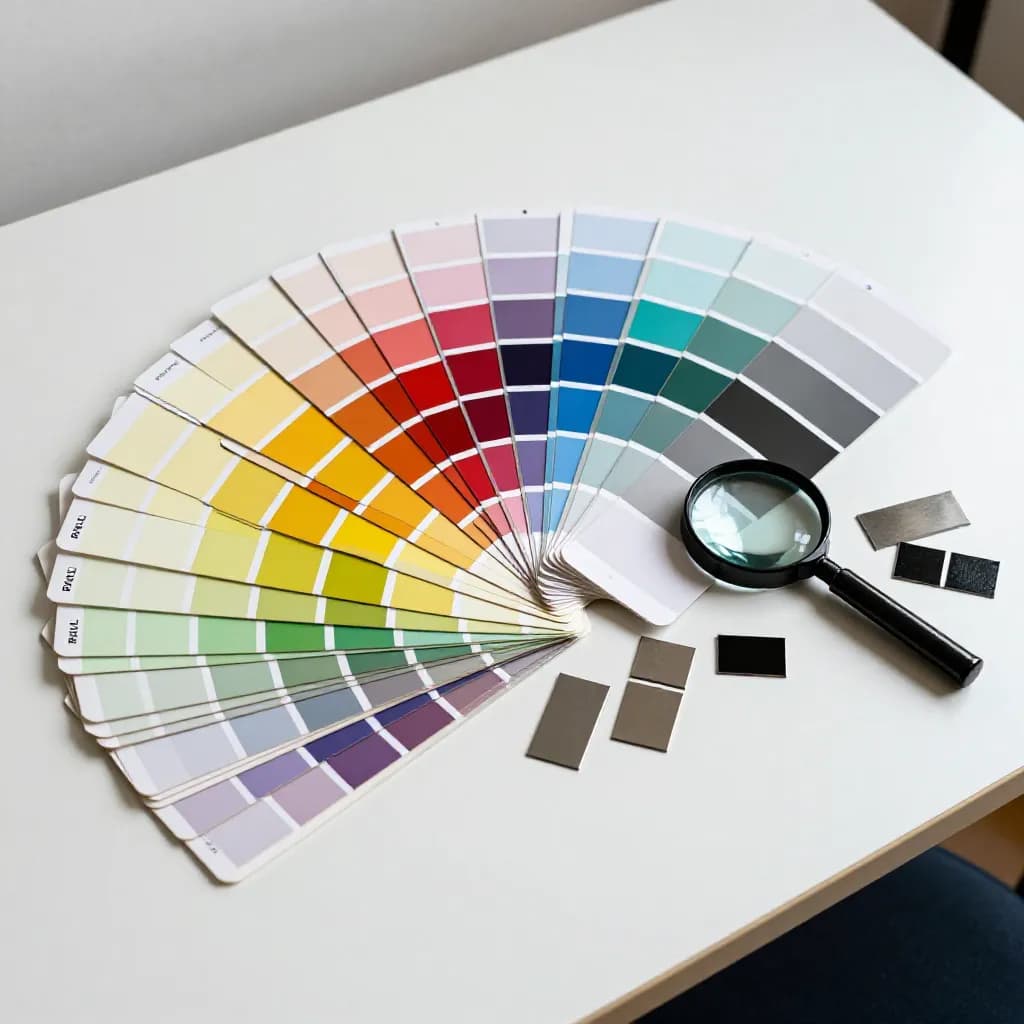
Today, the RAL system serves as the common language of color across the powder coating, paint, plastics, and building materials industries. When a specifier writes RAL 7016 on a drawing, every powder coating manufacturer, applicator, and quality inspector in the world understands exactly which color is intended. This universality is the RAL system's greatest strength and the primary reason it has maintained its dominance for nearly a century despite the emergence of competing color systems.
Ready to Start Your Project?
From one-off customs to 15,000-part production runs — get precise pricing in 24 hours.
On This Page
The RAL Color System: The Global Standard for Powder Coating
The RAL system has evolved from its original 40 colors to encompass three distinct color collections: RAL Classic, RAL Design, and RAL Effect. Each collection serves different specification needs and offers different levels of color precision and range. Understanding the structure, capabilities, and limitations of each collection is essential for effective powder coating color specification across architectural, industrial, and design applications.
RAL Classic: The Foundation Color Range
RAL Classic is the original and most widely used RAL color collection, containing 216 colors organized into a simple numerical system. Each color is identified by a four-digit number where the first digit indicates the color family: 1 for yellows, 2 for oranges, 3 for reds, 4 for violets, 5 for blues, 6 for greens, 7 for greys, 8 for browns, and 9 for whites and blacks.
The RAL Classic system's strength is its simplicity and universal recognition. Every powder coating manufacturer maintains formulations for the full RAL Classic range, and most standard colors are available from stock without custom formulation lead times. The four-digit numbering system is easy to communicate verbally, in writing, and on technical drawings, minimizing the risk of specification errors.
The most commonly specified RAL Classic colors in powder coating include RAL 9005 Jet Black, RAL 9010 Pure White, RAL 7016 Anthracite Grey, RAL 7035 Light Grey, RAL 9016 Traffic White, and RAL 7040 Window Grey. These six colors alone account for a substantial proportion of all architectural powder coating production.
Each RAL Classic color has an official name in German, English, French, Spanish, Italian, and Dutch, providing multilingual reference for international projects. However, the color names should be considered descriptive rather than definitive. The four-digit number is the authoritative identifier, and specifiers should always use the number rather than the name to avoid confusion, particularly when working across languages.
RAL Classic colors are defined as specific color coordinates in the CIE Lab* color space, with defined tolerances for acceptable variation. This mathematical definition ensures that RAL Classic colors are reproducible and verifiable using spectrophotometer measurements, providing an objective basis for quality control that subjective visual assessment cannot match.
RAL Design: Precision Color for Architects and Designers
RAL Design is a systematically structured color collection containing 1,825 colors organized according to the CIE Lab* color space. Unlike RAL Classic, which grew organically over decades with colors added as needed, RAL Design was developed as a coherent, logically structured system specifically for architects, designers, and color professionals who need precise color specification and systematic color relationships.
The RAL Design numbering system uses a seven-digit code that directly encodes the color's position in the CIE Lab* color space. The format is HHH LL CC, where HHH represents the hue angle (0-360 degrees), LL represents the lightness (0-100), and CC represents the chroma or saturation. This systematic structure means that the color's visual properties can be read directly from its code, and colors can be selected based on their mathematical relationships rather than by browsing through a random sequence.
For example, RAL 270 50 25 is a blue (hue 270) of medium lightness (50) and moderate saturation (25). Changing the lightness value while keeping the hue and chroma constant produces a lighter or darker version of the same blue. Changing the chroma value produces a more or less saturated version. This systematic approach enables designers to create coordinated color palettes with precise relationships between colors.
RAL Design is particularly valuable for architectural projects where multiple colors must be specified as a coordinated palette. The systematic structure allows designers to select colors that share specific properties, such as the same lightness level or the same saturation, creating harmonious combinations that are difficult to achieve by browsing the RAL Classic range.
The limitation of RAL Design for powder coating is that not all 1,825 colors are available as standard stock formulations from every powder manufacturer. While the most commonly specified RAL Design colors are available from stock, less common colors may require custom formulation with associated lead times and minimum order quantities. Verify availability with the powder manufacturer before specifying RAL Design colors.
RAL Effect: Metallic and Multi-Tone Colors
RAL Effect is the newest addition to the RAL color system, introduced in 2007 to address the growing demand for metallic, pearlescent, and multi-tone color references. The collection contains 490 colors divided into two groups: 420 solid colors and 70 metallic colors.
The RAL Effect solid colors are formulated using environmentally friendly pigments, with many based on natural and recycled raw materials. These colors tend to have a softer, more muted character than RAL Classic colors, reflecting contemporary design preferences for desaturated, nature-inspired tones. The RAL Effect solid range includes many colors that fill gaps in the RAL Classic palette, particularly in the earth tone, pastel, and muted color families.
The RAL Effect metallic colors provide standardized references for metallic finishes that were previously specified only through custom matching or manufacturer-specific references. These 70 metallic colors span the full hue spectrum, from silver and gold metallics through colored metallics in blue, green, red, and other hues. Having standardized metallic color references simplifies specification and quality control for metallic powder coating applications.
RAL Effect colors use a different numbering system from RAL Classic and RAL Design. Solid colors are identified by a three-digit number followed by a dash and a one or two-digit suffix, such as RAL 110-1 or RAL 340-6. Metallic colors add an M suffix, such as RAL 510-M or RAL 860-M. This distinct numbering prevents confusion between RAL Effect and RAL Classic colors.
For powder coating specification, RAL Effect metallic colors are particularly useful because they provide a common reference language for metallic finishes. Previously, specifying a metallic powder coating required either custom matching to a physical sample or referencing a specific manufacturer's product code, which limited competition and complicated quality verification. RAL Effect metallic references enable manufacturer-independent specification of metallic colors.
RAL Fan Decks and Physical Color References
Physical RAL color references, commonly known as fan decks, are essential tools for accurate color specification and verification in powder coating. While digital color representations are useful for initial color exploration, the final color decision should always be based on physical color standards viewed under appropriate lighting conditions.
The RAL K7 fan deck is the most widely used RAL Classic reference, presenting all 216 RAL Classic colors as small color chips in a compact, portable format. The K7 is suitable for initial color selection and general reference but is too small for accurate color evaluation of large-area applications. The RAL K5 fan deck presents the same colors as larger chips with either a semi-matte or high-gloss surface, providing a more representative impression of how the color will appear at architectural scale.
The RAL Design fan deck presents the full 1,825-color RAL Design range organized by hue, with each page showing a systematic progression of lightness and chroma values. This format makes it easy to explore color relationships and select coordinated palettes. The RAL Design fan deck is an essential tool for architects and designers working with the RAL Design system.
The RAL Effect fan deck presents both the solid and metallic RAL Effect colors. The metallic color chips are particularly valuable because metallic colors cannot be accurately represented in print or on screen, making physical samples the only reliable reference for metallic color specification.
It is important to understand that RAL fan deck chips represent the target color but are not perfect references. Fan deck chips are produced using printing or coating processes that may not exactly match the appearance of a powder-coated surface. The substrate, surface texture, and gloss level of a fan deck chip differ from those of a powder-coated metal component. For critical color decisions, always evaluate actual powder-coated sample panels rather than relying solely on fan deck chips.
RAL fan decks should be replaced periodically because the color chips can fade, yellow, or shift over time due to light exposure and handling. RAL recommends replacing fan decks every two to three years to ensure accurate color reference.
Digital Color Tools and RAL Digital
Digital color tools have become increasingly important for color specification workflows, enabling designers to explore, compare, and communicate colors using software and digital devices. RAL offers several digital tools that complement physical fan decks and sample panels.
RAL Digital is the official digital color data product, providing precise CIE Lab* color values, sRGB approximations, and other color data for all RAL colors across all three collections. This data enables accurate color representation in CAD software, BIM models, rendering applications, and digital design tools. RAL Digital data is licensed for use in professional design software and is integrated into many popular architectural and design applications.
The RAL iColours app provides mobile access to the RAL color collections, allowing designers to browse colors, compare options, and identify RAL colors from photographs using the device camera. While the app is useful for initial color exploration and on-site color identification, the accuracy of color representation on mobile device screens is limited by the device's display technology and calibration.
Spectrophotometer integration with RAL color data enables objective color measurement and verification in the powder coating production process. By measuring a coated sample with a spectrophotometer and comparing the measured values against the RAL color data, quality inspectors can determine whether the coating meets the specified color tolerance. This objective measurement approach is more reliable than visual assessment, particularly for colors that are susceptible to metamerism.
BIM integration of RAL color data allows architects to specify powder coating colors within their building information models, ensuring that color information flows through the design, specification, and procurement process without manual transcription errors. Several BIM software platforms include RAL color libraries, and custom RAL color data can be imported into most BIM systems.
Despite the utility of digital tools, they should supplement rather than replace physical color evaluation. No screen or projector can accurately reproduce the appearance of a powder-coated surface, particularly for metallic, textured, or high-gloss finishes. Digital tools are valuable for narrowing color options and communicating specifications, but final color approval should always be based on physical coated samples.
How to Specify RAL Colors for Powder Coating
Effective RAL color specification for powder coating requires more than simply writing a RAL number on a drawing. A complete color specification includes the RAL code, gloss level, texture, performance standard, and quality verification requirements.
Always use the full RAL code including the collection prefix when specifying colors outside RAL Classic. Write RAL Classic 7016 or RAL Design 270 50 25 or RAL Effect 510-M to avoid any ambiguity about which collection the color belongs to. For RAL Classic colors, the four-digit number alone is generally sufficient because it is the most widely recognized system.
Specify the gloss level as a numerical value measured at 60 degrees, with an acceptable tolerance range. For example, specify 30 plus or minus 5 gloss units at 60 degrees for a satin finish. Do not rely on descriptive terms like matte, satin, or gloss, which are interpreted differently across the industry.
If a textured finish is required, specify the texture type and provide a physical reference panel. RAL color standards are defined for smooth surfaces, and the appearance of a RAL color can change significantly when applied in a textured formulation.
Reference the applicable performance standard for the application environment. Specify Qualicoat Class 1, 2, or 3 for European architectural applications, or AAMA 2603, 2604, or 2605 for North American projects. The performance standard determines the resin chemistry, UV stabilizer package, and testing requirements.
Define the acceptable color tolerance using Delta E values. For standard commercial applications, Delta E less than 2.0 is typical. For architectural applications where multiple components must match, Delta E less than 1.0 is recommended. For critical color-match applications, Delta E less than 0.5 may be specified. Include the Delta E calculation method, either CIE76 or CIEDE2000, as different methods produce different values for the same color difference.
Require spectrophotometer verification of production batches against an approved reference panel. Specify that the coater must retain approved reference panels for the duration of the project and that color measurements must be documented and available for review.
Beyond RAL: Other Color Systems Used in Powder Coating
While RAL is the dominant color system in powder coating, several other color reference systems are used in specific markets, industries, and regions. Understanding these alternatives helps specifiers work effectively across different contexts.
NCS, the Natural Colour System, is widely used in Scandinavia and increasingly across Europe for architectural color specification. NCS describes colors based on their visual similarity to six elementary colors: white, black, yellow, red, blue, and green. The NCS notation system is intuitive for designers because it describes how a color looks rather than its physical properties. Powder coating manufacturers can formulate to NCS references, though NCS colors are typically custom-matched rather than available from stock.
Pantone is the dominant color system in the graphic design and printing industries and is frequently used as a brand color reference. Pantone colors are defined for printed media and do not translate directly to powder coating, but they provide useful physical color standards for custom matching. When specifying powder coating from a Pantone reference, provide the physical Pantone chip rather than the Pantone number alone, as the printed chip is the authoritative reference.
BS 381C and BS 4800 are British Standard color systems used in the United Kingdom for government, military, and institutional color specification. BS 381C defines colors for identification, coding, and special purposes, while BS 4800 provides a broader range of colors for building and decorative purposes. These systems are less commonly used internationally but remain relevant for UK government and defense projects.
Federal Standard 595 is the United States government color system used for military and federal procurement. It defines colors using a five-digit code and is the authoritative reference for US military equipment colors. Powder coating manufacturers serving defense contracts must be able to formulate to Federal Standard 595 references.
Munsell is a color system based on three independent dimensions of color: hue, value (lightness), and chroma (saturation). While less commonly used for direct powder coating specification, the Munsell system is important in soil science, archaeology, and other fields where powder-coated equipment must match specific environmental color references.
Regardless of the color system used, the specification principles remain the same: provide a precise color reference, define the gloss level, specify the performance standard, and require objective color verification through spectrophotometer measurement.
Frequently Asked Questions
What is the difference between RAL Classic and RAL Design?
RAL Classic contains 216 colors in a simple four-digit numbering system, widely available from stock. RAL Design contains 1,825 colors organized systematically by hue, lightness, and chroma, enabling precise color relationships. RAL Design is more useful for creating coordinated palettes but may require custom formulation for less common colors.
What are RAL Effect metallic colors?
RAL Effect includes 70 standardized metallic color references spanning the full hue spectrum. These provide a common specification language for metallic powder coatings, enabling manufacturer-independent specification and quality verification of metallic finishes that previously required custom matching.
How often should RAL fan decks be replaced?
RAL recommends replacing fan decks every two to three years because color chips can fade, yellow, or shift due to light exposure and handling. Using outdated fan decks for color specification can lead to inaccurate color selection and disputes about whether the delivered coating matches the specification.
Can I specify powder coating colors using Pantone references?
Yes, powder manufacturers can custom-match to Pantone references. Provide the physical Pantone chip rather than just the number, as the printed chip is the authoritative reference. Note that Pantone colors are defined for print media and may not translate exactly to powder coating due to differences in surface properties.
What Delta E tolerance should I specify for powder coating?
For standard commercial work, Delta E less than 2.0 is typical. For architectural applications requiring component matching, specify Delta E less than 1.0. For critical brand color applications, Delta E less than 0.5 may be appropriate. Always specify the calculation method, either CIE76 or CIEDE2000.
Do digital RAL tools replace physical color samples?
No. Digital tools are valuable for color exploration and specification communication, but no screen can accurately reproduce powder coating appearance, especially for metallic, textured, or high-gloss finishes. Final color approval should always be based on physical coated sample panels evaluated under representative lighting conditions.
Ready to Start Your Project?
From one-off customs to 15,000-part production runs — get precise pricing in 24 hours.