Railway and transit systems present a unique combination of coating challenges that span the full spectrum of performance requirements — from the fire safety criticality of rolling stock interiors to the vandal resistance of station platform furniture, from the corrosion protection of track-side infrastructure to the aesthetic consistency of passenger-facing surfaces across entire transit networks. Powder coating has become an essential finishing technology for the railway industry, addressing these diverse requirements with a single coating platform.
Industrial
Powder Coating Railway and Transit Systems: Rolling Stock, Platform Furniture, and Fire Safety Compliance
Sundial Powder Coating·April 22, 2026·12 min
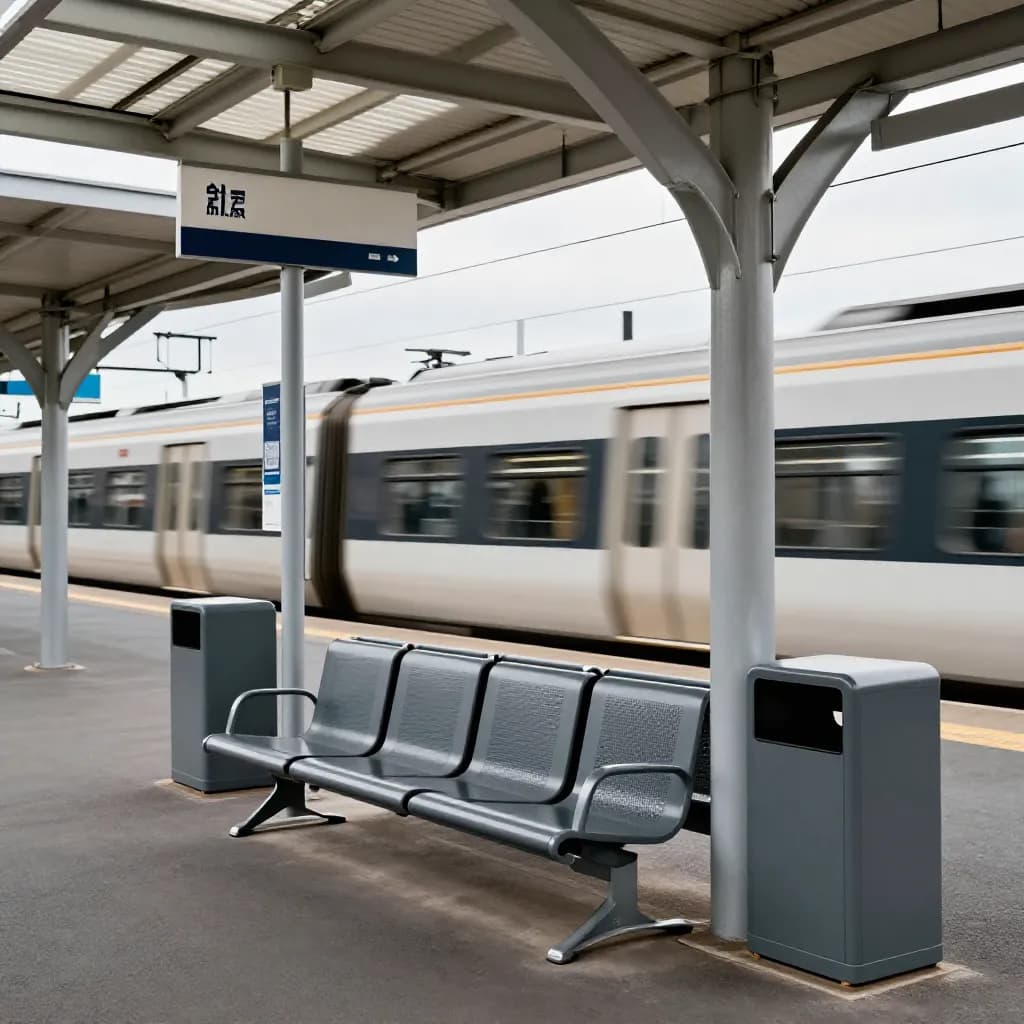
The railway environment is demanding in ways that differ from other industrial applications. Rolling stock components experience continuous vibration from rail contact, thermal cycling from outdoor operation, and exposure to a cocktail of chemicals including diesel exhaust, brake dust, de-icing salt, and cleaning agents. Station infrastructure faces intensive public use, vandalism, and the atmospheric conditions of both outdoor platforms and underground tunnel environments. Track-side equipment must withstand decades of exposure with minimal maintenance access.
Ready to Start Your Project?
From one-off customs to 15,000-part production runs — get precise pricing in 24 hours.
On This Page
Railway Coating Demands: Safety, Durability, and Lifecycle Performance
The regulatory framework for railway coatings is comprehensive and increasingly harmonized internationally. EN 45545 (Railway Applications — Fire Protection on Railway Vehicles) is the dominant fire safety standard in Europe, while NFPA 130 (Standard for Fixed Guideway Transit and Passenger Rail Systems) governs fire safety in North America. These standards impose strict requirements on the fire performance of all materials used in railway vehicles and stations, including coatings, making fire safety compliance a primary specification driver for railway powder coatings.
Rolling Stock Interior Components: Fire Safety and Passenger Comfort
Rolling stock interior components — seat frames, luggage racks, handrails, partition panels, ceiling panels, and floor edge trim — must meet the stringent fire safety requirements of EN 45545-2 while providing the durability, appearance, and passenger comfort expected in modern rail vehicles. Powder coating is widely used for these components because it achieves the required fire performance on steel and aluminum substrates while offering the design flexibility needed for contemporary train interior design.
EN 45545-2 classifies materials based on their fire performance in several test categories: R1 (reaction to fire — ignitability, flame spread, heat release), R2-R6 (specific tests for different material categories), and R7 (toxicity of combustion products). For coatings on metallic substrates, the relevant requirements are typically R1 (tested per ISO 5658-2 for lateral flame spread and ISO 5660-1 for heat release rate) and R7 (tested per NF X 70-100 for toxicity index). Powder-coated steel and aluminum components generally achieve Hazard Level HL3 (the most demanding level, required for underground and sleeping car applications) because the thin organic coating on a non-combustible metal substrate contributes minimal fuel load and generates negligible toxic combustion products.
The toxicity requirement of EN 45545-2 R7 is particularly important for railway coatings. When burned, coatings can release toxic gases including hydrogen cyanide (HCN), hydrogen chloride (HCl), hydrogen fluoride (HF), carbon monoxide (CO), nitrogen oxides (NOx), and sulfur dioxide (SO2). The Conventional Index of Toxicity (CIT) calculated from these gas concentrations must be below specified limits for each Hazard Level. Standard TGIC-free polyester powder coatings produce low levels of toxic gases during combustion, typically achieving CIT values well below the HL3 limits. However, some specialty powder formulations (particularly those containing halogenated flame retardants or certain pigments) may produce higher toxic gas levels and should be tested before specification for railway interior use.
Passenger comfort considerations for rolling stock interior coatings include tactile quality (smooth, comfortable surfaces for handrails and seat frames), thermal comfort (surfaces that are not uncomfortably cold in winter or hot in summer), and visual quality (consistent color and finish across all interior components). Powder coating addresses these requirements through its smooth, uniform film structure, moderate thermal conductivity, and precise color matching capability.
Rolling Stock Exterior: Corrosion Protection and Brand Identity
Rolling stock exterior surfaces — car body shells, roof panels, underframe components, and bogie frames — require coating systems that provide long-term corrosion protection in the demanding railway operating environment while maintaining the visual brand identity of the transit operator. While car body exterior painting is predominantly performed with liquid paint systems due to the large component sizes and the need for automotive-quality appearance, powder coating is increasingly used for exterior components, underframe protection, and complete car body coating on smaller rail vehicles.
The corrosion environment for rolling stock exteriors varies significantly by operating context. Urban metro systems operating in tunnels face high humidity, condensation, and brake dust contamination. Commuter rail and intercity trains face atmospheric corrosion, road salt spray from adjacent highways, and de-icing chemical exposure. Coastal rail lines face marine corrosion conditions. The coating specification must be matched to the specific corrosion environment, with ISO 12944 corrosivity categories providing the framework for system selection.
Underframe components — bogies, brake equipment, traction motors, and structural members beneath the car body — face the most aggressive corrosion conditions on the vehicle. These components are directly exposed to track spray (water, ballast dust, brake dust, de-icing chemicals), stone impact from ballast, and the vibration and thermal cycling of rail operation. Epoxy powder coatings at 150-250 microns over shot-blasted steel (Sa 2.5) provide the robust corrosion protection needed for underframe service, with the coating also providing stone chip resistance and chemical resistance to the track-side environment.
Brand identity is a significant consideration for rolling stock exterior coatings. Transit operators invest heavily in vehicle livery design — the distinctive color schemes and graphics that identify their services and build brand recognition. Powder coating's precise color matching and batch-to-batch consistency ensure that vehicles manufactured over multi-year production programs maintain visual consistency with the operator's brand standards. Custom colors are developed to match the operator's brand guidelines, with spectrophotometric verification ensuring Delta E compliance below 1.0 across all production vehicles.
Platform Furniture and Station Infrastructure
Railway station platforms, concourses, and passenger areas contain extensive powder-coated infrastructure — benches, shelters, information displays, ticket machines, barriers, handrails, litter bins, and wayfinding signage. These components must withstand intensive public use, vandalism, and the specific environmental conditions of railway stations, which can include tunnel draft, diesel exhaust, brake dust, and the thermal extremes of outdoor platforms.
Platform seating and shelters are the most visible powder-coated elements in station environments. The coating specification for platform furniture follows the same principles as street furniture — super-durable polyester at 80-100 microns over zinc phosphate pretreatment for steel, or chrome-free conversion coating for aluminum — but with additional requirements for fire safety (EN 45545-2 for components within the railway environment) and vandal resistance (anti-graffiti and scratch-resistant formulations for high-vandalism locations).
Underground and enclosed station environments present specific coating challenges. Poor ventilation can create high-humidity conditions that accelerate corrosion, while the absence of UV exposure means that epoxy coatings (which offer superior corrosion and chemical resistance but poor UV stability) can be used without concern for UV degradation. The particulate-laden atmosphere of underground stations — containing brake dust (iron and copper particles), tunnel dust, and diesel exhaust particulates — deposits a fine layer of contamination on all surfaces that must be regularly cleaned. Powder coatings with smooth, non-porous surfaces facilitate cleaning and resist the staining effects of brake dust contamination.
Accessibility requirements for railway station infrastructure are defined by national regulations (ADA in the US, PRM-TSI in Europe, Equality Act in the UK) and include specific requirements for visual contrast, tactile indicators, and handrail design that affect coating specification. Handrails must provide visual contrast with the background (minimum 30% luminance contrast per PRM-TSI), tactile indicators must be detectable by touch, and all surfaces must be free of sharp edges or rough textures that could injure passengers. Powder coating's precise color control enables the required visual contrast, while its smooth, uniform film provides safe tactile surfaces.
Graffiti Resistance and Anti-Vandal Coating Systems
Graffiti and vandalism are among the most persistent and costly challenges facing railway operators worldwide. The confined, semi-public environment of trains and stations provides vandals with both opportunity and audience, and the cost of graffiti removal and damage repair runs into hundreds of millions of dollars annually across the global railway industry. Powder coating technology provides multiple approaches to graffiti management that can significantly reduce these costs.
Permanent anti-graffiti powder coatings using low surface energy chemistry (silicone-modified or fluoropolymer-modified polyester) are the preferred solution for railway applications because they provide ongoing protection without the maintenance burden of sacrificial systems. These coatings achieve water contact angles above 90° and surface energies below 30 mN/m, preventing spray paint, marker ink, and adhesive stickers from forming a durable bond with the surface. Graffiti can be removed using mild solvents (isopropyl alcohol, mineral spirits) or hot water pressure washing without damaging the underlying coating.
The effectiveness of anti-graffiti coatings in railway service has been validated through extensive field trials by major transit operators. London Underground, Deutsche Bahn, SNCF, and numerous other operators have deployed anti-graffiti powder coatings on rolling stock interiors, platform furniture, and station infrastructure, reporting graffiti removal time reductions of 60-80% and cleaning chemical cost reductions of 50-70% compared to standard coatings.
Etch-resistant anti-graffiti formulations address the growing problem of acid etching — where vandals use acidic or caustic chemicals to permanently damage glass and coated surfaces. Standard anti-graffiti coatings resist paint and marker but can be damaged by strong acids or alkalis. Etch-resistant formulations incorporate ceramic or glass-like surface chemistry that resists chemical attack, providing protection against both conventional graffiti and chemical etching. These premium formulations are specified for the highest-vandalism locations where chemical etching is a known threat.
Window film and glass protection systems complement powder coating anti-graffiti measures on rolling stock. Sacrificial anti-scratch films on windows, combined with permanent anti-graffiti powder coating on interior panels and frames, create a comprehensive anti-vandal system that protects all passenger-facing surfaces. The integrated approach ensures that vandals cannot simply shift their attention from protected coated surfaces to unprotected glass surfaces.
Signage, Wayfinding, and Passenger Information Systems
Railway signage and wayfinding systems — platform signs, directional indicators, emergency information, timetable displays, and digital information screens — require powder coatings that provide precise color backgrounds for graphic content, maintain legibility through years of exposure, and comply with the fire safety requirements of the railway environment.
Color coding is fundamental to railway wayfinding. Transit systems worldwide use distinctive colors to identify lines, services, and zones — London Underground's iconic line colors, New York MTA's lettered and numbered line colors, and Tokyo Metro's color-coded system are among the most recognized examples. The powder coating on signage and wayfinding elements must precisely match these system colors with Delta E accuracy below 1.0, and must maintain color consistency across signs manufactured over decades of system expansion and renewal.
Emergency signage in railway environments must comply with ISO 3864 (Graphical Symbols — Safety Colours and Safety Signs) and local fire safety regulations. Safety green (RAL 6024 or equivalent), safety red (RAL 3001), and safety yellow (RAL 1003) must be precisely matched and maintained at high visibility throughout the sign's service life. Photoluminescent powder coatings that absorb ambient light and glow in darkness are available for emergency exit signage, providing wayfinding capability during power failures without battery or electrical power requirements.
Digital passenger information displays (PIDs) are housed in powder-coated enclosures that must meet the railway environment's fire safety, vandal resistance, and environmental protection requirements. The enclosure coating must be compatible with the display's thermal management system (the coating should not impede heat dissipation from the display electronics), provide IP54 or IP65 ingress protection in conjunction with gaskets and seals, and maintain its appearance through years of public exposure. Anti-glare matte powder coatings on display surrounds reduce reflections that could impair display readability in bright ambient lighting conditions.
Track-Side Infrastructure and Signaling Equipment
Track-side infrastructure — signal posts, relay cabinets, cable troughs, overhead line equipment (OLE) masts, and lineside fencing — represents a large volume of powder-coated steel and aluminum that must provide reliable corrosion protection for 30-50 years with minimal maintenance. These components are installed in locations that are difficult and dangerous to access for maintenance, making the initial coating specification critical for lifecycle performance.
Signal equipment housings and relay cabinets contain safety-critical electronic and electromechanical systems that must be protected from moisture, dust, and temperature extremes. The powder coating on these enclosures must provide IP55 or IP66 ingress protection in conjunction with gaskets, maintain its integrity through temperature cycling from -40°C to +70°C, and resist the UV degradation and atmospheric corrosion of permanent outdoor installation. Epoxy-polyester hybrid powder coatings at 80-120 microns provide the balance of chemical resistance, UV tolerance, and mechanical durability needed for track-side enclosures.
Overhead line equipment (OLE) masts and catenary support structures are among the largest powder-coated components in railway infrastructure. These steel structures support the overhead contact wire system that powers electric trains and must maintain structural integrity and corrosion protection for 50+ years. Hot-dip galvanizing is the primary corrosion protection for OLE masts, with powder coating applied as a duplex system where additional corrosion protection or specific color requirements are needed. The duplex galvanized-plus-powder system provides synergistic protection that significantly exceeds the sum of individual coating lifetimes.
Rail fastening systems — clips, baseplates, and insulators — are high-volume powder coating applications in railway infrastructure. These components are installed by the millions along railway tracks and must resist the corrosion effects of ballast moisture, de-icing chemicals, and stray current electrolysis. Epoxy powder coatings at 60-100 microns provide effective corrosion protection for rail fastening components, with the coating also providing electrical insulation that is important for track circuit signaling systems and stray current management.
Lifecycle Cost and Sustainability in Railway Coating
Railway infrastructure has among the longest service life expectations of any coating application — 30-50 years for fixed infrastructure and 25-35 years for rolling stock. This extended lifecycle makes the total cost of ownership calculation particularly important for railway coating specification, as the cumulative maintenance, repair, and recoating costs over decades of service can far exceed the initial coating cost.
Lifecycle cost analysis for railway coatings considers initial coating cost, inspection frequency, cleaning cost, repair and touch-up frequency, full recoating intervals, and end-of-life disposal. Powder coating's superior durability — longer intervals between recoating, lower cleaning frequency due to smooth non-porous surfaces, and reduced repair frequency due to better impact and scratch resistance — typically delivers the lowest lifecycle cost among available finishing options for railway applications.
Sustainability is an increasingly important factor in railway procurement decisions. Railway operators are major public sector organizations with sustainability commitments, and their procurement specifications increasingly include environmental performance requirements for materials and coatings. Powder coating's zero-VOC emissions, 95-98% material utilization, and elimination of hazardous waste align with railway operators' sustainability goals and contribute to the environmental credentials of rail transport as a low-carbon mobility option.
Environmental Product Declarations (EPDs) per ISO 14025 and EN 15804 are being developed for railway coating systems, providing standardized environmental impact data that enables railway operators to include coating environmental performance in their procurement evaluations. These EPDs quantify the coating's carbon footprint, energy consumption, water use, and waste generation from raw material extraction through end-of-life, enabling informed comparison between coating alternatives on environmental as well as technical and economic criteria.
The circular economy potential of powder-coated railway components supports the industry's sustainability objectives. Steel and aluminum railway components are recycled at end of life, with the thin powder coating film consumed during the metal melting process without generating toxic emissions. This clean recyclability, combined with powder coating's low-waste manufacturing process, positions powder coating as the most environmentally responsible finishing technology for the railway industry's long-lifecycle infrastructure.
Frequently Asked Questions
What fire safety standard applies to railway powder coatings?
EN 45545-2 is the primary European standard, classifying materials by Hazard Level (HL1-HL3). Powder-coated steel and aluminum typically achieve HL3 (most demanding, for underground and sleeping cars) because the thin organic film on non-combustible metal contributes minimal fuel load. NFPA 130 governs North American transit fire safety.
How effective are anti-graffiti powder coatings on trains and stations?
Field trials by London Underground, Deutsche Bahn, and SNCF report 60-80% reduction in graffiti removal time and 50-70% reduction in cleaning chemical costs. Permanent anti-graffiti coatings withstand 50-100+ removal cycles. Etch-resistant formulations also protect against chemical acid etching attacks.
How long do railway powder coatings last?
Rolling stock coatings last 25-35 years (the vehicle's service life) with scheduled maintenance. Fixed infrastructure coatings last 30-50 years, with duplex galvanized-plus-powder systems on structural steel providing the longest protection. Track-side equipment coatings are specified for 30+ years of maintenance-free service.
What coating protects railway underframe components?
Epoxy powder at 150-250 microns over shot-blasted steel (Sa 2.5) provides robust protection against track spray, ballast impact, brake dust, and de-icing chemicals. The thick epoxy film resists stone chipping and chemical exposure in the aggressive underframe environment. Underframe coatings must also withstand continuous vibration without fatigue cracking.
Does powder coating meet railway toxicity requirements?
Standard TGIC-free polyester powder coatings produce low toxic gas levels during combustion, typically achieving Conventional Index of Toxicity (CIT) values well below EN 45545-2 HL3 limits. Formulations containing halogenated flame retardants or certain pigments may produce higher toxicity and should be specifically tested before railway specification.
Ready to Start Your Project?
From one-off customs to 15,000-part production runs — get precise pricing in 24 hours.