Correctional facilities represent the most demanding environment for any architectural coating system. Unlike other high-traffic buildings where damage is primarily accidental, prisons must withstand deliberate, sustained attempts to damage surfaces. Inmates may scratch, gouge, pick at, and systematically attack coated surfaces over extended periods, testing the coating's adhesion, hardness, and film integrity in ways that no other building type replicates.
Architecture
Powder Coating for Prisons and Correctional Facilities
Sundial Powder Coating·April 20, 2026·9 min
Aggressive cleaning regimes compound the challenge. Correctional facilities require frequent deep cleaning with industrial-strength disinfectants, bleach solutions, and decontamination agents that would rapidly degrade conventional paint systems. Cell turnovers, incident clean-ups, and routine hygiene maintenance expose coated surfaces to chemical concentrations far exceeding those used in commercial or residential buildings.
Ready to Start Your Project?
From one-off customs to 15,000-part production runs — get precise pricing in 24 hours.
On This Page
Extreme Durability Requirements in Correctional Environments
Anti-ligature design requirements add a further dimension to coating specification. All fixtures and fittings in secure environments must be designed to prevent self-harm, which means smooth, continuous surfaces with no projections, edges, or features that could be used as attachment points. The coating system must support this design philosophy by providing a smooth, seamless finish that does not chip, flake, or create sharp edges when subjected to deliberate abuse.
Security-Rated Metalwork and Components
Cell furniture in correctional facilities is purpose-designed for security and durability. Bed frames, desk units, seating, and storage are typically fabricated from heavy-gauge steel with welded construction that eliminates removable components. The powder coating applied to these items must match the structural robustness of the furniture itself, providing a finish that resists years of intensive daily use and deliberate damage attempts.
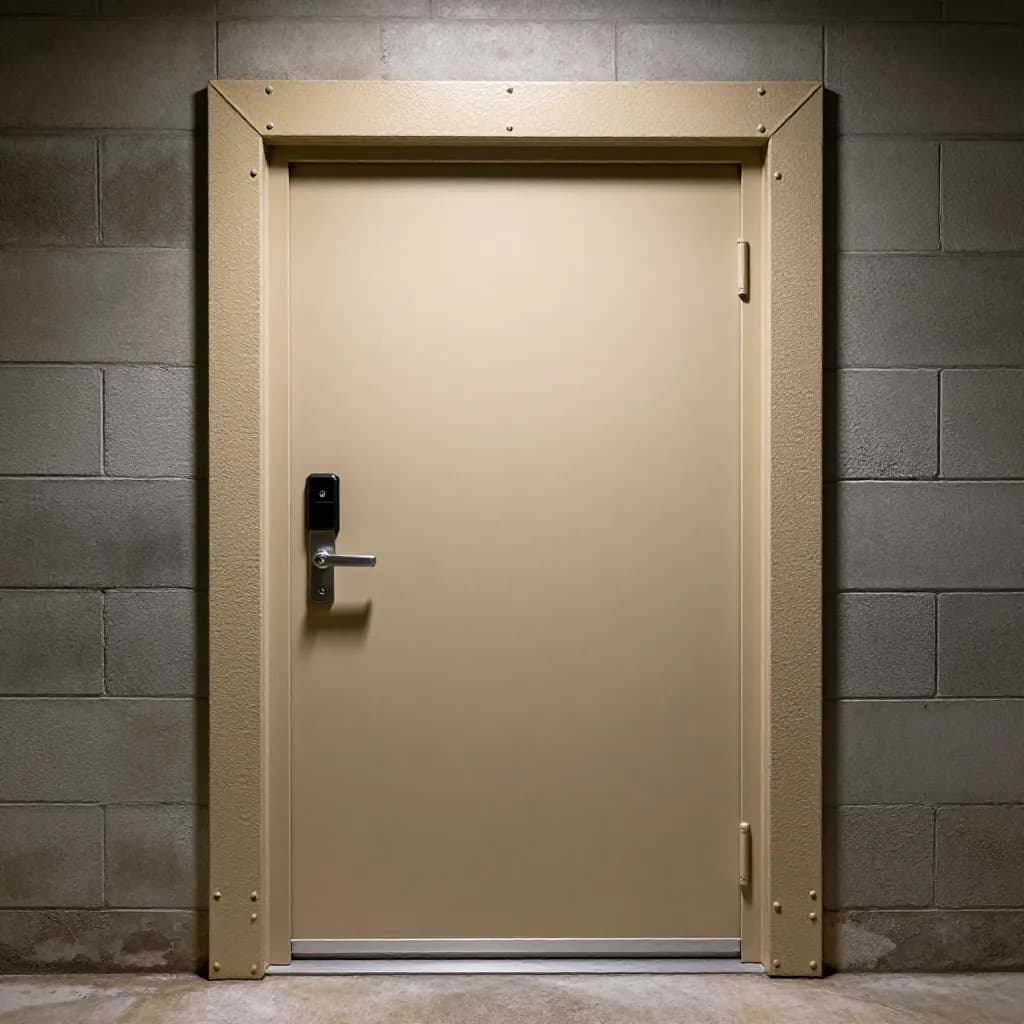
Door frames and locking mechanisms are critical security elements that must maintain their structural and functional integrity throughout the building's operational life. Powder coating at 60-120 microns provides a dense, hard barrier that protects these essential components from corrosion and wear, ensuring that security hardware continues to function reliably. The coating must also withstand the impacts and abrasion that door frames endure from the constant movement of inmates and staff through secure doorways.
Window grilles, exercise equipment, and communal area fittings all require the same combination of extreme durability and smooth, anti-ligature surface finish. Powder coating's ability to produce a continuous, seamless film across welded joints and complex geometries makes it uniquely suited to the anti-ligature design requirements of correctional metalwork, where any surface discontinuity represents a potential safety risk.
Anti-Graffiti and Chemical-Resistant Finishes
Graffiti and surface marking are persistent challenges in correctional environments. Inmates use any available material — food, bodily fluids, improvised marking tools — to mark surfaces, and the coating system must allow these marks to be removed completely without damaging the underlying finish. Anti-graffiti powder coatings with low surface energy prevent most substances from bonding permanently, enabling cleaning staff to restore surfaces to their original condition.
Chemical resistance is equally critical. The cleaning agents used in correctional facilities include concentrated bleach, quaternary ammonium compounds, and specialist decontamination chemicals that would dissolve or soften conventional paint films. Powder coating's cross-linked thermoset structure provides inherent resistance to these aggressive chemicals, maintaining its integrity through thousands of cleaning cycles over the building's operational life.
The combination of anti-graffiti properties and chemical resistance creates a self-reinforcing advantage. Because graffiti and contamination can be removed without damaging the coating, and because the coating withstands the aggressive chemicals needed for removal, the finish maintains its protective and aesthetic properties indefinitely. This eliminates the progressive degradation cycle that affects liquid-painted surfaces in correctional environments, where each cleaning event further weakens the already-thin paint film.
Restricted Color Palettes for Institutional Environments
Color specification in correctional facilities follows institutional guidelines that balance functional requirements with psychological considerations. Restricted palettes typically center on neutral tones — greys, beiges, and muted blues or greens — that create calm, non-stimulating environments while maintaining adequate light levels for security observation and CCTV monitoring.
Powder coating delivers these institutional colors with the consistency and precision that large-scale correctional facility projects demand. Hundreds of cell doors, thousands of furniture items, and extensive runs of railings and barriers must all match precisely, regardless of when they were manufactured or coated. Powder coating's inherent batch-to-batch consistency ensures this uniformity across production runs that may span months of manufacturing activity.
Functional color coding is used within the restricted palette to support operational requirements. Different security zones may be identified by subtle color variations, while safety-critical elements such as fire equipment housings and emergency exit hardware are finished in mandated high-visibility colors. Powder coating's precise color control allows these functional distinctions to be maintained consistently across the entire facility.
Why Powder Coating Outperforms Paint in Correctional Settings
The performance gap between powder coating and liquid paint is more pronounced in correctional environments than in any other building type. Liquid paint at 25-50 microns simply cannot withstand the deliberate abuse, aggressive cleaning, and sustained wear that correctional facilities impose. Within months of application, liquid-painted surfaces in high-security environments begin showing chips, scratches, and coating loss that expose bare metal to corrosion and create the sharp edges that anti-ligature design seeks to eliminate.
Powder coating at 60-120 microns provides a fundamentally more robust barrier. The thick, cross-linked film resists scratching, gouging, and picking far more effectively than thin liquid paint, and when minor surface damage does occur, the remaining film thickness continues to protect the substrate. The coating's adhesion to properly prepared steel substrates exceeds that of liquid paint, resisting the deliberate peeling and lifting attempts that inmates may make over extended periods.
The lifecycle implications are decisive. Liquid-painted correctional metalwork may require recoating every three to five years — a disruptive, security-sensitive operation that requires cell clearance, surface preparation, and extended drying times in occupied buildings. Powder-coated metalwork maintains its integrity for 20-25 years, virtually eliminating the need for in-situ recoating and the security complications it entails. For correctional facility operators, this durability advantage translates directly into reduced operational disruption and improved security outcomes.
Frequently Asked Questions
Why is powder coating preferred over paint in prisons?
Powder coating at 60-120 microns is two to three times thicker than liquid paint and features a cross-linked thermoset structure that resists deliberate damage, aggressive cleaning chemicals, and sustained wear. It lasts 20-25 years in correctional environments, compared to just 3-5 years for liquid paint, dramatically reducing disruptive maintenance operations.
Does powder coating support anti-ligature design requirements?
Yes. Powder coating produces a smooth, continuous, seamless film across welded joints and complex geometries, supporting the anti-ligature design philosophy required in secure environments. The coating does not chip or flake to create sharp edges, maintaining safe, smooth surfaces even under deliberate abuse.
Can powder coating withstand the cleaning chemicals used in correctional facilities?
Yes. Powder coating's cross-linked thermoset structure provides inherent resistance to concentrated bleach, quaternary ammonium compounds, and specialist decontamination chemicals. The coating maintains its integrity through thousands of aggressive cleaning cycles, unlike liquid paint which softens and degrades under repeated chemical exposure.
What colors are used for powder coating in correctional facilities?
Correctional facilities typically use restricted institutional palettes centered on neutral greys, beiges, and muted blues or greens. Powder coating delivers these colors with precise batch-to-batch consistency across large-scale projects, with functional color coding for security zones and safety-critical elements maintained throughout the facility.
Ready to Start Your Project?
From one-off customs to 15,000-part production runs — get precise pricing in 24 hours.