Pretreatment is the process of cleaning and chemically treating metal substrates before powder coating application. It serves two essential functions: removing surface contaminants that would prevent coating adhesion, and depositing a conversion coating layer that enhances both adhesion and corrosion resistance. The quality of pretreatment directly determines the long-term performance of the powder coating system — a premium powder coating applied over inadequate pretreatment will fail far sooner than a standard powder over excellent pretreatment.
Technical
Powder Coating Pretreatment: Iron Phosphate, Zinc Phosphate, Zirconium, and Chrome-Free Systems
Sundial Powder Coating·April 22, 2026·15 min
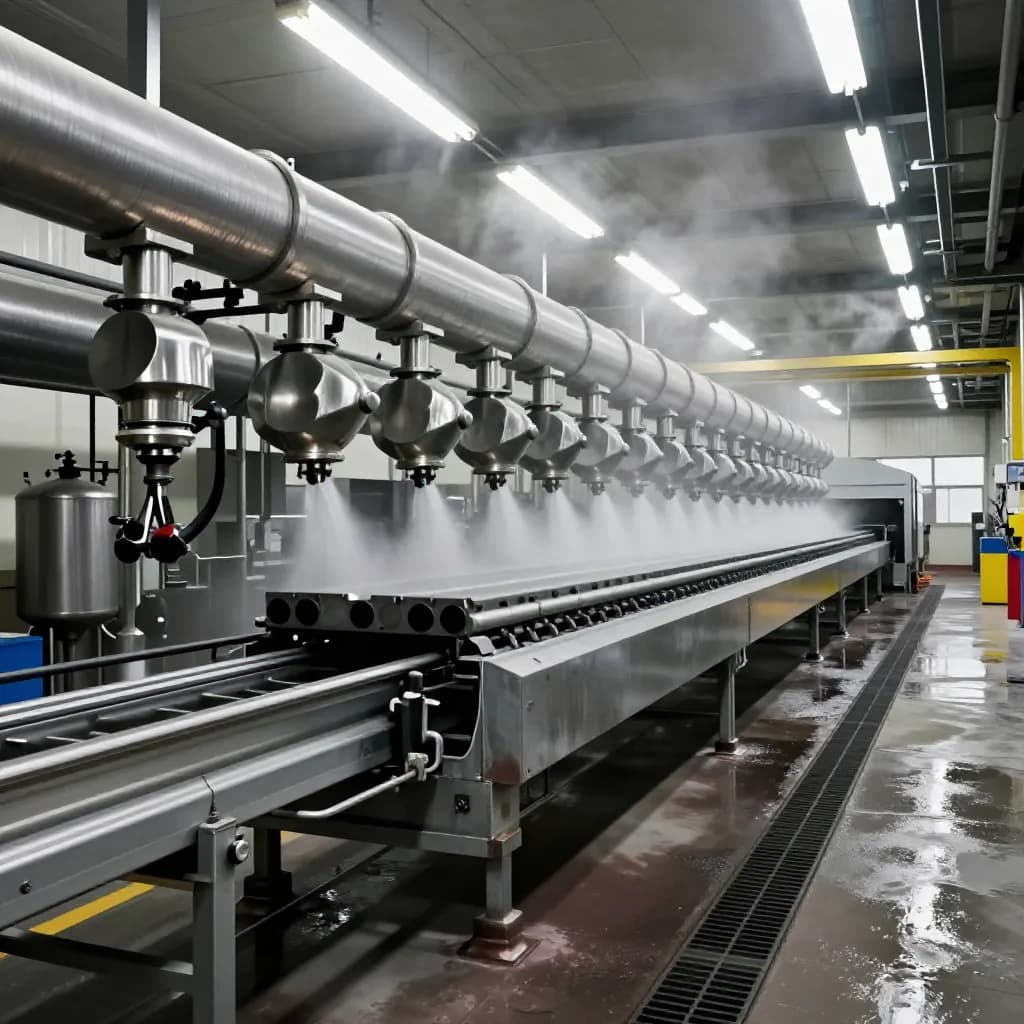
The pretreatment process typically consists of multiple sequential stages: alkaline cleaning to remove oils, greases, and organic contaminants; acid pickling or etching to remove oxides, scale, and inorganic surface layers; one or more rinse stages to remove chemical residues; conversion coating to deposit the protective chemical layer; a final rinse (often deionized water) to remove residual conversion coating chemicals; and drying to remove moisture before powder application. The number of stages, chemical types, and process parameters vary depending on the substrate material, the required performance level, and environmental regulations.
Ready to Start Your Project?
From one-off customs to 15,000-part production runs — get precise pricing in 24 hours.
On This Page
The Role of Pretreatment in Powder Coating Performance
The choice of pretreatment system has significant implications for coating performance, operating cost, environmental compliance, and waste management. Higher-performance systems such as zinc phosphate provide superior corrosion protection but generate more sludge and require more complex waste treatment. Newer chrome-free technologies such as zirconium-based systems offer good performance with reduced environmental impact. Understanding the capabilities and limitations of each pretreatment type is essential for selecting the right system for a given application.
Iron Phosphate: The Workhorse Pretreatment
Iron phosphate is the most widely used conversion coating in the general industrial powder coating market due to its simplicity, low cost, and adequate performance for many applications. The process works by reacting a dilute phosphoric acid solution (typically containing accelerators such as molybdate or fluoride) with the steel substrate surface, dissolving a thin layer of iron and redepositing it as an amorphous iron phosphate film. The resulting coating weight is typically 0.3-1.0 g/m², corresponding to a film thickness of approximately 0.3-1.0 μm.
Iron phosphate systems operate at temperatures of 35-60°C with immersion or spray contact times of 60-180 seconds. The bath pH is maintained at 4.0-5.5, with the active chemical concentration controlled by titration and automatic replenishment. The process is relatively forgiving of parameter variations compared to zinc phosphate, making it suitable for operations with less sophisticated process control capabilities.
The performance of iron phosphate pretreatment is adequate for interior applications and mild exterior environments, typically providing 250-500 hours of salt spray resistance (ASTM B117) when combined with a standard polyester powder coating at 60-80 μm. For more demanding applications — automotive, heavy industrial, or marine environments — iron phosphate may not provide sufficient corrosion protection, and zinc phosphate or zirconium-based systems should be considered. Iron phosphate is also limited to ferrous substrates; it does not form an effective conversion coating on aluminum, zinc, or galvanized surfaces without modification. Multi-metal iron phosphate formulations are available that include fluoride activators to etch aluminum and zinc surfaces, but their performance on non-ferrous metals is generally inferior to dedicated aluminum or zinc pretreatment chemistries.
Zinc Phosphate: High-Performance Conversion Coating
Zinc phosphate conversion coating provides significantly higher corrosion protection than iron phosphate and is the standard pretreatment for automotive, heavy equipment, and other demanding applications. The process deposits a crystalline zinc phosphate layer on the substrate surface, with coating weights of 1.5-4.0 g/m² and crystal sizes of 3-15 μm. The crystalline structure provides both a mechanical key for coating adhesion and a barrier layer that inhibits corrosion at the coating-substrate interface.
The zinc phosphate process is more complex than iron phosphate, typically requiring a separate activation stage before the phosphating bath. The activation stage deposits colloidal titanium phosphate nuclei on the substrate surface, which serve as crystallization seeds for the zinc phosphate layer. Without activation, the zinc phosphate crystals grow large and coarse, providing poor coating adhesion and reduced corrosion protection. With proper activation, the crystals are fine and uniform, creating an ideal surface for powder coating adhesion.
Zinc phosphate baths operate at 40-60°C with immersion times of 90-180 seconds. The bath chemistry is more complex than iron phosphate, requiring control of zinc concentration (typically 0.8-1.5 g/L), total acid, free acid, accelerator concentration (typically nitrite or hydroxylamine), and the zinc-to-iron ratio in the bath. The process generates significant sludge — a mixture of iron phosphate, zinc phosphate, and other precipitates — that must be removed continuously or periodically to maintain bath performance. Sludge generation rates of 5-15 g per square meter of treated surface are typical, requiring sludge removal systems and waste disposal arrangements.
The performance advantage of zinc phosphate is substantial: salt spray resistance of 750-1500 hours is typical with a standard polyester powder coating, compared to 250-500 hours for iron phosphate. This makes zinc phosphate the preferred choice for exterior applications, automotive components, agricultural equipment, and any application where corrosion resistance is a primary performance requirement.
Zirconium and Chrome-Free Conversion Coatings
Zirconium-based conversion coatings have emerged as the leading chrome-free alternative to traditional phosphate systems, driven by environmental regulations restricting hexavalent chromium and increasing pressure to reduce phosphate discharge in wastewater. Zirconium coatings deposit an ultra-thin layer of zirconium oxide (ZrO₂) on the substrate surface, with coating weights of only 20-80 mg/m² — approximately 50-100 times thinner than zinc phosphate. Despite this minimal thickness, zirconium coatings provide corrosion protection comparable to iron phosphate and approaching zinc phosphate in many applications.
The zirconium process operates at room temperature to 40°C with contact times of 30-120 seconds, offering significant energy savings compared to heated phosphate baths. The bath chemistry is simpler, with fewer control parameters — primarily zirconium concentration (typically 50-200 ppm as Zr), pH (3.5-5.0), and fluoride concentration. The process generates virtually no sludge, dramatically reducing waste treatment costs and disposal requirements. These operational advantages make zirconium an attractive option for new installations and for retrofitting existing phosphate lines.
Zirconium coatings are inherently multi-metal compatible, forming effective conversion coatings on steel, aluminum, zinc, and galvanized surfaces from a single bath. This is a significant advantage for operations that process mixed substrates, eliminating the need for separate pretreatment lines or multi-metal phosphate formulations. The coating mechanism involves dissolution of the native oxide layer by fluoride in the bath, followed by precipitation of zirconium oxide at the metal surface as the local pH rises due to the dissolution reaction.
Other chrome-free technologies include silane-based systems (organofunctional silanes that form a thin polymeric layer on the metal surface), titanium-based systems (similar in principle to zirconium), and rare-earth-based systems (cerium or lanthanum oxide coatings). Each has specific advantages and limitations, but zirconium has achieved the broadest commercial adoption due to its combination of performance, simplicity, and multi-metal capability.
Multi-Metal Pretreatment Lines: Challenges and Solutions
Many powder coating operations process multiple substrate materials — steel, aluminum, galvanized steel, and zinc die castings — on the same pretreatment line. This creates significant challenges because each metal has different cleaning requirements, different reactivity with conversion coating chemicals, and different optimal process parameters. A pretreatment system that works well for steel may attack aluminum aggressively, while a system optimized for aluminum may not adequately clean or convert steel.
The traditional approach to multi-metal pretreatment uses modified iron phosphate or zinc phosphate formulations containing fluoride activators that enable the bath to react with aluminum and zinc surfaces as well as steel. These multi-metal phosphate systems represent a compromise — they work adequately on all substrates but are not optimized for any single one. Performance on aluminum is typically the weakest link, with conversion coating weights and corrosion protection falling below what a dedicated aluminum pretreatment would achieve.
Zirconium-based systems have largely solved the multi-metal challenge because the zirconium deposition mechanism works effectively on all common engineering metals. A single zirconium bath can process steel, aluminum, galvanized steel, and zinc die castings with consistent conversion coating quality on each substrate. This simplification reduces the number of process stages, chemical inventory, and quality control parameters compared to multi-metal phosphate systems.
For operations with demanding performance requirements on multiple substrates, a split-line approach may be necessary — routing different substrate types through different pretreatment sequences within the same line. This can be achieved with programmable conveyor systems that direct parts through different stage combinations based on the substrate material. While more complex to operate, this approach allows each substrate to receive its optimal pretreatment without compromise.
Rinse Quality: The Often-Overlooked Critical Factor
Rinse stages between and after chemical treatment stages are critical to pretreatment quality but are frequently neglected in process control programs. The purpose of rinsing is to remove residual chemicals from the previous stage before the part enters the next stage. Inadequate rinsing allows chemical carryover that contaminates downstream baths, degrades conversion coating quality, and leaves residues on the surface that interfere with coating adhesion.
Rinse water quality is characterized by conductivity (a measure of dissolved solids), pH, and specific contaminant levels. Fresh municipal water typically has conductivity of 200-800 μS/cm, which is adequate for intermediate rinses but may be too high for the final rinse before drying. The final rinse should use deionized (DI) water with conductivity below 30 μS/cm — preferably below 10 μS/cm — to prevent water spots and mineral deposits on the conversion-coated surface. These deposits can interfere with powder adhesion and create visible defects under the coating.
Rinse water management involves balancing water consumption against rinse quality. Counter-flow rinsing — where fresh water enters the final rinse tank and overflows sequentially into preceding rinse tanks — is the most water-efficient configuration, reducing consumption by 50-70% compared to independent rinse tanks. Conductivity monitoring with automatic fresh water addition maintains rinse quality while minimizing water use. For the final DI rinse, a recirculating system with mixed-bed deionization or reverse osmosis regeneration provides consistent quality with minimal water waste.
The drying stage after the final rinse must remove all moisture before powder application. Residual moisture causes adhesion failure, blistering, and outgassing defects. Drying is typically performed in a dedicated dry-off oven at 100-150°C with sufficient residence time to evaporate all water from the part surfaces, including water trapped in joints, seams, and recessed areas. Blow-off with clean compressed air before the dry-off oven accelerates drying and prevents water pooling in horizontal surfaces.
Process Control and Testing for Pretreatment Quality
Maintaining consistent pretreatment quality requires regular monitoring of bath chemistry, process parameters, and conversion coating properties. The frequency and scope of testing depend on the production volume, the criticality of the application, and the specific pretreatment system.
Bath chemistry monitoring includes titration of active chemical concentrations (total acid, free acid, accelerator), pH measurement, temperature verification, and conductivity measurement. For iron phosphate, these tests should be performed at least twice per shift during production. For zinc phosphate, additional parameters including zinc concentration, iron content, and the zinc-to-iron ratio require monitoring. Zirconium baths require monitoring of zirconium concentration (by colorimetric test or ICP analysis), fluoride level, and pH. Automatic chemical feed systems that replenish chemicals based on throughput or titration results reduce the risk of bath depletion between manual checks.
Conversion coating quality is verified by coating weight measurement and visual inspection. Coating weight is measured by the gravimetric method (weighing a test panel before and after stripping the conversion coating in a chromic acid solution per ASTM B680) or by XRF (X-ray fluorescence) for non-destructive measurement. Iron phosphate should produce 0.3-1.0 g/m², zinc phosphate 1.5-4.0 g/m², and zirconium 20-80 mg/m². Visual inspection under good lighting should confirm a uniform, continuous conversion coating with no bare spots, staining, or discoloration.
Water break testing on cleaned surfaces verifies that organic contaminants have been removed — a water-break-free surface (water sheets uniformly without beading) indicates adequate cleaning. This simple test should be performed at the start of each shift and whenever cleaning bath chemistry is adjusted. For comprehensive quality assurance, coated test panels should be prepared regularly and subjected to adhesion testing (cross-hatch per ASTM D3359) and accelerated corrosion testing (salt spray per ASTM B117) to verify that the complete pretreatment-plus-coating system is performing to specification.
Waste Management and Environmental Compliance
Pretreatment operations generate wastewater, sludge, and spent chemicals that must be managed in compliance with environmental regulations. The specific requirements depend on the pretreatment chemistry, the local regulatory framework, and the discharge destination (municipal sewer, direct discharge, or zero-liquid-discharge).
Phosphate pretreatment systems generate wastewater containing phosphorus, heavy metals (zinc, iron, manganese, nickel), and dissolved solids. Phosphorus discharge limits have become increasingly stringent in many jurisdictions due to concerns about eutrophication of receiving waters — limits of 1-2 mg/L total phosphorus are common, and some regions require less than 0.5 mg/L. Meeting these limits requires chemical precipitation (typically with lime or ferric chloride), clarification, and potentially tertiary treatment such as filtration or membrane separation.
Zinc phosphate systems generate the most waste due to the continuous sludge production and the presence of zinc in the wastewater. Zinc discharge limits are typically 1-3 mg/L, requiring chemical precipitation and careful pH control. The sludge generated — a mixture of zinc phosphate, iron phosphate, and other precipitates — is classified as non-hazardous waste in most jurisdictions but requires proper disposal at a licensed facility.
Zirconium and other chrome-free systems generate significantly less waste than phosphate systems. The absence of phosphorus and heavy metals simplifies wastewater treatment, and the minimal sludge generation reduces disposal costs. These environmental advantages are a major driver of the industry's transition from phosphate to zirconium-based pretreatment. For operations considering a pretreatment system change, the total cost of ownership — including chemical costs, water consumption, energy, waste treatment, and disposal — should be evaluated alongside the coating performance requirements.
Frequently Asked Questions
What is the best pretreatment for powder coating?
The best pretreatment depends on the application requirements. Iron phosphate is adequate for general industrial and interior applications (250-500 hours salt spray). Zinc phosphate provides superior corrosion protection for automotive and exterior applications (750-1500 hours salt spray). Zirconium offers good performance with lower environmental impact and multi-metal compatibility. The choice balances performance needs against cost and environmental considerations.
Can you use the same pretreatment for steel and aluminum?
Yes, with the right chemistry. Zirconium-based systems are inherently multi-metal compatible and work effectively on steel, aluminum, galvanized steel, and zinc from a single bath. Multi-metal iron phosphate formulations with fluoride activators can also process mixed substrates, though performance on aluminum is typically lower than dedicated aluminum pretreatment systems.
How do you test pretreatment quality?
Key tests include: water break testing to verify cleaning adequacy, conversion coating weight measurement by gravimetric method or XRF, bath chemistry titration for active chemical concentrations, pH and temperature monitoring, and rinse water conductivity measurement. Coated test panels should be regularly tested for adhesion (ASTM D3359) and salt spray resistance (ASTM B117) to verify system performance.
Why is the final rinse so important in pretreatment?
The final rinse removes residual conversion coating chemicals that would interfere with powder adhesion. It should use deionized water with conductivity below 30 μS/cm (preferably below 10 μS/cm) to prevent water spots and mineral deposits. Poor final rinse quality is a common but often overlooked cause of adhesion failures and surface defects in powder coating.
What are the environmental advantages of zirconium over phosphate pretreatment?
Zirconium systems generate virtually no sludge (vs 5-15 g/m² for zinc phosphate), contain no phosphorus or heavy metals requiring wastewater treatment, operate at lower temperatures (room temperature to 40°C vs 40-60°C for phosphate), and use simpler chemistry with fewer control parameters. These advantages significantly reduce waste treatment costs, energy consumption, and environmental compliance burden.
Ready to Start Your Project?
From one-off customs to 15,000-part production runs — get precise pricing in 24 hours.