Pergolas, canopies, and outdoor structures have become essential elements of contemporary architectural and landscape design. From residential garden pergolas and terrace canopies to commercial outdoor dining shelters and public realm shade structures, these elements extend usable living and working space into the outdoor environment. The global trend toward indoor-outdoor living has elevated these structures from simple garden accessories to significant architectural investments.
Architecture
Powder Coating for Pergolas, Canopies, and Outdoor Structures
Sundial Powder Coating·April 20, 2026·10 min
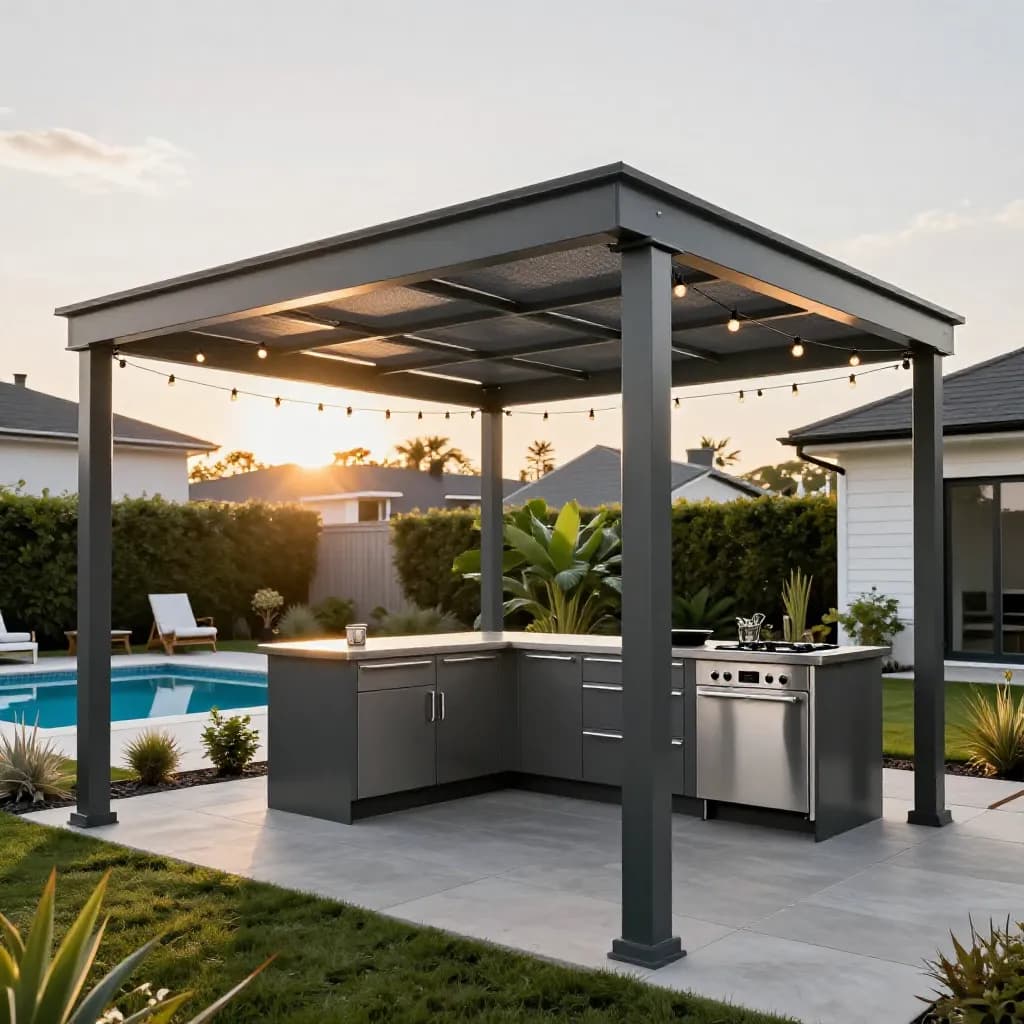
The design of outdoor structures has evolved to match this elevated status. Clean-lined aluminum pergolas with motorised louvre roofs, cantilevered canopies with integrated lighting and heating, and sculptural shade structures that serve as landscape focal points all demand a surface finish that matches their architectural ambition. The coating must deliver both visual quality and long-term durability in an environment where every surface is fully exposed to the elements.
Ready to Start Your Project?
From one-off customs to 15,000-part production runs — get precise pricing in 24 hours.
On This Page
Outdoor Structures in Contemporary Design
Unlike building facades, which may have sheltered areas and varying orientations, outdoor structures are exposed on all sides and from above. Every surface receives direct UV radiation, rain, and temperature extremes. This 360-degree exposure makes outdoor structures one of the most demanding applications for any coating system, requiring performance that only the most durable finishing technologies can deliver.
Why Powder Coating Outperforms Liquid on Outdoor Structures
Outdoor structures subject their coatings to constant, unrelenting weather exposure that rapidly exposes the limitations of liquid paint. Powder coating's 60-120 micron film build provides a protective barrier that is two to three times thicker than liquid paint at 25-50 microns, delivering substantially greater resistance to the UV radiation, rain, frost, and thermal cycling that outdoor structures endure every day of the year.
UV resistance is the critical differentiator. Outdoor structures receive direct solar radiation on horizontal and inclined surfaces where UV intensity is at its maximum. Super-durable polyester powder coatings are formulated to resist UV-induced chalking, fading, and gloss loss for 20-25 years under these conditions. Liquid paint, with its thinner film and less robust UV-resistant formulations, typically begins showing visible degradation within 5-8 years on fully exposed outdoor structures.
The zero VOC profile of powder coating is particularly relevant for outdoor structures in residential and hospitality settings. Pergolas over dining areas, canopies above children's play spaces, and shade structures in healthcare gardens all benefit from a coating that produces no volatile emissions during manufacture or throughout its service life. This contrasts with liquid paint, which releases solvents during application and can continue to off-gas at low levels, particularly when heated by direct sunlight.
Wood-Grain Finishes: Timber Aesthetic Without Maintenance
One of the most significant developments in outdoor structure design is the availability of wood-grain powder coating finishes on aluminum. Sublimation transfer technology enables aluminum pergola beams, canopy frames, and structural columns to replicate the appearance of natural timber species — oak, cedar, walnut, teak, and more — with remarkable realism. The grain pattern, colour variation, and tactile texture of these finishes are virtually indistinguishable from real wood at normal viewing distances.
The practical advantages over real timber are substantial. Wood-grain powder-coated aluminum does not warp, split, rot, or attract insects. It does not require annual oiling, staining, or sealing. It maintains its appearance for 20-25 years without any treatment beyond periodic cleaning with mild detergent and water. For homeowners and commercial operators who want the warm, natural aesthetic of timber without the relentless maintenance cycle, wood-grain powder coating on aluminum is the definitive solution.
Fire performance adds another critical advantage. Powder-coated aluminum achieves A1 or A2 Euroclass fire ratings, classifying it as non-combustible. Real timber pergolas and canopies present a significant fire risk, particularly in regions prone to wildfires or in commercial settings where fire regulations restrict the use of combustible materials in outdoor structures. Wood-grain powder-coated aluminum delivers the timber aesthetic with the fire safety of metal.
Color and Design Options for Outdoor Structures
Beyond wood-grain finishes, powder coating offers the full spectrum of colour and finish options for outdoor structures. The complete RAL Classic and RAL Design colour ranges are available, along with custom colour matching to any reference sample. This allows architects and designers to coordinate outdoor structures precisely with building facades, landscape elements, and brand identities.
Metallic finishes are increasingly popular for contemporary outdoor structures, creating a premium aesthetic that catches and reflects natural light. Bronze, champagne, and graphite metallic effects are particularly effective on pergola and canopy structures, where the interplay of light and shadow across metallic surfaces adds visual depth and sophistication. Textured finishes in dark tones provide a more understated quality, reducing glare and masking the inevitable marks from outdoor use.
Matte and satin finishes have become the preferred choice for residential pergolas and garden structures, offering a softer, more natural quality than high-gloss alternatives. These lower-sheen finishes also have the practical advantage of being more forgiving of minor surface imperfections and less prone to showing water spots and fingerprints — important considerations for structures that are touched, leaned against, and exposed to rain on a daily basis.
Lifecycle Comparison: Powder Coating vs Liquid Paint Outdoors
The lifecycle performance gap between powder coating and liquid paint is at its widest on outdoor structures, where the severity of exposure accelerates liquid paint degradation. Powder-coated outdoor structures maintain their appearance and protective performance for 20 years or more, with many installations exceeding 25 years before any recoating consideration is necessary. Liquid-painted outdoor structures, by contrast, typically require recoating every 5-8 years to maintain acceptable appearance.
Over a 30-year period, a liquid-painted pergola or canopy may require four to six recoating cycles, each involving surface preparation, priming, and multi-coat application. The cumulative cost of these recoating cycles — including materials, labour, and the inconvenience of having the structure out of use during painting — substantially exceeds the one-time cost of a powder-coated finish that requires no recoating during the same period.
The environmental lifecycle further favours powder coating. Each liquid paint recoating cycle generates VOC emissions, paint waste, and preparation debris. Over four to six cycles, the cumulative environmental impact is significant. Powder coating's zero VOC emissions, 95-98% material efficiency, and elimination of recoating cycles deliver a dramatically lower environmental footprint over the structure's full service life. For projects with sustainability objectives, this lifecycle advantage makes powder coating the only responsible specification choice for outdoor structures.
Frequently Asked Questions
How long does powder coating last on outdoor pergolas and canopies?
Powder-coated outdoor structures maintain their appearance for 20 years or more, with many installations exceeding 25 years. This compares to just 5-8 years for liquid paint on fully exposed outdoor structures, where UV radiation, rain, and temperature extremes accelerate coating degradation.
Can aluminum pergolas look like real wood with powder coating?
Yes. Sublimation transfer technology produces remarkably realistic wood-grain finishes on aluminum, replicating species including oak, cedar, walnut, and teak. These finishes are virtually indistinguishable from real wood at normal viewing distances and last 20-25 years without the warping, splitting, rotting, and annual maintenance that real timber demands.
Is powder coating on outdoor structures environmentally friendly?
Yes. Powder coating produces zero VOC emissions and achieves 95-98% material utilisation, compared to liquid paint's 30-70% transfer efficiency and solvent emissions. Over a 30-year lifecycle, powder coating eliminates the four to six recoating cycles that liquid paint requires, dramatically reducing cumulative environmental impact.
Why does liquid paint fail quickly on outdoor structures?
Outdoor structures are exposed to UV radiation, rain, and temperature extremes on all sides, creating the most demanding conditions for any coating. Liquid paint's thin 25-50 micron film provides inadequate protection under this 360-degree exposure, leading to visible chalking and fading within 5-8 years. Powder coating's 60-120 micron film withstands these conditions for 20-25 years.
Ready to Start Your Project?
From one-off customs to 15,000-part production runs — get precise pricing in 24 hours.