Pedestrian bridges and elevated walkways face the full spectrum of environmental challenges. Fully exposed to rain, wind, UV radiation, and temperature extremes, every component must withstand decades of continuous weathering without protective shelter. Unlike building facades that benefit from overhangs and recessed positions, bridge components receive direct exposure on all surfaces, including undersides where moisture can pool and corrosion initiate.
Architecture
Powder Coating for Pedestrian Bridges and Walkway Structures
Sundial Powder Coating·April 20, 2026·9 min
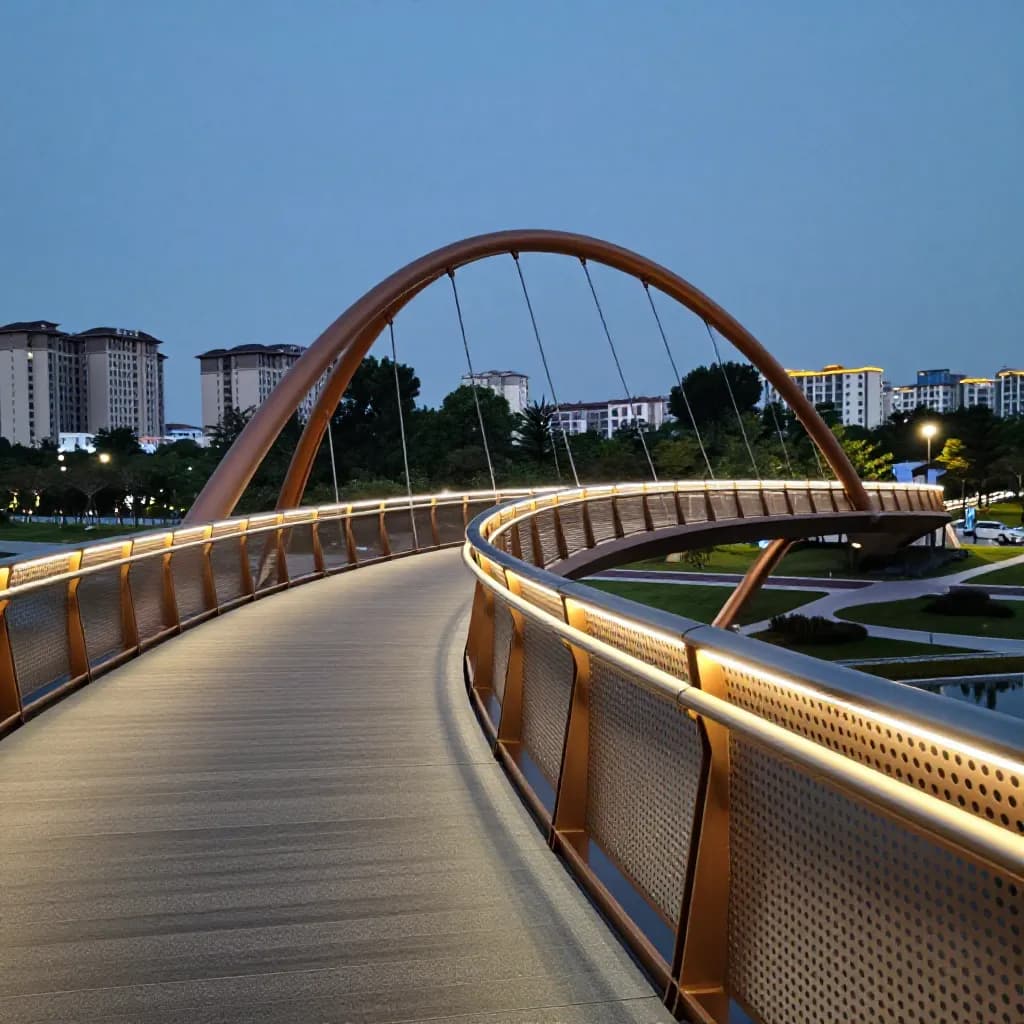
Structural integrity depends directly on coating performance. Corrosion of steel bridge elements reduces cross-sectional area and load-bearing capacity, creating safety risks that demand costly inspection and remediation programs. Even on aluminum structures, coating failure leads to surface pitting and aesthetic degradation that undermines public confidence in the structure.
Ready to Start Your Project?
From one-off customs to 15,000-part production runs — get precise pricing in 24 hours.
On This Page
Coating Demands for Pedestrian Bridges
Public safety requirements add another dimension. Bridge railings, balustrades, and deck surfaces must maintain their structural and aesthetic condition throughout the design life of the structure. Coating failures that lead to rough, corroded surfaces create injury risks for pedestrians, while unsightly deterioration discourages use of pedestrian infrastructure and reflects poorly on the responsible authority.
Powder Coating for Bridge Components
Pedestrian bridges comprise numerous metal components that benefit from powder coating protection. Railings and balustrades are the most visible elements, requiring both corrosion protection and long-term color retention to maintain the bridge's architectural appearance. Decking support structures, whether steel beams or aluminum extrusions, need robust coating systems that prevent corrosion in areas where water can collect and stagnate.
Lighting columns and luminaire housings mounted on bridges face extreme exposure conditions, with wind-driven rain impacting from all directions. Powder coating at 60-120 microns provides a dense, uniform barrier that protects these components far more effectively than the 25-50 micron films achievable with liquid paint. Signage panels and information boards also benefit from powder coating's UV resistance, maintaining legibility and color accuracy over decades of outdoor exposure.
Connection plates, brackets, and structural fixings are often overlooked in coating specifications but are critical to long-term bridge performance. These components are frequently located in moisture traps where water collects around bolt heads and in crevices. Powder coating's ability to provide consistent film thickness even on complex geometries makes it well suited to protecting these vulnerable connection details.
Corrosion Protection Systems for Bridge Structures
Steel bridge components require a multi-layer corrosion protection approach. The most effective system combines thorough surface preparation, typically abrasive blasting to Sa 2.5 standard, with an epoxy primer powder coat followed by a polyester topcoat. The epoxy primer provides excellent adhesion and barrier protection against moisture, while the polyester topcoat delivers UV resistance and color retention. Together, this dual-coat system provides comprehensive protection for structural steel in fully exposed outdoor environments.
Aluminum bridge components follow a different pretreatment path. Chromate-free conversion coatings, such as titanium or zirconium-based systems, provide the adhesion-promoting layer between the aluminum substrate and the powder topcoat. These modern pretreatments deliver excellent corrosion protection without the environmental and health concerns associated with hexavalent chromium processes, aligning with current regulatory requirements.
For bridges in coastal or marine-adjacent locations, enhanced specifications are available. Qualicoat Seaside certification, for example, requires additional salt spray resistance testing to ensure coating systems can withstand the aggressive chloride-laden atmosphere found near the sea. Specifying Seaside-certified coatings for coastal pedestrian bridges provides an additional layer of assurance for long-term performance.
Color and Design for Public Realm Bridges
Pedestrian bridges are prominent public realm structures that contribute significantly to the character of their surroundings. Color selection is therefore both a functional and aesthetic decision. Bold, distinctive colors can transform a utilitarian crossing into a landmark feature, while more restrained tones allow the bridge to integrate harmoniously with its natural or urban context.
Powder coating offers architects complete freedom in color specification. The full RAL Classic and RAL Design ranges are available, along with NCS and custom color matching. Metallic finishes can add visual depth and interest, while textured coatings provide a tactile quality that enhances the pedestrian experience. Matte finishes reduce glare in bright sunlight, a practical consideration for structures that are viewed from multiple angles throughout the day.
The color consistency of powder coating is particularly valuable for bridge projects, where components may be fabricated and coated in multiple batches over an extended production period. Unlike liquid paint, which can vary between batches due to solvent evaporation and mixing variables, powder coating delivers precise, repeatable color matching that ensures visual uniformity across the entire structure.
Maintenance Advantages Over Liquid Paint on Bridges
Maintenance of bridge coatings is inherently difficult and disruptive. Pedestrian bridges often span roads, railways, or waterways, meaning that maintenance access requires traffic management, scaffolding, or specialist access equipment. Every maintenance intervention involves significant logistical planning and disruption to both bridge users and the infrastructure below.
Powder coating dramatically reduces the frequency of these disruptive maintenance events. With a service life of 20-25 years, powder-coated bridge components require recoating far less often than liquid-painted equivalents, which typically need attention every 8-12 years. Over a 50-year bridge design life, this difference translates to one or two recoating cycles for powder coating versus three to five for liquid paint.
The environmental benefits of reduced maintenance are also significant. Each recoating event for liquid-painted bridges involves surface preparation that generates waste, application of solvent-containing paints that emit VOCs, and disposal of paint waste. Powder coating's longer service life means fewer of these environmentally impactful maintenance events, aligning with the sustainability objectives that increasingly govern public infrastructure investment decisions.
Frequently Asked Questions
How long does powder coating last on pedestrian bridges?
Powder coating on pedestrian bridge components typically lasts 20-25 years before recoating is needed, compared to 8-12 years for liquid paint. This extended service life is particularly valuable for bridges where maintenance access is difficult and disruptive, significantly reducing lifecycle maintenance requirements.
What corrosion protection does powder coating provide for steel bridges?
Steel bridge components are best protected with a dual-coat powder system: an epoxy primer for adhesion and moisture barrier protection, topped with a polyester finish coat for UV resistance and color retention. This system, applied over abrasive-blasted steel, provides comprehensive corrosion protection for fully exposed outdoor structures.
Can powder coating be used on coastal pedestrian bridges?
Yes. Qualicoat Seaside certification specifically addresses coastal and marine environments, requiring enhanced salt spray resistance testing. Specifying Seaside-certified powder coatings for coastal bridges ensures the coating system can withstand the aggressive chloride-laden atmosphere found near the sea.
What colors are available for powder-coated bridge structures?
The full RAL Classic and RAL Design color ranges are available, along with NCS and custom color matching. Metallic, textured, matte, satin, and gloss finishes allow architects to create distinctive landmark bridges or structures that integrate harmoniously with their surroundings.
Ready to Start Your Project?
From one-off customs to 15,000-part production runs — get precise pricing in 24 hours.