The intellectual property foundation of the powder coating industry was laid in the years following World War II, when European scientists and engineers began exploring alternatives to solvent-based liquid paints. These early patents established the fundamental concepts that would evolve into the multi-billion-dollar industry we know today.
Reference
Powder Coating Patents and Innovations Timeline: Key Breakthroughs That Shaped the Industry
Sundial Powder Coating·April 23, 2026·11 min
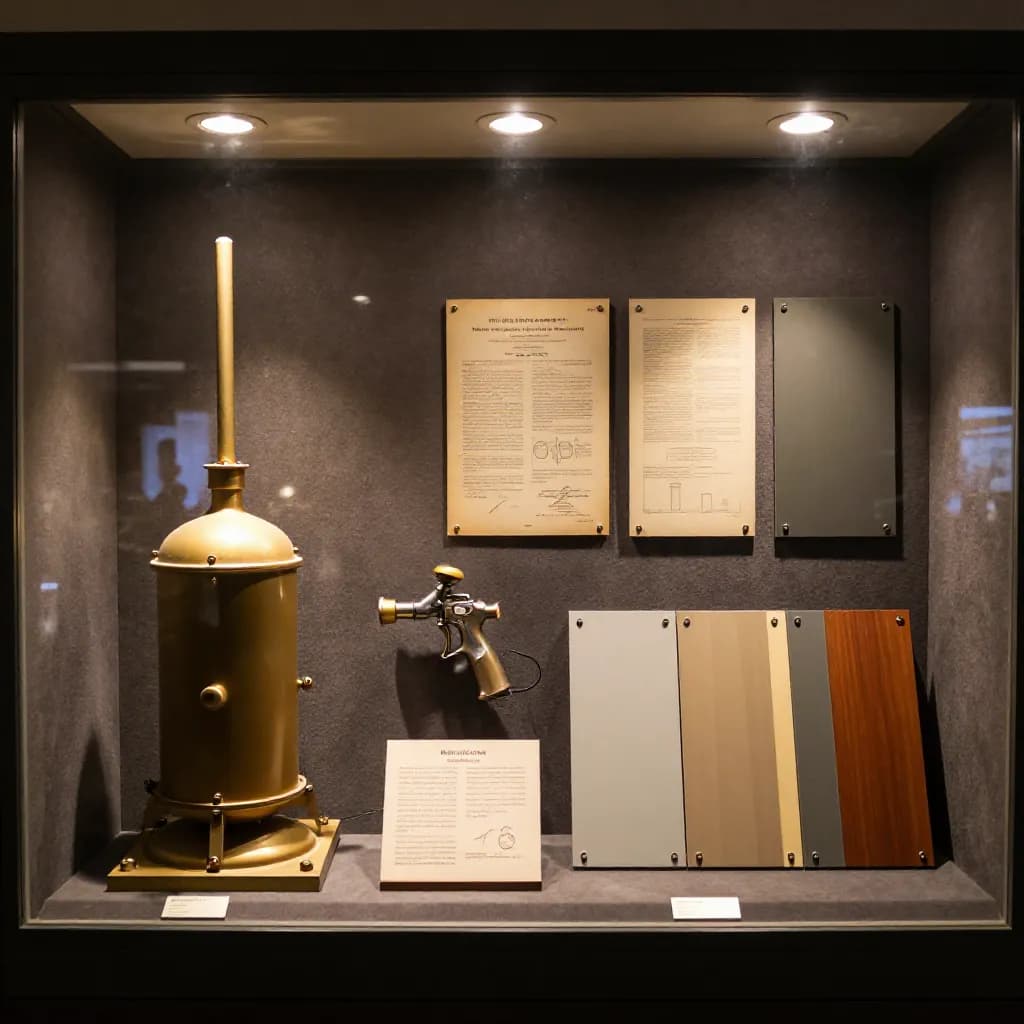
Dr. Erwin Gemmer's 1945 German patent is widely recognized as the first patent specifically describing a powder coating process. Gemmer's invention involved applying finely ground thermoplastic resin powder to heated metal substrates, where the powder melted on contact and formed a continuous protective film. While the specific methods described in Gemmer's patent were relatively primitive, the core concept — using dry polymer powder as a coating material — was genuinely novel and laid the groundwork for all subsequent powder coating technology.
Ready to Start Your Project?
From one-off customs to 15,000-part production runs — get precise pricing in 24 hours.
On This Page
The Foundation Patents: 1940s-1950s
The fluidized bed coating process, patented in the early 1950s by researchers in Germany, represented the first commercially viable method for applying powder coatings. The key innovation was the use of an upward-flowing air stream to suspend powder particles in a fluid-like state, creating a bed into which preheated parts could be dipped. This process solved the practical problem of how to apply powder uniformly to three-dimensional objects and became the first powder coating method to achieve significant commercial adoption.
Knoll AG, a German chemical company, was among the early patent holders for fluidized bed coating technology and played an important role in commercializing the process for industrial applications. Their work on polyethylene and nylon powder coatings for wire goods, pipe fittings, and electrical components demonstrated the commercial potential of the technology.
These foundation patents were primarily focused on thermoplastic powder coatings — materials that melt and resolidify without chemical change. The development of thermoset powder coatings, which undergo irreversible crosslinking during curing, would come later and would prove to be the more commercially significant branch of the technology. However, the thermoplastic foundation patents established the basic principles of powder application, fluidization, and heat fusion that remain relevant to all powder coating processes.
The Electrostatic Revolution: 1960s Patents
The 1960s produced the patents that transformed powder coating from a niche industrial process into a mainstream finishing technology. The development of electrostatic spray application — the ability to charge powder particles and deposit them on grounded substrates without preheating — was the single most important innovation in the history of powder coating.
Sames, a French company specializing in electrostatic application equipment, filed key patents in the early 1960s for the electrostatic spray application of powder coatings. Their innovation adapted the corona charging principle — already used in liquid electrostatic spraying — to dry powder particles. The Sames patents described the use of a high-voltage electrode to create a corona discharge that charged powder particles as they passed through the spray gun, enabling them to be deposited on grounded workpieces at room temperature.
This breakthrough solved the fundamental limitation of the fluidized bed process — the need to preheat parts before coating. By eliminating preheating, electrostatic spray application dramatically expanded the range of parts that could be powder coated, reduced energy consumption, and enabled precise control of film thickness in the decorative range of 25-100 microns.
Volstatic, a Dutch company, developed competing electrostatic powder application technology and filed patents that contributed to the rapid advancement of the field. The competition between Sames, Volstatic, and other equipment manufacturers drove rapid innovation in gun design, powder feeding systems, and booth technology throughout the 1960s and 1970s.
Triboelectric charging patents emerged as an alternative to corona charging. The tribo charging concept — using friction between powder particles and a gun barrel to generate electrostatic charge — was patented by several inventors and companies. Tribo charging offered advantages for coating complex geometries where the strong electric field of corona charging caused Faraday cage effects, and it became an important complement to corona technology.
Powder reclaim system patents were filed during this period, describing methods for collecting overspray powder, sieving it to remove contaminants and oversized particles, and returning it to the feed system for reuse. These reclaim innovations were essential for achieving the 95-98% material utilization rates that became one of powder coating's most compelling economic advantages.
Thermoset Chemistry Breakthroughs: 1970s-1980s
The 1970s and 1980s saw an explosion of patent activity in thermoset powder coating chemistry, as resin manufacturers and coating formulators developed the crosslinking systems that would enable powder coatings to compete with liquid paints in demanding applications.
Epoxy powder coating patents from companies including Shell Chemical, Ciba-Geigy, and Dow Chemical established the formulation principles for the first widely successful thermoset powder coatings. These patents covered the use of bisphenol-A epoxy resins crosslinked with dicyandiamide (DICY), phenolic hardeners, and anhydride curing agents. Epoxy powders became the standard for functional protective coatings, offering excellent adhesion, chemical resistance, and mechanical properties.
The development of polyester powder coatings for exterior applications was a watershed moment. Patents filed by companies including DSM, UCB (now Cytec/Solvay), and Hüls (now Evonik) described polyester resins specifically designed for powder coating, with controlled molecular weight, functionality, and glass transition temperature. The combination of these polyester resins with TGIC crosslinker produced coatings with dramatically improved UV resistance compared to epoxies, opening the door to architectural and outdoor applications.
TGIC (triglycidylisocyanurate) crosslinker patents, originally filed by Ciba-Geigy, were among the most commercially significant in powder coating history. TGIC-crosslinked polyester became the dominant chemistry for exterior-durable powder coatings worldwide, and the patents generated substantial licensing revenue for their holders.
HAA (hydroxyalkylamide) crosslinker technology, developed by EMS-Chemie as an alternative to TGIC, was patented in the 1980s and gained commercial importance in the 1990s as concerns about TGIC's mutagenic classification led to regulatory restrictions in some markets. HAA-crosslinked polyesters offered comparable weathering performance to TGIC systems without the health classification concerns.
Polyurethane powder coating patents described the use of blocked isocyanate crosslinkers with polyester or acrylic resins. These systems, developed by companies including Hüls, Bayer, and Degussa, produced coatings with exceptional smoothness, chemical resistance, and flexibility. Polyurethane powders found particular success in automotive clear coat applications where surface quality was paramount.
Acrylic powder coating patents from companies including Mitsui Chemicals and Anderson Development Company described GMA (glycidyl methacrylate) acrylic resins crosslinked with dicarboxylic acids. Acrylic powders offered outstanding clarity, weathering resistance, and automotive-quality appearance, though their higher cost limited adoption to premium applications.
Application Technology Innovations: 1990s-2000s
The 1990s and 2000s produced a wave of patents focused on application equipment, process control, and manufacturing technology that dramatically improved the efficiency, quality, and versatility of powder coating operations.
Automatic color change system patents revolutionized powder coating production by reducing the time required to switch between colors from hours to minutes. These systems, developed by equipment manufacturers including Nordson, Gema (now part of Graco), and Wagner, used self-cleaning gun assemblies, quick-change powder feed systems, and automated booth cleaning to enable rapid color transitions without cross-contamination. This innovation made powder coating economically viable for short production runs and just-in-time manufacturing.
Robotic application system patents described the integration of powder spray guns with industrial robots, enabling precise, programmable coating of complex three-dimensional parts. Robotic systems could adjust gun position, angle, powder flow rate, and electrostatic settings in real time based on the geometry of each part, achieving coating uniformity that was impossible with fixed reciprocating systems.
Dense-phase powder transport patents addressed a fundamental limitation of conventional powder feeding systems. Traditional venturi-based systems used large volumes of compressed air to transport powder from the feed hopper to the spray gun, resulting in high air velocities that could cause impact fusion and inconsistent powder delivery. Dense-phase transport systems, patented by companies including ITW Gema and Nordson, used lower air volumes and higher powder concentrations to achieve more consistent, controllable powder delivery.
Infrared and near-infrared curing patents described methods for curing powder coatings using radiant energy rather than convection heat. These systems offered dramatically faster cure times — seconds rather than minutes — and reduced energy consumption. Patents from companies including Heraeus, BGK, and Infrared Engineering covered lamp designs, reflector geometries, and process control methods optimized for powder coating cure.
Powder manufacturing technology patents covered advances in extrusion, grinding, and classification that improved product quality and manufacturing efficiency. Twin-screw extruder designs optimized for powder coating compounding, air classifying mill improvements for tighter particle size control, and bonding process patents for metallic powder coatings all contributed to the advancement of manufacturing technology.
Specialty and Functional Coating Patents: 2000s-2010s
The first two decades of the twenty-first century saw patent activity shift toward specialty and functional powder coatings that expanded the technology beyond its traditional role as a protective and decorative finish.
Low-temperature cure powder coating patents addressed one of the industry's most persistent challenges — reducing the cure temperature to enable coating of heat-sensitive substrates. Patents from companies including Akzo Nobel, DSM, and Cytec described novel resin and crosslinker systems that achieved full cure at 140-160°C, compared to the traditional 180-200°C range. Some ultra-low-temperature systems targeted cure temperatures as low as 120°C, potentially enabling powder coating of certain plastics and pre-assembled components.
Antimicrobial powder coating patents described formulations incorporating silver ions, copper compounds, or organic biocides that inhibit the growth of bacteria, mold, and other microorganisms on the coated surface. These coatings found applications in healthcare facilities, food processing equipment, public transportation, and other environments where surface hygiene is important.
Self-cleaning powder coating patents covered formulations with photocatalytic titanium dioxide or hydrophilic surface modifications that enable the coating to break down organic dirt when exposed to sunlight and wash clean in rain. These coatings were developed primarily for architectural applications where facade cleaning is expensive and disruptive.
Sublimation transfer technology patents described methods for applying photorealistic decorative patterns — wood grain, stone, marble, and custom designs — to powder-coated surfaces using heat-activated transfer films. This technology, developed by companies including Decoral System and Tiger Coatings, enabled aluminum profiles to replicate the appearance of natural materials while retaining the performance advantages of powder-coated metal.
Anti-fingerprint powder coating patents addressed the growing demand for coatings that resist visible fingerprint marks on consumer electronics, appliances, and architectural hardware. These formulations use specialized surface chemistry to minimize the optical contrast between clean and touched areas, maintaining a clean appearance even with frequent handling.
Thermal barrier powder coating patents described formulations with low thermal conductivity that reduce heat transfer through coated metal components. These coatings found applications in automotive exhaust systems, industrial equipment, and building components where thermal management is important.
UV-Cure and Next-Generation Patents: 2010s-Present
The most recent wave of powder coating patents reflects the industry's push toward fundamentally new curing technologies, sustainable materials, and digital manufacturing integration.
UV-curable powder coating patents have been filed by numerous companies and research institutions, describing formulations that use ultraviolet light rather than thermal energy to initiate crosslinking. Key patent areas include novel photoinitiator systems with improved efficiency and spectral response, UV-curable resin chemistries based on acrylate, vinyl ether, and maleimide functional groups, and process patents for the combined thermal melt and UV cure sequence required by current UV powder technology.
The challenge of achieving both good melt-flow (which requires low viscosity at elevated temperature) and rapid UV cure (which requires high photoinitiator efficiency) has driven creative patent solutions. Dual-cure systems that use a combination of thermal and UV crosslinking mechanisms have been patented as a practical compromise that achieves good film appearance while enabling low-temperature cure.
Bio-based powder coating patents describe formulations using resins derived from renewable resources — plant oils, sugars, lignin, and other biomass feedstocks — as partial or complete replacements for petroleum-derived raw materials. Companies including Akzo Nobel, Allnex, and several university research groups have filed patents covering bio-based polyester, epoxy, and acrylic resins for powder coating applications.
Nano-technology patents in powder coating cover the use of nano-scale additives — nano-silica, nano-alumina, nano-zinc oxide, and carbon nanotubes — to enhance coating properties. These nano-additives can improve scratch resistance, UV protection, barrier properties, and mechanical strength at very low loading levels, potentially enabling thinner coatings with equivalent or superior performance.
Digital manufacturing patents describe the integration of powder coating processes with Industry 4.0 technologies — IoT sensors, machine learning algorithms, digital twins, and predictive analytics. These patents cover systems for real-time process optimization, automated quality inspection using computer vision, predictive maintenance of coating equipment, and data-driven formulation development.
Recycled-content powder coating patents address the growing demand for circular economy solutions in the coatings industry. These patents describe methods for incorporating recycled polymer feedstocks into powder coating formulations without compromising performance, as well as processes for recovering and recycling powder coating material from end-of-life coated products.
Inventor Stories and Innovation Culture
Behind every patent is an inventor or team of inventors whose creativity, persistence, and technical insight drove the powder coating industry forward. While the corporate patent holders are well-documented, the individual stories of key inventors provide a human dimension to the technology's evolution.
Dr. Erwin Gemmer, the father of powder coating, worked in relative obscurity in post-war Germany. His 1945 patent was ahead of its time — the manufacturing technology and application equipment needed to realize his vision would not exist for another decade. Gemmer's contribution was primarily conceptual: he recognized that dry polymer powder could serve as a coating material, eliminating the need for solvents entirely. This insight, simple in retrospect, required the imagination to see beyond the liquid paint paradigm that had dominated surface finishing for centuries.
The engineers at Sames who developed electrostatic powder spray application in the early 1960s solved a problem that many considered impossible — how to make dry powder particles adhere to a room-temperature metal surface. Their solution, adapting corona charging technology from liquid electrostatic spraying, required deep understanding of both electrostatics and powder physics. The Sames team's work transformed powder coating from a laboratory curiosity into a practical industrial process.
The polymer chemists who developed thermoset powder coating resins in the 1970s and 1980s faced the challenge of creating materials that were stable as dry powders at room temperature but reactive enough to crosslink rapidly at curing temperatures. This required precise control of molecular weight, glass transition temperature, and functional group chemistry — a balancing act that demanded both theoretical knowledge and extensive experimental work.
The innovation culture of the powder coating industry has been characterized by close collaboration between resin manufacturers, equipment builders, and end users. Many of the most important innovations emerged from partnerships where equipment capabilities and material properties were co-developed to solve specific application challenges. This collaborative approach continues today, with industry consortia, university partnerships, and pre-competitive research programs driving innovation in areas such as UV cure, bio-based materials, and digital manufacturing.
The Powder Coating Institute (PCI) and the European powder coating associations have played important roles in fostering innovation by organizing technical conferences, publishing research, and facilitating knowledge exchange between industry participants. These organizations provide forums where inventors and innovators can share their work, receive feedback, and identify collaboration opportunities.
Frequently Asked Questions
Who filed the first powder coating patent?
Dr. Erwin Gemmer, a German scientist, filed the first powder coating patent in 1945. His invention described applying finely ground thermoplastic resin powder to heated metal substrates where it melted into a continuous film. While his specific methods were later superseded, the core concept established the foundation for the entire powder coating industry.
What was the most important powder coating patent?
The electrostatic spray application patents filed by Sames (France) in the early 1960s are widely considered the most transformative. By enabling charged powder particles to be deposited on room-temperature grounded substrates, these patents eliminated the need for preheating and made powder coating competitive with liquid paint for decorative applications.
What are the most significant recent powder coating innovations?
Recent innovations include UV-curable powder coatings for low-temperature cure, bio-based resins from renewable resources, nano-technology additives for enhanced properties, low-temperature cure formulations (140-160°C), digital manufacturing integration with AI and IoT, and functional coatings with antimicrobial or self-cleaning properties.
How did TGIC crosslinker change the powder coating industry?
TGIC (triglycidylisocyanurate), patented by Ciba-Geigy, enabled polyester powder coatings with excellent UV resistance for exterior applications. TGIC-crosslinked polyester became the dominant chemistry for architectural and outdoor powder coatings worldwide, opening markets that were previously inaccessible due to the poor UV resistance of epoxy systems.
What role did patent competition play in powder coating development?
Competition between patent holders drove rapid innovation. Sames vs. Volstatic in electrostatic equipment, TGIC vs. HAA in crosslinker chemistry, and multiple companies in low-temperature cure technology all accelerated development. This competitive dynamic, combined with collaborative industry organizations, created a vibrant innovation ecosystem.
Ready to Start Your Project?
From one-off customs to 15,000-part production runs — get precise pricing in 24 hours.