The oil and gas industry operates in some of the most corrosive environments on earth — offshore platforms in saltwater spray, buried pipelines in aggressive soils, refineries processing corrosive hydrocarbons, and wellhead equipment exposed to hydrogen sulfide and carbon dioxide. Corrosion costs the global oil and gas industry an estimated $1.372 billion annually according to NACE International (now AMPP — Association for Materials Protection and Performance), making effective corrosion protection a critical operational and safety requirement.
Industrial
Powder Coating for Oil and Gas Infrastructure: Pipeline Fittings, Valve Bodies, and Offshore Platform Protection
Sundial Powder Coating·April 22, 2026·13 min
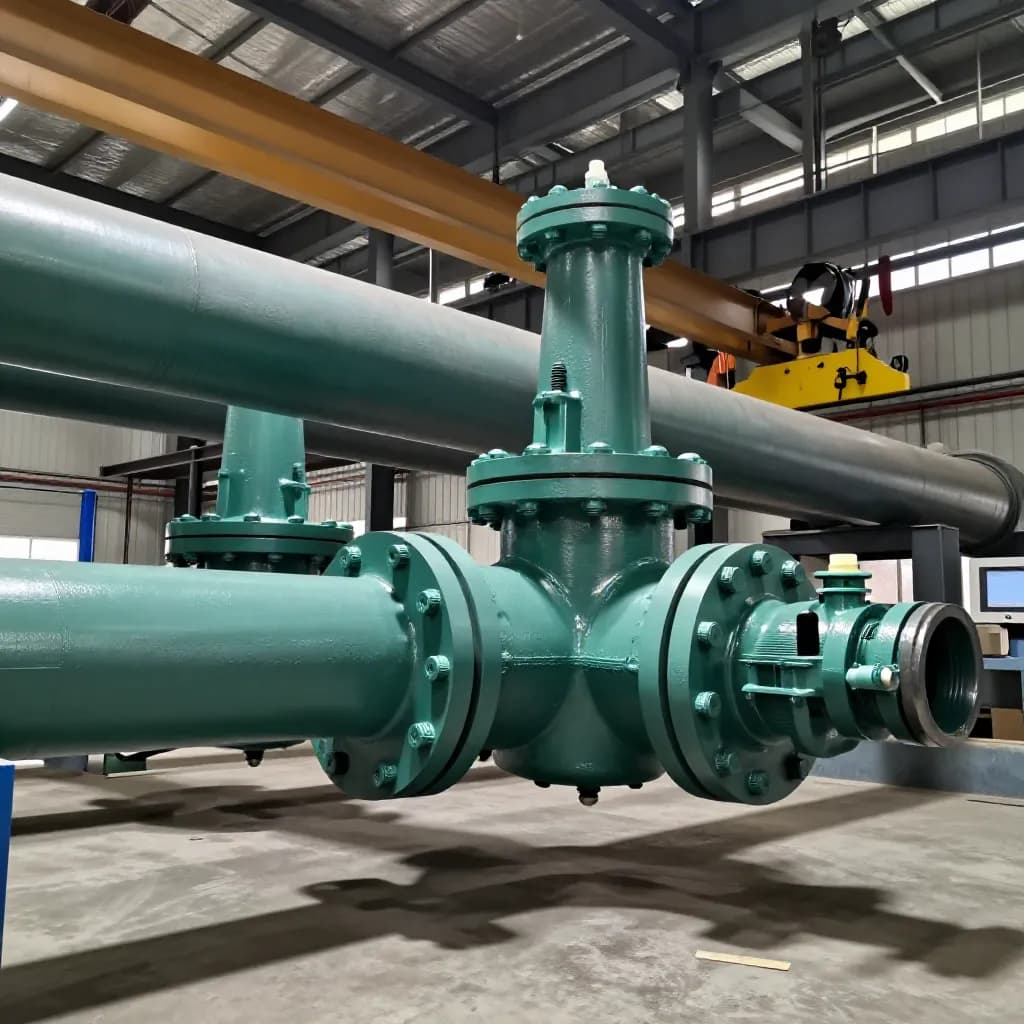
Powder coating technologies play a vital role in the oil and gas corrosion protection strategy, particularly fusion-bonded epoxy (FBE) coatings for pipelines and infrastructure, and functional powder coatings for valves, fittings, and structural steel. Unlike decorative powder coatings used in architectural and consumer applications, oil and gas powder coatings are engineered primarily for barrier protection, chemical resistance, and cathodic disbondment resistance, with appearance being a secondary consideration.
Ready to Start Your Project?
From one-off customs to 15,000-part production runs — get precise pricing in 24 hours.
On This Page
Corrosion Protection Demands in Oil and Gas Environments
The regulatory framework for oil and gas coatings is extensive and demanding. NACE/AMPP standards, ISO 21809 series for pipeline coatings, NORSOK M-501 for offshore structures, and API specifications for equipment coatings all define minimum performance requirements that coating systems must meet. Compliance with these standards is not optional — it is a condition of operation for pipelines, platforms, and processing facilities worldwide.
Fusion-Bonded Epoxy Coatings for Pipeline Protection
Fusion-bonded epoxy (FBE) is the most widely used powder coating technology in the oil and gas industry, protecting hundreds of thousands of kilometers of steel pipeline worldwide. FBE coatings are single-layer thermosetting epoxy powders applied to preheated steel pipe at 230-245°C, where they melt, flow, and cross-link to form a dense, adherent film of 350-500 microns that provides exceptional corrosion protection for buried and submerged pipelines.
The FBE application process is highly controlled. Steel pipe is first cleaned by abrasive blasting to Sa 3 (white metal) per ISO 8501-1, achieving a surface profile of 50-100 micrometers. The pipe is then heated to the specified application temperature using induction coils, and the FBE powder is applied by electrostatic spray guns as the pipe rotates. The heat of the pipe melts the powder on contact, and the coating cures within 1-3 minutes as the pipe passes through the coating station. This rapid, continuous process can coat pipe at rates of 200-400 joints per shift.
FBE coatings provide corrosion protection through three mechanisms: barrier protection (the dense epoxy film prevents moisture and corrosive species from reaching the steel), adhesion (the chemical bond between the epoxy and the steel surface resists disbondment), and compatibility with cathodic protection (FBE resists the alkaline environment generated by cathodic protection systems that can cause other coatings to disbond). This combination of properties makes FBE uniquely suited to pipeline service where cathodic protection is used as a secondary corrosion control measure.
The primary international standard for FBE pipeline coatings is ISO 21809-2, which specifies requirements for material qualification, application procedures, and testing. Key performance requirements include cathodic disbondment resistance (maximum 8 mm radius after 28 days at 65°C), hot water adhesion (no loss of adhesion after 24 hours at 75°C), and flexibility (no cracking at 3° per pipe diameter bend at -30°C).
Three-Layer Polyethylene and Polypropylene Pipeline Systems
For pipelines operating at elevated temperatures or in particularly aggressive soil conditions, three-layer polyethylene (3LPE) and three-layer polypropylene (3LPP) coating systems provide enhanced protection beyond single-layer FBE. These systems use FBE as the first layer (primer), followed by a copolymer adhesive and an extruded polyethylene or polypropylene outer layer, creating a composite coating system with total thickness of 1.8-3.0 mm for 3LPE and 1.5-3.0 mm for 3LPP.
The FBE primer in a three-layer system provides the primary corrosion protection and adhesion to the steel substrate, identical in function to standalone FBE. The copolymer adhesive layer bonds the FBE to the polyolefin outer layer, creating a mechanically robust composite. The polyethylene or polypropylene outer layer provides mechanical protection against soil stress, rock impingement, and handling damage during transportation and installation, as well as additional moisture barrier protection.
3LPE systems are specified for pipelines operating at temperatures up to 80°C, while 3LPP systems extend the operating temperature range to 140°C, making them suitable for high-temperature oil pipelines and steam injection lines. The choice between PE and PP is driven primarily by operating temperature, with 3LPP commanding a premium due to the higher material cost and more demanding application parameters of polypropylene.
ISO 21809-1 is the governing standard for three-layer polyolefin pipeline coatings, specifying requirements for material qualification, application procedures, and performance testing. Key tests include cathodic disbondment (maximum 7 mm radius after 28 days at the maximum operating temperature), peel adhesion (minimum 100 N/cm at 23°C for 3LPE), and impact resistance (minimum 5 J/mm at -30°C). These requirements ensure that the coating system maintains its protective performance throughout the pipeline's design life of 30-50 years.
Valve Bodies, Fittings, and Wellhead Equipment
Valves, fittings, flanges, and wellhead equipment represent a distinct category of oil and gas powder coating applications. Unlike pipeline coatings that are applied in continuous production lines, these components are individually coated in batch processes and must accommodate complex geometries, tight dimensional tolerances, and the need for coating-free zones on sealing surfaces, threads, and flange faces.
Valve bodies are typically cast or forged from carbon steel, alloy steel, or stainless steel, and may range in size from 2-inch gate valves to 48-inch butterfly valves. The coating must protect external surfaces from atmospheric corrosion while withstanding the thermal cycling, vibration, and chemical exposure typical of oil and gas service. Epoxy powder coatings at 200-350 microns are the standard specification for valve body exteriors, providing excellent chemical resistance and adhesion in both atmospheric and buried service.
NACE SP0394 (formerly RP0394) provides guidelines for the application of protective coatings to valves and wellhead equipment. Key requirements include surface preparation to SSPC-SP 10 / NACE No. 2 (near-white metal blast), minimum coating thickness of 200 microns for atmospheric service and 350 microns for buried service, and holiday detection testing at 5 volts per micron of coating thickness to identify pinholes and defects that could initiate corrosion.
Masking is critical for valve coating operations. Flange faces, ring groove joints, threaded connections, stem packing areas, and any surface that interfaces with gaskets or seals must be masked to prevent coating buildup that could compromise sealing integrity. High-temperature silicone masking products rated for the 200-230°C FBE cure cycle are used, and all masked areas are inspected after coating removal to verify that no coating residue remains on critical sealing surfaces.
Offshore Platform Structural Steel Protection
Offshore oil and gas platforms operate in the most aggressive corrosion environment in the industry — continuous saltwater spray, high humidity, UV radiation, and atmospheric pollutants combine to create corrosion rates that can exceed 0.5 mm per year on unprotected carbon steel. Structural steel on offshore platforms requires robust coating systems that can provide 15-25 years of corrosion protection with minimal maintenance, as coating repair on offshore structures is extremely expensive and logistically challenging.
NORSOK M-501, developed by the Norwegian petroleum industry, is the most widely referenced coating standard for offshore structures. It defines coating system requirements based on the exposure zone: atmospheric zone, splash zone, submerged zone, and internal zones. For atmospheric zone structural steel, NORSOK M-501 System 1 specifies an inorganic zinc silicate primer (75 microns), epoxy intermediate coat (150 microns), and polyurethane or polysiloxane topcoat (50 microns), for a total dry film thickness of 280 microns minimum.
While the NORSOK M-501 system is predominantly liquid-applied due to the field application requirements of offshore construction, powder coating plays an important role in the shop-applied coating of prefabricated structural modules, pipe supports, cable trays, and equipment skids that are coated onshore before transport to the offshore installation site. Epoxy powder coatings applied at 250-400 microns provide excellent corrosion protection for these shop-coated components, with the advantage of zero VOC emissions and high material efficiency compared to liquid epoxy systems.
For topsides equipment — process vessels, heat exchangers, pump skids, and electrical enclosures — powder coating is increasingly specified as the primary coating system. These components are fabricated and coated in controlled shop environments where powder coating's advantages in film consistency, edge coverage, and environmental compliance can be fully realized. The coated equipment is then transported to the platform and installed, with only field joints and damage repair requiring liquid paint touch-up.
NACE/AMPP Standards and Coating Specification
The oil and gas industry relies on a comprehensive framework of coating standards developed by NACE International (now part of AMPP — Association for Materials Protection and Performance) and international standards organizations. These standards define requirements for surface preparation, coating material qualification, application procedures, inspection, and testing that ensure consistent coating performance across the global oil and gas supply chain.
NACE SP0188 provides guidelines for the discontinuity (holiday) testing of new protective coatings on steel surfaces. Holiday testing is mandatory for oil and gas powder coatings because even a single pinhole in the coating can initiate corrosion that propagates beneath the film. Low-voltage wet sponge testing (per NACE SP0188 Method A) is used for coatings up to 500 microns, while high-voltage spark testing (Method B) is used for thicker coatings. Test voltage is typically calculated at 5 volts per micron of coating thickness for high-voltage testing.
SSPC/NACE surface preparation standards define the cleanliness levels required before coating application. For oil and gas powder coatings, SSPC-SP 10 / NACE No. 2 (near-white metal blast) is the minimum requirement, with SSPC-SP 5 / NACE No. 1 (white metal blast) specified for FBE pipeline coatings and critical service applications. These standards ensure that the steel surface is free of mill scale, rust, oil, grease, and other contaminants that could compromise coating adhesion and performance.
ISO 12944 provides a comprehensive framework for corrosion protection of steel structures by protective paint systems, classifying environments from C1 (very low corrosivity) to CX (extreme, offshore). Oil and gas facilities typically fall into C4 (high), C5 (very high), or CX categories, requiring coating systems with high durability ratings and total dry film thicknesses of 200-400+ microns. While ISO 12944 was developed primarily for liquid paint systems, its environmental classification and durability framework are increasingly applied to powder coating specifications for oil and gas applications.
High-Temperature and Chemical-Resistant Powder Coatings
Oil and gas processing equipment frequently operates at elevated temperatures and in contact with corrosive process fluids, requiring powder coatings with specialized thermal and chemical resistance properties. Standard decorative polyester powders are inadequate for these demanding service conditions — instead, engineered epoxy, phenolic, and specialty resin systems are formulated specifically for high-temperature and chemical-resistant applications.
Epoxy novolac powder coatings represent the highest tier of chemical resistance in the powder coating family. These coatings use novolac-cured epoxy resins that provide exceptional resistance to acids, alkalis, solvents, and crude oil at temperatures up to 230°C. Epoxy novolac powders are specified for the internal lining of oil and gas piping, vessels, and tanks where the coating must resist continuous contact with process fluids. Film thicknesses of 300-500 microns are typical for internal lining applications, applied in multiple coats with inter-coat holiday testing to ensure pinhole-free coverage.
Phenolic powder coatings provide even higher temperature resistance than epoxy novolac, maintaining film integrity at continuous service temperatures up to 260°C. These coatings are used for downhole tubular goods, high-temperature pipeline sections, and process equipment operating above the temperature limits of epoxy systems. Phenolic powders require higher cure temperatures (230-260°C) and longer cure times than standard epoxy powders, which must be accommodated in the coating facility's oven capacity and production scheduling.
For external insulation under insulation (CUI) protection, epoxy powder coatings are applied to piping and equipment surfaces before thermal insulation is installed. CUI is one of the most insidious corrosion mechanisms in oil and gas facilities — moisture penetrates the insulation and is trapped against the steel surface, causing corrosion that is hidden from visual inspection. Epoxy powder coatings at 250-400 microns provide an effective CUI barrier, and their resistance to the alkaline environment of wet mineral wool insulation makes them superior to many liquid coating alternatives for this application.
Quality Assurance and Inspection for Oil and Gas Coatings
Quality assurance for oil and gas powder coatings is significantly more rigorous than for decorative or architectural applications, reflecting the critical safety and environmental consequences of coating failure on pipelines, platforms, and processing equipment. Third-party coating inspection by NACE/AMPP-certified inspectors (CIP Level 1, 2, or 3) is standard practice for oil and gas coating projects, with inspection requirements defined in the project coating specification.
The inspection process covers every stage of the coating operation: incoming material verification (powder batch certificates, shelf life, storage conditions), surface preparation verification (cleanliness per SSPC/NACE standards, surface profile per ISO 8503 or ASTM D4417, dust level per ISO 8502-3), environmental conditions monitoring (temperature, humidity, dew point per ISO 8502-4), coating application monitoring (film thickness, cure temperature and time), and final inspection (visual examination, film thickness measurement, adhesion testing, holiday detection).
For FBE pipeline coatings, additional testing requirements include differential scanning calorimetry (DSC) to verify cure completeness (minimum 95% cure per ISO 21809-2), cathodic disbondment testing on production cutback samples, and flexibility testing on coated test rings. These tests verify that the FBE coating has achieved the cross-link density and adhesion necessary for long-term pipeline protection.
Documentation and traceability are essential elements of oil and gas coating quality assurance. Every coated component must be traceable to the specific powder batch, application date, cure parameters, and inspection results. Coating inspection reports, material certificates, and test results are retained as permanent quality records for the life of the asset — typically 25-50 years for pipelines and offshore structures. This documentation supports integrity management programs and provides evidence of coating system compliance in the event of a corrosion failure investigation.
Frequently Asked Questions
What is fusion-bonded epoxy (FBE) coating for pipelines?
FBE is a thermosetting epoxy powder applied to preheated steel pipe at 230-245°C. It melts, flows, and cross-links to form a 350-500 micron film that provides barrier protection, strong adhesion, and cathodic protection compatibility. FBE is the most widely used pipeline coating technology worldwide, governed by ISO 21809-2.
What NACE standards apply to oil and gas powder coatings?
Key standards include NACE SP0394 for valve and wellhead coatings, NACE SP0188 for holiday testing, and SSPC-SP 5/10 for surface preparation. ISO 21809 covers pipeline coatings, NORSOK M-501 covers offshore structures, and ISO 12944 provides the environmental classification framework for corrosion protection systems.
How does powder coating protect offshore platform equipment?
Shop-applied epoxy powder coatings at 250-400 microns protect prefabricated modules, pipe supports, cable trays, and equipment skids before offshore installation. The dense epoxy film provides excellent corrosion resistance in the C5-M marine environment, with zero VOC emissions and superior edge coverage compared to liquid alternatives.
What powder coating resists the highest temperatures in oil and gas service?
Phenolic powder coatings withstand continuous service at 260°C, while epoxy novolac powders handle up to 230°C with superior chemical resistance. Standard FBE coatings operate up to 110°C for single-layer and 140°C for three-layer polypropylene systems. Coating selection depends on both temperature and chemical exposure requirements.
Why is holiday testing required for oil and gas powder coatings?
Even a single pinhole in the coating can initiate corrosion that propagates beneath the film, potentially leading to pipeline leaks or structural failure. Holiday testing per NACE SP0188 uses electrical methods to detect discontinuities invisible to the naked eye, ensuring pinhole-free coverage before the component enters service.
Ready to Start Your Project?
From one-off customs to 15,000-part production runs — get precise pricing in 24 hours.