The contract furniture industry — encompassing office desks, workstations, filing systems, storage units, and seating frames — relies on powder coating as its primary metal finishing technology. Virtually every major office furniture manufacturer worldwide uses powder coating for steel and aluminum components, a transition that began in the 1980s and is now essentially complete. The reasons are compelling: powder coating delivers the consistent quality, color range, durability, and environmental performance that the modern contract furniture market demands.
Commercial
Powder Coating for Office Furniture Systems: Durable, Sustainable Finishes for Modern Workspaces
Sundial Powder Coating·April 22, 2026·12 min
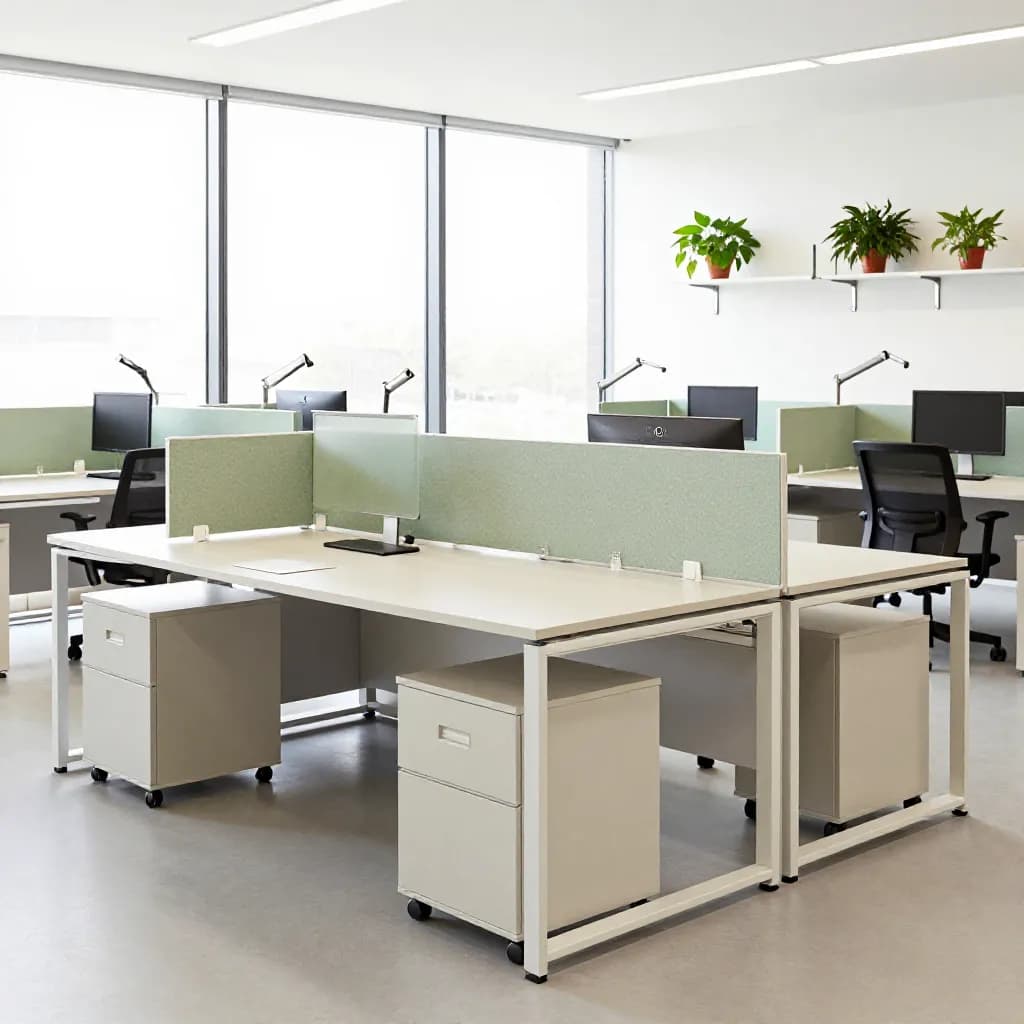
Office furniture operates in a demanding environment despite its indoor setting. Desks and workstations endure daily contact with hands, arms, bags, and personal items. Filing cabinets and storage units are opened and closed thousands of times per year, creating wear at handle and edge contact points. Partition systems must maintain their appearance over 10-15 year lease cycles in commercial buildings. Powder coating meets these demands with a hard, dense film that resists scratching, chipping, and wear far more effectively than liquid paint alternatives.
Ready to Start Your Project?
From one-off customs to 15,000-part production runs — get precise pricing in 24 hours.
On This Page
Powder Coating's Dominance in Contract Furniture Manufacturing
The commercial furniture sector has also been a driver of sustainability in powder coating. Major furniture manufacturers have adopted environmental management systems and product certifications that require low-emission finishing processes. Powder coating's zero VOC emissions, high material efficiency, and absence of hazardous waste streams align directly with certifications such as BIFMA LEVEL, Greenguard, and FEMB (European Office Furniture Federation) sustainability standards that are increasingly required in corporate procurement specifications.
Desks, Workstations, and Ergonomic Frame Systems
Office desks and workstations represent the highest-volume application for powder coating in the furniture sector. The steel frames, legs, and structural components of both fixed and height-adjustable desks are powder coated for durability, aesthetics, and corrosion protection.
Height-adjustable (sit-stand) desks have become one of the fastest-growing segments in office furniture, driven by workplace wellness initiatives and ergonomic regulations. The telescoping steel columns and base frames of these desks require powder coatings with exceptional abrasion resistance because the moving components slide against each other during height adjustment. Polyester powder coatings with hardness ratings of 2H or higher on the pencil hardness scale are standard for these applications, and some manufacturers specify additional surface treatments such as PTFE-modified topcoats to reduce friction at sliding interfaces.
The color palette for desk frames has evolved significantly from the limited range of black, grey, and white that dominated office furniture for decades. Contemporary workspace design embraces color as a tool for brand expression, wayfinding, and employee wellbeing. Furniture manufacturers now offer desk frames in 20-40 standard colors, with custom color matching available for large corporate orders. RAL 9005 (jet black), RAL 9006 (white aluminum), RAL 7016 (anthracite grey), and RAL 9003 (signal white) remain the volume leaders, but warm tones, pastels, and bold accent colors are gaining share.
Texture selection is equally important for desk components. Fine texture finishes (sometimes called sand texture or semi-matte) are preferred for desk frames because they hide minor surface imperfections in the steel substrate, resist showing fingerprints and minor scratches, and provide a contemporary aesthetic that complements both laminate and solid surface desktop materials.
Filing Cabinets, Lockers, and Storage Systems
Filing cabinets and storage systems demand powder coatings that combine aesthetic quality with exceptional mechanical durability. These products experience concentrated wear at drawer slides, handle areas, and edges where metal-to-metal contact occurs during daily use. The coating must resist chipping at impact points, maintain adhesion at formed edges where the steel substrate is under residual stress from bending operations, and retain its appearance through years of handling.
The standard specification for filing cabinet coatings calls for polyester or polyester-epoxy hybrid powder at 60-80 microns film thickness, with impact resistance of at least 80 inch-pounds (direct) per ASTM D2794 and pencil hardness of H to 2H. These mechanical properties ensure the coating withstands the knocks, bumps, and abrasion that filing cabinets encounter in busy office environments.
Locker systems for workplaces, gyms, and educational facilities present additional challenges. Lockers in high-traffic environments experience deliberate abuse — kicks, slams, and impacts from bags and equipment — that tests coating adhesion and impact resistance to their limits. Heavy-duty polyester powder coatings at 80-100 microns, applied over zinc phosphate pretreatment, provide the robust protection these applications demand. Anti-bacterial powder coatings incorporating silver ion technology are increasingly specified for locker systems in healthcare and food service environments.
Mobile pedestal units that roll beneath desks require coatings with good scratch resistance on the top surface, which often serves as an impromptu seat. The edges and corners of pedestals are vulnerable to chipping when the unit is pushed against desk legs or walls. Radius edges of at least 1 mm on sheet metal components significantly improve powder coating coverage and durability at these critical points.
Color consistency across large orders of filing cabinets and storage units is a critical quality requirement. A single office fit-out may include hundreds of identical units manufactured over several production runs. Powder coating's inherent batch-to-batch consistency, combined with spectrophotometric color measurement and acceptance criteria of delta E ≤ 1.0, ensures visual uniformity across the entire installation.
Partition Systems and Workspace Dividers
Office partition systems — including floor-to-ceiling partitions, desk-mounted screens, and freestanding dividers — use powder-coated steel and aluminum frames as their structural backbone. These systems must maintain their appearance over extended service lives of 10-15 years in commercial lease environments, where the cost and disruption of refinishing is prohibitive.
Steel-framed partition systems typically use cold-rolled steel profiles that are powder coated before assembly with glass, fabric, or solid panel infills. The powder coating must provide corrosion protection (particularly important in humid climates or buildings with high occupant density), mechanical durability at connection points where partitions are joined and reconfigured, and consistent color across frames manufactured at different times.
Aluminum-framed partition systems are increasingly popular for their lighter weight and modern aesthetic. Aluminum profiles are powder coated using chromate-free pretreatment systems (zirconium or titanium-based conversion coatings) that comply with current environmental regulations. The anodized appearance that was once standard for aluminum partitions is now frequently replicated using metallic powder coatings that provide the same visual effect with greater color flexibility and easier touch-up repair.
Demountable partition systems, which are designed to be disassembled and reconfigured as office layouts change, place particular demands on coating durability. Each reconfiguration cycle involves handling, transport, and reassembly that can damage coatings at connection points and edges. Specifying powder coatings with high impact resistance (≥100 inch-pounds) and good flexibility (≥2 mm conical mandrel bend) ensures the coating survives multiple reconfiguration cycles without visible damage.
Acoustic partition panels with perforated metal faces use powder coating to finish the perforated steel or aluminum sheet. The coating must bridge the perforation edges without excessive build-up that could block the holes and reduce acoustic performance. Thin-film powder coatings applied at 40-60 microns are specified for perforated acoustic panels to maintain the open area ratio required for sound absorption.
Corporate Color Matching and Brand Identity
In the modern corporate environment, office furniture is an extension of brand identity. Companies invest significantly in creating workspaces that reflect their brand values, culture, and visual identity, and furniture color is a key element of this expression. Powder coating's ability to match virtually any color reference — RAL, NCS, Pantone, or custom samples — makes it the ideal technology for delivering brand-specific furniture finishes.
The color matching process for corporate furniture begins with a reference sample, which may be a physical color chip, a digital color specification, or even a sample of existing furniture that must be matched. Powder coating manufacturers use spectrophotometers to measure the reference color and formulate a powder that matches within agreed tolerances, typically delta E ≤ 1.0 for critical color matches. For metallic and textured finishes, visual assessment under controlled lighting conditions supplements instrumental measurement because spectrophotometers cannot fully capture the appearance of these complex finishes.
Large corporate furniture orders often require color approval processes that include laboratory-prepared spray-out panels, production trial panels, and final approval of the first production batch before full manufacturing proceeds. This structured approach ensures that the finished furniture matches the design intent and maintains consistency across the entire order.
Multi-site corporate rollouts present additional color consistency challenges. When the same furniture specification is manufactured at different factories or by different suppliers, ensuring color match between sites requires tight control of powder formulation, application parameters, and curing conditions. Centralized powder supply from a single manufacturer, combined with regular inter-site color audits, is the standard approach for maintaining consistency across distributed manufacturing.
The trend toward biophilic design in offices — incorporating natural elements and organic forms — has increased demand for nature-inspired powder coating colors. Warm wood tones, earth colors, and botanical greens are replacing the cool greys and stark whites that dominated office furniture palettes for decades. Textured finishes that evoke natural materials such as stone, concrete, and weathered metal are also gaining popularity as designers seek to create more inviting, human-centered workspaces.
Sustainability Certifications and Environmental Performance
Sustainability has become a non-negotiable requirement in the contract furniture industry, driven by corporate ESG commitments, green building certifications, and procurement policies that mandate environmentally responsible products. Powder coating's environmental credentials are a significant competitive advantage for furniture manufacturers seeking to meet these requirements.
BIFMA LEVEL certification, the leading sustainability standard for commercial furniture in North America, evaluates products across four categories: materials, energy and atmosphere, human and ecosystem health, and social responsibility. Powder coating contributes positively to multiple LEVEL credits: zero VOC emissions support the energy and atmosphere category, high material utilization (95-98%) reduces waste in the materials category, and the absence of hazardous solvents and heavy metals supports human and ecosystem health.
Greenguard and Greenguard Gold certifications verify that furniture products meet strict chemical emission limits for indoor air quality. Because powder coatings are fully crosslinked during the curing process and contain no residual solvents, powder-coated furniture components typically emit negligible VOCs in service, easily meeting Greenguard emission thresholds. This is a significant advantage over liquid-painted furniture, which may continue to off-gas solvents for weeks or months after manufacture.
The European FEMB sustainability code for office furniture includes specific requirements for surface treatment processes, favoring technologies with low environmental impact. Powder coating's zero VOC emissions, absence of wastewater from coating operations (unlike wet paint spray booths), and high material efficiency align with FEMB requirements.
Circular economy principles are increasingly influencing furniture design and specification. Powder-coated steel furniture is fully recyclable at end of life — the steel is recovered through standard scrap recycling processes, and the thin powder coating film is consumed during the melting process without generating hazardous byproducts. This cradle-to-cradle recyclability supports corporate zero-waste targets and contributes to circular economy certifications such as Cradle to Cradle Certified.
Seating Frames and Ergonomic Components
Office seating represents a specialized application for powder coating where the finish must withstand not only aesthetic demands but also the mechanical stresses of daily use by occupants of varying weights and movement patterns. Chair bases, armrest frames, back supports, and mechanism housings are all commonly powder coated.
Die-cast aluminum chair bases — the five-star bases that support virtually all modern office chairs — are one of the highest-volume powder coating applications in the furniture industry. These bases must support dynamic loads of up to 150 kg while rolling on casters across various floor surfaces. The powder coating on chair bases must resist abrasion from carpet fibers, scratching from hard floor surfaces, and impact from collisions with desk legs and other furniture. Polyester powder coatings at 60-80 microns with hardness ratings of 2H or higher are standard.
Chrome-effect powder coatings have emerged as a popular alternative to actual chrome plating for chair bases and frames. These high-metallic-content powder coatings replicate the bright, reflective appearance of chrome at a fraction of the environmental cost, eliminating the hexavalent chromium, heavy metals, and hazardous wastewater associated with electroplating processes. While chrome-effect powder coatings do not achieve the mirror-like reflectivity of true chrome plating, they provide an attractive metallic finish that satisfies the aesthetic requirements of most commercial furniture applications.
Mesh-back office chairs use powder-coated steel or aluminum frames that support the tensioned mesh fabric. The coating at mesh attachment points must resist the constant tension and micro-movement of the mesh without cracking or delaminating. Flexible polyester powder coatings with elongation values exceeding 5% are specified for these applications.
Stacking and nesting chairs for conference rooms and multi-purpose spaces require coatings that resist the metal-to-metal contact that occurs when chairs are stacked. Nylon or PTFE bumpers at contact points protect the coating, but the finish must still withstand occasional direct contact without chipping. Impact resistance of at least 100 inch-pounds is a typical specification for stackable chair frames.
Application Technology and Quality Control in Furniture Coating
Modern furniture coating lines are highly automated systems designed to deliver consistent quality at production speeds of 2-5 meters per minute for conveyor-based systems. Understanding the application technology and quality control processes helps specifiers appreciate the level of precision that goes into producing powder-coated office furniture.
Automatic electrostatic spray guns, typically arranged in banks of 8-16 guns per booth, apply powder to furniture components as they travel through the spray booth on an overhead conveyor. Reciprocating gun movers sweep the guns vertically while the conveyor provides horizontal movement, ensuring complete coverage of all surfaces. Gun-to-part distance, powder flow rate, electrostatic voltage, and conveyor speed are all precisely controlled to achieve the target film thickness within ±10 micron tolerances.
For complex furniture geometries — such as desk frames with multiple bends, welded joints, and varying cross-sections — robotic spray systems are increasingly used. Six-axis robots can follow the contours of complex parts more precisely than fixed reciprocating systems, optimizing powder deposition and reducing waste. Some advanced furniture coating lines use 3D scanning to map each part's geometry and automatically adjust the robot's spray path in real time.
Quality control in furniture powder coating encompasses incoming material inspection, in-process monitoring, and final product verification. Incoming powder is checked for particle size distribution (typically D50 of 30-40 microns for furniture applications), color against the approved standard, and gel time to verify reactivity. In-process monitoring includes continuous film thickness measurement using non-contact eddy current or magnetic induction gauges, and periodic adhesion testing using cross-cut tape pull per ISO 2409.
Final inspection of powder-coated furniture components includes visual assessment under standardized lighting (D65 daylight equivalent at 1000 lux), instrumental color measurement, film thickness verification, and mechanical testing of sample pieces from each production batch. Defect rates below 2% are typical for well-managed furniture coating operations, with common defects including orange peel texture, thin spots at edges, and contamination-related craters.
Frequently Asked Questions
How durable is powder coating on office furniture?
Powder coating on office furniture is highly durable, with pencil hardness of H to 2H and impact resistance of 80-100 inch-pounds. It resists scratching, chipping, and daily wear from hands, bags, and office equipment. Properly applied powder coating maintains its appearance for 10-15 years in typical office environments.
Can office furniture be powder coated in custom corporate colors?
Yes. Powder coating can match virtually any color reference including RAL, NCS, Pantone, and custom samples. Color matching accuracy of delta E ≤ 1.0 is standard for corporate orders. Large multi-site rollouts use centralized powder supply and inter-site color audits to ensure consistency.
Is powder-coated furniture better for indoor air quality than painted furniture?
Yes. Powder coatings are fully crosslinked during curing and contain no residual solvents, so powder-coated furniture emits negligible VOCs in service. This easily meets Greenguard and Greenguard Gold emission thresholds, unlike liquid-painted furniture which may off-gas solvents for weeks after manufacture.
What sustainability certifications does powder-coated furniture support?
Powder-coated furniture supports BIFMA LEVEL, Greenguard, Greenguard Gold, and FEMB sustainability certifications. Zero VOC emissions, 95-98% material utilization, absence of hazardous substances, and full end-of-life recyclability of powder-coated steel contribute to credits across multiple certification categories.
Can powder coating replicate a chrome finish on chair bases?
Chrome-effect powder coatings provide an attractive metallic finish that approximates chrome plating without the environmental hazards of hexavalent chromium and heavy metal wastewater. While not mirror-like, these finishes satisfy most commercial furniture aesthetic requirements at lower environmental cost.
Ready to Start Your Project?
From one-off customs to 15,000-part production runs — get precise pricing in 24 hours.