Powder coating is one of the most popular finishing methods in the motorcycle world, and for good reason. Nearly every metal component on a motorcycle can be powder coated, from the frame and swingarm to the wheels, triple clamps, clip-ons, rearsets, and foot pegs. Engine covers, valve covers, and other external engine components are also excellent candidates, provided the right powder is selected for the heat exposure they will face.
Local Info
Motorcycle Powder Coating Services: Frames, Wheels, and Engine Parts
Sundial Powder Coating·April 20, 2026·8 min
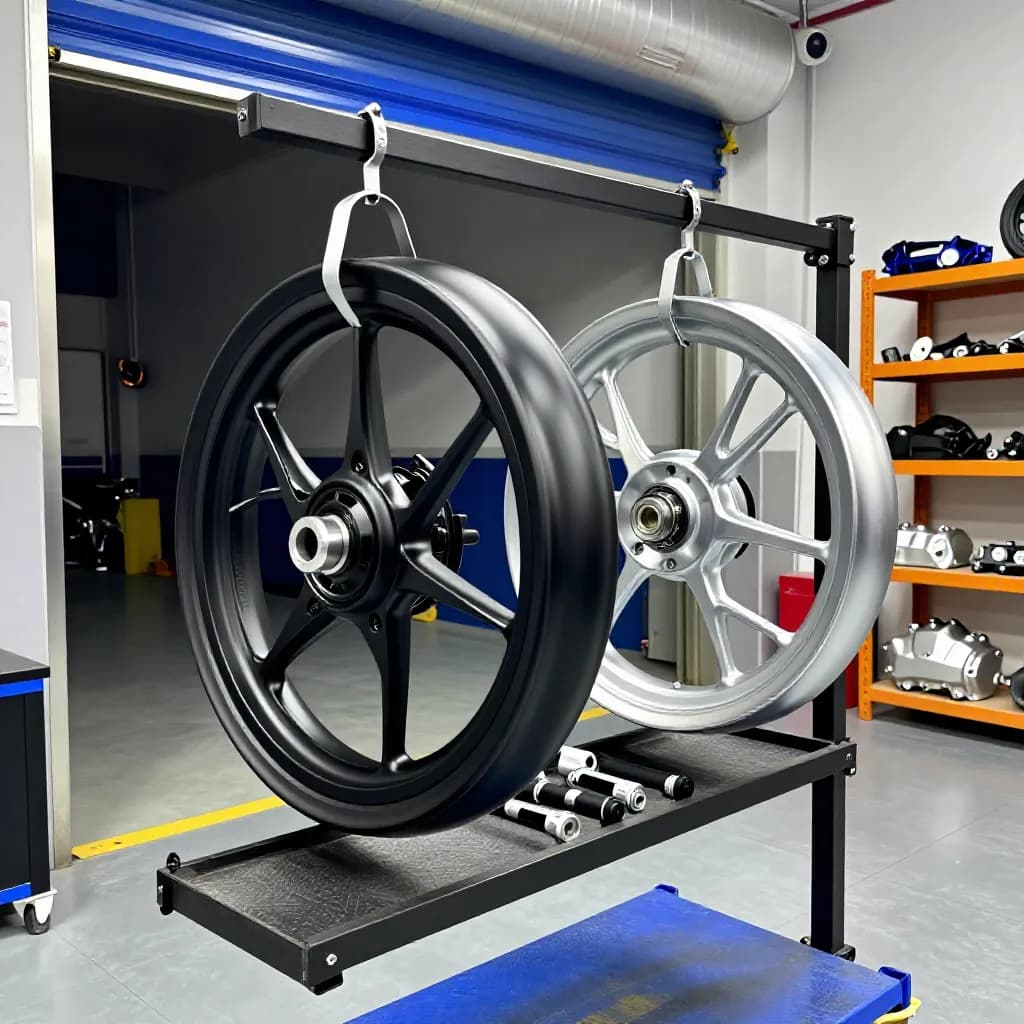
Frames and subframes are among the most common motorcycle powder coating jobs. A freshly coated frame transforms the entire look of a build, whether you are going for a factory-fresh restoration or a custom color that makes your bike stand out. Swingarms, steering stems, and center stands all benefit from the same treatment, creating a cohesive look across the chassis.
Ready to Start Your Project?
From one-off customs to 15,000-part production runs — get precise pricing in 24 hours.
On This Page
What Motorcycle Parts Can Be Coated
Smaller components like brackets, levers, master cylinder housings, headlight ears, and license plate holders round out a complete build. Even items like exhaust header flanges and heat shields can be coated with high-temperature ceramic powder that withstands the extreme heat near the engine. The key is matching the right powder type to each component's operating conditions.
Preparing Your Motorcycle Parts
Full disassembly is essential before sending parts for powder coating. The frame needs to be completely stripped of every component: engine, wiring harness, suspension, bearings, bushings, rubber mounts, and any fasteners you want to keep uncoated. Wheels need tires, tubes, bearings, and valve stems removed. Engine covers need gaskets, dowels, and any pressed-in components removed. Nothing non-metal should go into the coating process.
Bearing races, threaded holes, and machined mating surfaces must be identified and communicated to the coater for masking. Steering head bearings, swingarm pivot points, engine mount surfaces, and any area where precise fitment is required need to remain uncoated. Make a detailed list or mark these areas clearly on the parts or on reference photos. Missing a masking point can mean difficult reassembly or the need to strip and recoat.
Clean your parts of heavy grease and oil before delivery. While the coater will do the final preparation, arriving with parts that are not dripping in old engine oil or caked in road grime shows respect for the shop and speeds up the process. If parts have been sitting in a garage accumulating surface rust, that is fine. The coater will handle rust removal during blasting.
Choosing Colors and Finishes for Your Build
Color choice is where your motorcycle build becomes personal. For custom builds, the color palette is limited only by your imagination. Coordinate your frame color with your planned paint scheme, or make the frame a feature in its own right with a bold color that contrasts with the bodywork. Popular custom choices include satin black, gloss black, gunmetal, candy colors over a metallic base, and textured wrinkle finishes that hide minor imperfections.
For period-correct restorations, matching the original factory finish is the priority. Many classic motorcycles left the factory with specific frame colors that enthusiasts and judges expect to see. Your coater can match these original colors from reference samples, factory color codes, or even from an unfaded section of the original frame. Getting the right shade of silver, grey, or black for a restoration project requires attention to detail and a coater who understands the importance of authenticity.
Show bikes and competition builds often use specialty finishes that push the boundaries of what powder coating can achieve. Metallic flakes, color-shifting pigments, transparent candy coats over polished metal, and ultra-fine textures all create visual impact. Discuss your vision with your coater and ask to see samples of specialty finishes they have done before. A coater experienced in motorcycle work will have ideas and examples that can inspire your build.
Working with Your Coater on a Motorcycle Project
Bring reference photos of the finished look you are aiming for. Whether it is a photo of another build you admire, a rendering from your builder, or images from a magazine, visual references help the coater understand your vision far better than words alone. Discuss not just the color but the finish level, whether you want high gloss, satin, matte, or textured, as this dramatically affects the final appearance.
Masking is critical on motorcycle parts and deserves a detailed conversation. Walk through each component with the coater, pointing out every bearing surface, thread, mating face, and area that must remain uncoated. If you are unsure whether a particular area needs masking, ask. An experienced motorcycle coater will know which surfaces are critical and can advise you. It is far better to discuss masking thoroughly upfront than to discover a problem during reassembly.
Approve color samples before the coater sprays your actual parts. This is especially important for custom colors, metallics, and any finish where the final appearance is difficult to predict from a color chip alone. Ask for the sample to be sprayed on a piece of similar metal so you can see how the color looks on the actual substrate. Once you approve, the coater has a clear reference for the production work.
Turnaround and Getting Your Build Back on Track
Motorcycle coating projects typically take one to two weeks depending on the number of parts, the complexity of the finish, and the shop's current workload. A simple frame and swingarm in a single stock color is a straightforward job. A full chassis worth of components in a custom color with detailed masking requirements takes longer. Discuss the timeline with your coater when you drop off parts so you can plan the rest of your build schedule accordingly.
If your build has a deadline, such as a show date, a riding season start, or a customer delivery, communicate this clearly from the beginning. A coater who knows your timeline can schedule your work appropriately and flag any potential delays early. Last-minute rushes on motorcycle projects often lead to compromises that are visible in the finished build.
When you collect your coated parts, inspect them carefully before leaving the shop. Check color consistency across all components, verify that masked areas are clean and properly defined, and look for any defects in hard-to-see areas like the inside of frame tubes or the back side of engine covers. Addressing any issues at pickup is much simpler than discovering them during reassembly in your garage.
Frequently Asked Questions
Can engine cases and covers be powder coated?
Yes, external engine covers, cases, and components can be powder coated. For parts that experience significant heat, such as cylinder heads or exhaust components, a high-temperature ceramic powder coating is used that withstands elevated temperatures without discoloring or degrading. Discuss the operating temperature of each component with your coater so they select the appropriate powder.
Will powder coating add thickness that affects fitment?
Powder coating adds a film thickness of approximately 60 to 80 microns, which is thin enough that it rarely affects fitment on most motorcycle components. However, tight-tolerance areas like bearing seats, pivot bores, and mating surfaces should be masked to maintain precise fitment. Discuss any tight-tolerance areas with your coater during the masking conversation.
Should I powder coat or paint my motorcycle frame?
Powder coating is generally the better choice for motorcycle frames due to its superior durability, chemical resistance, and uniform coverage on complex tube structures. It resists chipping from stone impacts and does not peel like paint can. The main advantage of liquid paint is the ability to achieve certain effects like complex graphics or blended fades that powder cannot replicate.
How do I protect powder-coated motorcycle parts during reassembly?
Use soft jaw clamp covers, protective tape on contact points, and rubber-tipped tools when working around coated surfaces. Apply anti-seize compound to threaded fasteners to prevent galling without damaging the surrounding coating. Take your time during reassembly and avoid dragging components across each other. A little care during assembly preserves the finish you invested in.
Ready to Start Your Project?
From one-off customs to 15,000-part production runs — get precise pricing in 24 hours.