Mining operations subject equipment to the most extreme combination of mechanical, chemical, and environmental stresses encountered in any industrial sector. Excavators, haul trucks, crushers, conveyors, processing equipment, and structural steelwork operate in environments where abrasive rock and ore particles, corrosive process chemicals, extreme temperatures, and continuous heavy-duty operation create coating challenges that push protective finishing technology to its limits.
Industrial
Powder Coating for Mining Equipment: Extreme Abrasion and Impact Protection for Heavy Machinery
Sundial Powder Coating·April 22, 2026·12 min
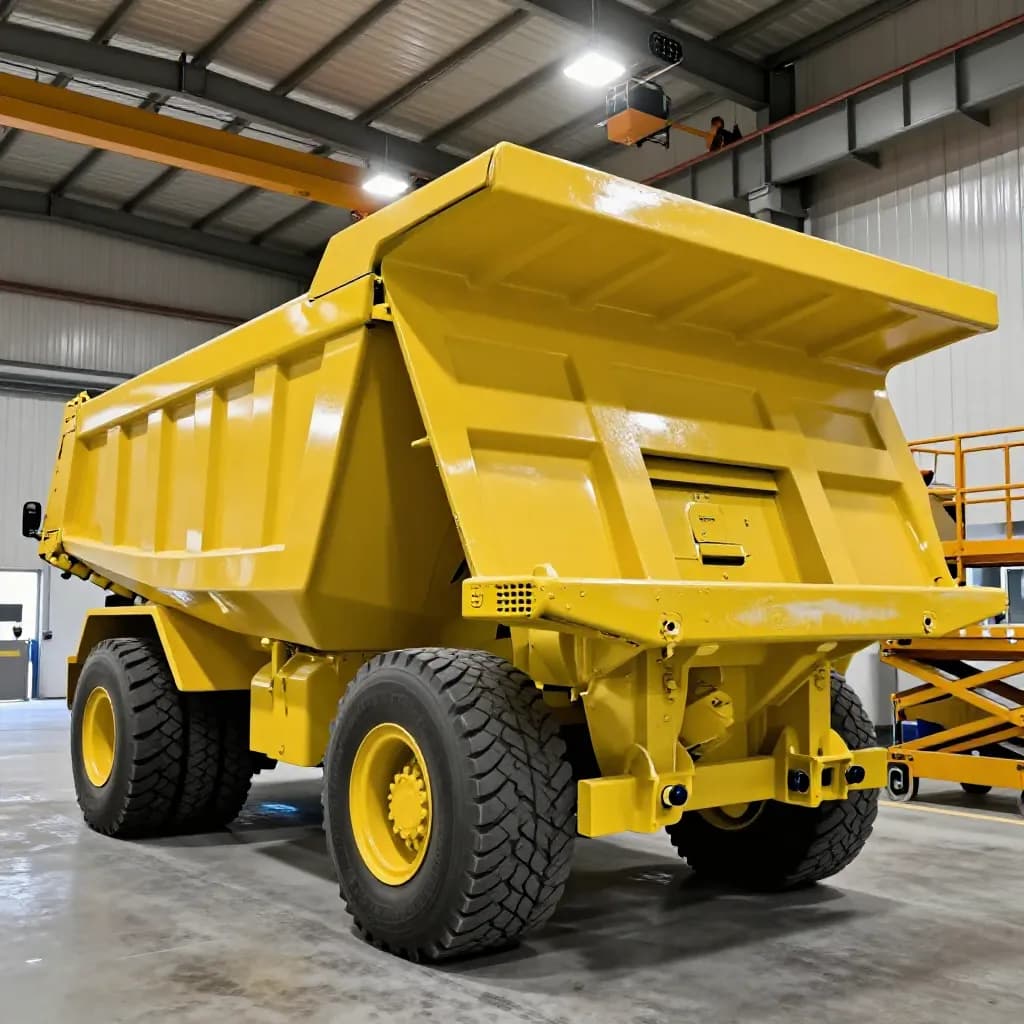
The consequences of coating failure in mining are measured in operational downtime, equipment replacement costs, and safety risks. A conveyor structure that corrodes to the point of structural failure can halt production for days or weeks. A processing vessel that loses its protective lining can contaminate the product stream and require emergency shutdown for repair. The economic stakes drive mining companies to specify coating systems that deliver maximum protection and service life, even at higher initial cost.
Ready to Start Your Project?
From one-off customs to 15,000-part production runs — get precise pricing in 24 hours.
On This Page
Mining Environments: The Ultimate Test for Protective Coatings
Powder coating has established a significant presence in the mining equipment sector, particularly for components manufactured in factory environments where the controlled conditions needed for quality powder application are available. Structural steelwork, equipment housings, electrical enclosures, conveyor components, and processing equipment frames are all commonly powder coated. For field-applied coatings on large structures and equipment that cannot be transported to a coating facility, liquid paint systems remain necessary, but powder coating dominates factory-applied finishes.
This article examines the specific requirements for powder coating mining equipment, covering the extreme mechanical demands, chemical exposures, environmental conditions, and performance standards that define this challenging application sector.
Abrasion Resistance for Ore Handling Equipment
Abrasion is the dominant coating degradation mechanism in mining applications. Rock, ore, and mineral particles ranging from fine dust to large lumps create continuous abrasive wear on every surface they contact. The abrasion severity depends on the mineral hardness (Mohs scale), particle size and shape, contact velocity, and contact angle.
Conveyor systems are the most abrasion-intensive application for powder coating in mining. Belt conveyor structures — the frames, idler brackets, and support steelwork that carry the conveyor belt — are continuously exposed to spillage of ore and rock from the belt edges. The abrasive particles slide, roll, and impact against the structural steelwork, wearing through conventional coatings within months if the coating system is not designed for this extreme service.
Heavy-duty polyester powder coatings at 100-150 microns provide the baseline abrasion protection for conveyor structures. Taber abrasion testing per ASTM D4060 with CS-17 wheels provides a comparative measure of abrasion resistance, with mining-grade coatings achieving weight loss of less than 60 mg per 1,000 cycles — significantly better than the 80-100 mg typical of standard industrial coatings.
For the most severe abrasion zones — chute linings, transfer points, and hopper interiors where ore impacts at high velocity — powder coating alone is insufficient. These areas typically use ceramic tile linings, rubber linings, or ultra-high-molecular-weight polyethylene (UHMWPE) wear plates. However, the structural steelwork supporting these wear linings is powder coated for corrosion protection, and the coating must resist the abrasion that occurs at the edges of wear liner panels and at any gaps between liners.
Screen decks and vibrating equipment present a unique abrasion challenge. The continuous vibration (typically 900-1,200 RPM) causes ore particles to move across the coating surface in a grinding action that is more aggressive than simple sliding abrasion. Coatings on vibrating equipment must combine abrasion resistance with flexibility and fatigue resistance to withstand the continuous cyclic stress without cracking.
Dust suppression and material handling systems — including dust collection ductwork, cyclones, and baghouse structures — experience abrasion from airborne dust particles traveling at velocities of 15-25 m/s. The erosive wear pattern in these systems concentrates at bends, transitions, and areas of turbulent flow. Powder coating at 80-100 microns provides adequate protection for the moderate abrasion levels in dust handling systems, with increased thickness at identified wear points.
Impact Resistance for Heavy Equipment Components
Mining equipment experiences impact forces that dwarf those in any other coating application. Rock falls, equipment collisions, and the dynamic loads of excavation and material handling create impact energies that can destroy conventional coatings instantly. The coating system must absorb these impacts without catastrophic failure — cracking, delamination, or large-scale coating loss — that would expose the steel substrate to rapid corrosion.
Excavator and loader buckets, while typically uncoated or protected by sacrificial wear plates, have structural frames and boom assemblies that are powder coated for corrosion protection. These components experience transmitted impact forces from digging operations, with peak loads of 100-500 kN depending on the machine size. The coating on boom and arm assemblies must withstand the flexing and vibration transmitted from the bucket during digging cycles.
Haul truck bodies experience direct rock impact during loading by excavators. Rocks weighing 50-500 kg are dropped from heights of 3-5 meters into the truck body, generating impact energies of 1,500-25,000 joules. While the truck body interior relies on steel thickness and wear liners for protection, the exterior surfaces and structural frame are powder coated for corrosion protection and fleet identification. Impact resistance of 160+ inch-pounds per ASTM D2794 is the minimum specification for haul truck exterior coatings.
Crusher housings and frames experience continuous transmitted impact from the crushing process. Jaw crushers, cone crushers, and impact crushers generate vibration and shock loads that test coating adhesion at bolted connections, weld joints, and stress concentration points. Flexible polyester powder coatings with elongation values exceeding 5% and excellent adhesion (pull-off strength >8 MPa per ISO 4624) resist the fatigue-inducing vibration of crusher operation.
Conveyor head and tail drums, which drive and tension the conveyor belt, experience concentrated loads at the belt-drum interface. The powder coating on drum shells must resist the abrasion of the belt's bottom cover and any material trapped between the belt and drum. Lagging (rubber covering) is applied over the powder coating on drive drums, and the coating must provide a suitable bonding surface for the lagging adhesive.
Safety-critical structural connections — bolted joints, pin connections, and clevis assemblies — require particular attention to coating integrity. The coating at these connections must not mask cracks, corrosion, or deformation that could indicate structural compromise. Regular inspection of coating condition at structural connections is part of the mining industry's structural integrity management programs.
Chemical Exposure in Mining and Mineral Processing
Mining and mineral processing operations use a wide range of chemicals that create aggressive exposure conditions for equipment coatings. The specific chemical environment varies enormously depending on the mineral being processed, the extraction method, and the processing technology employed.
Acid mine drainage (AMD) is one of the most pervasive chemical challenges in mining. When sulfide minerals (particularly pyrite, FeS₂) are exposed to air and water during mining, they oxidize to produce sulfuric acid, creating drainage water with pH values as low as 2-3. Equipment operating in AMD-affected areas — pumps, pipes, structural steelwork, and water treatment systems — requires coatings with excellent acid resistance. Epoxy powder coatings provide good resistance to dilute sulfuric acid (pH 2-4), while novolac epoxy formulations are specified for more concentrated acid exposures.
Flotation reagents used in mineral concentration — xanthates, dithiophosphates, frothers, and pH modifiers — create a complex chemical environment in flotation circuits. The coating on flotation cell structures, piping, and launders must resist these reagents at operating concentrations and temperatures. Chemical resistance testing per ASTM D1308 against the specific reagent suite used in the processing plant validates the coating's suitability.
Leaching operations — heap leaching, tank leaching, and in-situ leaching — use strong acids (sulfuric acid for copper, hydrochloric acid for some gold operations) or alkaline solutions (sodium cyanide for gold, sodium hydroxide for alumina) to dissolve target minerals from ore. Equipment in leaching circuits requires coatings with specific resistance to the leaching solution. Cyanide solutions (0.01-0.05% NaCN at pH 10-11) are particularly challenging because the alkaline pH attacks many coating systems while the cyanide ion can penetrate coating defects and accelerate corrosion of the steel substrate.
Thickener and clarifier equipment in mineral processing operates in a slurry environment where abrasive mineral particles are suspended in process water containing dissolved chemicals. The coating on thickener mechanisms, rake arms, and overflow launders must resist the combined effects of slurry abrasion and chemical attack — a dual-stress condition that is more aggressive than either stress alone.
Dust suppression chemicals — surfactants, polymers, and hygroscopic salts (calcium chloride, magnesium chloride) — are applied to haul roads and material handling areas to control airborne dust. These chemicals can accumulate on equipment surfaces and create localized corrosion conditions, particularly the chloride-based suppressants that are highly corrosive to steel. Regular washing of equipment to remove dust suppression chemical residues is an important maintenance practice that extends coating life.
Conveyor Components and Material Handling Systems
Conveyor systems are the arteries of mining operations, transporting millions of tonnes of ore, waste rock, and processed material annually. The structural steelwork, mechanical components, and safety systems of conveyor installations represent one of the largest applications for powder coating in the mining sector.
Conveyor stringers (the longitudinal beams that support the idler frames) are typically fabricated from structural steel channels or hollow sections and powder coated for corrosion protection. These components are manufactured in standard lengths (3-6 meters) in factory environments where quality powder coating is readily achieved. The coating must resist the abrasion from material spillage and the corrosion from exposure to weather, dust suppression chemicals, and process water.
Idler frames — the brackets that support the carrying and return idler rollers — experience concentrated loads at roller bearing points and are subject to vibration transmitted from the rotating rollers. Powder coating at 60-80 microns over zinc phosphate pretreatment provides adequate protection for idler frames in most mining environments. In highly corrosive environments (coastal mines, acid-generating ore bodies), duplex systems with hot-dip galvanizing plus powder coating extend service life.
Conveyor drive frames and gearbox mounting structures must maintain precise alignment under the dynamic loads of conveyor operation. The powder coating on these components must not interfere with the machined mounting surfaces used for alignment. Masking of machined surfaces during coating, followed by application of corrosion-preventive compound after installation, protects these critical surfaces.
Belt cleaning systems — primary and secondary scrapers, ploughs, and belt washing stations — operate in direct contact with the conveyor belt and the material being transported. The structural frames of these systems are powder coated, but the scraper blades and contact elements use specialized wear materials (polyurethane, tungsten carbide, ceramic) that are not powder coated.
Conveyor safety systems — pull-cord switches, belt alignment switches, speed monitors, and emergency stop stations — use powder-coated steel or aluminum enclosures that must maintain their IP rating and visibility in the dusty, wet mining environment. Safety yellow (RAL 1023) and safety red (RAL 3001) powder coatings provide the high-visibility color coding required for safety equipment, and the coating's UV resistance ensures that safety colors remain legible throughout the equipment's service life.
Walkways, platforms, and access structures along conveyor routes use powder-coated steel grating, handrails, and structural members. Anti-slip powder coatings with aggregate additives (aluminum oxide or silica particles) provide the slip resistance required for safe access in wet and dusty conditions. These anti-slip coatings must maintain their friction properties despite the abrasive wear from foot traffic and the accumulation of dust and spillage.
Environmental Conditions and Corrosion Classification
Mining operations span the full range of global climatic conditions, from arctic mines in northern Canada and Scandinavia to tropical operations in equatorial Africa and Southeast Asia, and from coastal mines at sea level to high-altitude operations in the Andes at 4,000+ meters elevation. Each environment presents distinct coating challenges that must be addressed through appropriate specification.
Arctic and sub-arctic mining environments subject coatings to extreme cold (temperatures below -40°C), freeze-thaw cycling, and the abrasive action of ice and frozen ground. Powder coatings must maintain flexibility and adhesion at these extreme temperatures without becoming brittle or cracking. Low-temperature impact testing per ASTM D2794 at -40°C verifies coating performance under arctic conditions. The short construction season in arctic regions also means that coating application must be completed during the brief summer months when ambient temperatures permit proper curing.
Tropical mining environments combine high temperatures (35-45°C ambient), extreme humidity (80-100% RH), intense UV radiation, and biological activity (mold, algae, and bacterial growth on coating surfaces). The combination of heat and humidity accelerates coating degradation through increased water permeation and chemical reaction rates. Antimicrobial powder coatings resist biological colonization that can create localized acidic conditions and accelerate coating breakdown.
Coastal mining operations face the additional challenge of salt-laden air that dramatically accelerates corrosion. Mines within 5 kilometers of the coastline are classified as C5 (very high) or CX (extreme) corrosivity per ISO 9223, requiring the most robust coating systems available. Duplex systems (hot-dip galvanizing plus super-durable polyester powder coating) at total system thicknesses of 160-200+ microns are standard for coastal mining equipment.
High-altitude mining operations experience intensified UV radiation (UV intensity increases approximately 10% per 1,000 meters of elevation) and wider temperature cycling between day and night. At 4,000 meters elevation, UV intensity is 40-50% higher than at sea level, accelerating coating degradation proportionally. Super-durable or fluoropolymer powder coatings are essential for equipment at high-altitude mines.
Underground mining environments present a different set of challenges. While UV exposure is absent, the combination of high humidity (often 90-100% RH), elevated temperatures (rock temperature increases with depth), and exposure to groundwater containing dissolved minerals creates aggressive corrosion conditions. Epoxy powder coatings, which provide excellent moisture and chemical resistance but poor UV stability, are well-suited to underground applications where UV resistance is unnecessary.
Specification, Application, and Quality Assurance for Mining Coatings
Specifying powder coatings for mining equipment requires a systematic approach that considers the full range of mechanical, chemical, and environmental stresses each component will experience over its intended service life. The specification process typically follows the framework of ISO 12944 (corrosion protection of steel structures by protective paint systems), adapted for the specific conditions of the mining application.
The specification begins with environmental classification per ISO 9223, which categorizes the corrosivity of the operating environment based on atmospheric conditions, chemical exposures, and immersion conditions. Most mining environments fall into categories C4 (high) to CX (extreme), requiring coating systems designed for high or very high durability (15-25+ years).
Coating system selection follows the environmental classification. For C4 environments, polyester powder coating at 80-100 microns over zinc phosphate pretreatment provides adequate protection for most structural and equipment components. For C5 and CX environments, duplex systems (galvanizing plus powder coating) or enhanced single-coat systems (epoxy primer plus super-durable polyester topcoat at 120-160 microns total) are specified.
Surface preparation for mining equipment follows the same principles as other heavy industrial applications but with particular attention to the heavy mill scale, weld spatter, and fabrication contamination typical of mining equipment manufacture. Abrasive blast cleaning to Sa 2.5 per ISO 8501-1 using steel grit (G25 or G40) is the standard preparation method, with Sa 3 specified for immersion service and critical structural components.
Quality assurance during coating application includes all standard industrial coating QA procedures — surface preparation verification, film thickness measurement, adhesion testing, and cure verification — plus additional requirements specific to mining applications. These may include holiday detection on immersion-service components, impact resistance testing on samples from each production batch, and chemical resistance verification against the specific chemicals present in the mining operation.
Documentation and traceability requirements for mining equipment coatings are typically more extensive than for general industrial applications, reflecting the safety-critical nature of mining equipment and the regulatory requirements of the mining industry. Each coated component is traceable to its powder batch, preparation method, application parameters, and inspection results through a unique identification system that supports warranty claims and incident investigation.
Field repair of coating damage on mining equipment is an ongoing maintenance requirement. Touch-up procedures using compatible liquid coating systems are defined in the original coating specification, and maintenance personnel are trained in proper surface preparation and application techniques for field repairs. The goal is to restore corrosion protection at damage sites before significant substrate corrosion develops.
Frequently Asked Questions
How does powder coating resist the extreme abrasion in mining?
Heavy-duty polyester powder coatings at 100-150 microns achieve Taber abrasion loss below 60 mg per 1,000 cycles, significantly better than standard industrial coatings. For extreme abrasion zones like chute linings and transfer points, powder coating protects the structural steel while ceramic, rubber, or UHMWPE wear liners handle the direct ore contact.
What coating system is used for mining equipment in coastal environments?
Coastal mines (C5/CX corrosivity per ISO 9223) require duplex systems: hot-dip galvanizing plus super-durable polyester powder coating at total system thicknesses of 160-200+ microns. The galvanizing provides sacrificial protection at damage sites while the powder coating prevents premature zinc consumption from salt-laden air.
Can powder coating resist acid mine drainage?
Yes. Epoxy powder coatings provide good resistance to the dilute sulfuric acid (pH 2-4) typical of acid mine drainage. Novolac epoxy formulations handle more concentrated acid exposures. Chemical resistance must be validated through ASTM D1308 testing against the specific water chemistry of the mine site.
How long does powder coating last on mining conveyor structures?
In moderate environments (C3-C4), powder-coated conveyor structures last 10-15 years. In aggressive environments (C5-CX), duplex systems provide 15-20 years of protection. Service life depends heavily on abrasion severity, chemical exposure, and maintenance practices. Annual inspection and prompt repair of damage extends coating life significantly.
What special requirements exist for underground mining coatings?
Underground environments feature high humidity (90-100% RH), elevated temperatures, and groundwater exposure but no UV radiation. Epoxy powder coatings are ideal — they provide excellent moisture and chemical resistance without the UV stability needed for surface applications. Antimicrobial formulations resist biological growth in the warm, humid underground environment.
Ready to Start Your Project?
From one-off customs to 15,000-part production runs — get precise pricing in 24 hours.