The Middle East presents one of the most thermally extreme environments for architectural powder coatings anywhere on Earth. Ambient air temperatures routinely exceed 50°C in summer across the Arabian Peninsula, with recorded extremes approaching 54°C in Kuwait and Iraq. Surface temperatures on sun-exposed powder-coated metals are significantly higher — dark-colored surfaces can reach 80-100°C, while even light-colored surfaces may exceed 60-70°C during peak solar hours.
Architecture
Powder Coating in the Middle East: Extreme Heat, Sandstorms, Color Retention, and Mega-Projects
Sundial Powder Coating·April 22, 2026·12 min
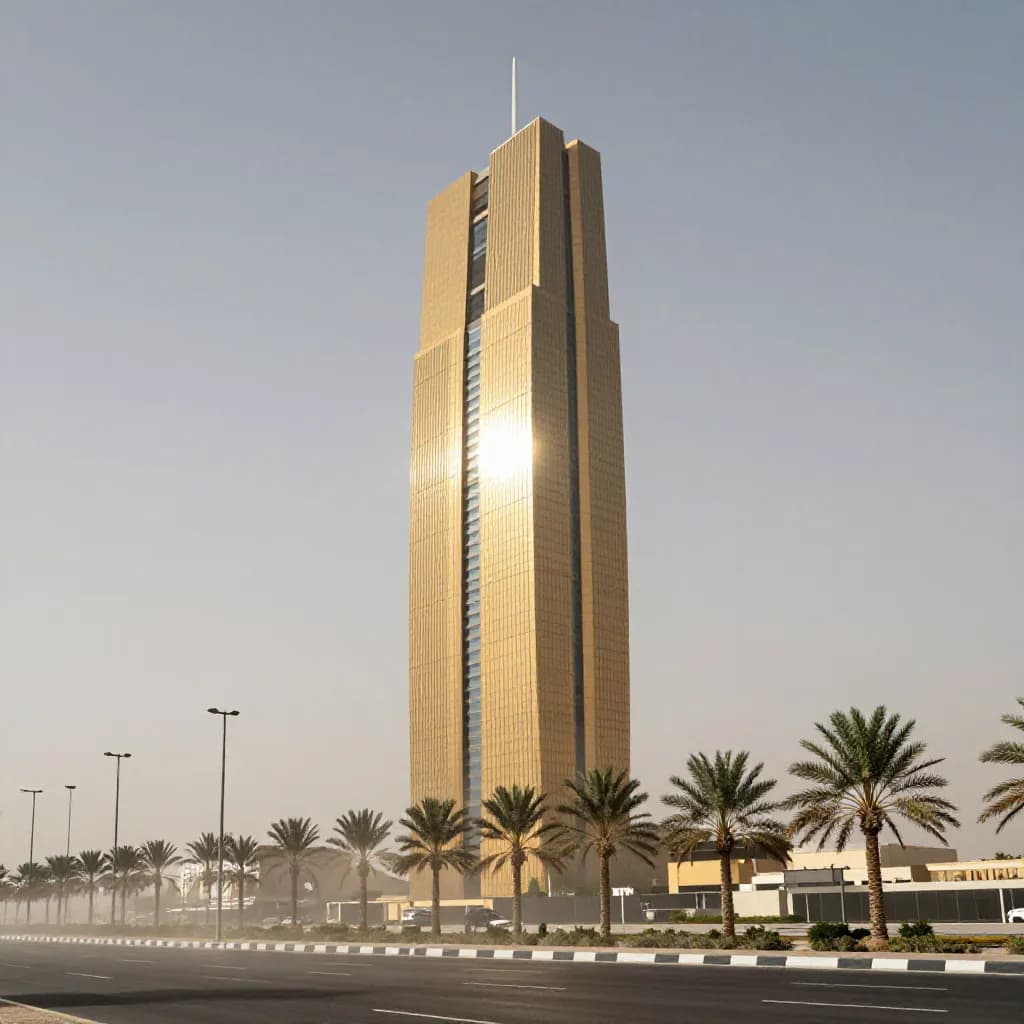
These extreme surface temperatures approach or exceed the glass transition temperature (Tg) of many standard powder coating formulations. When a powder coating is heated above its Tg, the polymer transitions from a rigid, glassy state to a softer, rubbery state. This softening reduces hardness, scratch resistance, and chemical resistance, and can cause permanent deformation if the surface is subjected to mechanical contact while hot. Repeated cycling above and below Tg accelerates physical aging of the polymer, leading to progressive embrittlement over time.
Ready to Start Your Project?
From one-off customs to 15,000-part production runs — get precise pricing in 24 hours.
On This Page
The Middle Eastern Extreme Heat Environment
The thermal environment is compounded by intense solar radiation. The Arabian Peninsula receives 2,000-2,400 kWh/m² of annual global horizontal irradiance — among the highest levels on Earth. UV indices of 12-14 are routine during summer months, and the clear desert atmosphere provides minimal UV attenuation. This combination of extreme heat and intense UV creates synergistic degradation: elevated temperatures accelerate the photochemical reactions initiated by UV radiation, roughly doubling the degradation rate for every 10°C increase in surface temperature.
Despite these challenges, the Middle East is one of the world's largest markets for architectural powder coatings, driven by massive construction programs in Saudi Arabia, the UAE, Qatar, Oman, and Egypt. The industry has responded with specialized formulations and specification practices tailored to the region's extreme conditions.
Surface Temperature Management and Tg Considerations
Managing the relationship between surface temperature and coating glass transition temperature is the central technical challenge for powder coatings in the Middle East. Standard polyester powder coatings have Tg values of 60-70°C, which are routinely exceeded on sun-exposed surfaces during Middle Eastern summers. This means that for significant portions of the year, the coating is operating in or near its softened state.
The consequences of operating above Tg include reduced pencil hardness (from 2H-3H to HB-H), increased susceptibility to dirt pickup and staining, potential for permanent indentation from mechanical contact, and accelerated physical aging that leads to long-term embrittlement. While these effects are partially reversible when the coating cools below Tg at night, the cumulative damage from thousands of above-Tg cycles over a 20-year service life is significant.
Formulation strategies to address the Tg challenge include using high-Tg polyester resins (Tg 75-85°C), increasing crosslink density through optimized stoichiometry, and incorporating rigid molecular segments into the polymer backbone. Super-durable polyester formulations specifically developed for Middle Eastern conditions typically achieve Tg values of 75-80°C, providing a meaningful safety margin above the surface temperatures experienced by light and medium-colored coatings.
For dark-colored coatings where surface temperatures can exceed 90°C, even high-Tg polyester formulations may be insufficient. In these cases, infrared-reflective (IR-reflective) pigment technology provides a complementary solution. IR-reflective pigments reflect near-infrared solar radiation (700-2,500 nm wavelength) while maintaining the desired visible color, reducing surface temperatures by 10-20°C compared to conventional pigments. A dark gray coating formulated with IR-reflective pigments might reach 70°C instead of 90°C — bringing it within the safe operating range of high-Tg polyester formulations.
Fluoropolymer powder coatings (FEVE) offer inherently higher Tg values (typically 85-100°C) and superior thermal stability, making them the most reliable choice for dark-colored Middle Eastern architectural applications where maximum thermal performance is required.
Sandstorm Resistance and Surface Protection
Sandstorms — known locally as shamal in the Arabian Gulf and khamsin in Egypt — are a defining feature of the Middle Eastern environment. These storms carry fine sand and dust particles at wind speeds of 50-100+ km/h, subjecting building facades to abrasive bombardment that can last from hours to days. Major sandstorm events can reduce visibility to near zero and deposit centimeters of sand on horizontal surfaces.
The abrasive impact of sand particles on powder-coated surfaces causes progressive erosion of the coating film, increasing surface roughness, reducing gloss, and eventually thinning the coating to the point where substrate protection is compromised. The severity of abrasion damage depends on particle size and hardness (desert sand is primarily quartz, with Mohs hardness of 7), impact velocity, impact angle, and the hardness and thickness of the powder coating.
Powder coating hardness is the primary defense against sand abrasion. Standard polyester coatings achieve pencil hardness of 2H-3H, providing moderate abrasion resistance. However, the softening effect of high surface temperatures reduces effective hardness during the hottest hours — precisely when sandstorms are most likely to occur. This temperature-hardness interaction means that abrasion resistance must be evaluated at elevated temperatures, not just at the standard 23°C test temperature.
Polyurethane powder coatings offer improved abrasion resistance (3H-4H pencil hardness) with better retention of hardness at elevated temperatures. For the most demanding applications — ground-level facades in open desert locations — ceramic-modified powder coatings incorporating nano-alumina or nano-silica particles can achieve hardness values exceeding 4H while maintaining acceptable flexibility.
Film thickness specification for Middle Eastern applications should account for gradual erosion over the coating's service life. Specifying 80-100 microns rather than the standard 60-80 microns provides a sacrificial thickness margin of 20-40 microns that accommodates decades of sand abrasion without compromising the minimum protective film thickness.
Color Retention Under Extreme Solar Exposure
Maintaining color consistency across large architectural facades over decades of Middle Eastern solar exposure is one of the most challenging requirements in the powder coating industry. Color shifts as small as Delta E 2-3 are perceptible to the human eye and can create visible inconsistencies between original panels and replacement sections, between different facade orientations, and between sheltered and exposed areas of the same facade.
The extreme UV and thermal conditions of the Middle East accelerate all pigment degradation mechanisms. Organic pigments — which provide the brightest, most saturated colors — are particularly vulnerable. Standard organic red, orange, and yellow pigments can show visible fading within 3-5 years of Middle Eastern exposure, while even high-performance organic pigments may shift noticeably within 8-12 years.
Inorganic pigments provide the foundation for color-stable Middle Eastern powder coatings. Titanium dioxide (rutile grade with alumina/silica surface treatment) provides excellent white and tint base stability. Iron oxide pigments — available in red, yellow, brown, and black — are among the most lightfast pigments available and are ideal for the earth-tone palettes popular in Middle Eastern architecture. Chromium oxide green and cobalt blue provide stable green and blue options.
For colors requiring organic pigments, selecting the highest lightfastness grades is essential. Pigments rated Blue Wool Scale 7-8 should be specified as minimum for Middle Eastern exterior applications. DPP (diketopyrrolopyrrole) reds, perylene reds, and phthalocyanine blues and greens represent the most durable organic pigment families.
Color specification for Middle Eastern mega-projects should include maximum allowable color change (typically Delta E ≤ 3 after 10 years for AAMA 2605 equivalent performance), color matching tolerances for replacement panels (Delta E ≤ 1.0 compared to retained reference panels), and accelerated weathering requirements that correlate with Middle Eastern exposure conditions. Retaining reference panels from each production batch in controlled storage enables accurate color matching for future replacement needs.
Mega-Project Specification and Quality Management
The Middle East's mega-project construction programs — including NEOM, The Line, and Jeddah Tower in Saudi Arabia, Expo City and Museum of the Future in the UAE, and the New Administrative Capital in Egypt — require powder coating on a scale that creates unique specification and quality management challenges. Individual projects may require millions of square meters of powder-coated aluminum, produced by multiple applicators across different countries over construction periods spanning 5-10 years.
Specification standards for Middle Eastern mega-projects typically reference AAMA 2605 (the highest North American architectural coating specification), Qualicoat Class 2 or Class 3, and GSB Master certification, often supplemented with project-specific requirements for desert performance. AAMA 2605 requires 10 years of South Florida exposure testing — a humid subtropical environment that differs significantly from the arid Middle Eastern climate — so supplementary desert exposure data from sites in Abu Dhabi, Riyadh, or Arizona is increasingly required.
Quality management across multiple applicators requires centralized specification control, standardized quality documentation, and regular third-party auditing. Key quality parameters that must be consistent across all applicators include pretreatment process and conversion coating weight, powder coating formulation and batch traceability, film thickness distribution and minimum values, cure verification by DSC or solvent rub testing, and color consistency within and between production batches.
Batch-level color control is particularly challenging on mega-projects. Powder coating color can vary slightly between production batches due to raw material variations, and these variations become visible when panels from different batches are installed adjacent to each other on a facade. Specifying maximum batch-to-batch color variation (typically Delta E ≤ 0.5) and requiring pre-installation color verification of each batch against the project master standard minimizes visible color inconsistencies.
Logistical challenges in the Middle Eastern construction environment — including extreme heat during installation, sand contamination of surfaces during construction, and long storage periods between coating and installation — require specific handling and protection protocols to prevent coating damage before the building is completed.
Pretreatment and Application for Middle Eastern Conditions
Pretreatment and application practices for Middle Eastern powder coating must account for the specific challenges of the regional environment, including high ambient temperatures during processing, dust contamination risk, and the need for enhanced coating performance under extreme service conditions.
Pretreatment for aluminum substrates follows standard multi-stage chrome-free processes, but with enhanced requirements for conversion coating quality. Qualicoat Class 2 pretreatment — with its higher conversion coating weight and more stringent adhesion testing — is the recommended minimum for Middle Eastern architectural applications. The conversion coating must demonstrate adhesion retention after both boiling water immersion and Machu (acetic acid salt spray) testing to ensure performance under the combined moisture and chemical exposure of Middle Eastern conditions.
Application temperature control is critical in Middle Eastern coating facilities. Ambient temperatures in unconditioned factory spaces can exceed 45°C during summer, affecting powder flow characteristics, electrostatic charging efficiency, and cure behavior. Climate-controlled spray booths and curing ovens with precise temperature regulation are essential for consistent coating quality. Powder storage must also be temperature-controlled, as exposure to temperatures above 30°C can cause powder agglomeration and flow problems.
Cure verification is particularly important for Middle Eastern applications because the consequences of undercure — reduced chemical resistance, lower Tg, and poor weathering performance — are amplified by the extreme service conditions. DSC (differential scanning calorimetry) testing of cured coating samples should be performed on every production batch, with the degree of cure verified to be within 95-100% of the theoretical maximum. Solvent rub testing (MEK double rubs) provides a rapid in-process cure check.
Edge coverage and minimum film thickness at critical points — edges, corners, and recessed areas — require particular attention for Middle Eastern applications. The combination of sand abrasion and UV exposure means that thin areas of the coating fail first, and the aggressive environment provides no tolerance for inadequate coverage. Automatic film thickness measurement systems and 100% visual inspection of coated components are recommended quality control measures.
Sustainability and Energy Efficiency in Middle Eastern Powder Coating
Sustainability considerations are increasingly important in Middle Eastern construction, driven by national vision programs (Saudi Vision 2030, UAE Net Zero 2050), green building certification requirements (Estidama Pearl Rating, LEED, BREEAM), and the practical imperative to reduce energy consumption in one of the world's most energy-intensive building environments.
Powder coating contributes to building sustainability through several mechanisms. The zero-VOC application process eliminates solvent emissions that contribute to ground-level ozone formation — a significant air quality concern in Middle Eastern cities. The 95-98% material utilization rate minimizes waste generation compared to liquid painting. And the long service life of properly specified powder coatings reduces the frequency of recoating, avoiding the environmental impact of repeated surface preparation and coating application over the building's lifecycle.
Cool roof and cool wall powder coatings — formulated with high total solar reflectance (TSR) and high thermal emittance — offer direct energy savings for Middle Eastern buildings. By reflecting solar radiation rather than absorbing it, these coatings reduce surface temperatures by 20-40°C compared to conventional dark coatings, significantly reducing the cooling load on air conditioning systems. For a typical Middle Eastern commercial building, cool coatings on the roof and upper facade can reduce annual cooling energy consumption by 10-20%.
The TSR of a powder coating depends on both the visible color and the near-infrared reflectance of the pigments. IR-reflective pigment technology enables dark-colored coatings to achieve TSR values of 30-40%, compared to 5-10% for conventional dark pigments. This means architects can specify dark colors for aesthetic reasons while still achieving meaningful energy savings — a significant advantage in a region where dark-colored facades are architecturally popular.
Lifecycle assessment (LCA) data for powder-coated aluminum facade systems demonstrates favorable environmental performance compared to alternative materials. The combination of aluminum recyclability (95%+ recovery rate), powder coating durability (20-25 year service life), and zero-VOC application creates a lifecycle environmental profile that supports green building certification across multiple rating systems.
Future Trends in Middle Eastern Powder Coating
The Middle Eastern powder coating market is evolving rapidly in response to the region's ambitious construction programs, sustainability commitments, and the unique technical challenges of the extreme climate.
Self-cleaning powder coatings incorporating photocatalytic titanium dioxide (TiO2) nanoparticles are gaining interest for Middle Eastern applications. These coatings use UV energy to decompose organic contaminants on the surface, and the hydrophilic surface properties cause rainwater to sheet off rather than bead, carrying away loosened dirt. In the Middle Eastern context, self-cleaning coatings could significantly reduce the frequency and cost of facade cleaning — a major maintenance expense for large buildings in dusty environments.
Anti-soiling powder coatings with low surface energy and smooth surface profiles are being developed specifically for desert environments. These coatings minimize the adhesion of sand and dust particles, allowing natural wind action to remove deposits that would otherwise require manual cleaning. Combined with self-cleaning photocatalytic technology, anti-soiling coatings promise to dramatically reduce facade maintenance requirements.
Digital color management systems are being adopted by Middle Eastern mega-projects to ensure color consistency across multiple applicators and extended construction timelines. These systems use spectrophotometric measurement and digital color databases to track color consistency in real time, flagging deviations before coated components are shipped to site. Integration with building information modeling (BIM) systems enables panel-level traceability from powder batch to installed location.
Advanced thermal management coatings that combine IR-reflective pigments with thermochromic materials — which change reflectance properties in response to temperature — represent an emerging technology for Middle Eastern buildings. These smart coatings could automatically increase solar reflectance as surface temperatures rise, providing adaptive thermal management without mechanical systems or external energy input.
Frequently Asked Questions
How hot do powder-coated surfaces get in the Middle East?
Dark-colored surfaces can reach 80-100°C in direct Middle Eastern sunlight, while light colors may reach 60-70°C. These temperatures can exceed the glass transition temperature of standard polyester coatings (60-70°C), causing softening. High-Tg formulations (75-85°C) and IR-reflective pigments that reduce temperatures by 10-20°C are recommended.
What powder coating specification is used for Middle Eastern mega-projects?
AAMA 2605, Qualicoat Class 2 or 3, and GSB Master are commonly referenced, often supplemented with project-specific desert exposure requirements. Batch-level color control (Delta E ≤ 0.5 between batches), enhanced pretreatment, and cure verification by DSC are standard quality management practices for mega-projects.
How do sandstorms affect powder-coated buildings?
Sand particles (primarily quartz, Mohs hardness 7) carried at 50-100+ km/h progressively erode the coating film, reducing gloss and thickness. High-temperature softening during storms reduces effective hardness. Specifying 80-100 micron film thickness, polyurethane or ceramic-modified coatings, and designing wind-deflecting facade profiles mitigates damage.
Can dark colors be used on Middle Eastern buildings?
Yes, with appropriate technology. IR-reflective pigments reduce surface temperatures by 10-20°C while maintaining the desired visible color. Combined with high-Tg polyester or fluoropolymer coatings, dark colors can perform acceptably. Cool coating technology also reduces building cooling energy by 10-20%, supporting sustainability goals.
How do cool powder coatings save energy in the Middle East?
Cool coatings with high total solar reflectance (TSR) reflect solar radiation instead of absorbing it, reducing surface temperatures by 20-40°C compared to conventional coatings. For typical Middle Eastern commercial buildings, cool coatings on roofs and upper facades can reduce annual cooling energy consumption by 10-20%.
Ready to Start Your Project?
From one-off customs to 15,000-part production runs — get precise pricing in 24 hours.