The Mediterranean climate — characterized by hot, dry summers and mild, wet winters — spans southern Europe, North Africa, parts of the Middle East, California, central Chile, and southwestern Australia. This climate zone hosts some of the world's most architecturally significant regions, from the historic cities of Italy, Spain, and Greece to the rapidly developing coastlines of Turkey, Croatia, and Morocco.
Architecture
Powder Coating in Mediterranean Architecture: Coastal UV, Terracotta Alternatives, Heritage, and Tourism
Sundial Powder Coating·April 22, 2026·11 min
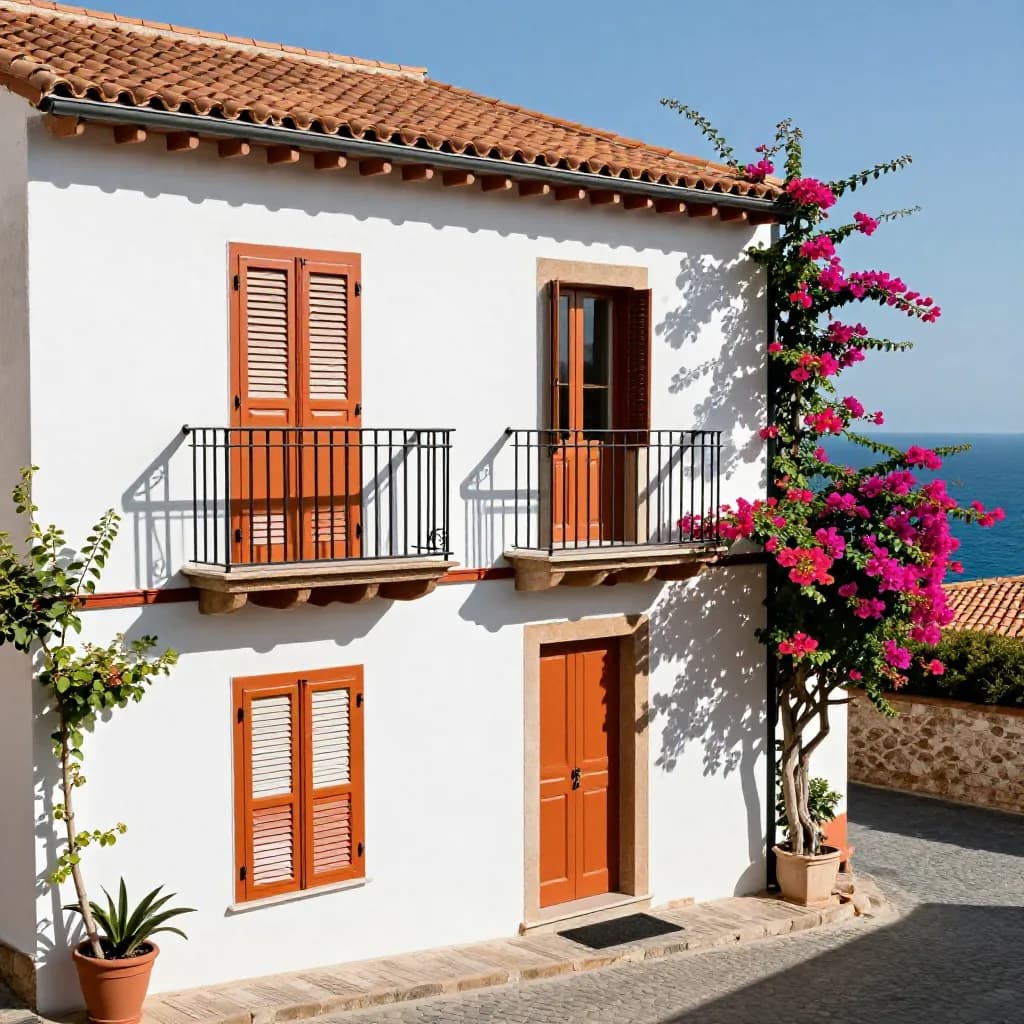
For powder coatings, the Mediterranean environment presents a distinctive combination of challenges: intense summer UV radiation with UV indices of 9-11, coastal salt exposure along the extensive Mediterranean shoreline, moderate to high temperatures (35-45°C ambient, 60-80°C surface), and winter rainfall that creates wet-dry cycling. The corrosivity classification per ISO 9223 ranges from C3 (Medium) for inland locations to C4-C5 (High to Very High) for coastal sites, with the combination of salt and UV creating synergistic degradation.
Ready to Start Your Project?
From one-off customs to 15,000-part production runs — get precise pricing in 24 hours.
On This Page
The Mediterranean Building Environment
Mediterranean architecture has a rich tradition of color and material expression — terracotta roofs, ochre-washed walls, blue shutters, and white-painted villages — that creates specific aesthetic expectations for modern building materials. Powder-coated aluminum must not only perform technically in the Mediterranean environment but also integrate visually with this architectural heritage, providing colors and textures that complement rather than clash with the regional building tradition.
The Mediterranean region's importance as a global tourism destination adds another dimension to powder coating specification. Hotels, resorts, airports, marinas, and cultural facilities must maintain attractive appearances over extended periods despite aggressive environmental exposure, as the visual quality of buildings directly affects the tourism experience and economic value of the destination.
Combined Coastal and UV Exposure
The Mediterranean coastline — over 46,000 km in length — creates an environment where coastal salt exposure and intense UV radiation act simultaneously on powder-coated surfaces. This combination is more aggressive than either factor alone because UV degradation creates micro-defects in the coating surface that allow salt-laden moisture to penetrate, while salt deposits on the surface can act as photocatalysts that accelerate UV degradation.
For coastal Mediterranean buildings within 1 km of the shoreline, the coating specification must address both UV resistance and salt corrosion protection simultaneously. Super-durable polyester powder coatings meeting Qualicoat Class 2 with Qualicoat Seaside certification provide the recommended baseline, combining enhanced UV stabilization with proven coastal corrosion resistance. For premium projects or buildings closer than 200 meters to the sea, fluoropolymer (FEVE) coatings with Qualicoat Class 3 certification offer maximum combined UV and coastal performance.
The Mediterranean's seasonal climate pattern creates a distinctive degradation cycle. During the hot, dry summer months (May-September), UV degradation dominates, with intense solar radiation causing chalking and gloss loss. During the mild, wet winter months (October-April), moisture-driven degradation takes over, with rainfall, condensation, and salt deposition causing corrosion at any points where the summer UV exposure has compromised the coating. This seasonal alternation means that coating damage accumulates through two distinct mechanisms operating in sequence.
Filiform corrosion — the thread-like corrosion that propagates beneath coatings on aluminum in chloride-containing environments — is the primary failure mode for powder-coated aluminum in Mediterranean coastal conditions. The combination of summer UV damage to the coating surface and winter salt-moisture exposure at the coating-substrate interface creates ideal conditions for filiform corrosion initiation and propagation. Enhanced pretreatment meeting Qualicoat Seaside requirements is essential to resist this failure mode.
Terracotta and Heritage Color Alternatives
The terracotta palette — ranging from pale salmon and warm ochre through burnt sienna to deep Venetian red — is the defining color language of Mediterranean architecture. Traditional terracotta roof tiles, clay-rendered walls, and natural stone facades create a warm, earth-toned built environment that modern buildings must complement to maintain the visual coherence of Mediterranean towns and cities.
Powder coating technology enables precise replication of traditional Mediterranean colors on modern aluminum substrates. The terracotta color range is well-served by iron oxide pigments — among the most UV-stable and cost-effective pigments available — making these colors both aesthetically appropriate and technically excellent for Mediterranean exterior applications. RAL 8023 (Orange Brown), RAL 8004 (Copper Brown), RAL 3012 (Beige Red), and RAL 1015 (Light Ivory) approximate common Mediterranean building colors, while custom color matching to specific regional traditions provides exact replication.
Textured powder coating finishes can replicate the visual and tactile qualities of traditional Mediterranean building materials. Sand-textured finishes simulate rendered walls, while fine-textured matte finishes approximate the appearance of natural stone. These textured finishes also provide practical benefits: they hide minor surface imperfections, reduce the visibility of dirt accumulation, and create a more visually interesting facade than flat, smooth finishes.
Heritage building regulations in many Mediterranean countries restrict the colors and materials that can be used on buildings within historic centers. Powder-coated aluminum that replicates traditional colors and textures can satisfy these regulations while providing modern performance — fire safety, thermal efficiency, and durability — that traditional materials cannot match. Collaboration between architects, heritage authorities, and powder coating suppliers during the design phase ensures that color and texture specifications meet both regulatory and aesthetic requirements.
The blue palette — from pale sky blue to deep Mediterranean blue — is another signature element of Mediterranean architecture, particularly in Greek island and North African coastal traditions. Phthalocyanine blue pigments provide excellent UV stability for these colors, maintaining the vibrant blue appearance that is central to the Mediterranean architectural identity.
Tourism Infrastructure and Hospitality Architecture
The Mediterranean region welcomes over 400 million international tourists annually, making tourism infrastructure a major market for architectural powder coatings. Hotels, resorts, restaurants, marinas, airports, cruise terminals, and cultural facilities all require powder-coated components that maintain attractive appearances under aggressive coastal and UV exposure while withstanding the heavy use associated with tourism operations.
Hotel and resort facades in Mediterranean coastal locations face the full spectrum of environmental challenges: salt spray, intense UV, high temperatures, and biological growth. The aesthetic expectations are high — guests expect pristine, well-maintained buildings — and the economic consequences of facade deterioration are direct, as building appearance affects occupancy rates and room pricing. Super-durable polyester or fluoropolymer powder coatings with Qualicoat Seaside certification are the standard specification for Mediterranean hospitality architecture.
Marina infrastructure — pontoons, gangways, railings, lighting columns, and service buildings — operates in the most aggressive coastal environment, with direct salt spray exposure and frequent water contact. Duplex coating systems (galvanizing plus powder coating) on steel components and Qualicoat Seaside-certified coatings on aluminum provide the robust protection required for marina service lives of 20-30 years.
Airport and transportation infrastructure in Mediterranean locations must maintain both aesthetic appearance and functional performance over extended periods. Powder-coated aluminum curtain walls, cladding, and fenestration on terminal buildings are exposed to jet fuel vapors, de-icing chemicals, and heavy mechanical use in addition to the standard Mediterranean environmental stresses. Chemical resistance testing against aviation-specific substances should supplement standard weathering specifications for airport applications.
Cultural and museum buildings in Mediterranean cities often combine contemporary architecture with historic settings, requiring powder coating colors and finishes that bridge traditional and modern aesthetics. The design flexibility of powder coating — with its unlimited color range, multiple finish options, and ability to replicate traditional materials — makes it an ideal finishing technology for these architecturally sensitive projects.
Seismic Considerations in Mediterranean Architecture
The Mediterranean region is seismically active, with significant earthquake risk across Italy, Greece, Turkey, and the eastern Mediterranean. Building facades in seismic zones must accommodate structural movement during earthquakes without catastrophic failure, and powder-coated cladding and curtain wall systems must be designed to maintain integrity under seismic loading.
Powder-coated aluminum cladding panels are inherently well-suited to seismic applications due to aluminum's ductility and the flexibility of properly designed panel attachment systems. During an earthquake, the building structure undergoes inter-story drift — horizontal displacement between adjacent floors — that imposes racking forces on the facade. Cladding attachment systems must accommodate this drift without transferring excessive force to the panels or causing panel detachment.
The powder coating itself must be sufficiently flexible to accommodate the substrate deformation that occurs during seismic events. Standard polyester powder coatings at 60-80 microns have adequate flexibility for the small deformations typical of moderate seismic events (inter-story drift ratios up to 1%). For high-seismic zones where larger deformations are expected, polyurethane powder coatings with their superior elongation and impact resistance provide additional safety margin.
Post-earthquake inspection of powder-coated facades should include assessment of coating condition at panel attachment points, joints, and areas of visible structural deformation. Cracking, delamination, or loss of adhesion at these locations indicates that the coating has been stressed beyond its elastic limit and may require repair to maintain corrosion protection. The ease of visual inspection of powder-coated surfaces — compared to concealed structural elements — makes facade coating condition a useful indicator of overall building damage.
Seismic retrofit of historic Mediterranean buildings increasingly incorporates powder-coated aluminum structural elements — bracing, reinforcement plates, and connection hardware — that must be both structurally effective and visually compatible with the historic building fabric.
Energy Efficiency and Solar Management
Mediterranean buildings face a dual energy challenge: heating demand during mild but damp winters and significant cooling demand during hot summers. Powder coating specification can contribute to energy efficiency through solar reflectance management, thermal break compatibility, and integration with shading systems.
Solar reflective powder coatings with high total solar reflectance (TSR) reduce cooling loads on Mediterranean buildings by reflecting solar radiation rather than absorbing it. Light-colored coatings naturally have high TSR values (60-80% for whites and light grays), while IR-reflective pigment technology enables medium and dark colors to achieve TSR values of 25-40% — significantly higher than conventional pigments of the same visible color. For Mediterranean commercial buildings with significant cooling loads, specifying solar reflective coatings on roofs and sun-exposed facades can reduce annual cooling energy consumption by 10-15%.
Powder-coated aluminum solar shading systems — brise-soleil, louvers, and perforated screens — are widely used in Mediterranean architecture to control solar gain while maintaining natural ventilation and daylight. These shading elements are exposed to the full intensity of Mediterranean solar radiation and require super-durable or fluoropolymer powder coatings to maintain appearance and function over their 20-30 year design life.
The integration of photovoltaic (PV) systems with powder-coated aluminum facades is an emerging trend in Mediterranean architecture. Building-integrated photovoltaics (BIPV) combine energy generation with facade function, and the powder-coated aluminum framing and mounting systems must be specified for the same 25-30 year service life as the PV modules. Color-matched powder coatings that visually integrate PV framing with the surrounding facade improve the aesthetic acceptance of BIPV installations.
Natural ventilation strategies — essential for reducing cooling energy in Mediterranean buildings — rely on operable facade elements (windows, louvers, and vents) that must function reliably over decades of use. Powder-coated aluminum profiles for operable elements require smooth, consistent finishes that do not impede operation, combined with corrosion resistance that prevents binding or seizure of moving parts.
Maintenance and Lifecycle in Mediterranean Conditions
Maintenance programs for powder-coated buildings in Mediterranean climates should be tailored to the seasonal exposure pattern: summer UV and heat stress followed by winter moisture and salt exposure. This seasonal rhythm creates natural maintenance windows and inspection priorities.
Autumn cleaning — conducted after the dry, dusty summer and before the wet winter — is the most important maintenance intervention. Removing accumulated dust, salt deposits, and biological growth before the winter rains prevents these contaminants from being dissolved and concentrated on the coating surface by rainfall, which would accelerate corrosion during the wet season. A thorough autumn cleaning with mild detergent and fresh water, combined with visual inspection of coating condition, provides the best return on maintenance investment.
Spring inspection — conducted after the wet winter — assesses any moisture-related damage that occurred during the rainy season. Blistering, filiform corrosion tracks, and corrosion staining at edges and fasteners are the primary indicators of winter damage. Early detection and repair of these conditions prevents propagation during the subsequent summer UV exposure.
Cleaning frequency for Mediterranean buildings depends on location and exposure. Coastal buildings within 500 meters of the shoreline should be cleaned every 3-6 months, while inland buildings may require only annual or biannual cleaning. Buildings in areas with high atmospheric dust — common in southern Mediterranean regions influenced by Saharan dust events — may require more frequent cleaning to prevent dust accumulation that traps moisture and promotes biological growth.
The lifecycle economics of powder coating in Mediterranean conditions are favorable. Super-durable polyester coatings with proper pretreatment and maintenance achieve 20-25 year service lives, while fluoropolymer coatings can exceed 30 years. These service lives, combined with the relatively simple maintenance requirements, deliver excellent lifecycle value compared to alternative facade finishing systems that require more frequent recoating or replacement.
Frequently Asked Questions
What powder coating specification is best for Mediterranean coastal buildings?
Super-durable polyester meeting Qualicoat Class 2 with Qualicoat Seaside certification is the recommended baseline for buildings within 1 km of the Mediterranean coast. For premium projects or buildings closer than 200 meters to the sea, fluoropolymer (FEVE) coatings with Qualicoat Class 3 provide maximum combined UV and coastal corrosion resistance.
Can powder coating replicate traditional Mediterranean terracotta colors?
Yes. Iron oxide pigments — among the most UV-stable available — provide excellent terracotta, ochre, and warm earth-tone colors. Textured powder finishes can simulate rendered walls and natural stone. Custom color matching to specific regional traditions ensures visual compatibility with historic Mediterranean architecture.
How does the Mediterranean seasonal climate affect powder coating?
Summer UV causes chalking and gloss loss, while winter moisture and salt drive corrosion at UV-damaged points. This seasonal alternation means damage accumulates through two mechanisms operating in sequence. Autumn cleaning before winter rains and spring inspection after the wet season are the most important maintenance interventions.
What is filiform corrosion and why is it a concern in the Mediterranean?
Filiform corrosion is thread-like corrosion that propagates beneath coatings on aluminum in chloride environments. The Mediterranean combination of summer UV damage and winter salt-moisture exposure creates ideal conditions for filiform initiation. Enhanced pretreatment meeting Qualicoat Seaside requirements is essential to resist this failure mode.
How do powder coatings improve energy efficiency in Mediterranean buildings?
Solar reflective coatings with high TSR reduce cooling loads by 10-15%. IR-reflective pigments enable dark colors to achieve TSR of 25-40%. Powder-coated aluminum solar shading systems control solar gain while maintaining ventilation. Integration with BIPV systems combines energy generation with facade function.
Ready to Start Your Project?
From one-off customs to 15,000-part production runs — get precise pricing in 24 hours.