The marine splash zone — the area of a structure between the highest wave crest and the lowest tidal exposure — is universally recognized as the most corrosive natural environment for steel and aluminum structures. This zone combines the worst elements of both atmospheric and immersion corrosion: continuous salt exposure, unlimited oxygen supply, mechanical wave action, biological fouling, and relentless wet-dry cycling that drives electrochemical corrosion at rates 5-10 times higher than full immersion or atmospheric exposure alone.
Technical
Powder Coating in the Marine Splash Zone: Tidal Exposure, Wet-Dry Cycling, Cathodic Disbondment, and ISO 12944 Im2
Sundial Powder Coating·April 22, 2026·12 min
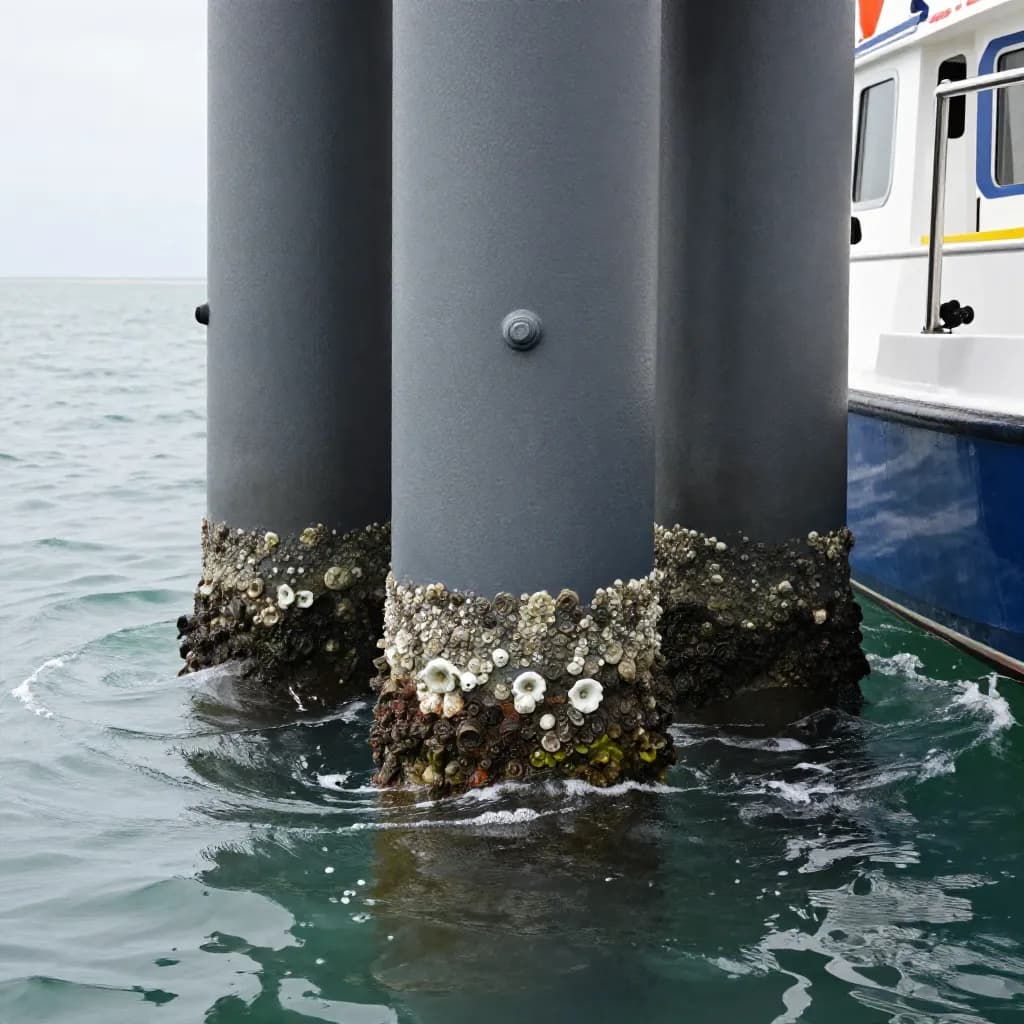
ISO 12944-2 classifies the splash zone under immersion category Im2 (seawater or brackish water), recognizing that the corrosion mechanisms in this zone are fundamentally different from atmospheric corrosion categories C1-CX. The corrosion rate of unprotected carbon steel in the splash zone can exceed 1.0 mm/year — sufficient to perforate a 10 mm steel plate within a decade. Even corrosion-resistant alloys like stainless steel and aluminum experience accelerated attack in the splash zone due to the combination of chloride concentration and oxygen availability.
Ready to Start Your Project?
From one-off customs to 15,000-part production runs — get precise pricing in 24 hours.
On This Page
The Marine Splash Zone: Most Aggressive Corrosion Environment
Structures exposed to splash zone conditions include offshore oil and gas platforms, port and harbor infrastructure (piles, fenders, quay walls), coastal bridges and sea walls, desalination plant intake structures, and marine renewable energy foundations. The economic value of these structures — and the consequences of their failure — demands the highest levels of corrosion protection, making splash zone coating specification one of the most critical and demanding areas of protective coating engineering.
Powder coatings — particularly fusion-bonded epoxy (FBE) and multi-layer polyolefin systems — have established a strong track record in splash zone applications, offering advantages over liquid coatings in terms of film build consistency, absence of solvent-related defects, and resistance to the mechanical and chemical stresses of the splash zone environment.
Wet-Dry Cycling and Corrosion Acceleration
The defining characteristic of the splash zone is continuous wet-dry cycling driven by tidal action and wave splash. Each cycle deposits a fresh layer of seawater on the structure surface, which then partially evaporates during the dry phase, concentrating the dissolved salts. This concentration effect can increase the chloride content of the surface film to 2-3 times the concentration of the surrounding seawater, creating an extremely aggressive corrosive environment.
The corrosion acceleration from wet-dry cycling occurs through several mechanisms. During the wet phase, the seawater film provides the electrolyte for electrochemical corrosion, with dissolved oxygen serving as the cathodic reactant. During the dry phase, the concentrated salt film maintains ionic conductivity while the unlimited oxygen supply at the air-salt interface drives the cathodic reaction at maximum rate. The transition between wet and dry phases creates transient electrochemical conditions that can be more aggressive than either steady-state wet or dry exposure.
For powder coatings in the splash zone, wet-dry cycling creates specific challenges. Moisture permeation through the coating film is driven by the concentration gradient between the salt-laden surface and the coating-substrate interface. Each wet cycle drives moisture inward, while each dry cycle may not fully reverse the moisture penetration, leading to progressive moisture accumulation at the coating-substrate interface over thousands of cycles.
The mechanical action of waves compounds the chemical attack. Wave impact forces of 10-50 kPa (and much higher during storms) create cyclic mechanical loading on the coating that can cause fatigue cracking, particularly at edges, welds, and areas of stress concentration. Waterborne debris — rocks, ice, floating objects — causes impact damage that creates coating defects where accelerated corrosion can initiate.
Biological fouling — the attachment and growth of marine organisms including barnacles, mussels, algae, and biofilm — adds another dimension to splash zone coating degradation. Fouling organisms create localized oxygen depletion cells beneath their attachment points, driving crevice corrosion of the substrate. The mechanical removal of fouling organisms can damage the coating surface, creating new defect points for corrosion initiation.
ISO 12944 Im2 Specification Requirements
ISO 12944, the international standard for corrosion protection of steel structures by protective paint systems, defines specific requirements for splash zone (Im2) coating systems that are significantly more demanding than atmospheric corrosion categories. Understanding and correctly applying these requirements is essential for reliable splash zone coating specification.
ISO 12944-5 defines coating system types and minimum dry film thicknesses for Im2 environments. For durability class High (15-25 years), the standard requires minimum total dry film thicknesses of 400-600 microns depending on the coating system type. For durability class Very High (>25 years), thicknesses of 600-1,000+ microns may be required. These thicknesses are typically achieved using multi-coat systems with zinc-rich primers, epoxy intermediate coats, and polyurethane or epoxy topcoats.
ISO 12944-6 defines the laboratory test methods for qualifying Im2 coating systems. The key tests include neutral salt spray (ISO 9227) for a minimum of 1,440 hours (60 days), cathodic disbondment testing at -1.05V vs. Ag/AgCl for 180 days, cyclic immersion testing alternating between seawater immersion and atmospheric exposure, and adhesion testing after immersion exposure. These test durations are substantially longer than those required for atmospheric corrosion categories.
ISO 12944-9 provides additional requirements for offshore and related structures, including splash zone applications on oil and gas platforms, wind turbine foundations, and marine infrastructure. This part of the standard defines pre-qualification testing requirements that are even more demanding than ISO 12944-6, including extended cathodic disbondment testing and cyclic corrosion testing under conditions representative of actual marine service.
NORSOK M-501, the Norwegian standard widely used for offshore coating specification, defines System 7 specifically for splash zone and submerged applications. NORSOK requirements include 4,200 hours of cathodic disbondment testing, cyclic immersion testing, and impact resistance at low temperatures — reflecting the harsh conditions of North Sea and arctic offshore environments. Coatings qualified to NORSOK M-501 System 7 represent the highest level of splash zone coating qualification.
Cathodic Disbondment in the Splash Zone
Cathodic disbondment — the progressive loss of coating adhesion under the influence of cathodic protection — is one of the most critical performance parameters for splash zone coatings. Marine structures are almost universally protected by cathodic protection (CP) systems, either sacrificial anodes (zinc or aluminum alloys) or impressed current, and the interaction between CP and the coating system must be carefully managed.
In the splash zone, cathodic protection is less effective than in the fully submerged zone because the intermittent water contact limits the time during which the CP current can flow. However, during wet phases, the CP system generates hydroxyl ions (OH⁻) at the steel surface through the cathodic reaction, creating a highly alkaline environment (pH 12-14) at the coating-substrate interface. This alkaline environment can break the adhesive bond between the coating and the steel, causing the coating to progressively disbond outward from any defect point.
The rate of cathodic disbondment depends on the coating chemistry, adhesion strength, film thickness, and the CP potential applied. Epoxy coatings generally provide the best cathodic disbondment resistance among organic coatings due to their strong chemical bonding to steel substrates and resistance to alkaline attack. FBE coatings, with their high-temperature application that promotes chemical bonding to the steel surface, offer particularly good cathodic disbondment resistance.
Cathodic disbondment testing for splash zone coatings follows ISO 15711 or the cathodic disbondment test methods defined in ISO 12944-6 and NORSOK M-501. The test involves applying a controlled cathodic potential (-1.05V to -1.50V vs. Ag/AgCl) to a coated panel with a deliberate holiday (defect) immersed in synthetic seawater at defined temperatures. After the test period (28-180 days depending on the standard), the disbondment radius around the holiday is measured. Maximum allowable disbondment radii range from 5-15 mm depending on the specification and test conditions.
Coating systems with poor cathodic disbondment resistance can be progressively stripped from the structure by the CP system, creating a self-reinforcing failure cycle: as more coating is lost, more bare steel is exposed, requiring more CP current, which in turn accelerates disbondment of adjacent coating. This failure mode has been observed on marine structures with inadequate coating specifications and underscores the importance of cathodic disbondment testing in splash zone coating qualification.
Powder Coating Systems for Splash Zone Service
Several powder coating system designs have been developed and proven for splash zone service, each offering different balances of performance, application complexity, and cost.
Fusion-bonded epoxy (FBE) single-layer systems at 400-600 microns provide excellent splash zone protection for moderate-severity applications. FBE's strong adhesion to steel, low moisture permeability, and good cathodic disbondment resistance make it well-suited to splash zone service. However, FBE's poor UV resistance means that the coating will chalk and degrade in the atmospheric zone above the splash zone, requiring either acceptance of aesthetic degradation or application of a UV-resistant topcoat.
Dual-layer FBE systems — combining a high-adhesion inner layer (150-200 microns) with a tougher, more abrasion-resistant outer layer (200-300 microns) — provide enhanced mechanical protection compared to single-layer FBE. The inner layer is optimized for adhesion and cathodic disbondment resistance, while the outer layer is formulated for impact resistance and abrasion resistance against wave action and debris.
Three-layer polyethylene (3LPE) and polypropylene (3LPP) systems provide the highest level of mechanical protection for splash zone applications. The FBE primer (150+ microns) provides adhesion and cathodic disbondment resistance, the copolymer adhesive bonds the polyolefin to the FBE, and the thick polyethylene or polypropylene outer layer (3-5 mm) provides outstanding resistance to mechanical damage, abrasion, and biological fouling. These systems are the standard for offshore platform legs, monopile foundations, and other high-value splash zone structures.
For splash zone applications requiring UV resistance (structures that extend from the splash zone into the atmospheric zone), hybrid systems combining FBE or epoxy primer with polyurethane topcoat provide both splash zone corrosion protection and atmospheric weathering resistance. The epoxy layer provides the moisture barrier and cathodic disbondment resistance needed for splash zone service, while the polyurethane topcoat provides UV resistance and color retention in the atmospheric zone.
Thermal spray aluminum (TSA) or thermal spray zinc-aluminum (TSZA) combined with powder coating topcoats represents the ultimate splash zone protection system. The metallic spray layer (150-250 microns) provides cathodic protection to the steel substrate, while the powder coating topcoat (200-400 microns) protects the metallic layer from rapid consumption in the aggressive splash zone environment. This duplex system provides 30-50+ year protection in the most severe marine environments.
Application and Quality Control for Splash Zone Coatings
The application quality of splash zone coatings is critical because the consequences of coating failure in this environment are severe and repair is extremely difficult and costly. Marine structures in the splash zone are subject to continuous wave action, tidal variation, and biological fouling that make in-service coating repair a major engineering and logistical challenge.
Surface preparation for splash zone coatings must achieve the highest cleanliness standards. Abrasive blasting to Sa 3 (white metal, ISO 8501-1) is required for most splash zone specifications, with surface profile of 50-100 microns (Rz). Soluble salt contamination must be below 20 µg/cm² equivalent NaCl — and preferably below 10 µg/cm² — to prevent osmotic blistering in the aggressive marine environment. Achieving these cleanliness standards on marine structures requires careful environmental control, as salt-laden marine air can contaminate freshly blasted surfaces within minutes.
For FBE application, the steel must be heated to 230-245°C with temperature uniformity within ±10°C across the coated surface. On large marine structures, achieving this temperature uniformity requires sophisticated heating systems — typically induction heating for pipe and tubular sections, or gas-fired heating for plate structures. Temperature monitoring at multiple points ensures that the entire surface is within the specified range before powder application begins.
Holiday detection is mandatory for all splash zone coatings, with test voltages calculated based on film thickness (typically 5V per micron for FBE, with maximum voltages capped to prevent coating damage). Every square centimeter of the splash zone coating must be tested, and any detected holidays must be repaired with approved materials and re-tested before the structure is installed.
Coating thickness measurement at a high density of measurement points (typically one measurement per 0.5-1.0 m²) ensures that the minimum specified thickness is achieved across the entire splash zone surface. Statistical analysis of thickness data — including mean, standard deviation, and minimum values — provides confidence that the coating system meets specification requirements.
Documentation of the complete coating application process — including surface preparation records, environmental conditions during application, temperature records, thickness measurements, holiday detection results, and repair records — creates a quality dossier that supports warranty claims and provides baseline data for future inspection and maintenance planning.
Inspection and Maintenance of Splash Zone Coatings
Inspection and maintenance of coatings in the marine splash zone present unique logistical challenges due to the continuous wave action, tidal variation, and biological fouling that characterize this environment. Access to splash zone surfaces typically requires specialized marine equipment — jack-up barges, diving support vessels, or rope access teams — and work windows are limited by weather, tide, and sea state conditions.
Underwater and splash zone inspection methods include visual inspection by divers or remotely operated vehicles (ROVs), coating thickness measurement using underwater-capable gauges, adhesion testing at accessible locations, and cathodic potential measurement to verify CP system performance. These inspections are typically conducted on a 3-5 year cycle for offshore structures, with more frequent inspection of critical areas or areas with known coating damage.
Biological fouling must be removed before coating inspection can be conducted. Marine growth — barnacles, mussels, algae, and biofilm — obscures the coating surface and can mask coating defects. Fouling removal methods include high-pressure water jetting (700-1,000 bar), mechanical scraping, and in some cases, chemical treatment. Care must be taken to avoid damaging the coating during fouling removal, particularly at edges and areas of thin coating.
Splash zone coating repair is one of the most challenging operations in marine coating maintenance. The continuous wet-dry cycling makes it difficult to achieve the dry, clean surface conditions required for coating adhesion. Specialized splash zone repair systems have been developed that can be applied to damp or wet surfaces — including moisture-tolerant epoxy and polyurethane formulations that cure in the presence of water. These systems provide acceptable but not optimal adhesion compared to coatings applied under controlled conditions.
Cofferdam and habitat systems — temporary enclosures that create a dry working environment around the splash zone — enable coating repair under controlled conditions. These systems are expensive to deploy but provide the surface preparation and application conditions needed for high-quality coating repair. For critical structures where coating integrity is essential for structural safety, cofferdam repair is the preferred approach.
Predictive maintenance models for splash zone coatings use environmental data (wave height, temperature, salinity), coating specification data, and inspection results to predict coating degradation rates and optimize maintenance timing. These models enable condition-based maintenance that targets repair resources at the areas of greatest need, maximizing the effectiveness of limited maintenance budgets.
Frequently Asked Questions
Why is the splash zone the most corrosive marine environment?
The splash zone combines continuous salt exposure, unlimited oxygen supply, wet-dry cycling that concentrates salts to 2-3x seawater concentration, mechanical wave action, and biological fouling. Unprotected steel corrosion rates exceed 1.0 mm/year — 5-10 times higher than full immersion or atmospheric exposure alone.
What is ISO 12944 Im2 and what does it require?
Im2 is the ISO 12944 immersion category for seawater and brackish water, including the splash zone. It requires minimum 400-600 micron total coating thickness, 1,440+ hours salt spray testing, 180-day cathodic disbondment testing, and cyclic immersion testing. These requirements are substantially more demanding than atmospheric categories.
What is cathodic disbondment and why does it matter in the splash zone?
Cathodic disbondment is progressive coating adhesion loss caused by the alkaline environment (pH 12-14) generated by cathodic protection at the coating-substrate interface. In the splash zone, where CP is applied to all marine structures, coatings must resist this mechanism. FBE coatings offer the best cathodic disbondment resistance among organic coatings.
What powder coating system is best for splash zone structures?
Three-layer polyethylene (3LPE) or polypropylene (3LPP) systems provide the highest protection: FBE primer (150+ microns), copolymer adhesive, and 3-5 mm polyolefin outer layer. For the ultimate protection, thermal spray aluminum plus powder coating topcoat provides 30-50+ year service life in the most severe marine environments.
How are splash zone coatings inspected and repaired?
Inspection uses divers or ROVs on 3-5 year cycles after fouling removal. Repair is challenging due to continuous wet-dry cycling — moisture-tolerant epoxy and polyurethane systems can be applied to damp surfaces, but cofferdam enclosures providing dry conditions are preferred for critical repairs. Predictive maintenance models optimize repair timing.
Ready to Start Your Project?
From one-off customs to 15,000-part production runs — get precise pricing in 24 hours.