Marine environments represent one of the most aggressive corrosion scenarios for metal components. The combination of saltwater spray, high humidity, UV radiation, and temperature cycling creates conditions that can destroy unprotected steel and aluminum in months rather than years. Powder coating has emerged as a leading protective finish for marine hardware, structural components, and decorative elements because its dense, cross-linked thermoset film provides a continuous barrier against chloride ion penetration — the primary driver of marine corrosion.
Marine
Powder Coating for Marine and Boating Applications: Saltwater Corrosion Protection and Hardware Finishing
Sundial Powder Coating·April 22, 2026·12 min
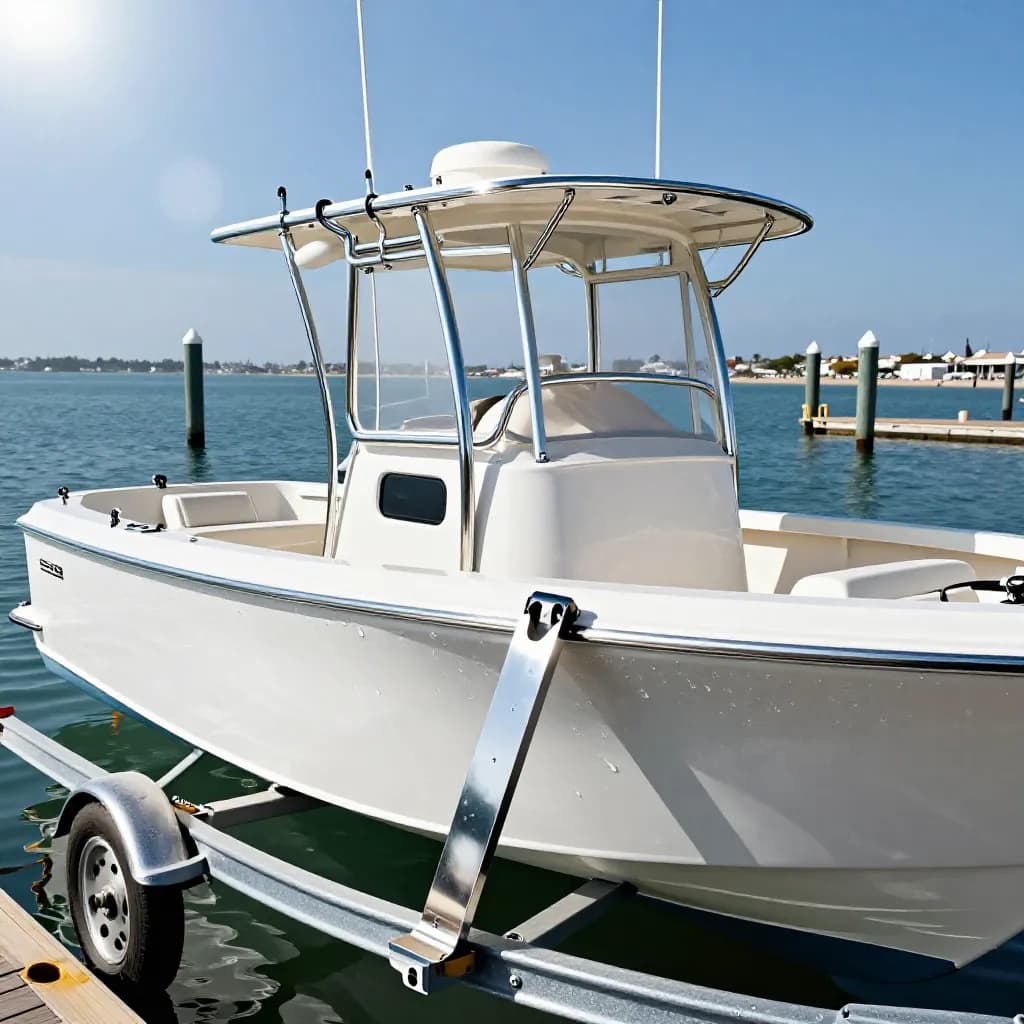
Saltwater corrosion operates through electrochemical mechanisms that are accelerated by the high conductivity of salt-laden moisture. Chloride ions penetrate coating defects, pinholes, and areas of thin coverage to initiate pitting corrosion on aluminum and general corrosion on steel substrates. Once initiated, corrosion propagates beneath the coating film, causing blistering, delamination, and structural degradation. The key to effective marine protection is therefore a coating system with minimal porosity, excellent adhesion, and resistance to chloride ion transport.
Ready to Start Your Project?
From one-off customs to 15,000-part production runs — get precise pricing in 24 hours.
On This Page
The Marine Corrosion Challenge and Why Powder Coating Excels
Powder coating achieves these requirements through its application process. The electrostatic spray and thermal cure process produces a film that is denser and more uniform than air-dried liquid paints, with fewer pinholes and voids that could serve as corrosion initiation sites. Film thicknesses of 80-120 microns are standard for marine applications, providing a substantial barrier that liquid paint systems struggle to match in a single application.
Marine Hardware: Cleats, Hinges, Latches, and Deck Fittings
Marine deck hardware — cleats, hinges, latches, chocks, fairleads, and rod holders — must withstand constant saltwater exposure, mechanical loading, and UV radiation while maintaining both functional performance and visual appearance. Powder coating these components requires careful attention to substrate selection, pretreatment, and coating specification to ensure long-term performance in the marine environment.
Stainless steel (316L marine grade) and aluminum (6061-T6 or 5083 marine alloys) are the preferred substrates for powder-coated marine hardware. Carbon steel is generally avoided for above-waterline marine hardware due to its rapid corrosion rate, though it may be used for structural components that are fully encapsulated by the coating system. The substrate choice directly affects pretreatment requirements: aluminum requires chromate or zirconium-based conversion coating, while stainless steel needs mechanical abrasion or specialized acid etching to achieve adequate adhesion.
For cleats and high-wear hardware, coating durability under mechanical abrasion is critical. Dock lines, anchor chains, and mooring ropes create significant abrasion forces that can wear through thin coatings. Specifying a minimum film thickness of 100 microns and selecting a powder formulation with high pencil hardness (2H or greater) and good abrasion resistance helps ensure the coating survives the mechanical demands of marine hardware use.
Color selection for marine hardware typically favors white, navy, black, and metallic silver finishes that complement hull and deck colors. Marine-grade polyester powders with enhanced UV stabilizer packages maintain color and gloss retention for 8-12 years in direct marine exposure, compared to 3-5 years for standard polyester formulations not optimized for marine service.
Railings, Stanchions, and Structural Marine Components
Boat railings, stanchions, pulpits, tower frames, and T-tops represent a significant category of marine powder coating work. These structural components are typically fabricated from welded aluminum or stainless steel tubing and must maintain both structural integrity and visual appearance over years of saltwater exposure, UV radiation, and mechanical loading from passengers, equipment, and docking impacts.
Aluminum railings and towers are the most common substrates for marine powder coating. The pretreatment process for welded aluminum marine structures is critical: all weld spatter, flux residue, and heat-affected zone oxidation must be removed by mechanical grinding or chemical cleaning before the conversion coating process. Weld areas are particularly vulnerable to corrosion because the heat of welding disrupts the aluminum's natural oxide layer and can create galvanic cells between the weld filler and base metal.
The preferred pretreatment for marine aluminum is a multi-stage process: alkaline cleaning, acid etch (chromic or non-chromic), and chromate or zirconium-based conversion coating. This process creates a chemically bonded conversion layer that dramatically improves powder adhesion and provides an additional barrier against chloride ion penetration. For the highest marine corrosion protection, a chrome-free conversion coating meeting MIL-DTL-5541 Type II or MIL-DTL-81706 provides military-grade pretreatment performance.
Coating specification for marine railings typically calls for a super-durable polyester powder with AAMA 2604 or AAMA 2605 performance characteristics, applied at 80-120 microns. These high-performance polyester formulations contain enhanced UV stabilizers and hindered amine light stabilizers (HALS) that resist the intense UV exposure of open-water marine environments. Qualicoat Class 2 or Class 3 certified powders provide equivalent European performance standards.
Qualicoat Seaside Certification and Marine-Grade Standards
Qualicoat Seaside is the premier quality certification for powder coatings intended for marine and coastal environments. Developed by the Qualicoat association specifically to address the extreme demands of saltwater exposure, the Seaside certification imposes additional testing requirements beyond standard Qualicoat Class 1, 2, or 3 certifications, including extended neutral salt spray testing (minimum 1,500 hours for Seaside), acetic acid salt spray testing, and Kesternich testing for resistance to acidic atmospheric conditions.
To achieve Qualicoat Seaside certification, the complete coating system — pretreatment, primer (if used), and topcoat — must be tested and approved as an integrated system. This means that applicators cannot simply use a Seaside-certified powder over a non-certified pretreatment and claim Seaside compliance. The pretreatment process, chemical suppliers, and application parameters must all be part of the certified system, ensuring that every element of the corrosion protection chain meets the required standard.
In North America, AAMA 2605 is the closest equivalent to Qualicoat Seaside performance, requiring 4,000 hours of salt spray resistance and 10 years of South Florida weathering exposure. While AAMA 2605 was developed primarily for architectural applications, its demanding performance requirements make it a suitable specification for marine components that require long-term corrosion and UV resistance.
Beyond these coating-specific standards, marine powder coating applications may also need to comply with ISO 12944 (corrosion protection of steel structures by protective paint systems), which classifies marine environments as C5-M (very high corrosivity, marine) and specifies minimum coating system requirements for each corrosivity category. For offshore applications, NORSOK M-501 provides additional requirements for coating systems used on oil and gas platforms in marine environments.
Marine-Grade Pretreatment: The Foundation of Corrosion Protection
Pretreatment quality determines the ultimate corrosion performance of any marine powder coating system. In marine environments, the pretreatment must accomplish three objectives: remove all surface contaminants that could compromise adhesion, create a surface profile that provides mechanical bonding for the powder coat, and deposit a conversion coating that provides chemical bonding and an additional corrosion barrier at the metal-coating interface.
For aluminum substrates, the gold standard marine pretreatment is a six-stage process: hot alkaline cleaning (60-70°C), rinse, acid etch (chromic acid or non-chromic alternative), rinse, chromate or chrome-free conversion coating, and final rinse with deionized water. The conversion coating step is the most critical — it creates a thin (0.5-2 micron) inorganic layer that is chemically bonded to the aluminum surface and provides both adhesion promotion and corrosion inhibition. Chrome-based conversion coatings (per MIL-DTL-5541) remain the performance benchmark, but environmental regulations are driving adoption of trivalent chromium and zirconium-based alternatives that approach chrome performance without the hexavalent chromium toxicity concerns.
For steel substrates in marine service, zinc phosphate conversion coating provides superior corrosion protection compared to iron phosphate. The zinc phosphate crystal structure creates a more effective barrier against chloride ion penetration and provides better adhesion for the powder coat. In the most demanding marine applications, a zinc-rich epoxy primer applied over zinc phosphate pretreatment and beneath the polyester topcoat creates a three-layer defense system that can achieve 3,000+ hours of neutral salt spray resistance.
Water quality in the pretreatment process is often overlooked but critically important for marine applications. Final rinse water should have a conductivity below 30 microsiemens per centimeter to prevent salt deposits on the pretreated surface that could compromise coating adhesion. Many marine coating facilities use reverse osmosis or deionized water for final rinse stages to ensure consistent pretreatment quality.
Below-Waterline and Splash Zone Considerations
While powder coating excels for above-waterline marine applications, below-waterline and splash zone components present additional challenges that require specialized coating approaches. Components in these zones face continuous or intermittent water immersion, biofouling, cathodic protection interactions, and mechanical abrasion from debris and marine growth.
For splash zone components — those alternately wetted and dried by wave action — the corrosion rate is typically the highest of any marine exposure zone. The cyclic wetting and drying concentrates salt on the surface and provides the oxygen necessary for corrosion reactions. Powder coating systems for splash zone service should specify a minimum of 150 microns total film thickness, with an epoxy primer providing the primary corrosion barrier and a UV-resistant polyester topcoat protecting the epoxy from degradation.
Below-waterline applications require consideration of cathodic protection compatibility. Many marine vessels and structures use sacrificial anodes (zinc or aluminum) or impressed current cathodic protection systems to prevent corrosion of submerged metal. The powder coating must be compatible with the cathodic protection system — specifically, it must resist cathodic disbondment, where the alkaline environment generated at the cathode causes the coating to lose adhesion and peel away from the substrate.
Fusion-bonded epoxy (FBE) coatings, applied as a powder and cured at 230-245°C, are the preferred powder coating technology for below-waterline and immersion service. FBE coatings are specifically formulated for cathodic disbondment resistance and are widely used in pipeline, offshore platform, and marine infrastructure applications. Standard decorative polyester powder coatings are not suitable for continuous immersion service due to their higher moisture permeability and lower cathodic disbondment resistance.
Galvanic Corrosion Prevention in Multi-Metal Marine Assemblies
Marine assemblies frequently combine dissimilar metals — aluminum railings with stainless steel fasteners, steel brackets with bronze fittings, or aluminum hulls with copper-based antifouling systems. When dissimilar metals are in electrical contact in the presence of an electrolyte (saltwater), galvanic corrosion accelerates the degradation of the more anodic (less noble) metal. Powder coating plays a critical role in preventing galvanic corrosion by electrically isolating dissimilar metals from each other and from the saltwater electrolyte.
The galvanic series in seawater ranks metals from most anodic (most likely to corrode) to most cathodic (most noble). Aluminum and zinc are highly anodic, while stainless steel, copper, and bronze are cathodic. When aluminum is fastened to stainless steel in a marine environment without isolation, the aluminum will corrode preferentially and rapidly at the contact point. Powder coating the aluminum component, the stainless steel fastener, or both creates a dielectric barrier that interrupts the galvanic circuit.
For effective galvanic isolation, the powder coating must provide complete, pinhole-free coverage at the contact interface. Any break in the coating at the dissimilar metal junction will concentrate corrosion at that point, potentially accelerating failure rather than preventing it. This is why marine powder coating specifications often require higher film thicknesses at fastener holes and contact points — areas where the coating is most likely to be damaged during assembly.
Non-metallic isolation washers and bushings should be used in conjunction with powder coating for critical dissimilar metal joints. Nylon, PTFE, or fiber-reinforced composite washers provide a secondary isolation barrier that protects against coating damage during fastener installation and thermal cycling. The combination of powder coating and mechanical isolation provides the most reliable galvanic corrosion prevention for marine assemblies.
Maintenance and Repair of Powder-Coated Marine Components
Even the highest-quality marine powder coating system will eventually require maintenance and repair due to the extreme severity of the marine environment. Establishing a regular inspection and maintenance program extends the service life of powder-coated marine components and prevents minor coating damage from developing into significant corrosion problems.
Routine maintenance for powder-coated marine surfaces involves freshwater rinsing after each saltwater exposure to remove salt deposits, followed by periodic washing with a mild pH-neutral detergent. Abrasive cleaners, solvents, and high-pressure washers above 1,500 psi should be avoided as they can damage the coating surface and accelerate degradation. For stubborn stains or biological growth, a soft brush with diluted marine cleaning solution is effective without compromising the coating integrity.
Field repair of damaged powder coating on marine components is typically performed using marine-grade two-component epoxy or polyurethane touch-up paints rather than powder coating, since powder coating requires oven curing that is impractical for installed components. The repair process involves cleaning the damaged area, feathering the edges of the intact coating, applying a corrosion-inhibiting primer, and topcoating with a color-matched marine paint. While the liquid paint repair will not match the original powder coat in durability, it provides effective corrosion protection until the component can be removed and professionally recoated.
Inspection intervals for marine powder-coated components should be based on the severity of exposure. Components in direct splash zone exposure should be inspected quarterly, while above-waterline components in moderate marine environments can be inspected annually. Key indicators of coating degradation include chalking (a white powdery residue on the surface), loss of gloss, color fading, blistering, and any visible corrosion at edges, fastener holes, or damage points.
Frequently Asked Questions
How long does powder coating last in a saltwater marine environment?
With proper pretreatment and a marine-grade polyester powder, powder coating typically lasts 8-12 years in direct marine exposure before significant degradation occurs. Qualicoat Seaside certified systems and AAMA 2605 rated coatings can extend this to 15+ years. Regular freshwater rinsing and maintenance significantly extend service life.
What is Qualicoat Seaside certification?
Qualicoat Seaside is a specialized quality certification for powder coating systems intended for marine and coastal environments. It requires extended salt spray testing (minimum 1,500 hours), acetic acid salt spray testing, and certification of the complete system including pretreatment, primer, and topcoat. It ensures the coating system can withstand aggressive saltwater exposure.
Can powder coating prevent galvanic corrosion between aluminum and stainless steel?
Yes. Powder coating creates a dielectric barrier that electrically isolates dissimilar metals, interrupting the galvanic corrosion circuit. For maximum protection, the coating must be pinhole-free at contact interfaces, and non-metallic isolation washers should be used as a secondary barrier at fastener locations.
What pretreatment is best for marine aluminum powder coating?
The gold standard is a six-stage process: alkaline cleaning, rinse, acid etch, rinse, chromate or chrome-free conversion coating, and deionized water rinse. The conversion coating step is critical — it creates a chemically bonded layer that dramatically improves adhesion and corrosion resistance. Chrome-free alternatives meeting MIL-DTL-81706 are increasingly preferred.
Is powder coating suitable for below-waterline marine applications?
Standard decorative polyester powders are not suitable for continuous immersion. Fusion-bonded epoxy (FBE) coatings, cured at 230-245°C, are the preferred powder technology for below-waterline service due to their superior cathodic disbondment resistance and low moisture permeability. Above-waterline and splash zone applications use standard marine-grade polyester systems.
Ready to Start Your Project?
From one-off customs to 15,000-part production runs — get precise pricing in 24 hours.