Jet skis and personal watercraft operate in an environment that destroys ordinary coatings in short order. Constant salt water immersion, intense UV exposure reflected from the water surface, high-speed water impact, and the physical wear from rider contact combine to create one of the most demanding coating environments outside of industrial applications. The metal components on a personal watercraft need a finish that can withstand all of this while maintaining an attractive appearance.
Marine
Powder Coating Jet Ski Parts: Salt Water Durability and Custom Colors for Personal Watercraft
Sundial Powder Coating·April 23, 2026·9 min
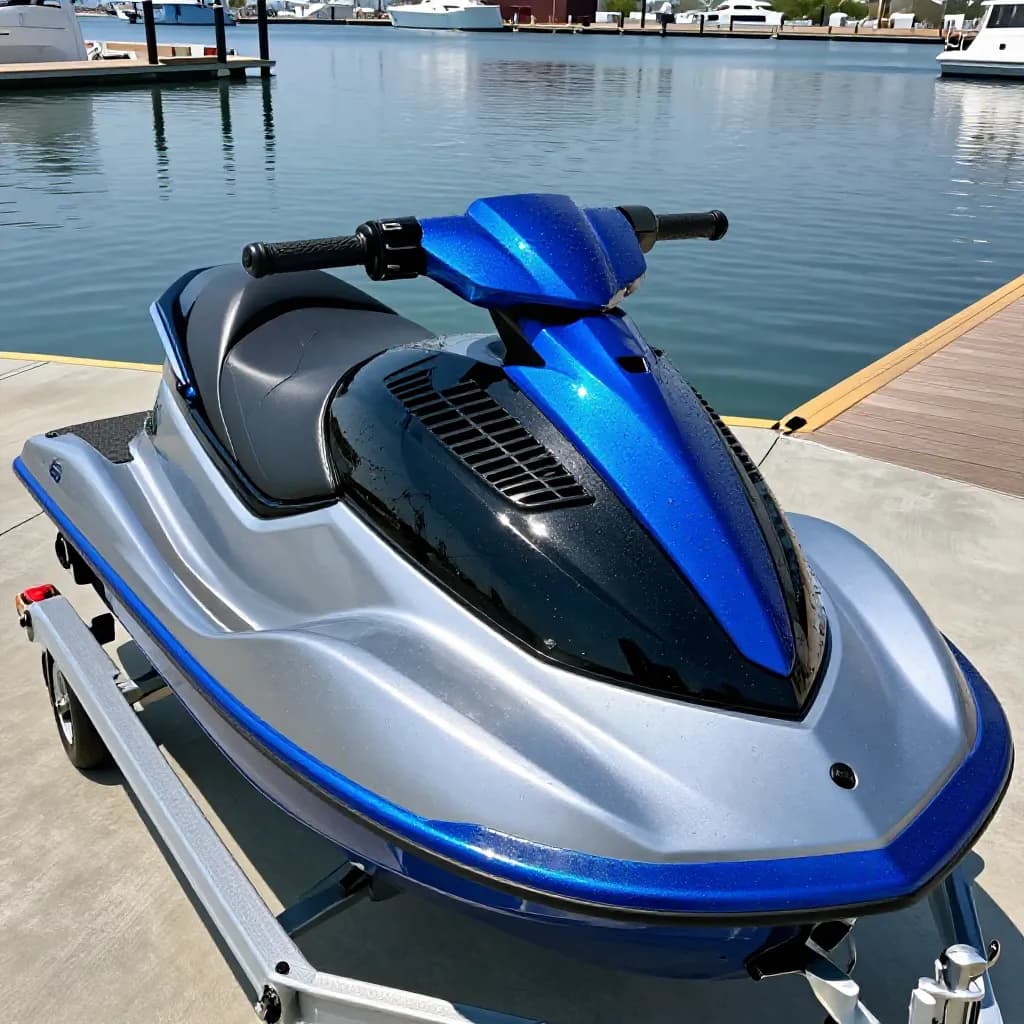
Factory finishes on jet ski metal components vary in quality. Premium brands apply durable coatings to critical components, but even these degrade over time in the marine environment. Budget and older watercraft often have minimal coating on metal parts, leading to rapid corrosion that affects both appearance and function. Corroded handlebars, rusted hull hardware, and oxidized engine components detract from the watercraft's value and can create safety concerns.
Ready to Start Your Project?
From one-off customs to 15,000-part production runs — get precise pricing in 24 hours.
On This Page
Personal Watercraft and the Demand for Durable Finishes
Powder coating provides the thick, chemically resistant, and UV-stable finish that personal watercraft components demand. The ability to coat metal parts in any color also opens up customization possibilities that are hugely popular in the jet ski community, where personalized color schemes and custom builds are a significant part of the culture.
Identifying Coatable Jet Ski Components
Personal watercraft contain numerous metal components that benefit from powder coating, but not every part is suitable for the process. Identifying the right components ensures a successful project without damaging heat-sensitive or precision parts.
Handlebars and steering assemblies are the most popular jet ski components for powder coating. These aluminum or steel parts are highly visible, frequently contacted by the rider, and exposed to salt spray and UV. Powder coating provides a durable, comfortable grip surface and allows custom color expression. Throttle and brake lever pivot points should be masked to maintain smooth operation.
Hull hardware including intake grates, ride plates, sponsons, and pump housings are aluminum or stainless steel components that benefit from powder coating for both corrosion protection and appearance. These parts are partially or fully submerged during operation and face the most aggressive salt water exposure. Proper preparation with salt removal and marine-grade pretreatment is essential.
Engine and drivetrain brackets, mounts, and covers can be powder coated for a clean engine bay appearance. These components operate in the enclosed engine compartment where heat and moisture are constant concerns. Standard polyester powder handles the thermal environment of a jet ski engine bay, which is typically cooler than automotive applications due to water cooling.
Exhaust components and waterbox housings operate at elevated temperatures and may require high-temperature powder formulations depending on the specific temperatures involved. Measure or research the operating temperature of these components before selecting a powder chemistry.
Plastic hull panels, seats, and rubber components cannot be powder coated and must be finished with other methods. The fiberglass or plastic hull itself is not a candidate for powder coating due to the cure temperature requirements.
Salt Water Corrosion Protection
Salt water is the primary enemy of metal components on personal watercraft. The high chloride concentration in salt water accelerates corrosion rates dramatically compared to fresh water, and the combination of salt water immersion, salt spray, and wet-dry cycling creates a corrosion environment that tests the limits of any coating system.
For components that are submerged during operation, such as intake grates and ride plates, the coating must provide a continuous, pore-free barrier against salt water. Any pinhole, thin spot, or adhesion failure becomes a corrosion initiation point that will spread rapidly in the salt water environment. Thorough surface preparation with complete salt removal, aggressive blasting, and marine-grade conversion coating is non-negotiable for submerged components.
A two-coat system with epoxy primer and polyester topcoat provides the best salt water resistance. The epoxy primer offers superior chemical resistance and adhesion compared to polyester alone, creating a robust barrier against chloride penetration. The polyester topcoat provides UV resistance for above-waterline areas and adds additional barrier thickness.
Galvanic corrosion between dissimilar metals is accelerated by salt water. When powder-coated aluminum components are fastened with stainless steel hardware, the coating acts as an insulating barrier that reduces galvanic current flow. However, if the coating is damaged at the fastener interface, galvanic corrosion will be concentrated at the exposed area. Using nylon washers or isolators between dissimilar metals provides additional galvanic protection.
After every salt water use, rinse all powder-coated components thoroughly with fresh water. This simple maintenance step removes salt deposits before they can concentrate and attack the coating. Pay particular attention to crevices, bolt holes, and areas where salt water can pool and evaporate, leaving concentrated salt deposits.
UV Resistance for Water-Reflected Sunlight
Personal watercraft operate in an extreme UV environment. Direct sunlight from above combines with reflected UV from the water surface to create a UV dose that is significantly higher than land-based applications. Water reflects approximately 10-25 percent of incident UV radiation, depending on the angle and surface conditions, effectively increasing the total UV exposure on watercraft components.
This intensified UV environment demands the highest level of UV resistance from the powder coating. Super-durable polyester formulations are the minimum recommendation for any jet ski component that is exposed to sunlight. Standard polyester powders will fade and chalk noticeably within 1-2 seasons of regular watercraft use, which is unacceptable for components that should maintain their appearance for years.
Dark colors are particularly vulnerable to UV degradation in the marine environment. Black handlebars or dark-colored hull hardware will show fading and chalking sooner than light-colored components, even with super-durable powder. If choosing dark colors, insist on the highest-grade UV-stable formulation available and consider a clear coat over the color for additional UV protection.
Metallic and candy finishes, while visually stunning on personal watercraft, are more susceptible to UV degradation than solid colors. The metallic flake or translucent candy layer can shift in color or lose its visual effect as UV breaks down the coating matrix. A UV-stable clear coat over metallic and candy finishes is strongly recommended for marine applications.
For maximum UV longevity, light colors like white, silver, and light blue provide the best color retention. These colors reflect more UV energy and show less visible change as the coating ages. Many factory jet ski color schemes use light colors for this practical reason, in addition to the aesthetic preference for bright, visible watercraft.
Custom Colors and the Jet Ski Culture
The personal watercraft community embraces customization, and powder coating is a key enabler of the bold, eye-catching color schemes that define custom jet ski builds. From subtle factory-matching restorations to wild multi-color show builds, powder coating provides the durability and color range that this creative community demands.
Popular custom color schemes include single-color transformations where all metal components are coated in a unified color that contrasts with the hull graphics. Bright red, electric blue, lime green, and vivid orange are perennial favorites that pop against white or black hull panels. These solid colors are straightforward to apply and provide maximum visual impact.
Two-tone and multi-color schemes use masking to create patterns, stripes, and color blocks across individual components. A handlebar assembly with contrasting grip areas and stem colors, or an intake grate with alternating colored bars, adds visual complexity that elevates the build. Each additional color requires a separate masking, spraying, and curing cycle.
Metallic and chrome-look finishes are hugely popular for jet ski handlebars and hull hardware. A super chrome or mirror chrome powder coat creates a reflective, jewelry-like appearance that catches light on the water. These finishes require meticulous surface preparation and skilled application but produce stunning results.
Color coordination between powder-coated metal parts and the hull graphics or wrap creates a cohesive build identity. Work with the hull graphics designer to select powder colors that complement the graphic scheme. Bringing a color sample from the graphics material to the powder coater ensures an accurate match.
For racing watercraft, team colors and sponsor branding on powder-coated components add a professional touch. The durability of powder coating means team colors survive the rigors of competition without the fading and chipping that would plague painted components.
Preparation Specifics for Marine Aluminum
Jet ski components are predominantly aluminum alloy castings and extrusions, and preparing these for powder coating in a marine application requires the most rigorous preparation protocol to ensure long-term coating survival in salt water.
Salt removal is the first and most critical step. Components that have been in salt water service contain salt deposits on the surface, in crevices, and embedded in casting porosity. A multi-stage cleaning process is required: initial degreasing to remove oils and grease, followed by soaking in a heated salt-removing solution, then multiple fresh water rinses. Test the final rinse water for chloride content to verify adequate salt removal. Any residual salt will cause blistering and adhesion failure after coating.
After salt removal, strip any remaining factory coatings through chemical stripping or blasting. Marine coatings can be tenacious and may require aggressive stripping methods. Verify complete removal by inspecting the surface under strong light for any remaining coating traces.
Pre-bake cast aluminum components at cure temperature for 30-45 minutes to drive out trapped gases from casting porosity. Marine castings may require extended or repeated pre-bake cycles due to moisture and salt that has penetrated deep into the casting structure over years of service.
Blast with fine aluminum oxide or glass bead at controlled pressure appropriate for the component's wall thickness. Apply a marine-grade chromate-free conversion coating immediately after blasting. The conversion coating is the foundation of the entire coating system's corrosion resistance, and its quality directly determines how long the powder coat will survive in the marine environment.
Apply powder promptly after pretreatment. Any delay allows the aluminum to re-oxidize and reduces the effectiveness of the conversion coating. For multi-component projects, process components in batches small enough to coat within the pretreatment's open time.
Reassembly and Watercraft-Specific Maintenance
Reassembling powder-coated jet ski components requires marine-grade hardware and sealants to maintain the corrosion protection provided by the coating. Every fastener, seal, and connection point is a potential corrosion site if not properly addressed.
Use marine-grade stainless steel fasteners throughout. Apply anti-seize compound to all threaded connections to prevent galvanic corrosion and facilitate future disassembly. Where aluminum components contact stainless hardware, use nylon washers or isolators to reduce galvanic coupling.
Reinstall all seals, gaskets, and O-rings with new marine-grade components. The disassembly process provides an opportunity to replace aging seals that could allow water intrusion into enclosed spaces. Use marine sealant at all hull penetrations and hardware mounting points.
After reassembly, test all mechanical functions before returning the watercraft to the water. Verify steering operation, throttle response, and the function of any components that were disassembled for coating. Check all fastener torque values against manufacturer specifications.
Ongoing maintenance is centered on salt removal. Rinse the entire watercraft with fresh water after every salt water use, paying particular attention to powder-coated components and the crevices around them. Periodically inspect the coating for chips, scratches, and any signs of corrosion. Touch up damage promptly with marine-grade primer and matching paint.
Store the watercraft under cover when not in use to reduce UV exposure. Even with UV-stable powder, minimizing sun exposure extends the finish life. For watercraft stored on trailers outdoors, a fitted cover is a worthwhile investment that protects both the hull and the powder-coated components.
At the end of each season, perform a thorough inspection of all powder-coated components. Clean, touch up any damage, and apply a marine-grade wax or ceramic coating to provide an additional protective layer during storage.
Frequently Asked Questions
What jet ski parts can be powder coated?
Metal components including handlebars, steering assemblies, intake grates, ride plates, sponsons, pump housings, engine brackets, and various hardware can all be powder coated. Plastic hull panels, seats, and rubber components cannot withstand the cure temperature and must be finished with other methods.
How do you prepare jet ski parts that have been in salt water?
Multi-stage cleaning is required: degrease, soak in heated salt-removing solution, and rinse multiple times with fresh water. Test the final rinse for chloride content. Pre-bake cast aluminum parts to drive out moisture and salt from porosity. Apply marine-grade conversion coating after blasting.
Will powder coating survive constant salt water exposure?
Yes, with proper preparation and a marine-grade coating system. A two-coat system with epoxy primer and super-durable polyester topcoat provides excellent salt water resistance. Thorough salt removal during preparation and fresh water rinsing after each use are essential for long-term coating survival.
What colors are most popular for custom jet ski builds?
Bright solid colors like red, blue, green, and orange are perennial favorites. Metallic and chrome-look finishes are popular for handlebars and hardware. Color coordination with hull graphics creates a cohesive build. Light colors provide better UV longevity in the intense marine sun environment.
How often should I maintain powder-coated jet ski parts?
Rinse with fresh water after every salt water use. Inspect the coating monthly during the riding season for chips and scratches. Touch up damage promptly. Apply marine-grade wax or ceramic coating at the start and end of each season. Perform a thorough inspection before winter storage.
Ready to Start Your Project?
From one-off customs to 15,000-part production runs — get precise pricing in 24 hours.