Louvres, sunscreens, and brise soleil systems have become defining elements of contemporary architecture. These shading devices serve a dual function: they control solar heat gain and glare to improve building energy performance, while simultaneously creating bold visual texture and rhythm on building facades. From horizontal blade systems to vertical fins and perforated screens, shading elements are now integral to the architectural language of sustainable design.
Architecture
Powder Coating for Louvres, Sunscreens, and Shading Systems
Sundial Powder Coating·April 20, 2026·10 min
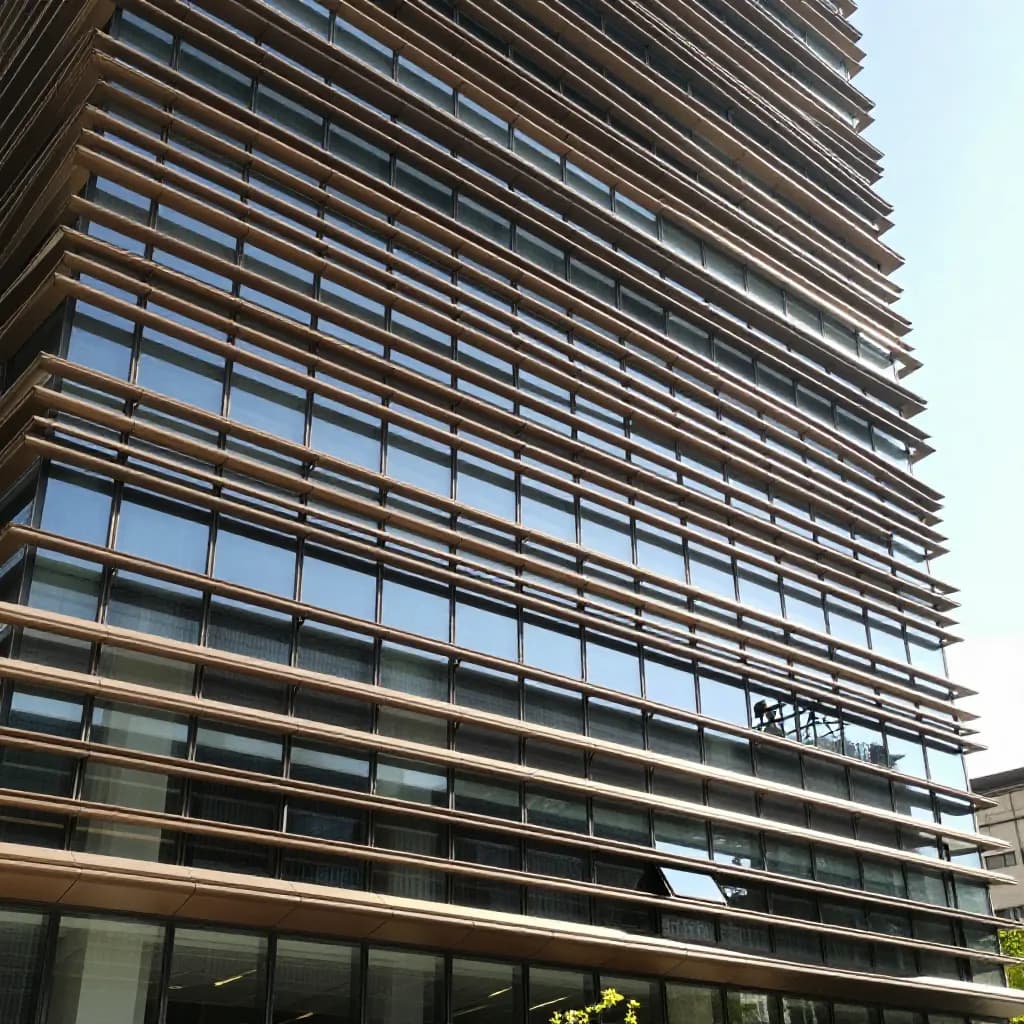
The growing emphasis on energy efficiency in building regulations has accelerated the adoption of external shading systems. By intercepting direct solar radiation before it reaches the glazing, louvres can reduce cooling loads by 30-50%, making them a cost-effective alternative to high-performance solar control glass. This functional importance means that shading systems must perform reliably for the full service life of the building, without degradation that compromises either their appearance or their solar control function.
Ready to Start Your Project?
From one-off customs to 15,000-part production runs — get precise pricing in 24 hours.
On This Page
The Role of Louvres in Modern Architecture
Because louvres and sunscreens are mounted on the exterior of the building envelope, they are fully exposed to the most severe weather conditions. UV radiation, wind-driven rain, thermal cycling, and airborne pollutants all act continuously on these elements. The coating system applied to louvres must therefore deliver exceptional durability under conditions that are among the most demanding in architectural specification.
Why Powder Coating Is Essential for Shading Systems
Powder coating is the natural choice for louvres and sunscreens because it addresses the two primary challenges these elements face: extreme UV exposure and complex geometry. Applied at 60-120 microns, powder coating provides a film build that is two to three times thicker than liquid paint at 25-50 microns, creating a more substantial barrier against the intense and unrelenting UV radiation that shading elements endure by design — they are positioned specifically to intercept sunlight.
The complex geometries of louvre blades, perforated screens, and curved sunscreen profiles present coating challenges that powder handles with inherent advantage. Electrostatic powder application naturally builds film on edges, corners, and recessed areas where liquid paint thins out due to surface tension. For louvre blades with sharp leading edges and narrow profiles, this edge-building characteristic ensures that the most exposed surfaces receive adequate protection without manual touch-up.
With zero VOC emissions and 95-98% material utilisation, powder coating also aligns with the sustainability objectives that drive the specification of shading systems in the first place. It would be contradictory to specify louvres for energy efficiency while finishing them with a solvent-based liquid paint that generates VOC emissions and achieves only 30-70% transfer efficiency. Powder coating completes the sustainable design intent from structure to surface.
Coating Specification for Louvres and Sunscreens
Given the extreme UV exposure that louvres and sunscreens endure, specification should target the highest weathering performance tiers. Qualicoat Class 2 is the minimum recommended standard for exterior shading systems, with Class 3 preferred for south-facing installations and locations with high UV indices. In North America, AAMA 2605 provides equivalent assurance with its requirement for 10 years of South Florida weathering exposure.
Super-durable polyester powder coatings are the standard formulation for louvre applications, offering the best combination of UV resistance, colour retention, and mechanical durability. These formulations are specifically engineered to resist the chalking, fading, and gloss loss that standard polyester coatings may exhibit under prolonged direct UV exposure. For the most demanding applications, fluoropolymer-modified powder coatings provide performance approaching that of PVDF liquid systems.
Pretreatment must be specified to match the exposure conditions. Chrome-free multi-stage pretreatment with titanium or zirconium-based conversion coatings is standard for aluminum louvres. For coastal installations, Qualicoat Seaside certification ensures that the complete system — pretreatment plus powder topcoat — will resist the accelerated corrosion that salt-laden air causes on inadequately protected aluminum.
Design Possibilities: Perforated, Curved, and Wood-Grain
Modern powder coating technology enables a remarkable range of design options for louvres and sunscreens. Perforated aluminum screens can be powder coated in any RAL colour with consistent coverage across both the solid areas and the perforated edges — a challenge that liquid paint handles poorly due to paint pooling around perforations and thinning on cut edges. The electrostatic application process ensures uniform film build regardless of the complexity of the perforation pattern.
Curved louvre blades and three-dimensional sunscreen profiles benefit equally from powder coating's ability to follow complex contours. The dry powder particles conform to curved surfaces during electrostatic application and flow into a smooth, continuous film during the curing process. This produces a flawless finish on curved profiles that would require multiple coats and extensive skill to achieve with liquid paint.
Sublimation transfer technology has opened up wood-grain finishes for aluminum louvres, allowing architects to achieve the warm aesthetic of timber shading systems with the durability and fire performance of powder-coated aluminum. These wood-effect finishes are particularly popular for residential developments and hospitality projects where the natural appearance of timber is desired but the maintenance burden and fire risk of real wood are unacceptable.
Liquid Paint Limitations for Louvre Applications
Liquid paint is poorly suited to louvre and sunscreen applications for several fundamental reasons. The thin film build of 25-50 microns provides inadequate protection against the extreme UV exposure that shading elements endure. Because louvres are designed to intercept direct sunlight, they receive more UV radiation per square metre than any other facade element. Liquid paint films begin chalking and fading within 5-8 years under these conditions, compared to 20-25 years for powder coating.
Edge coverage is the second critical failure point. Louvre blades are typically narrow aluminum extrusions with sharp leading and trailing edges — precisely the geometry where liquid paint performs worst. Surface tension causes liquid paint to pull away from edges during application, leaving these high-exposure areas with the thinnest film. Corrosion and coating breakdown invariably begin at these edges, spreading progressively across the blade surface.
The practical difficulties of liquid painting louvre systems compound these performance limitations. Louvre blades are often coated individually before assembly, and the multi-coat liquid process — primer, intermediate coat, topcoat, with drying time between each — is significantly slower and more labour-intensive than the single-coat powder process. For large shading installations involving hundreds or thousands of individual blades, this process inefficiency translates directly into higher production costs and longer lead times.
Frequently Asked Questions
Why do louvres need a higher coating specification than other facade elements?
Louvres and sunscreens are designed to intercept direct sunlight, so they receive more UV radiation per square metre than any other facade element. This extreme UV exposure demands the highest weathering performance — Qualicoat Class 2 or 3, or AAMA 2605 — to ensure colour retention and film integrity over a 20-25 year service life.
Can powder coating cover perforated louvre screens effectively?
Yes. Electrostatic powder application provides consistent coverage across both solid areas and perforated edges, unlike liquid paint which pools around perforations and thins on cut edges. This ensures uniform protection and appearance across the entire perforated screen surface.
Are wood-grain finishes available for powder-coated louvres?
Yes. Sublimation transfer technology enables realistic wood-grain finishes on powder-coated aluminum louvres. These finishes provide the warm aesthetic of timber with the durability, fire performance, and low maintenance of powder-coated aluminum — lasting 20-25 years compared to the frequent maintenance that real timber requires.
How long does liquid paint last on louvres compared to powder coating?
Liquid paint on louvres typically begins chalking and fading within 5-8 years due to the extreme UV exposure these elements endure. Powder coating lasts 20-25 years under the same conditions, thanks to its thicker film build of 60-120 microns and the superior UV resistance of super-durable polyester formulations.
Ready to Start Your Project?
From one-off customs to 15,000-part production runs — get precise pricing in 24 hours.