Leadership in Energy and Environmental Design (LEED), administered by the US Green Building Council (USGBC), is the world's most widely used green building certification system. LEED v4.1, the current version, evaluates buildings across multiple performance categories including location and transportation, sustainable sites, water efficiency, energy and atmosphere, materials and resources, indoor environmental quality, and innovation. Powder coatings can contribute to credits in several of these categories, making coating specification a meaningful element of LEED certification strategy.
Environmental
Powder Coating Contributions to LEED Certification: Credits, Documentation, and EPD Integration
Sundial Powder Coating·April 22, 2026·12 min
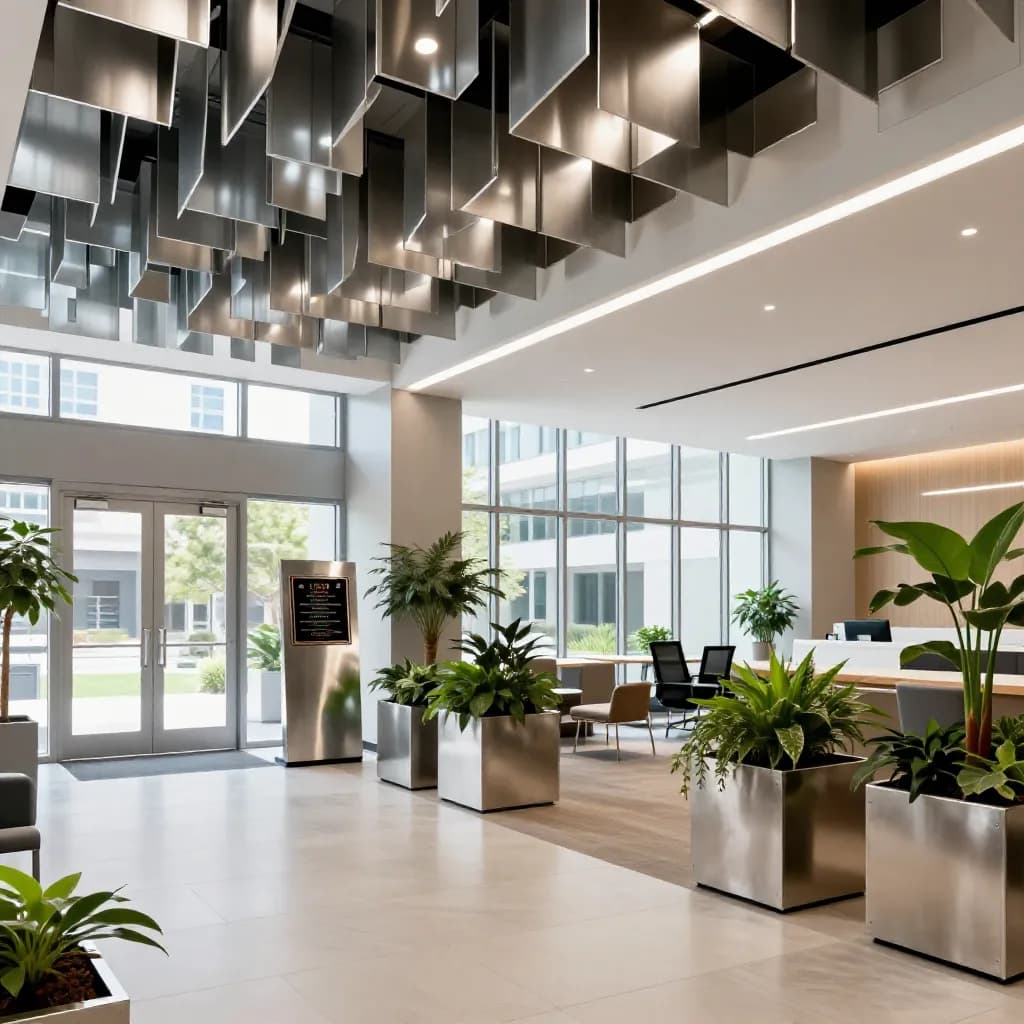
The materials and resources (MR) category is where powder coatings have the most direct impact. LEED v4.1 MR credits reward the use of products with Environmental Product Declarations (EPDs), products sourced from manufacturers with transparent environmental reporting, and materials that minimize lifecycle environmental impact. The indoor environmental quality (EQ) category also provides credit opportunities for powder coatings through low-emitting materials requirements that reward products with minimal VOC emissions.
Ready to Start Your Project?
From one-off customs to 15,000-part production runs — get precise pricing in 24 hours.
On This Page
LEED v4.1 and the Role of Powder Coatings
Understanding how powder coatings contribute to specific LEED credits enables architects, specifiers, and coating applicators to maximize the certification value of their coating choices. This requires not only selecting appropriate coating products but also assembling the documentation that LEED reviewers need to award credits. The following sections detail the specific credits where powder coatings can contribute and the documentation requirements for each.
MR Credit: Building Product Disclosure and Optimization — EPDs
LEED v4.1 MR Credit: Building Product Disclosure and Optimization — Environmental Product Declarations rewards the use of products that have third-party verified EPDs conforming to ISO 14025 and EN 15804 or ISO 21930. This credit has two options. Option 1 requires that at least 20 different permanently installed products from at least five different manufacturers have product-specific (Type III) EPDs. Option 2 rewards products that demonstrate below-average environmental impact in specific categories compared to industry benchmarks.
Powder coatings with product-specific EPDs contribute directly to the product count under Option 1. Several major powder coating manufacturers have published EPDs for their product lines, covering environmental impacts across the full lifecycle from raw material extraction through manufacturing, application, service life, and end-of-life. These EPDs quantify global warming potential, ozone depletion potential, acidification potential, eutrophication potential, and resource depletion, providing the transparent environmental data that LEED rewards.
For Option 2, powder coatings can demonstrate below-average environmental impact in several categories. The zero-VOC characteristic of powder coatings typically results in lower photochemical ozone creation potential compared to liquid coating alternatives. The high material utilization rate (95-98% with reclaim) reduces waste generation and associated environmental impacts. When powder coating EPDs show below-industry-average impacts in at least three categories, they qualify for additional credit value. Project teams should request EPDs from their powder coating suppliers early in the specification process and verify that the EPDs meet LEED's conformance requirements.
MR Credit: Building Product Disclosure and Optimization — Material Ingredients
The Material Ingredients credit under LEED v4.1 MR rewards transparency about the chemical composition of building products and the optimization of material ingredients to minimize health hazards. This credit has multiple compliance paths. Option 1 rewards products with published material ingredient reporting using formats such as Health Product Declarations (HPDs), Cradle to Cradle Certified material health certificates, or manufacturer inventories compliant with the Health Product Declaration Open Standard.
Powder coatings are well-positioned for this credit because their formulations are relatively simple compared to many building products, and the absence of solvents eliminates a major category of hazardous ingredients. Powder coating manufacturers who publish HPDs for their products provide the ingredient transparency that LEED rewards. The HPD format requires disclosure of all intentionally added ingredients and residuals above specified thresholds, along with hazard screening against authoritative lists such as the GreenScreen for Safer Chemicals.
Option 2 of this credit rewards products that have been optimized to avoid hazardous ingredients. Powder coatings formulated without SVHC-listed substances, without CMR (carcinogenic, mutagenic, or reprotoxic) classified ingredients, and without persistent bioaccumulative toxic (PBT) substances can qualify for this optimization pathway. The Cradle to Cradle Certified program's material health assessment, which evaluates ingredients against a comprehensive hazard database, provides another recognized pathway. Powder coating manufacturers who invest in ingredient optimization and third-party material health certification create value for their customers pursuing LEED certification.
EQ Credit: Low-Emitting Materials
The Indoor Environmental Quality (EQ) Credit for Low-Emitting Materials in LEED v4.1 addresses the impact of building products on indoor air quality. This credit evaluates products in several categories including interior paints and coatings, adhesives and sealants, flooring, and composite wood. For interior paints and coatings, the credit requires compliance with VOC content limits and, for some product types, VOC emission testing.
Powder coatings applied to interior building components — such as metal wall panels, ceiling systems, furniture, shelving, and hardware — qualify as low-emitting materials due to their zero-VOC content. The LEED v4.1 reference guide specifies VOC content limits based on the applicable product category, referencing standards such as SCAQMD Rule 1113 for architectural coatings and CDPH Standard Method v1.2 for emission testing. Powder coatings inherently meet VOC content limits because they contain no volatile organic solvents.
For emission testing, the California Department of Public Health (CDPH) Standard Method v1.2 (also known as Section 01350) evaluates VOC emissions from products over a 14-day period in a controlled chamber environment. While powder coatings have negligible VOC emissions, some project teams may request CDPH testing documentation for powder-coated products to satisfy LEED reviewers. Several powder coating manufacturers have conducted CDPH testing and can provide compliant test reports. The GREENGUARD Gold certification, which uses testing protocols aligned with CDPH, provides another recognized pathway for demonstrating low-emission compliance for powder-coated products.
Additional LEED Credits Supported by Powder Coatings
Beyond the primary MR and EQ credits, powder coatings can contribute to several additional LEED credit categories. The MR Credit for Construction and Demolition Waste Management rewards projects that divert construction waste from landfill. Powder coating operations generate minimal waste due to high material utilization rates, and any waste powder that cannot be reclaimed can often be recycled or used in lower-grade applications rather than landfilled. Documentation of waste diversion rates from the coating applicator supports this credit.
The MR Credit for Sourcing of Raw Materials rewards the use of products with recycled content, bio-based content, or products sourced from responsible extraction practices. While powder coatings themselves typically have limited recycled content, they are frequently applied to aluminum and steel substrates with high recycled content. The combination of recycled-content metal with a durable powder coating that extends the substrate's service life contributes to the lifecycle resource efficiency that this credit rewards.
The Energy and Atmosphere (EA) credits may also benefit indirectly from powder coating specification. High-performance powder coatings with solar-reflective pigments can contribute to cool roof and cool wall strategies that reduce building cooling loads. Infrared-reflective powder coatings in light and medium colors can achieve solar reflectance index (SRI) values that qualify for the LEED Sustainable Sites Credit for Heat Island Reduction. Documentation of SRI values from coating manufacturers supports this credit application.
Documentation Requirements and Best Practices
Successful LEED credit claims for powder coatings require thorough documentation that satisfies LEED reviewers. For EPD-related credits, the documentation package should include the complete EPD document, verification that the EPD conforms to ISO 14025 and the relevant product category rules (PCR), confirmation that the EPD is current (not expired), and a product-specific EPD rather than an industry-average EPD for maximum credit value.
For material ingredient credits, documentation should include the Health Product Declaration (HPD) or equivalent disclosure document, any third-party material health certifications such as Cradle to Cradle Certified, and manufacturer letters confirming the absence of specific hazardous substances if required. For low-emitting materials credits, documentation should include VOC content test reports per the applicable test method, CDPH emission test reports if available, or GREENGUARD Gold certification certificates.
Best practices for LEED documentation management include establishing a centralized document repository for all coating-related LEED submissions, maintaining current versions of all certificates and test reports, and coordinating with the LEED project administrator to ensure that documentation formats meet submission requirements. Powder coating manufacturers who provide LEED-ready documentation packages — including EPDs, HPDs, VOC test reports, and LEED credit contribution summaries — significantly reduce the administrative burden on project teams and increase the likelihood that their products will be specified on LEED projects.
Maximizing LEED Value Through Integrated Coating Specification
An integrated approach to coating specification can maximize the total LEED credit contribution of powder coatings across multiple credit categories simultaneously. This begins with selecting powder coating products that have both EPDs and HPDs, contributing to two MR credits with a single product selection. Choosing products with GREENGUARD Gold certification adds EQ credit value. Specifying solar-reflective formulations for exterior applications adds potential Sustainable Sites credit value.
Coordination between the architect, coating specifier, and LEED consultant early in the design process ensures that coating selections are optimized for LEED contribution. The LEED consultant can identify which credits are being targeted and which documentation is needed, allowing the specifier to select products and request documentation accordingly. This proactive approach avoids the common problem of discovering documentation gaps late in the certification process when product substitutions are difficult or impossible.
The LEED credit landscape continues to evolve, with the USGBC regularly updating credit requirements and adding new pathways. The trend is toward greater emphasis on lifecycle environmental performance, material health transparency, and carbon reduction — all areas where powder coatings have inherent advantages. Powder coating manufacturers who invest in EPD development, material health certification, and carbon footprint reduction position their products for increasing LEED relevance as the certification system evolves. For project teams, specifying powder coatings from manufacturers with comprehensive sustainability documentation is one of the most straightforward ways to accumulate LEED credits in the materials and indoor environmental quality categories.
Frequently Asked Questions
Which LEED credits can powder coatings contribute to?
Powder coatings can contribute to MR Credit: EPDs (with product-specific EPDs), MR Credit: Material Ingredients (with HPDs or Cradle to Cradle certification), EQ Credit: Low-Emitting Materials (zero-VOC content), MR Credit: Waste Management (high material utilization), and SS Credit: Heat Island Reduction (solar-reflective formulations).
Do powder coatings need EPDs for LEED credits?
Product-specific EPDs conforming to ISO 14025 are required for the MR Credit: Building Product Disclosure and Optimization — EPDs. While not all powder coatings have EPDs, several major manufacturers have published them. Industry-average EPDs provide partial credit, but product-specific EPDs provide full credit value.
How do powder coatings qualify as low-emitting materials for LEED?
Powder coatings qualify as low-emitting materials because they contain zero VOCs, meeting the VOC content limits specified in LEED v4.1 EQ Credit. Additional documentation such as CDPH Standard Method v1.2 emission testing or GREENGUARD Gold certification strengthens the credit claim.
What documentation do LEED reviewers need for powder coating credits?
Documentation varies by credit but typically includes EPDs (for MR EPD credit), HPDs or material health certificates (for MR Material Ingredients credit), VOC content test reports or GREENGUARD certificates (for EQ Low-Emitting Materials credit), and manufacturer letters confirming specific product attributes.
Can powder coatings help with LEED heat island credits?
Yes. Powder coatings formulated with solar-reflective pigments can achieve high Solar Reflectance Index (SRI) values that qualify for the LEED Sustainable Sites Credit: Heat Island Reduction when applied to roof or wall surfaces. Manufacturers can provide SRI data for specific colors and formulations.
Ready to Start Your Project?
From one-off customs to 15,000-part production runs — get precise pricing in 24 hours.