Lead time is one of the most frequently discussed — and frequently misunderstood — aspects of powder coating procurement. Buyers often expect coating to be a quick, simple process, but the reality involves multiple sequential steps, each with its own time requirements: order processing, scheduling, goods receipt and inspection, pretreatment, coating application, curing, quality inspection, packaging, and dispatch. Understanding what drives lead times helps buyers plan more effectively and avoid the costly consequences of unrealistic scheduling.
Guides
Powder Coating Lead Times: What to Expect and How to Plan
Sundial Powder Coating·April 22, 2026·11 min
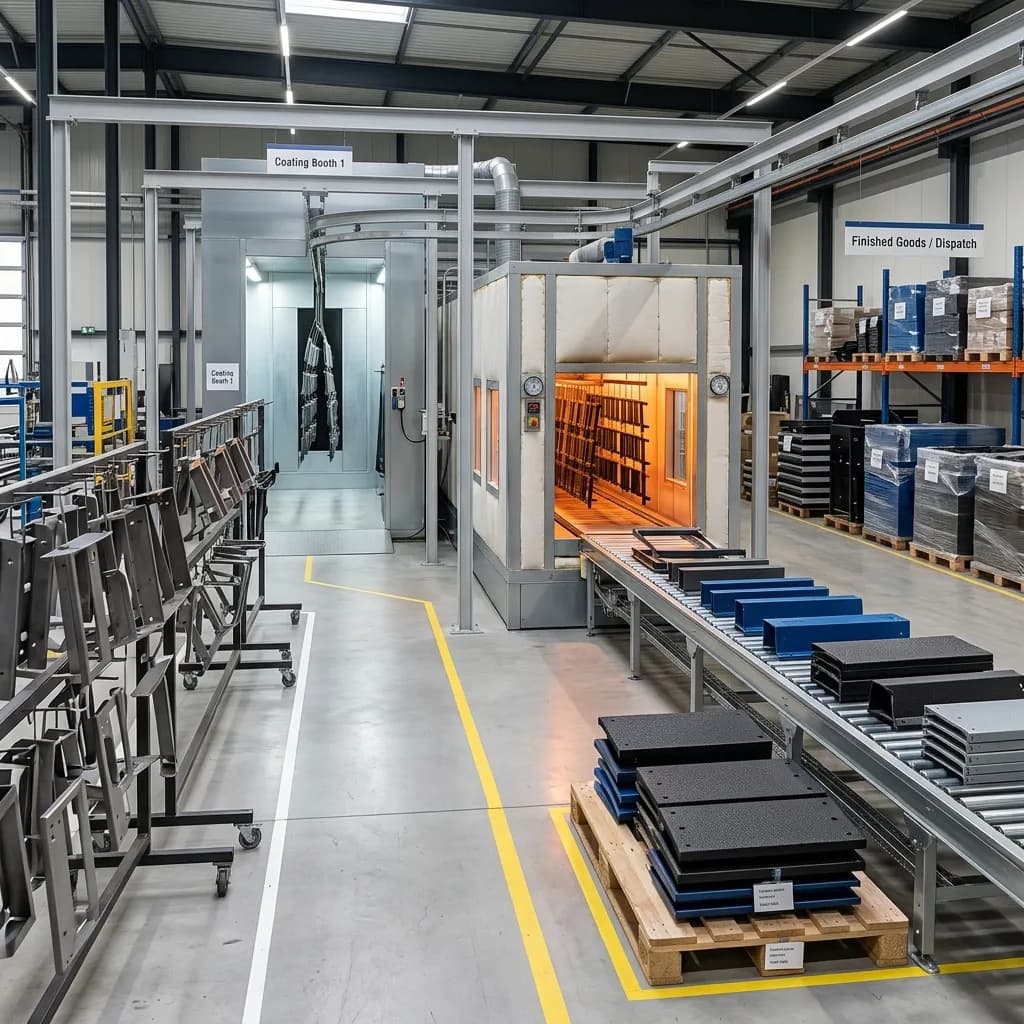
Standard lead times for powder coating vary significantly depending on the supplier's workload, the complexity of the order, and the specific requirements involved. A typical job shop handling general industrial work might quote five to ten working days for standard orders. Architectural coating specialists working to Qualicoat or GSB standards may quote two to three weeks due to more rigorous pretreatment, inspection, and documentation requirements. High-volume production coaters serving OEM customers may operate on scheduled delivery windows with lead times agreed as part of a supply contract.
Ready to Start Your Project?
From one-off customs to 15,000-part production runs — get precise pricing in 24 hours.
On This Page
Understanding Powder Coating Lead Times
The key insight for buyers is that lead time is not simply a function of how long the coating process takes — the actual time a part spends in pretreatment, the spray booth, and the curing oven is typically measured in minutes to hours. The majority of lead time is consumed by scheduling, queue time, color changes, quality inspection, and logistics. Understanding these components allows buyers to identify opportunities to reduce lead times through better planning and communication.
Factors That Affect Lead Time
Multiple factors influence the lead time for a specific powder coating order, and understanding them helps buyers set realistic expectations and identify opportunities to accelerate delivery when needed.
Order complexity is a primary driver. A single-color batch of identical parts on a standard substrate is the simplest and fastest order type. Multi-color orders require booth cleaning and color changes between each color run, adding time to the production schedule. Complex masking requirements add labor-intensive preparation steps. Non-standard substrates may require special pretreatment processes or additional preparation. Parts with challenging geometry — deep recesses, thin sections, or large surface areas — may require slower line speeds or manual touch-up application.
Supplier workload and capacity utilization directly affect scheduling. During peak periods — which vary by market but often coincide with construction season in spring and summer — lead times extend as suppliers manage competing priorities. Conversely, during quieter periods, suppliers may be able to offer shorter lead times to fill capacity. Building a relationship with your supplier and providing forward visibility of your requirements helps them plan capacity and prioritize your work.
Powder availability can also affect lead times. Standard RAL colors from major manufacturers are typically available from stock. Less common colors, special effects, or custom-matched powders may require ordering from the powder manufacturer, adding days or weeks to the overall timeline. If your project uses non-standard colors, confirm powder availability with your supplier before committing to a production schedule.
Standard vs Rush Lead Times
Most powder coating suppliers offer both standard and rush (expedited) lead time options. Standard lead times represent the normal production schedule and are typically the most cost-effective option. Rush services prioritize your order ahead of others in the production queue, often involving overtime work, dedicated line time, or weekend production to meet an accelerated deadline.
Rush services come with trade-offs that buyers should understand. The most obvious is cost — rush surcharges typically range from 25% to 100% of the standard coating charge, depending on the urgency and the disruption to the supplier's normal schedule. Less obvious is the potential quality impact: rushing production can lead to shortcuts in pretreatment dwell times, reduced inspection thoroughness, or pressure to accept marginal quality rather than rework and miss the deadline.
To minimize the need for rush orders, build adequate lead time into your project schedules from the outset. Communicate your requirements to your coating supplier as early as possible, even before the formal order is placed — advance notice allows the supplier to reserve capacity and plan materials. For projects with fixed deadlines, work backward from the delivery date to establish the latest acceptable order placement date, and add a buffer for unexpected delays. If rush orders are a regular occurrence rather than an occasional exception, it may indicate a systemic planning problem that should be addressed at the scheduling level rather than managed through premium freight and expediting charges.
Batch Size and Its Impact on Scheduling
Batch size significantly affects both lead time and cost efficiency in powder coating. Every production run involves fixed setup activities — booth preparation, color loading, gun adjustment, first-article inspection, and post-run cleaning — that consume time regardless of the number of parts being coated. For very small batches, these setup activities may take longer than the actual coating application, making small runs disproportionately time-consuming and expensive.
From a scheduling perspective, suppliers typically batch similar orders together to minimize color changes and maximize line utilization. If your order is for a common color that the supplier runs frequently, it may be scheduled into the next available run of that color, potentially reducing lead time. If your order requires an unusual color that the supplier rarely runs, it may wait in the queue until enough orders accumulate to justify a color change, extending lead time.
Buyers can optimize batch size economics in several ways. Consolidate orders to create larger, more efficient batches rather than placing frequent small orders. Coordinate with your supplier on their production schedule — if they run RAL 9005 every Tuesday, timing your black-coated orders to align with this schedule can reduce lead time. For products with multiple color options, consider standardizing on a smaller number of colors to increase batch sizes and reduce the frequency of color changes. If small batches are unavoidable, discuss dedicated small-batch scheduling with your supplier — some coaters offer specific days or shifts for small-run work.
Color Changes and Their Effect on Turnaround
Color changes are one of the most significant time consumers in powder coating production. Each color change requires purging the powder delivery system, cleaning the spray guns and hoses, cleaning or replacing booth filters, and verifying that the new color is free from contamination by the previous color. Depending on the booth type and the color transition involved, a color change can take anywhere from fifteen minutes for a quick-change booth switching between similar dark colors to over an hour for a thorough change from a dark or metallic color to white or a light pastel.
The sequence of colors matters. Coating lighter colors before darker colors reduces contamination risk and cleaning time, because a small amount of light-colored powder contaminating a dark color is far less visible than the reverse. Metallic and textured powders are particularly problematic for color changes because metallic flakes and texture additives can persist in the delivery system and contaminate subsequent colors. Suppliers typically schedule metallic and textured colors at the end of a production run or on dedicated equipment.
For buyers, the practical implication is that multi-color orders take longer than single-color orders of the same total volume. If your project involves multiple colors, discuss the production sequence with your supplier and consider whether all colors are needed simultaneously or whether phased delivery by color is acceptable. Providing the supplier with flexibility on delivery sequence — allowing them to coat all parts of one color before switching to the next — can significantly reduce overall lead time compared to requiring mixed-color deliveries.
Custom Colors and Special Finishes Timeline
Custom colors and special finishes add a significant front-end timeline to the coating process that must be factored into project planning. A custom color that does not exist in any powder manufacturer's standard range must be developed from scratch — the powder manufacturer formulates a trial batch, produces sample panels, and submits them for approval. This development cycle typically takes two to four weeks for a straightforward solid color and may take longer for metallic, textured, or special-effect finishes.
If the first sample is not approved, revisions add additional time — each revision cycle typically takes one to two weeks. For projects with multiple stakeholders who must approve the color (common in architectural projects involving architects, clients, and contractors), the approval process itself can take weeks as samples circulate between parties. Build this approval timeline into your project schedule and start the color development process as early as possible.
Once a custom color is approved, the powder manufacturer must produce a production batch of the powder. Minimum production quantities for custom colors are typically 25-100 kg, depending on the manufacturer and the complexity of the formulation. Production lead time for custom powder is usually one to three weeks from order placement. If your project requires a large quantity of custom powder, confirm the manufacturer's production capacity and lead time before committing to a coating schedule. For ongoing projects, consider ordering powder in advance and having it held at the coating supplier's facility to eliminate powder supply as a lead time variable.
Strategies for Reducing Lead Times
Proactive planning is the most effective lead time reduction strategy. Provide your coating supplier with forward visibility of upcoming orders — even approximate forecasts help them plan capacity, order powder, and schedule production more efficiently. For regular repeat orders, establish a scheduling agreement that defines delivery frequencies and quantities, allowing the supplier to build your work into their standard production plan.
Standardize where possible. Reducing the number of colors, finishes, and special requirements in your product range simplifies the coating process and reduces the frequency of time-consuming color changes and setup modifications. If your product line uses twenty different colors, consider whether ten would serve the market equally well while halving the color change overhead.
Invest in the relationship with your coating supplier. Suppliers prioritize customers who provide consistent volume, clear communication, accurate forecasts, and reasonable expectations. Being a good customer — paying on time, providing complete order information, giving adequate notice for changes, and treating the supplier as a partner rather than a commodity vendor — earns goodwill that translates into priority scheduling when you need it most.
Finally, consider the total supply chain timeline rather than optimizing coating lead time in isolation. If your fabrication process takes three weeks and coating takes one week, reducing coating lead time by two days has minimal impact on the overall timeline. Focus your lead time reduction efforts on the longest links in the chain and on eliminating the gaps between process steps where parts sit waiting for the next operation.
Frequently Asked Questions
What is a typical lead time for standard powder coating?
Standard lead times range from five to ten working days for general industrial work and two to three weeks for architectural-grade coating with full quality documentation. Actual lead times depend on supplier workload, order complexity, color availability, and batch size.
How much extra does rush powder coating cost?
Rush surcharges typically range from 25% to 100% of the standard coating charge, depending on the urgency and disruption to the supplier's schedule. Some suppliers offer tiered rush options — for example, three-day and next-day services at different premium levels.
How long does custom color development take?
Initial custom color development typically takes two to four weeks from submission of the color reference to delivery of sample panels. If revisions are needed, each cycle adds one to two weeks. Production powder manufacturing adds another one to three weeks. Allow six to ten weeks total from color brief to production-ready powder.
Why do small batches take longer than large batches?
Every coating run involves fixed setup time for booth preparation, color loading, gun adjustment, and cleaning — regardless of batch size. For small batches, this setup time is a larger proportion of the total production time. Small batches may also wait longer in the queue until the supplier schedules that color.
Can I reduce lead time by supplying my own powder?
Supplying your own powder eliminates powder procurement lead time but introduces other complexities. The coating supplier must verify the powder's compatibility with their equipment and process, and they may not accept liability for coating performance if using customer-supplied material. Discuss this option with your supplier before proceeding.
Ready to Start Your Project?
From one-off customs to 15,000-part production runs — get precise pricing in 24 hours.