ISO 45001:2018 is the international standard for occupational health and safety (OH&S) management systems, replacing the previous OHSAS 18001 standard. For powder coating operations, which involve a range of physical, chemical, and ergonomic hazards, ISO 45001 provides a systematic framework for identifying hazards, assessing risks, implementing controls, and driving continual improvement in workplace safety performance. The standard's emphasis on worker participation, leadership commitment, and proactive risk management aligns with the safety-critical nature of powder coating operations.
Technical
ISO 45001 Occupational Health and Safety Management for Powder Coating Operations
Sundial Powder Coating·April 22, 2026·12 min
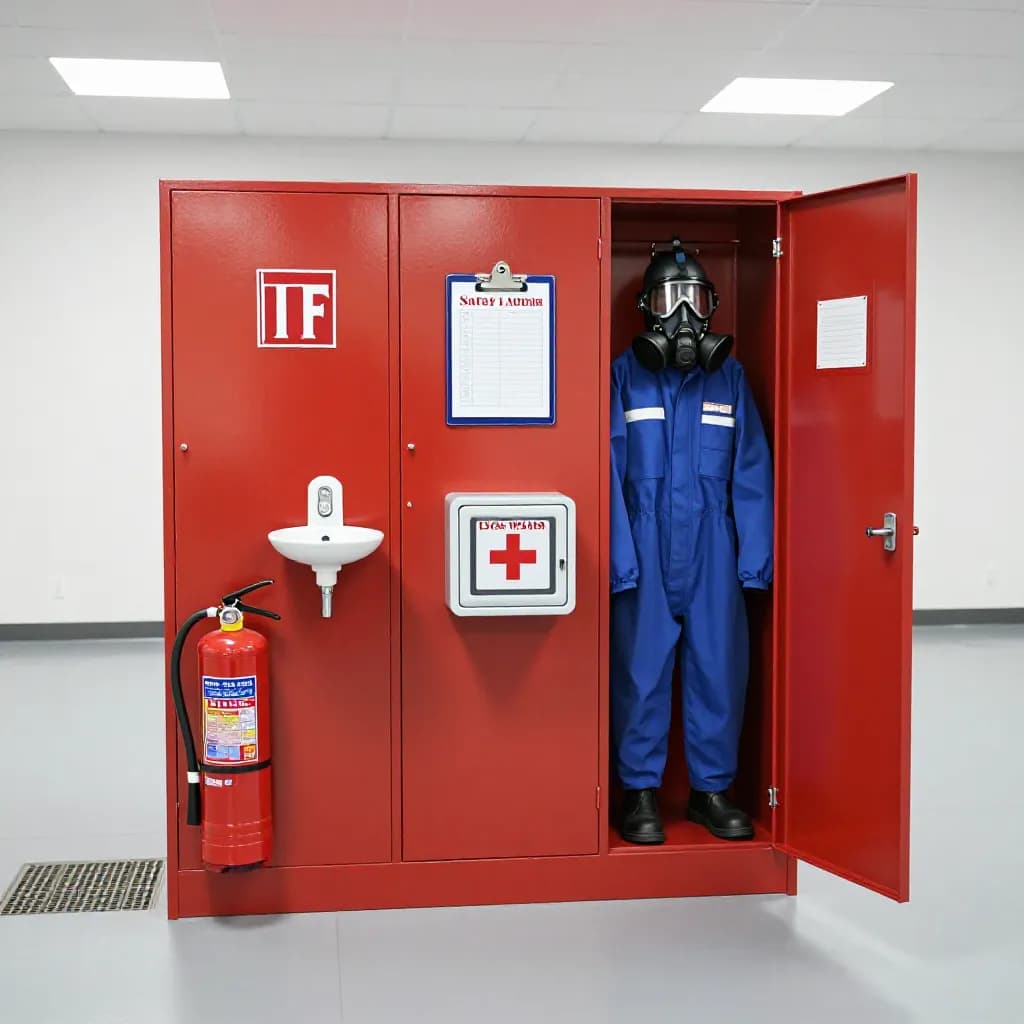
Powder coating facilities face a distinctive combination of occupational hazards. Chemical hazards include exposure to powder coating dust, pretreatment chemicals, and cleaning agents. Physical hazards include combustible dust explosion risk, thermal burns from curing ovens and hot workpieces, noise from compressed air systems and mechanical equipment, and ergonomic risks from repetitive manual handling and spray gun operation. Electrical hazards from high-voltage electrostatic equipment and general industrial electrical systems add further risk dimensions.
Ready to Start Your Project?
From one-off customs to 15,000-part production runs — get precise pricing in 24 hours.
On This Page
ISO 45001 and Powder Coating Safety Management
ISO 45001 addresses these hazards through a structured management system that integrates safety into all aspects of operations rather than treating it as a separate compliance function. The standard's High Level Structure (HLS) — shared with ISO 9001 and ISO 14001 — enables integration with existing quality and environmental management systems, creating an efficient integrated management system (IMS) that addresses quality, environment, and safety through common processes and documentation.
Hazard Identification in Powder Coating Operations
Comprehensive hazard identification is the foundation of the ISO 45001 OH&S management system. The standard requires organizations to establish a proactive, ongoing process for hazard identification that considers routine and non-routine activities, all persons who have access to the workplace, and the design of work areas, processes, installations, equipment, and operating procedures. For powder coating operations, hazard identification should systematically address each operational area and activity.
The pretreatment area presents chemical hazards from alkaline cleaners, acid solutions, conversion coating chemicals, and their associated fumes. Physical hazards include wet floors creating slip risks, hot solution tanks, and manual handling of heavy workpieces. The powder application area involves combustible dust hazards, high-voltage electrostatic equipment, compressed air systems, and ergonomic risks from manual spray gun operation. The curing area presents thermal hazards from ovens operating at 160-200°C, hot workpieces on conveyors, and potential exposure to curing byproducts.
Support activities also require hazard identification. Powder storage and handling involves manual handling of 20-25 kg boxes, dust exposure during powder transfer, and combustible dust accumulation. Maintenance activities — including booth cleaning, filter changes, oven maintenance, and conveyor repairs — often involve non-routine tasks with elevated risk profiles. Color change procedures require workers to enter booth enclosures and handle accumulated powder. The hazard identification process should include input from workers who perform these activities, as their practical experience provides insights that may not be apparent from management-level assessments alone.
Risk Assessment and Hierarchy of Controls
Once hazards are identified, ISO 45001 requires assessment of OH&S risks associated with each hazard, considering the likelihood of occurrence and the potential severity of harm. The risk assessment should account for the effectiveness of existing controls and identify where additional controls are needed. A risk matrix approach — rating likelihood and severity on defined scales and multiplying to produce a risk score — provides a structured, consistent methodology for prioritizing risks across the operation.
ISO 45001 mandates the application of the hierarchy of controls when determining risk treatment measures. The hierarchy, in order of effectiveness, is: elimination (removing the hazard entirely), substitution (replacing with a less hazardous alternative), engineering controls (isolating people from the hazard), administrative controls (changing the way people work), and personal protective equipment (protecting the individual). Higher-level controls are preferred because they are more reliable and less dependent on human behavior.
For powder coating operations, applying the hierarchy might look like this: elimination could involve replacing a hazardous pretreatment chemical with a non-hazardous alternative; substitution might mean switching from an isocyanate-containing powder to an isocyanate-free formulation; engineering controls include spray booth containment, local exhaust ventilation, and machine guarding; administrative controls encompass safe work procedures, training, job rotation to reduce ergonomic exposure, and permit-to-work systems for high-risk maintenance; PPE includes respiratory protection, chemical-resistant gloves, hearing protection, and thermal protective clothing. The risk assessment should document the selected controls for each significant risk and assign responsibility for implementation.
Worker Participation and Consultation
ISO 45001 places significantly greater emphasis on worker participation and consultation than its predecessor OHSAS 18001. The standard requires organizations to establish processes for consultation and participation of workers at all levels, recognizing that workers' knowledge and experience are essential for effective OH&S management. This is not merely a procedural requirement — genuine worker engagement improves hazard identification, increases the practicality and acceptance of control measures, and builds a safety culture where everyone takes responsibility for workplace safety.
In powder coating operations, worker participation can take many forms. Safety committees with worker representatives provide a formal channel for raising safety concerns and contributing to safety decisions. Toolbox talks — brief, focused safety discussions conducted at the start of shifts or before specific tasks — keep safety awareness current and provide opportunities for workers to share observations and concerns. Near-miss reporting systems encourage workers to report incidents that could have resulted in harm, providing valuable data for proactive risk management.
Consultation is specifically required for several ISO 45001 processes, including determining the needs and expectations of interested parties, establishing the OH&S policy, assigning organizational roles and responsibilities, determining how to fulfill legal requirements, establishing OH&S objectives, determining applicable controls for outsourcing and procurement, and determining what needs to be monitored and measured. For powder coating operations, this means involving workers in decisions about PPE selection, safe work procedure development, equipment purchases, and workplace design changes. The standard requires that workers are provided with timely access to relevant OH&S information and that barriers to participation — such as language, literacy, or fear of reprisal — are identified and removed.
Operational Planning and Control for Powder Coating Safety
Operational planning and control translates the risk assessment outcomes into practical workplace controls. ISO 45001 requires organizations to plan, implement, control, and maintain processes needed to meet OH&S management system requirements and to implement the actions determined in the risk assessment. For powder coating operations, this involves developing and maintaining documented procedures for all safety-critical activities.
Key operational controls for powder coating safety include lockout/tagout (LOTO) procedures for equipment maintenance and cleaning, ensuring that energy sources are isolated before workers enter hazardous zones such as spray booths, ovens, and conveyor systems. Confined space entry procedures apply to booth interiors, oven chambers, and pretreatment tanks where atmospheric hazards or engulfment risks may exist. Hot work permit systems control welding, cutting, and grinding activities in areas where combustible dust may be present.
Management of change (MOC) is a critical operational control that ensures safety implications are assessed before changes are implemented. Changes that should trigger MOC review include new powder coating chemistries (which may introduce new health hazards), equipment modifications (which may affect zone classifications or ventilation effectiveness), process parameter changes (which may affect exposure levels or explosion risk), and organizational changes (which may affect competence or supervision levels). The MOC process should include hazard identification and risk assessment for the proposed change, determination of necessary control measures, communication to affected workers, and verification that controls are effective after implementation.
Incident Investigation and Corrective Action
ISO 45001 requires organizations to establish processes for reporting, investigating, and taking action on incidents, including near-misses and non-conformities. Effective incident investigation goes beyond identifying the immediate cause to determine the root causes and contributing factors that allowed the incident to occur. This deeper analysis enables corrective actions that address systemic weaknesses rather than merely treating symptoms.
For powder coating operations, common incident types include dust exposure events (filter failures, booth containment breaches), chemical contact incidents (pretreatment chemical splashes, powder skin contact), thermal injuries (contact with hot workpieces or oven surfaces), slips, trips, and falls (wet pretreatment areas, powder accumulation on floors), and musculoskeletal injuries (manual handling of workpieces and powder containers). Near-miss events — such as electrostatic discharge incidents that did not result in ignition, or equipment malfunctions that were caught before causing harm — are equally important to investigate because they reveal hazards that could cause serious harm in different circumstances.
Root cause analysis methods such as the 5 Whys technique, fishbone (Ishikawa) diagrams, or fault tree analysis help investigation teams move beyond surface-level causes to identify the management system failures, design deficiencies, or cultural factors that contributed to the incident. Corrective actions should address root causes and be tracked to completion, with effectiveness verification conducted after implementation. Lessons learned from incidents should be communicated across the organization — and where appropriate, across the industry — to prevent recurrence. Trend analysis of incident data over time reveals patterns that may indicate systemic issues requiring broader corrective action.
Performance Evaluation and Continual Improvement
ISO 45001 requires organizations to monitor, measure, analyze, and evaluate OH&S performance to determine the effectiveness of the management system and drive continual improvement. For powder coating operations, key performance indicators should include both leading indicators (proactive measures that predict future performance) and lagging indicators (reactive measures that record past events).
Leading indicators for powder coating safety might include the number of safety observations and near-miss reports submitted, completion rates for scheduled safety inspections and audits, training completion rates, housekeeping audit scores, equipment maintenance compliance rates, and the percentage of corrective actions completed on time. Lagging indicators include recordable injury rates, lost-time injury rates, workers' compensation claims, regulatory citations, and property damage incidents. A balanced scorecard of leading and lagging indicators provides a comprehensive view of safety performance.
Internal audits, conducted by trained auditors independent of the areas being audited, verify that the OH&S management system is effectively implemented and maintained. Audit findings — both positive observations and non-conformities — feed into the management review process, where top management evaluates overall OH&S performance and makes decisions about resource allocation, policy changes, and improvement priorities. The management review should consider audit results, incident investigation outcomes, performance indicator trends, changes in legal requirements, worker feedback, and opportunities for improvement. This systematic evaluation cycle ensures that the OH&S management system evolves in response to changing conditions and drives sustained improvement in workplace safety performance.
Frequently Asked Questions
What are the main safety hazards in powder coating operations?
Key hazards include combustible dust explosion risk, chemical exposure (powder dust, pretreatment chemicals), thermal burns from curing ovens and hot workpieces, noise from compressed air and mechanical equipment, electrical hazards from high-voltage electrostatic equipment, and ergonomic risks from manual handling and repetitive spray gun operation.
How does ISO 45001 differ from OHSAS 18001?
ISO 45001 places greater emphasis on organizational context, leadership commitment, worker participation, and proactive risk management. It uses the High Level Structure shared with ISO 9001 and ISO 14001, facilitating integration. It also requires consideration of opportunities for OH&S improvement, not just hazard management.
What is the hierarchy of controls under ISO 45001?
The hierarchy, from most to least effective, is: elimination (remove the hazard), substitution (replace with less hazardous alternative), engineering controls (isolate people from hazard), administrative controls (change work practices), and PPE (protect the individual). Higher-level controls are preferred as they are more reliable.
How does worker participation work in ISO 45001?
Workers must be consulted on OH&S policy, objectives, risk assessment, control measures, and other key decisions. Participation mechanisms include safety committees, toolbox talks, near-miss reporting, and involvement in incident investigations. The standard requires removal of barriers to participation such as language, literacy, or fear of reprisal.
Can ISO 45001 be integrated with ISO 9001 and ISO 14001?
Yes. All three standards use the same High Level Structure, enabling integration into a single management system with shared processes for document control, internal audit, management review, corrective action, and competence management. This integrated approach reduces duplication and improves efficiency.
Ready to Start Your Project?
From one-off customs to 15,000-part production runs — get precise pricing in 24 hours.