Multi-coat powder coating systems — primer plus topcoat, basecoat plus clear coat, or other layered configurations — are used when a single coat cannot provide the required combination of properties. The primer provides corrosion protection and substrate adhesion, while the topcoat provides weathering resistance, color, and aesthetic properties. In automotive systems, a basecoat provides color and effect, while a clear coat provides gloss, scratch resistance, and UV protection. Each layer is optimized for its specific function, and the system as a whole delivers performance that no single coat could achieve.
Technical
Inter-Coat Adhesion in Powder Coating: Primer-Topcoat Systems, Cure Windows, and Testing
Sundial Powder Coating·April 22, 2026·13 min
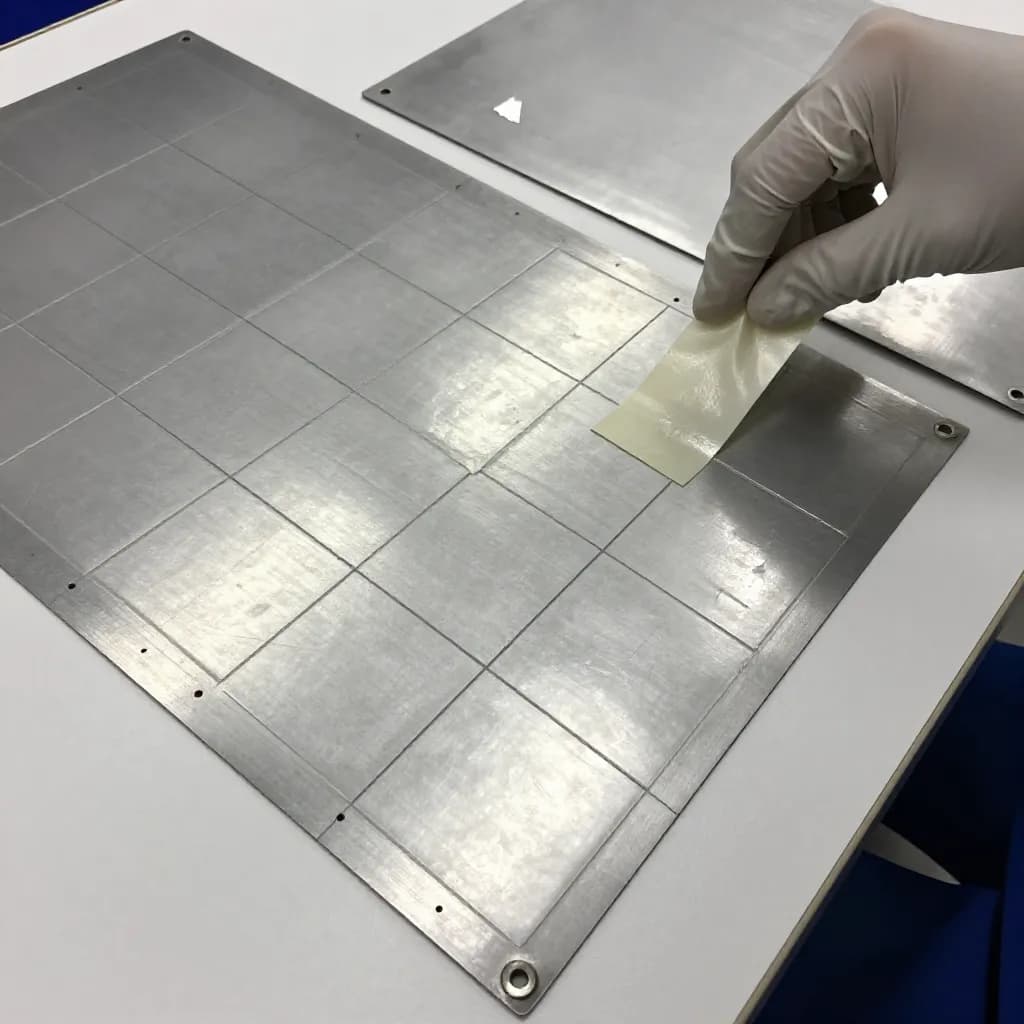
However, the performance of a multi-coat system depends critically on the adhesion between the individual layers — the inter-coat adhesion. If the bond between primer and topcoat is weak, the topcoat can delaminate from the primer under mechanical stress, thermal cycling, moisture exposure, or UV degradation, causing the entire coating system to fail even though each individual layer may be performing adequately in isolation.
Ready to Start Your Project?
From one-off customs to 15,000-part production runs — get precise pricing in 24 hours.
On This Page
Why Inter-Coat Adhesion Matters in Multi-Coat Systems
Inter-coat adhesion failure is one of the most common and costly quality problems in multi-coat powder coating operations. Unlike substrate adhesion failure (where the coating separates from the metal), inter-coat adhesion failure occurs at the interface between two coating layers, producing characteristic delamination patterns where the topcoat peels away from the primer in sheets or flakes. This failure mode is particularly insidious because it may not be apparent immediately after coating — it can develop over weeks, months, or years as the coating system is exposed to environmental stresses.
The mechanisms that create inter-coat adhesion are fundamentally different from those that create substrate adhesion. Substrate adhesion relies on chemical bonding between the coating and the metal oxide surface, supplemented by mechanical interlocking with the surface profile. Inter-coat adhesion relies on a combination of chemical bonding between reactive groups in the two coating layers, mechanical interlocking between the surface texture of the primer and the topcoat, and interdiffusion of polymer chains across the interface.
Chemical Bonding vs Mechanical Adhesion Between Coats
The two primary mechanisms for inter-coat adhesion — chemical bonding and mechanical adhesion — operate through fundamentally different principles and have different implications for process control and coating system design.
Chemical bonding occurs when reactive functional groups in the primer surface participate in crosslinking reactions with the topcoat during the topcoat cure cycle. For this to occur, the primer must have residual unreacted functional groups at its surface when the topcoat is applied. These residual groups can react with complementary groups in the topcoat resin or crosslinker, forming covalent bonds across the primer-topcoat interface. Chemical bonding produces the strongest inter-coat adhesion and is the preferred mechanism for high-performance multi-coat systems.
Achieving chemical bonding requires careful control of the primer cure state. If the primer is fully cured — all reactive groups consumed — there are no residual groups available for chemical bonding with the topcoat, and adhesion must rely entirely on mechanical mechanisms. If the primer is undercured — too many unreacted groups remaining — the primer film may be soft, poorly crosslinked, and susceptible to damage during handling and topcoat application. The optimal cure state for chemical bonding is a partial cure (sometimes called B-stage cure) where the primer is sufficiently crosslinked to be mechanically robust but retains enough surface reactivity for chemical bonding with the topcoat.
Mechanical adhesion relies on physical interlocking between the topcoat and the surface texture of the primer. When the topcoat melts and flows during cure, it penetrates into the micro-roughness of the primer surface, creating a mechanical bond analogous to a hook-and-loop fastener at the microscopic scale. The effectiveness of mechanical adhesion depends on the surface roughness of the primer — rougher surfaces provide more interlocking sites and stronger mechanical adhesion.
Sanding or abrading the cured primer surface before topcoat application is the traditional method for creating mechanical adhesion in multi-coat systems. Sanding creates a rough surface profile that promotes mechanical interlocking and also removes any surface contamination (wax bloom, silicone migration, or atmospheric deposits) that could impair adhesion. However, sanding is labor-intensive, generates dust, and is difficult to perform consistently on complex geometries. For high-volume production, chemical bonding through controlled primer cure is strongly preferred over sanding-based mechanical adhesion.
The Cure Window: Optimizing Primer Cure for Topcoat Adhesion
The cure window is the range of primer cure conditions (time and temperature) that produces a primer surface with adequate mechanical properties and sufficient residual reactivity for chemical bonding with the topcoat. Operating within the cure window is essential for reliable inter-coat adhesion in production environments.
The lower boundary of the cure window is defined by the minimum cure needed for the primer to develop adequate mechanical properties — hardness, adhesion to the substrate, and resistance to damage during handling and topcoat application. A primer that is too far undercured will be soft, easily scratched, and may not provide adequate corrosion protection. The lower boundary is typically determined by solvent rub testing (MEK double rubs) or pencil hardness testing of the primer film.
The upper boundary of the cure window is defined by the maximum cure beyond which the primer surface loses sufficient reactivity for chemical bonding with the topcoat. An overcured primer has consumed most or all of its surface reactive groups, and the topcoat must rely on mechanical adhesion alone. The upper boundary is typically determined by inter-coat adhesion testing (cross-cut tape pull or pull-off adhesion) of topcoated panels prepared with primers cured at various schedules.
The width of the cure window — the range between the lower and upper boundaries — varies significantly depending on the primer and topcoat chemistries. Some primer-topcoat combinations have wide cure windows (30-60 minutes at the specified temperature), providing generous production flexibility. Others have narrow cure windows (5-15 minutes), requiring precise oven control and consistent part throughput to maintain the primer within the acceptable cure range.
Epoxy primers generally have wider cure windows than polyester or hybrid primers because the epoxy cure reaction proceeds more gradually, leaving residual surface reactivity over a broader range of cure conditions. Polyester primers cured with highly reactive crosslinkers (fast-gel formulations) may have very narrow cure windows because the rapid cure reaction quickly consumes all surface reactive groups.
In production, the cure window must account for the temperature variation across the oven and across the parts being coated. Parts at different positions in the oven, or different areas of the same part (thin sections heat faster than thick sections), experience different thermal histories. The cure window must be wide enough to accommodate this variation while keeping all areas of all parts within the acceptable range.
Sanding and Surface Preparation Between Coats
When chemical bonding is not achievable — either because the primer is fully cured, because the primer and topcoat chemistries are incompatible for chemical bonding, or because the primer has been stored for an extended period before topcoating — mechanical adhesion through surface preparation becomes the primary inter-coat adhesion mechanism.
Sanding the cured primer surface with fine abrasive (P320-P400 grit) creates a micro-rough surface profile that promotes mechanical interlocking with the topcoat. The sanding process also removes any surface contamination — wax bloom, flow additive migration, atmospheric deposits, or handling contamination — that could act as a weak boundary layer and impair adhesion. For fully cured primers, sanding is often the only reliable method for achieving adequate inter-coat adhesion.
The sanding process must be controlled to avoid damaging the primer film. Excessive sanding can thin the primer below its minimum specified thickness, reducing corrosion protection. Uneven sanding can create thickness variations that affect the appearance of the topcoat. Sanding dust must be completely removed from the surface before topcoat application — residual dust particles act as contaminants that can cause adhesion defects and surface imperfections in the topcoat.
Alternatives to manual sanding include automated abrasive processes (orbital sanders, brush sanders), chemical surface activation (solvent wiping, plasma treatment), and mechanical roughening (Scotch-Brite pads, non-woven abrasive). Each method has advantages and limitations depending on the part geometry, production volume, and quality requirements.
Plasma treatment is an emerging technology for inter-coat adhesion promotion that modifies the primer surface chemistry without mechanical abrasion. Atmospheric plasma treatment exposes the primer surface to a stream of ionized gas that creates reactive functional groups (hydroxyl, carboxyl, amine) on the surface, promoting chemical bonding with the topcoat. Plasma treatment is fast, non-contact, and does not generate dust, making it attractive for high-volume production. However, the surface activation is temporary — the reactive groups created by plasma treatment decay over hours to days, requiring that the topcoat be applied promptly after treatment.
For production environments where sanding is impractical (complex geometries, high volumes, or clean-room requirements), designing the primer-topcoat system for chemical bonding through controlled primer cure is strongly preferred. The investment in oven control and cure monitoring to maintain the primer within its cure window is typically less than the cost of sanding operations and the quality risks associated with inconsistent manual surface preparation.
Chemistry Compatibility in Multi-Coat Systems
Not all powder coating chemistries are compatible in multi-coat systems. The chemical compatibility between primer and topcoat affects both the inter-coat adhesion and the appearance of the finished system. Incompatible chemistry combinations can cause delamination, surface defects, or chemical interactions that degrade the performance of one or both layers.
Epoxy primer with polyester topcoat is the most common and generally most compatible multi-coat combination for architectural and industrial applications. The epoxy primer provides excellent substrate adhesion and corrosion protection, while the polyester topcoat provides UV resistance and aesthetic properties. Inter-coat adhesion between epoxy and polyester is generally good, particularly when the epoxy primer is partially cured to retain surface reactivity.
Epoxy-polyester hybrid primer with polyester topcoat is another widely used combination that provides good inter-coat adhesion due to the chemical similarity between the polyester component of the hybrid primer and the polyester topcoat. The hybrid primer offers better overbake tolerance than pure epoxy, providing a wider cure window for topcoat adhesion.
Polyester primer with polyester topcoat (same chemistry, different formulations) provides excellent chemical compatibility and inter-coat adhesion. This combination is used when the primer and topcoat are both polyester-based but formulated for different functions — for example, a corrosion-resistant polyester primer with a superdurable polyester topcoat.
Acrylic topcoat over polyester primer or basecoat requires special attention due to the inherent incompatibility between acrylic and polyester resins. As discussed in the acrylic powder coatings article, these chemistries are thermodynamically immiscible and can cause surface defects if they intermix. In multi-coat systems, the primer or basecoat must be fully cured before the acrylic topcoat is applied to prevent intermixing at the interface. Inter-coat adhesion relies primarily on mechanical mechanisms rather than chemical bonding.
Fluoropolymer topcoat over polyester primer is the standard system for high-performance architectural applications. The inter-coat adhesion between fluoropolymer and polyester depends on the specific fluoropolymer chemistry (FEVE systems generally provide better adhesion than PVDF systems) and the primer cure state. Fluoropolymer topcoat manufacturers provide specific recommendations for compatible primer products and cure conditions.
Testing Methods for Inter-Coat Adhesion
Verifying inter-coat adhesion requires specific testing methods that evaluate the bond strength at the primer-topcoat interface rather than the overall coating adhesion to the substrate.
Cross-cut adhesion testing (ISO 2409 / ASTM D3359) is the most widely used method for routine inter-coat adhesion assessment. A grid pattern is cut through the topcoat and primer using a multi-blade cutting tool, and adhesive tape is applied over the grid and pulled off at a defined angle and speed. The amount of coating removed by the tape is assessed on a 0-5 scale (ISO) or 0B-5B scale (ASTM), with 0/5B representing no removal and 5/0B representing more than 65% removal. For inter-coat adhesion assessment, the failure mode is as important as the rating — failure at the primer-topcoat interface indicates inter-coat adhesion problems, while failure at the substrate-primer interface indicates substrate adhesion problems.
Pull-off adhesion testing (ISO 4624 / ASTM D4541) provides a quantitative measurement of adhesion strength in megapascals (MPa). A metal dolly is bonded to the coating surface with adhesive, and a calibrated pull-off tester applies a perpendicular tensile force until the coating fails. The failure load and failure mode (cohesive failure within a layer, adhesive failure at an interface, or mixed mode) are recorded. Pull-off values of 3-5 MPa or higher are typical requirements for multi-coat architectural systems.
Boiling water adhesion testing evaluates inter-coat adhesion after hydrothermal stress. Coated panels are immersed in boiling water for 20-60 minutes, then immediately subjected to cross-cut tape pull testing while still warm. This test is particularly demanding because the hot water penetrates the coating system and attacks the weakest interface — often the primer-topcoat bond. Boiling water adhesion is a standard requirement in Qualicoat, AAMA, and GSB specifications for multi-coat systems.
Wedge bend testing and T-bend testing evaluate inter-coat adhesion under severe mechanical deformation. These tests bend the coated panel over progressively tighter radii and assess whether the coating layers separate from each other (inter-coat delamination) or from the substrate. These tests are particularly relevant for coil-coated products that undergo post-coating forming operations.
For production quality control, cross-cut adhesion testing is the standard method due to its speed, simplicity, and ability to distinguish between substrate adhesion and inter-coat adhesion failures. Pull-off testing is used for more detailed investigation and for specification compliance verification. Boiling water adhesion testing is typically performed as part of batch qualification rather than on every production run.
Troubleshooting Inter-Coat Adhesion Failures
When inter-coat adhesion failures occur, systematic investigation is needed to identify the root cause and implement effective corrective action. The most common causes of inter-coat adhesion failure fall into several categories.
Primer overcure is the most frequent cause of inter-coat adhesion failure. When the primer is cured beyond its cure window, the surface reactive groups are consumed, and the topcoat cannot form chemical bonds with the primer. Overcure can result from excessive oven temperature, excessive residence time in the oven, or parts being held at elevated temperature while awaiting topcoat application. Verification involves comparing the actual primer cure schedule (time and temperature) with the specified cure window and adjusting oven parameters or production scheduling to bring the primer cure within the acceptable range.
Surface contamination between coats is another common cause. Wax bloom (migration of wax additives to the primer surface during cooling), silicone contamination from handling or environmental sources, and atmospheric deposits (dust, oil mist, moisture) can all create weak boundary layers at the primer-topcoat interface. Prevention involves minimizing the time between primer cure and topcoat application, maintaining clean handling practices, and storing primed parts in clean, controlled environments.
Chemistry incompatibility between primer and topcoat can cause adhesion failure even when both layers are properly cured and the surfaces are clean. Using a primer and topcoat from different manufacturers, or from different product lines within the same manufacturer, without verifying compatibility can result in adhesion problems. Always use primer-topcoat combinations that have been tested and approved by the coating manufacturer.
Insufficient topcoat cure can cause apparent inter-coat adhesion failure because the undercured topcoat is soft and easily removed by adhesion testing, even though the actual interface bond may be adequate. Verify topcoat cure by solvent rub testing (MEK double rubs) before concluding that inter-coat adhesion is the problem.
When investigating adhesion failures, examining the failure surface under magnification (10-30x) helps identify the failure mode. A clean separation at the primer-topcoat interface with smooth surfaces on both sides suggests a chemical bonding failure. A rough, irregular separation with primer material adhering to the topcoat suggests a cohesive failure within the primer (indicating primer undercure). Contamination at the interface may be visible as a glossy or discolored layer on the failure surface.
Frequently Asked Questions
What causes inter-coat adhesion failure in powder coatings?
The most common cause is primer overcure — when the primer is cured beyond its cure window, surface reactive groups are consumed and the topcoat cannot form chemical bonds. Other causes include surface contamination between coats, chemistry incompatibility, and insufficient time between primer cure and topcoat application.
Is sanding between coats necessary for powder coatings?
Not if the primer is cured within its cure window and the topcoat is applied promptly. Chemical bonding through controlled partial cure of the primer provides stronger adhesion than mechanical sanding. Sanding is needed when the primer is fully cured, has been stored for extended periods, or when the primer-topcoat chemistry does not support chemical bonding.
What is the cure window for inter-coat adhesion?
The cure window is the range of primer cure conditions that produces adequate mechanical properties while retaining sufficient surface reactivity for chemical bonding with the topcoat. Width varies by chemistry — epoxy primers typically have wider windows (30-60 minutes) than fast-cure polyester primers (5-15 minutes).
How is inter-coat adhesion tested?
Cross-cut adhesion testing (ISO 2409/ASTM D3359) is the standard production method. Pull-off adhesion testing (ISO 4624) provides quantitative strength values. Boiling water adhesion testing evaluates bond durability after hydrothermal stress. The failure mode (interface vs cohesive) is as important as the numerical rating.
Can different powder coating chemistries be used in multi-coat systems?
Yes, but compatibility must be verified. Epoxy primer with polyester topcoat is the most common compatible combination. Acrylic over polyester requires full primer cure to prevent intermixing. Fluoropolymer over polyester works well with proper primer selection. Always use manufacturer-tested primer-topcoat combinations.
Ready to Start Your Project?
From one-off customs to 15,000-part production runs — get precise pricing in 24 hours.