Industrial and warehouse buildings operate in some of the most aggressive environments in the construction sector. Chemical exposure from manufacturing processes, mechanical impact from forklifts and heavy equipment, atmospheric pollution from industrial operations, and the thermal stresses of unheated or partially heated structures all impose severe demands on surface finishes. A coating system that fails prematurely in an industrial environment leads to corrosion, structural degradation, and costly remediation that disrupts operations.
Architecture
Powder Coating for Industrial and Warehouse Buildings: Cladding, Structural Steel, and Corrosion Protection
Sundial Powder Coating·April 22, 2026·11 min
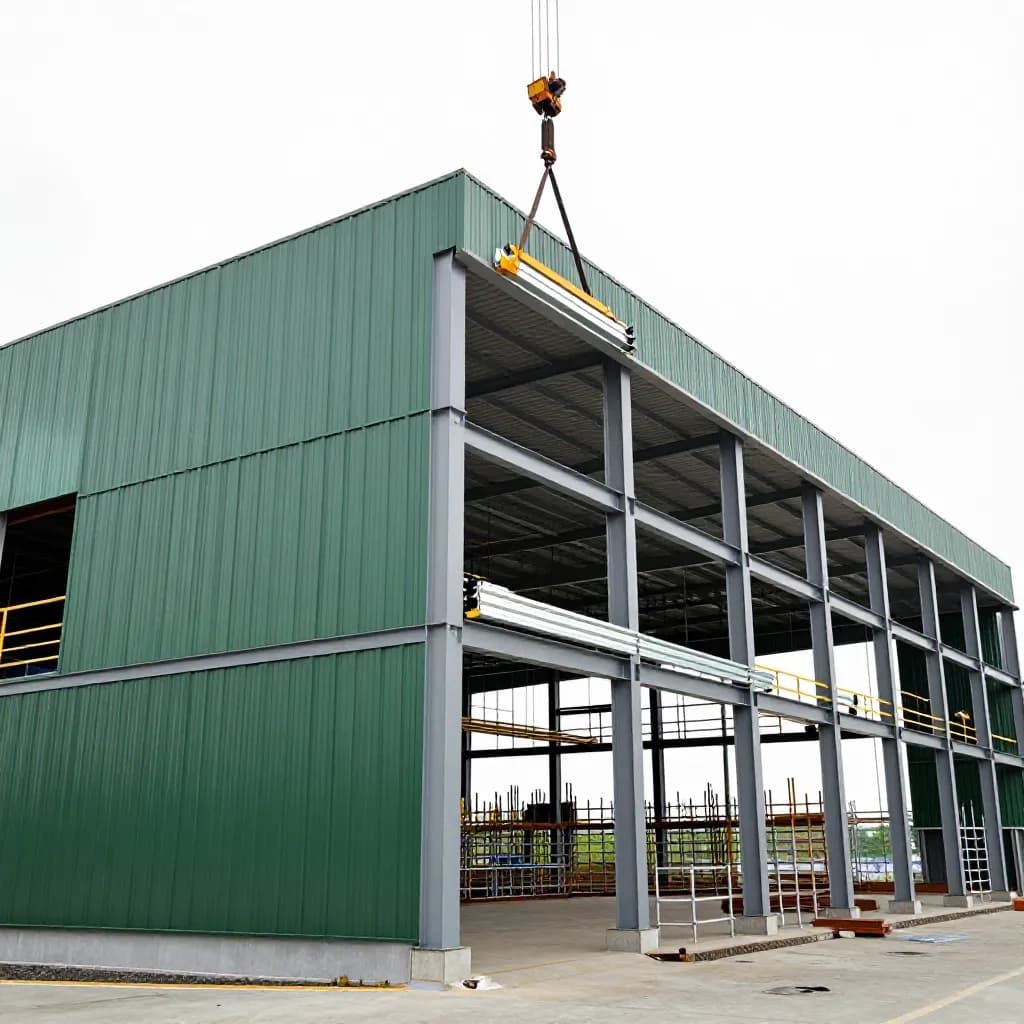
Powder coating has established itself as the preferred finishing technology for industrial building metalwork because it delivers the robust, long-term protection these environments demand. The 60-120 micron film thickness — more than double the 25-50 microns achievable with liquid paint — creates a dense, impervious barrier against chemical attack, moisture ingress, and mechanical damage. The thermoset polymer matrix resists softening and degradation from industrial chemicals, maintaining its protective function in environments that would rapidly destroy conventional paint systems.
Ready to Start Your Project?
From one-off customs to 15,000-part production runs — get precise pricing in 24 hours.
On This Page
Industrial Buildings: Harsh Environments Demand Robust Finishes
From external cladding and roller doors to internal structural steel, mezzanine systems, and equipment enclosures, powder-coated metalwork provides the durability and corrosion resistance that industrial building owners require. The 95-98% material utilization efficiency of powder application also aligns with the waste reduction objectives of modern industrial operations, while zero VOC emissions support compliance with environmental regulations governing industrial facilities.
Cladding Systems: Weather Protection and Industrial Aesthetics
Industrial building cladding must provide weather protection, thermal insulation, and an acceptable external appearance while withstanding the specific environmental challenges of the industrial site. Chemical fallout from nearby processes, heavy vehicle traffic generating road spray and debris, and the potential for mechanical impact from loading operations all stress the cladding finish beyond the demands of typical commercial buildings.
Powder-coated steel and aluminum cladding panels provide the performance needed for industrial applications. The 60-120 micron powder film creates a continuous barrier against moisture and atmospheric corrosion, while the thermoset chemistry resists degradation from industrial pollutants including sulfur dioxide, nitrogen oxides, and particulate matter. For buildings in heavy industrial zones classified as C4 or C5 corrosivity categories under ISO 9223, powder coating combined with appropriate pretreatment provides the enhanced protection needed to achieve the required service life.
The aesthetic quality of powder-coated industrial cladding has become increasingly important as planning authorities impose design standards on industrial developments. Modern industrial parks and logistics hubs require buildings that present a professional, well-maintained appearance, and powder coating delivers this with minimal ongoing maintenance. The color range available allows industrial buildings to comply with planning color requirements, incorporate corporate branding, and present a quality image that reflects positively on the occupying business.
For insulated composite cladding panels — the dominant wall system in modern industrial construction — the powder coating is applied to the steel or aluminum outer skin during panel manufacture. The coating must withstand the panel manufacturing process, including foam injection and press curing, without degradation. Powder coatings formulated for composite panel production maintain their properties through these manufacturing stresses, delivering consistent quality across production runs of thousands of panels.
Roller Doors, Shutters, and Loading Bay Equipment
Roller doors and shutters are among the most heavily used and mechanically stressed elements of industrial buildings. Operating multiple times daily, these doors are subjected to impact from forklifts and loading equipment, exposure to weather and industrial atmosphere during open periods, and the mechanical stress of repeated coiling and uncoiling. The surface finish must withstand this demanding service regime while maintaining both appearance and corrosion protection.
Powder coating on roller door slats provides superior performance compared to liquid paint in this application. The 60-120 micron film thickness resists the scratching and abrasion that occurs as slats slide against each other during door operation, maintaining the coating's integrity through thousands of operating cycles. The thermoset film's combination of hardness and flexibility allows it to accommodate the bending stress that each slat experiences as it passes over the coiling drum, without cracking or delaminating.
Loading bay equipment — including dock levelers, bumpers, guide rails, and canopy structures — is exposed to the most aggressive conditions in the industrial building. Vehicle impact, hydraulic fluid spills, diesel exhaust, and weather exposure combine to create an environment that rapidly degrades inadequate finishes. Powder coating's chemical resistance and mechanical robustness provide reliable protection in this environment, with the 60-120 micron film maintaining its barrier function despite regular chemical and mechanical assault.
For cold storage and refrigerated warehouse facilities, the coating must also withstand the thermal shock of rapid temperature changes as doors open between ambient and refrigerated zones. Powder coating's flexibility at low temperatures — maintained down to -40°C for appropriately formulated products — prevents the embrittlement and cracking that can affect liquid paint films under thermal shock conditions, ensuring continuous corrosion protection in these demanding applications.
Structural Steel: Corrosion Protection in Industrial Atmospheres
The structural steel framework of industrial buildings represents a major capital investment that must be protected against corrosion for the building's entire design life — typically 30-50 years. In industrial atmospheres, where airborne chemicals, elevated humidity, and temperature fluctuations accelerate corrosion, the specification of the steel protection system is a critical design decision.
Powder coating on structural steel provides both decorative finish and corrosion protection. For exposed structural elements — columns, beams, trusses, and bracing — the powder coating serves as the primary visual finish while providing barrier protection against atmospheric corrosion. The 60-120 micron film thickness creates a more robust barrier than the 25-50 micron liquid paint films typically applied to structural steel, reducing the risk of premature coating failure and the costly remediation that follows.
Duplex coating systems — combining hot-dip galvanizing with powder coating topcoat — provide the highest level of corrosion protection for industrial structural steel. The galvanized zinc layer provides sacrificial cathodic protection at any points of coating damage, while the powder topcoat provides barrier protection and the desired aesthetic finish. ISO 12944-5 provides guidance on duplex system specification, with expected service lives exceeding 40 years in C3 and C4 corrosivity environments when properly specified and applied.
For structural steel in particularly aggressive environments — chemical processing plants, waste treatment facilities, and marine-adjacent industrial sites — epoxy-polyester hybrid powder coatings provide enhanced chemical resistance at the expense of some UV stability. These formulations are ideal for interior structural steel where UV exposure is minimal but chemical resistance is critical. For exterior applications requiring both chemical resistance and UV stability, a two-coat system with epoxy primer and polyester topcoat provides the optimal combination of properties.
Mezzanine Floors, Racking, and Internal Infrastructure
The internal infrastructure of industrial and warehouse buildings — mezzanine floor systems, storage racking, conveyor supports, equipment platforms, and service distribution systems — represents a vast surface area of metalwork that must be protected against corrosion and maintained in safe condition throughout its service life.
Powder-coated mezzanine floor structures benefit from the coating's combination of durability and safety color capability. Structural members are protected against corrosion from condensation, spillages, and cleaning chemicals, while safety colors on handrails, edge protection, and stairways comply with workplace safety regulations. The 60-120 micron powder film resists the impact and abrasion from foot traffic, pallet trucks, and stored goods that would rapidly degrade thinner liquid paint films.
Storage racking systems in warehouses are subjected to regular impact from forklifts and pallet handling equipment. While racking uprights are typically protected by physical barriers, the surface finish must still resist the scratching and minor impacts that occur during normal warehouse operations. Powder coating's hardness and adhesion ensure that minor surface damage does not lead to coating delamination and progressive corrosion — a common failure mode with liquid-painted racking where edge chips propagate into large areas of coating loss.
Conveyor supports, equipment platforms, and service distribution systems — including cable trays, pipe supports, and ductwork — are often located in areas with elevated humidity, chemical exposure, or temperature extremes. Powder coating provides reliable protection in these environments, with formulations available to resist specific chemical exposures encountered in different industrial processes. The smooth, non-porous powder film also facilitates cleaning in food processing and pharmaceutical manufacturing environments where hygiene standards apply to all building infrastructure.
Corrosion Protection Systems for Aggressive Environments
Industrial environments are classified by corrosivity category under ISO 9223, ranging from C1 (very low) to CX (extreme). The coating system specified for industrial building metalwork must be appropriate for the corrosivity category of the specific environment, with more aggressive environments requiring more robust protection systems.
For C3 (medium) environments — typical of urban industrial areas with moderate pollution — standard polyester powder coating at 60-80 microns on properly pretreated substrates provides adequate protection for a 15-25 year service life. The pretreatment system is critical: chromate-free conversion coatings or multi-stage pretreatment processes create the adhesion and corrosion resistance foundation on which the powder coating's barrier protection depends.
For C4 (high) and C5 (very high) environments — including coastal industrial sites, chemical processing facilities, and heavy manufacturing plants — enhanced protection systems are required. These may include increased powder film thickness (80-120 microns), duplex galvanizing-plus-powder systems, or multi-coat powder systems with epoxy primer and polyester topcoat. The specific system is selected based on the corrosivity assessment, the required service life, and the maintenance access constraints of the particular application.
For CX (extreme) environments — offshore-adjacent industrial facilities, chemical storage areas, and locations with direct chemical splash exposure — powder coating may be combined with additional protection measures including cathodic protection systems, sacrificial anodes, or specialized chemical-resistant topcoats. In these extreme applications, the powder coating serves as one element of a comprehensive corrosion management strategy designed to protect the structural integrity of the building throughout its design life.
Operational Efficiency and Maintenance Planning
Industrial building operators prioritize operational efficiency, and the maintenance requirements of surface finishes directly impact facility availability and operating costs. Unplanned maintenance — emergency repairs to corroded structural members, replacement of failed cladding panels, or remediation of coating failures — disrupts operations and incurs premium costs. A coating system that delivers predictable, long-term performance enables planned maintenance that minimizes operational disruption.
Powder coating's 20-25 year service life provides the predictability that industrial maintenance planning requires. Building owners can schedule recoating interventions years in advance, coordinating with planned shutdowns or low-activity periods to minimize operational impact. This contrasts with liquid paint systems, where the shorter 8-12 year service life and less predictable degradation pattern can lead to unplanned maintenance requirements that conflict with production schedules.
The 95-98% material utilization efficiency of powder coating application reduces waste generation in the coating process — an important consideration for industrial facilities operating under environmental permits that regulate waste streams. The absence of solvents eliminates the need for solvent storage, handling, and disposal infrastructure, reducing both environmental risk and regulatory compliance burden.
For industrial building owners considering the total cost of ownership, powder coating consistently delivers the lowest cost per year of protection. The higher initial cost compared to basic liquid paint systems is offset by the extended service life, reduced maintenance frequency, and lower waste disposal costs. When the indirect costs of operational disruption during maintenance are included, the economic advantage of powder coating becomes even more pronounced — particularly for high-value industrial operations where downtime costs are measured in thousands per hour.
Frequently Asked Questions
What corrosion protection does powder coating provide in industrial environments?
Powder coating at 60-120 microns provides robust barrier protection suitable for ISO 9223 corrosivity categories C3 to C5. Duplex systems combining hot-dip galvanizing with powder coating topcoat achieve service lives exceeding 40 years in C3 and C4 environments per ISO 12944-5 guidance.
Can powder coating withstand forklift impact on warehouse metalwork?
Powder coating's 60-120 micron film thickness and thermoset hardness provide superior impact resistance compared to 25-50 micron liquid paint. Minor surface damage does not propagate into coating delamination, maintaining corrosion protection despite the regular impacts typical in warehouse environments.
How does powder coating perform on industrial roller doors?
Powder coating resists the scratching and bending stress of repeated roller door operation. The thermoset film's combination of hardness and flexibility accommodates coiling without cracking, maintaining integrity through thousands of operating cycles. Cold-storage formulations perform down to -40°C.
Is powder coating suitable for chemical processing environments?
Yes. Epoxy-polyester hybrid powder coatings provide enhanced chemical resistance for interior applications. For exterior elements requiring both chemical and UV resistance, two-coat systems with epoxy primer and polyester topcoat provide optimal protection in chemical processing environments.
How does powder coating reduce industrial building maintenance costs?
Powder coating's 20-25 year service life enables planned maintenance aligned with production schedules, versus unpredictable 8-12 year liquid paint cycles. The 95-98% material efficiency reduces waste costs, and zero VOC emissions simplify environmental permit compliance for industrial facilities.
Ready to Start Your Project?
From one-off customs to 15,000-part production runs — get precise pricing in 24 hours.