Powder coating serves a remarkably broad range of industries, each with its own requirements for finish quality, durability, and compliance. The construction industry relies on powder coating for structural steel, cladding, window frames, curtain walling, railings, and architectural metalwork. Manufacturing operations use it for everything from machine housings and enclosures to consumer products and retail fixtures.
Local Info
Industrial and Commercial Powder Coating Services: What We Handle
Sundial Powder Coating·April 20, 2026·8 min
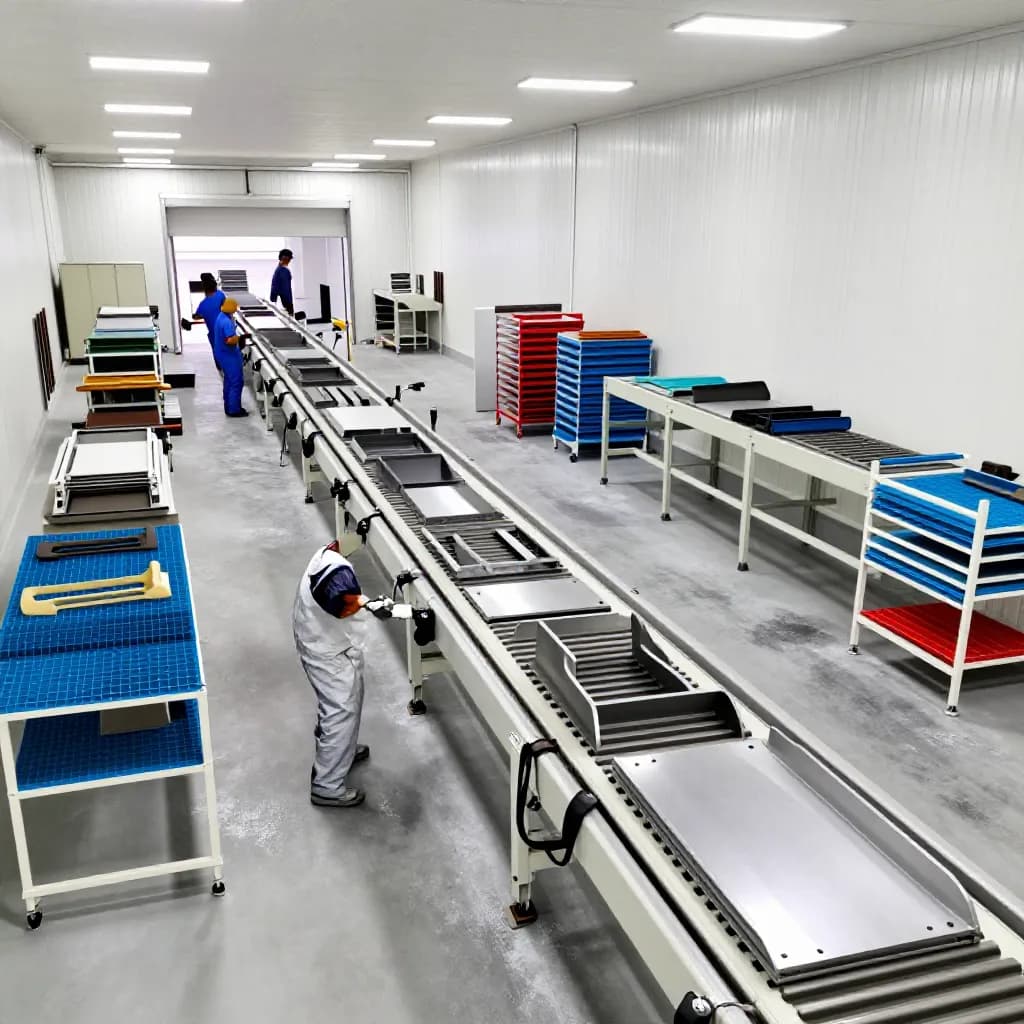
The automotive and transport sectors use powder coating on chassis components, wheels, brackets, fuel tanks, and accessories. Agricultural equipment manufacturers coat frames, guards, implements, and structural components that face harsh outdoor conditions and chemical exposure. Electrical and electronics industries depend on powder coating for switchgear enclosures, cable trays, transformer housings, and distribution boards where both protection and appearance matter.
Ready to Start Your Project?
From one-off customs to 15,000-part production runs — get precise pricing in 24 hours.
On This Page
Industries Served
Furniture manufacturers, both commercial and residential, use powder coating extensively on metal frames, legs, bases, and structural elements. The fitness and leisure industry coats gym equipment, playground structures, and outdoor furniture. Each industry brings specific requirements for color, durability, chemical resistance, and compliance standards, and a capable commercial coater can serve them all.
Capabilities to Look For
Oven size is one of the first practical considerations when choosing a commercial coater. The maximum dimensions of the curing oven determine the largest single piece that can be coated. If your parts include long railing sections, large panels, or oversized fabrications, confirm that the coater's oven can accommodate them. Some shops have walk-in ovens capable of handling items several meters long, while others are limited to smaller batch ovens.
Pretreatment capability directly affects the durability and quality of the finished coating. For industrial and commercial work, look for a coater with a multi-stage pretreatment system that includes cleaning, rinsing, and a conversion coating stage. The type of conversion coating, whether iron phosphate, zinc phosphate, or zirconium, should be appropriate for the substrate material and the performance requirements of the finished product.
Quality certifications demonstrate that the coater operates to documented standards with regular auditing. ISO 9001 for quality management, Qualicoat or GSB for architectural coating, and industry-specific certifications all indicate a coater who takes process control seriously. A broad color range backed by relationships with major powder manufacturers ensures the coater can meet virtually any color specification you require.
OEM and Production Run Support
For manufacturers who need consistent coating on production volumes, the coater becomes a critical link in the supply chain. OEM coating support means the coater can handle recurring orders with documented specifications, consistent quality, and reliable scheduling that integrates with your production timeline. Parts arrive coated and ready for assembly without variation from batch to batch.
Batch documentation is essential for production work. Each coating run should be traceable, with records of the powder used, pretreatment parameters, film thickness measurements, adhesion test results, and cure verification. This documentation supports your own quality management system and provides evidence of compliance for your customers and any regulatory requirements.
Scheduling reliability is non-negotiable for production coating. Late deliveries from the coater cascade into delayed assembly, missed shipping dates, and unhappy customers. A coater set up for OEM work will have the capacity planning, communication systems, and process discipline to deliver on schedule consistently. Discuss your production calendar, peak periods, and lead time requirements when establishing the relationship.
Prototype and One-Off Capability
Not every industrial coating job is a production run. Prototypes, samples, trade show pieces, and one-off custom fabrications all need coating, often on tight timelines and with specific aesthetic requirements. A versatile commercial coater can handle these alongside their production work, offering the flexibility to coat a single prototype in a custom color with the same quality and attention as a thousand-piece production batch.
Prototype work often involves unusual substrates, unconventional geometries, or experimental finishes that require the coater to adapt their standard process. A coater experienced in one-off work will discuss the challenges upfront, suggest solutions, and manage expectations about what is achievable. They understand that a prototype may be the piece that wins a contract or launches a product, and they treat it accordingly.
Fast turnaround is frequently important for prototype and sample work. Trade show deadlines, client presentations, and design review meetings create time pressure that production schedules do not. A coater who can prioritize a single prototype piece and deliver it within days rather than weeks provides genuine value to manufacturers and designers working to tight deadlines.
Quality Management and Documentation
Industrial and commercial customers require quality documentation that goes beyond a visual inspection. Test reports covering film thickness, adhesion testing, impact resistance, and cure verification provide objective evidence that the coating meets specification. These reports should reference the test methods used, the results achieved, and the acceptance criteria applied.
Certificates of conformance are formal declarations that the coating work complies with the specified standard or customer requirement. They typically reference the parts coated, the specification applied, the powder system used, and the test results achieved. For regulated industries or projects with formal quality requirements, these certificates are contractual deliverables that must accompany the coated parts.
Traceability systems allow any coated component to be traced back to its specific coating batch, including the powder lot number, pretreatment chemicals, process parameters, and operator. This traceability is valuable for investigating any quality issues that arise in service and for demonstrating due diligence in quality management. A coater with robust traceability systems inspires confidence in their commitment to consistent quality.
Frequently Asked Questions
What is the largest item you can powder coat?
Maximum part size depends on the coater's oven dimensions and spray booth capacity. Many commercial coaters can handle items several meters long and over a meter wide. If you have oversized parts, provide dimensions when requesting a quote so the coater can confirm their equipment can accommodate your components.
Can you coat different metals in the same batch?
Yes, different metals can be coated in the same batch provided the pretreatment process is compatible with all substrates present. Steel and aluminum, for example, may require different pretreatment chemistry. A capable coater will manage substrate differences to ensure proper adhesion and performance on each material type.
What quality certifications should an industrial coater have?
ISO 9001 for quality management is a strong baseline. For architectural work, Qualicoat or GSB certification demonstrates compliance with industry-specific coating standards. Some industries require additional certifications. Discuss your specific quality requirements with the coater to confirm their certifications align with your needs.
How do you handle confidential or proprietary parts?
Professional coaters understand that some parts are commercially sensitive. Discuss confidentiality requirements when setting up your account. Many coaters are willing to sign non-disclosure agreements and can implement handling procedures that restrict access to your parts and specifications within their facility.
Ready to Start Your Project?
From one-off customs to 15,000-part production runs — get precise pricing in 24 hours.