Immersion service — where the powder coating is continuously or frequently submerged in liquid — represents the most demanding application environment for any organic coating system. Unlike atmospheric exposure where the coating faces intermittent moisture contact, immersion subjects the coating to constant hydrostatic pressure driving moisture through the film, continuous chemical exposure from dissolved substances in the liquid, and potential electrochemical activity at the coating-substrate interface.
Technical
Powder Coating for Immersion Applications: Potable Water, Wastewater, Chemical Tanks, and FBE Linings
Sundial Powder Coating·April 22, 2026·12 min
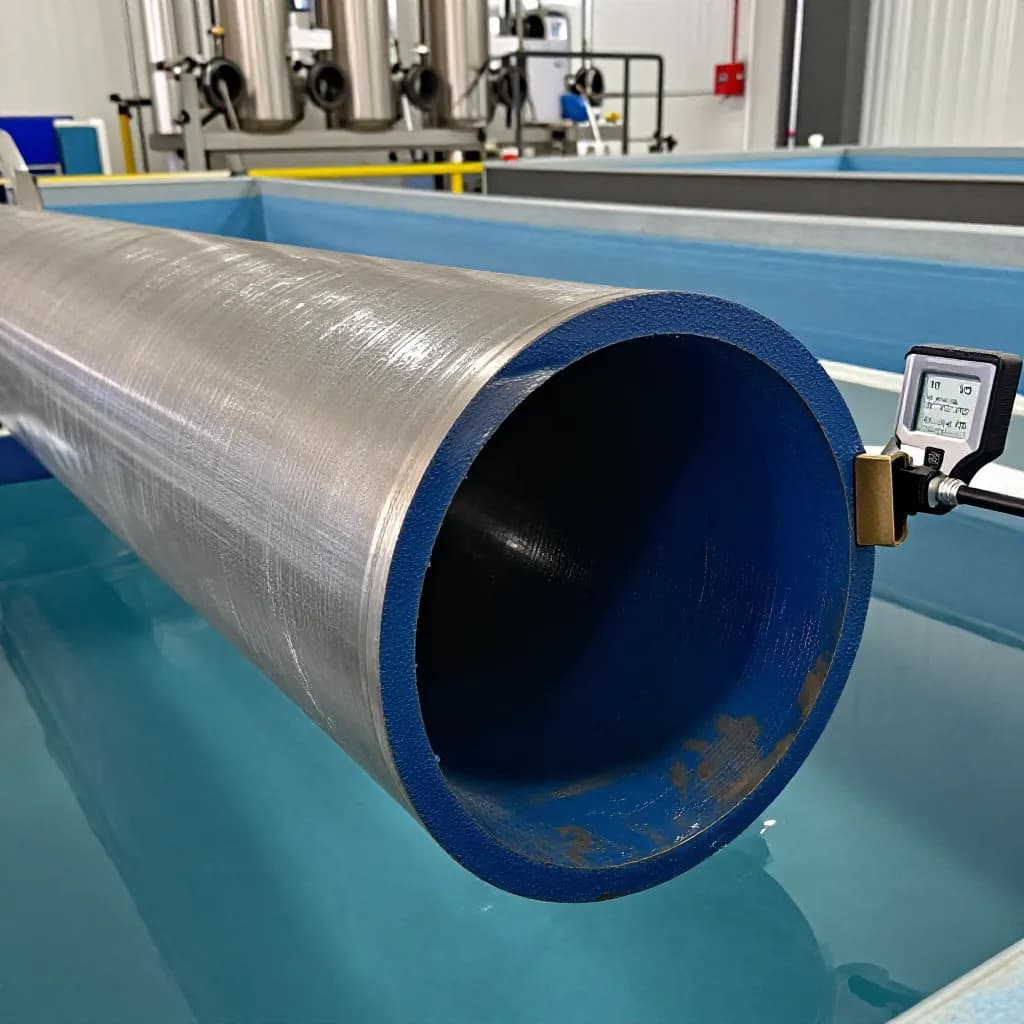
The challenges of immersion service are fundamentally different from atmospheric corrosion protection. In atmospheric service, the coating primarily functions as a barrier against intermittent moisture and atmospheric pollutants. In immersion, the coating must resist sustained moisture permeation under hydrostatic pressure, maintain adhesion in the presence of continuous water at the coating-substrate interface, resist chemical attack from the immersion medium, and in potable water applications, comply with strict health and safety regulations regarding leaching of coating components into drinking water.
Ready to Start Your Project?
From one-off customs to 15,000-part production runs — get precise pricing in 24 hours.
On This Page
Immersion Service: The Most Demanding Coating Environment
Powder coatings — particularly fusion-bonded epoxy (FBE) and specialized epoxy-phenolic formulations — have established a strong track record in immersion applications. Their advantages over liquid coatings in immersion service include higher film builds achievable in a single coat (reducing the number of potential inter-coat adhesion failures), absence of solvent entrapment (which can cause blistering in immersion), and superior adhesion to properly prepared steel substrates.
The scope of immersion powder coating applications is broad: internal linings for potable water transmission and distribution pipes, wastewater treatment plant structures, chemical storage tanks, desalination plant components, cooling water systems, and marine ballast tanks. Each application presents specific chemical exposure, temperature, and regulatory requirements that must be addressed through appropriate coating selection and specification.
Potable Water Pipe Linings
Internal powder coating of potable water pipes is one of the largest volume applications for immersion-grade powder coatings. FBE linings protect the internal surface of steel and ductile iron water transmission mains from corrosion, maintain hydraulic efficiency by providing a smooth internal surface, and prevent iron dissolution that causes discolored water and taste complaints.
Potable water FBE linings are typically applied at 300-500 microns (12-20 mils) on pipe diameters from 100 mm to over 3,000 mm. The coating must meet stringent health and safety requirements for contact with drinking water. In the United States, NSF/ANSI 61 certification is mandatory, requiring that the cured coating does not leach harmful substances into water at concentrations exceeding established health limits. In Europe, the equivalent requirements are defined by national regulations such as the UK Water Regulations Advisory Scheme (WRAS) approval, German DVGW W270 for microbial growth, and the European Drinking Water Directive.
The performance requirements for potable water FBE linings include adhesion retention after extended hot water immersion (typically 5,000+ hours at 75°C), resistance to cathodic disbondment in the presence of cathodic protection systems commonly used on water mains, flexibility to accommodate pipe handling and installation stresses, and resistance to the mild alkalinity (pH 7-9) and chlorine residuals (0.2-2.0 mg/L) typical of treated drinking water.
AWWA C213 (American Water Works Association) is the primary North American standard for FBE lining of water pipe, defining material requirements, application procedures, and testing methods. ISO 21809-2 provides the international framework. Both standards require holiday detection testing of 100% of the coated surface at specified voltages to ensure a defect-free lining.
Wastewater and Sewage Treatment Applications
Wastewater treatment infrastructure presents a particularly aggressive immersion environment for powder coatings. The combination of variable pH (from acidic industrial discharges to alkaline treatment chemicals), dissolved gases (hydrogen sulfide, methane, carbon dioxide), suspended solids with abrasive properties, and active microbial populations creates a multi-vector chemical and biological attack on coating systems.
Hydrogen sulfide (H2S) is the most destructive agent in wastewater environments. Generated by anaerobic bacterial decomposition of organic matter, H2S dissolves in moisture films on surfaces above the waterline to form sulfuric acid through biological oxidation by Thiobacillus bacteria. This biogenic sulfuric acid can reach concentrations of pH 0.5-2.0 on concrete and steel surfaces in enclosed wastewater structures, causing rapid corrosion of unprotected steel and degradation of many coating systems.
For immersed surfaces in wastewater treatment plants — clarifier internals, aeration basins, digesters, and piping — epoxy powder coatings at 400-600 microns provide excellent protection against the combination of chemical exposure, abrasion from suspended solids, and microbial attack. Novolac epoxy formulations, which incorporate phenolic resin modifiers, offer enhanced chemical resistance compared to standard bisphenol-A epoxy and are preferred for the most aggressive wastewater environments.
For surfaces above the waterline in enclosed wastewater structures — where biogenic sulfuric acid attack is most severe — specialized acid-resistant coatings are required. Vinyl ester and novolac epoxy powder coatings at 500-1,000 microns provide the necessary acid resistance, though liquid-applied systems remain more common for these extreme applications due to the difficulty of achieving very high film builds with powder in complex geometries.
Chemical Storage Tank Linings
Internal powder coating of chemical storage tanks requires precise matching of the coating chemistry to the stored chemical. Unlike atmospheric applications where the coating faces a relatively predictable environment, chemical tank linings must resist continuous immersion in specific chemicals at defined concentrations and temperatures — conditions that can cause rapid failure if the coating chemistry is incompatible.
Epoxy powder coatings are the most versatile chemistry for chemical tank linings, offering resistance to a broad range of acids, alkalis, solvents, and salt solutions at moderate temperatures (up to 60°C for standard formulations, up to 90°C for novolac epoxy). The chemical resistance of epoxy coatings derives from their high crosslink density, low permeability, and the chemical stability of the ether and hydroxyl groups in the cured bisphenol-A epoxy network.
Novolac epoxy powder coatings provide enhanced chemical resistance for the most demanding tank lining applications. The phenolic modification increases crosslink density and thermal stability, extending the chemical resistance envelope to include concentrated acids (up to 30% sulfuric acid, 10% hydrochloric acid), strong alkalis (up to 50% sodium hydroxide), and many organic solvents. Novolac epoxy linings are typically applied at 500-800 microns in two coats to ensure pinhole-free coverage.
Chemical resistance testing is essential before specifying any powder coating for tank lining service. ASTM D1308 (spot test) and ISO 2812-1 (immersion test) provide standardized methods for evaluating coating resistance to specific chemicals at defined concentrations and temperatures. Testing should be conducted at the maximum expected service temperature, as chemical attack rates increase significantly with temperature — typically doubling for every 10°C increase.
For tanks storing multiple chemicals or undergoing frequent chemical changes, the coating must resist the most aggressive chemical in the service profile. Chemical compatibility charts provided by powder coating manufacturers are useful starting points, but project-specific immersion testing in the actual stored chemical is strongly recommended for critical applications.
FBE Lining Technology and Application
Fusion-bonded epoxy lining technology for internal pipe and vessel applications has been refined over five decades of commercial use. The application process is highly controlled and automated, producing consistent, high-quality linings that meet the demanding requirements of immersion service.
The FBE lining application process begins with thorough surface preparation. Internal surfaces are abrasive blasted to Sa 2.5 or Sa 3 (ISO 8501-1) using steel grit or alumina, achieving a surface profile of 50-100 microns. Surface cleanliness is verified by visual inspection and soluble salt testing, with maximum allowable salt contamination of 20 µg/cm² equivalent NaCl. Any residual blast media is removed by vacuum cleaning before coating.
The prepared pipe or vessel is heated to the specified application temperature — typically 230-245°C for FBE — using gas-fired or induction heating systems. Temperature uniformity across the surface is critical; variations exceeding ±10°C can cause inconsistent cure and film properties. For large-diameter pipes and vessels, multiple temperature monitoring points ensure uniform heating.
FBE powder is applied to the heated internal surface using airless spray guns, electrostatic spray, or flocking (gravity-fed powder application for large-diameter pipes). The powder melts on contact with the hot surface, flows to form a continuous film, and cures through the thermosetting crosslinking reaction. The gel time, flow characteristics, and cure schedule of the FBE formulation are precisely controlled to achieve optimal film formation and properties.
Post-application quality control includes film thickness measurement (minimum 300 microns for water pipe, 400-600 microns for chemical service), holiday detection at specified voltage, adhesion testing (cross-cut or pull-off), and cure verification by DSC or solvent rub testing. Any detected defects are repaired using approved liquid epoxy repair materials before the lined pipe or vessel is released for service.
Immersion Performance Testing and Standards
Performance testing for immersion-grade powder coatings is more extensive and demanding than for atmospheric coatings, reflecting the severity of the immersion environment and the difficulty of accessing and repairing immersed coatings after installation.
Hot water immersion testing is the primary accelerated test for evaluating immersion coating performance. Coated panels are immersed in deionized water at 75°C (or the maximum service temperature) for extended periods — typically 1,000-5,000 hours for qualification testing. Performance is evaluated by measuring adhesion retention (pull-off adhesion per ISO 4624 before and after immersion), blistering (ISO 4628-2), and any visible degradation. A well-formulated FBE should retain at least 70% of its initial adhesion after 5,000 hours of hot water immersion.
Cathodic disbondment testing per ISO 21809-2 or CSA Z245.20 evaluates the coating's resistance to alkaline degradation at the coating-substrate interface under cathodic protection conditions. This test is critical for pipeline linings where cathodic protection is applied, as poor cathodic disbondment resistance can lead to progressive coating delamination in service.
Chemical immersion testing per ISO 2812-1 evaluates resistance to specific chemicals at defined concentrations and temperatures. Test duration varies from 24 hours for screening tests to 1,000+ hours for qualification testing. Performance criteria include no blistering, no softening, no color change, and adhesion retention above specified thresholds.
Flexibility testing is important for pipe linings that must withstand handling, transportation, and installation stresses. The 3° per pipe diameter bend test (CSA Z245.20) evaluates the coating's ability to withstand bending without cracking — a critical requirement for field-bent pipe sections. Impact resistance testing at the minimum expected service temperature ensures the lining can withstand mechanical damage during installation.
For potable water applications, leaching tests per NSF/ANSI 61 or equivalent national standards verify that the cured coating does not release harmful substances into drinking water. These tests involve immersing coated specimens in standardized water at specified temperatures and analyzing the water for regulated contaminants after defined contact periods.
Design Considerations for Immersion Powder Coating
Successful immersion powder coating applications require careful attention to design details that may be less critical in atmospheric service. The continuous presence of liquid against the coating surface means that any design feature that compromises coating integrity or creates a pathway for liquid to reach the substrate will lead to accelerated failure.
Weld preparation is critical for internal linings. All internal welds must be ground smooth and free of spatter, undercut, porosity, and sharp profiles before coating. Weld defects create stress concentrations in the coating film and areas of reduced thickness that become initiation points for coating failure in immersion service. Weld profiles should achieve a maximum peak-to-valley height of 50 microns after grinding.
Internal geometry must accommodate coating application and inspection. Minimum access openings, adequate internal clearance for spray equipment, and line-of-sight access to all surfaces requiring coating are essential design requirements. Complex internal geometries — baffles, nozzle internals, and small-diameter branches — may require specialized application techniques or liquid coating touch-up to achieve adequate coverage.
Coating continuity at penetrations, nozzles, and flanges requires particular attention. These transition areas are the most common locations for immersion coating failure because they involve changes in geometry, substrate material, and thermal mass that complicate coating application. Stripe coating — the application of additional coating to edges, corners, and weld lines before the full coat — ensures adequate film build at these critical locations.
Thermal design must consider the operating temperature range of the immersion service. Thermal cycling between ambient and operating temperatures creates differential expansion stresses at the coating-substrate interface. For high-temperature immersion applications (above 60°C), specifying FBE formulations with glass transition temperatures at least 20°C above the maximum service temperature ensures the coating remains in its glassy, high-performance state throughout the operating range.
Emerging Trends in Immersion Powder Coating
The immersion powder coating sector continues to evolve in response to increasingly demanding application requirements, tightening environmental regulations, and advances in polymer chemistry and application technology.
High-temperature FBE formulations capable of continuous immersion service at temperatures up to 110°C have been developed for enhanced oil recovery (EOR) pipelines and geothermal applications. These formulations use modified epoxy resins with elevated glass transition temperatures (Tg above 130°C) and enhanced thermal stability, enabling powder coating technology to compete with liquid-applied phenolic and vinyl ester linings in high-temperature immersion service.
Low-temperature cure FBE formulations that achieve full cure at pipe temperatures of 180-200°C (compared to the standard 230-245°C) reduce energy consumption during application and enable coating of heat-sensitive substrates. These formulations use catalyzed cure systems that achieve equivalent crosslink density at lower temperatures, maintaining the performance properties required for immersion service.
Antimicrobial powder coatings for potable water applications incorporate silver ion or copper-based antimicrobial agents that inhibit biofilm formation on the internal pipe surface. Biofilm — the layer of bacteria and organic matter that colonizes water pipe interiors — can harbor pathogenic organisms, reduce hydraulic capacity, and accelerate microbiologically influenced corrosion. Antimicrobial linings reduce biofilm formation by 90-99%, improving water quality and reducing the need for chemical disinfection.
Thick-film powder coating technology enabling single-coat application at 800-1,200 microns is being developed for chemical tank lining applications that currently require multiple coats. Single-coat application reduces processing time, eliminates inter-coat adhesion risks, and improves coating consistency. Achieving these film thicknesses without sagging, orange peel, or cure defects requires specialized powder formulations with controlled melt viscosity and extended gel times.
Frequently Asked Questions
What powder coating is used inside water pipes?
Fusion-bonded epoxy (FBE) at 300-500 microns is the standard internal lining for potable water pipes. FBE provides corrosion protection, maintains hydraulic efficiency, and meets health safety requirements. In the US, NSF/ANSI 61 certification is mandatory; in Europe, WRAS, DVGW, and national drinking water regulations apply.
Can powder coating withstand continuous water immersion?
Yes. FBE and specialized epoxy powder coatings are designed for continuous immersion service. Well-formulated FBE retains at least 70% of initial adhesion after 5,000 hours of hot water immersion at 75°C. Performance depends on proper surface preparation, adequate film thickness, and correct cure — all verified through rigorous quality control testing.
What powder coating resists chemical immersion?
Novolac epoxy powder coatings provide the broadest chemical resistance for tank lining applications, handling concentrated acids (up to 30% H2SO4), strong alkalis (up to 50% NaOH), and many organic solvents at temperatures up to 90°C. Standard bisphenol-A epoxy handles moderate chemical exposure up to 60°C. Project-specific immersion testing is recommended.
How thick should powder coating be for immersion service?
Minimum 300 microns for potable water pipe linings, 400-600 microns for wastewater and general chemical immersion, and 500-800 microns for aggressive chemical tank linings. Higher film builds provide longer diffusion paths for moisture and chemicals, improving barrier performance. Holiday detection testing ensures pinhole-free coverage.
What standards govern powder coating for potable water contact?
NSF/ANSI 61 in the United States, WRAS approval in the UK, DVGW W270 in Germany, and the European Drinking Water Directive govern coating materials in contact with drinking water. AWWA C213 and ISO 21809-2 define application and performance requirements for FBE water pipe linings. All require that cured coatings do not leach harmful substances.
Ready to Start Your Project?
From one-off customs to 15,000-part production runs — get precise pricing in 24 hours.