Heating, ventilation, and air conditioning (HVAC) equipment operates in conditions that are uniquely challenging for protective coatings. Air handling units process millions of cubic meters of air containing moisture, particulates, and chemical pollutants. Condensate forms continuously on cooling coils and drain pans. Outdoor units face the full spectrum of atmospheric corrosion stresses. And all components must maintain their protective coating integrity for 15-25 years of continuous operation with minimal maintenance access.
Industrial
Powder Coating HVAC Systems and Components: Air Handling Units, Ductwork, Grilles, and Coil Protection
Sundial Powder Coating·April 22, 2026·11 min
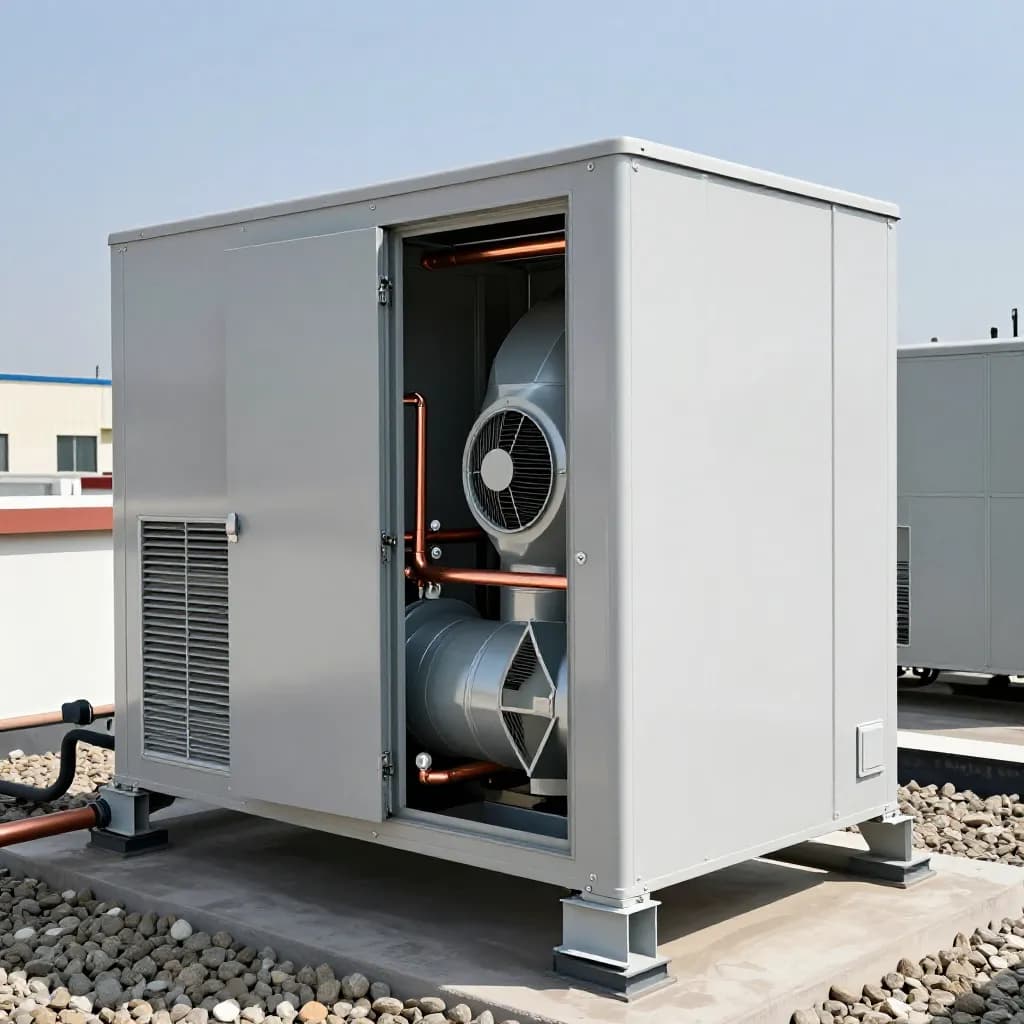
Powder coating has become the standard finishing technology for HVAC equipment manufacturers because it addresses the industry's core coating requirements: corrosion protection in humid and condensing environments, resistance to the cleaning chemicals used in HVAC maintenance, compatibility with indoor air quality standards that restrict coating emissions, and the production efficiency needed for high-volume HVAC equipment manufacturing.
Ready to Start Your Project?
From one-off customs to 15,000-part production runs — get precise pricing in 24 hours.
On This Page
HVAC Equipment: A Demanding Coating Environment
The HVAC coating market encompasses a diverse range of components — from large air handling unit (AHU) casings and rooftop units to small grilles, diffusers, and damper blades. Each component type has specific coating requirements driven by its operating environment, visibility, and maintenance accessibility. Understanding these requirements enables specifiers to select coating systems that deliver reliable performance throughout the HVAC system's design life.
Air Handling Units and Rooftop Package Units
Air handling units (AHUs) and rooftop package units are the largest HVAC components requiring powder coating, with casings that can span 2-6 meters in length and 1-3 meters in height. These units house fans, coils, filters, and controls within a sheet metal enclosure that must resist both interior condensation corrosion and exterior atmospheric corrosion for the unit's 20-25 year design life.
The exterior surfaces of AHUs and rooftop units face standard atmospheric corrosion challenges — UV radiation, rain, temperature cycling, and in coastal or industrial locations, salt spray or chemical pollutants. Super-durable polyester powder coating at 60-80 microns over zinc phosphate pretreatment provides the exterior corrosion and UV protection needed for these outdoor-exposed surfaces. Color selection typically follows the building's architectural color scheme, with RAL 7035 (light grey), RAL 9002 (grey white), and custom architectural colors being the most common specifications.
The interior surfaces of AHUs face a fundamentally different corrosion challenge: condensation. When warm, humid air contacts the cold surfaces of cooling coils and the surrounding casing, water condenses on the metal surfaces. This condensate, which may be slightly acidic (pH 5-6) due to dissolved CO2 and atmospheric pollutants, creates a persistent wet environment that accelerates corrosion of unprotected steel. Interior AHU surfaces downstream of the cooling coil are particularly vulnerable because they are continuously wetted during cooling operation.
Epoxy powder coatings are preferred for AHU interior surfaces because they provide superior moisture resistance and adhesion in the continuously wet environment downstream of cooling coils. Film thicknesses of 80-120 microns on interior surfaces provide adequate barrier protection against condensate corrosion. The epoxy's poor UV resistance is not a limitation for interior surfaces that are never exposed to sunlight. For AHU drain pans, which collect and channel condensate to the building's drainage system, epoxy powder at 120-150 microns provides the immersion-grade protection needed for surfaces in continuous water contact.
Grilles, Diffusers, and Architectural HVAC Components
Supply air grilles, return air grilles, linear diffusers, round ceiling diffusers, and decorative HVAC covers are the visible interface between the HVAC system and the occupied space. These components must meet architectural aesthetic standards while providing the functional air distribution performance specified by the HVAC engineer. Powder coating is the universal finishing method for these components, providing the color range, finish quality, and durability that architectural specifications demand.
Aluminum is the predominant substrate for architectural HVAC grilles and diffusers, chosen for its light weight, corrosion resistance, and excellent formability. Extruded aluminum grille bars, stamped aluminum diffuser faces, and die-cast aluminum registers are all powder coated over chrome-free conversion coating pretreatment at film thicknesses of 40-60 microns. The thin film specification is important for grilles and diffusers because excessive coating thickness can alter the aerodynamic profile of grille bars and diffuser vanes, affecting air distribution patterns and noise generation.
Color matching for architectural HVAC components must coordinate with the ceiling, wall, or floor finish where the grille or diffuser is installed. White (RAL 9010, RAL 9003, or custom ceiling white) accounts for the majority of grille and diffuser production, but the trend toward exposed ductwork and industrial-aesthetic interiors has increased demand for black, dark grey, metallic, and custom colors. Powder coating's ability to match any color reference with Delta E precision below 1.0 ensures that HVAC components integrate seamlessly with the architectural finish palette.
Acoustic performance is an important consideration for HVAC grille and diffuser coating. The surface texture of the coating can affect air turbulence at the grille face, influencing the noise generated by air flowing through the grille. Smooth powder coatings (surface roughness Ra below 2 micrometers) minimize turbulence-induced noise, while textured coatings can increase noise levels by 2-5 dB at typical face velocities. For noise-sensitive applications (recording studios, hospitals, libraries), smooth semi-gloss or gloss powder coatings are specified to minimize HVAC noise contribution.
Coil Coatings: Protecting Heat Exchangers from Corrosion
Heat exchanger coils — evaporator coils, condenser coils, and heating coils — are the most corrosion-vulnerable components in HVAC systems. These coils are fabricated from copper tubes with aluminum fins, creating a bimetallic system that is susceptible to galvanic corrosion in the presence of moisture and electrolytes. In coastal, industrial, and swimming pool environments, coil corrosion can cause system failure within 2-5 years without protective coating.
Coil coating technologies for HVAC heat exchangers include factory-applied coil coatings (applied to the aluminum fin stock before coil fabrication), post-fabrication dip coatings, and post-fabrication spray coatings. While these are not traditional powder coatings (they are typically waterborne or solvent-based epoxy, polyurethane, or silicone formulations applied at 5-25 microns), the powder coating industry has developed electrostatic powder application techniques for post-fabrication coil coating that provide thicker, more durable protection than liquid alternatives.
Electrophoretic powder coating (e-coat) of assembled coils deposits a uniform 15-25 micron epoxy film on all accessible surfaces of the coil assembly, including the fin surfaces, tube-to-fin joints, and header connections. This process provides significantly better coverage of the complex coil geometry than spray application, which struggles to penetrate the narrow fin spacing (typically 1.5-3 mm) of HVAC coils. E-coat coil protection is specified for HVAC systems in C4 and C5 corrosivity environments per ISO 12944, including coastal locations, indoor swimming pool facilities, and industrial environments with chemical pollutants.
The thermal performance impact of coil coatings must be considered in the HVAC system design. Any coating on heat exchanger surfaces adds thermal resistance that reduces heat transfer efficiency. At typical coil coating thicknesses of 5-25 microns, the thermal performance reduction is 2-5%, which must be compensated by increasing coil face area or air velocity. Thicker powder coatings (above 25 microns) can reduce thermal performance by 5-10% and are generally not recommended for coil surfaces unless the corrosion environment justifies the performance trade-off.
Ductwork and Air Distribution Systems
HVAC ductwork — the network of sheet metal channels that distribute conditioned air throughout buildings — represents a large surface area of powder-coated or painted metal in commercial and industrial buildings. While much ductwork is hidden above ceilings and within mechanical spaces, the trend toward exposed ductwork in modern commercial, retail, and residential design has elevated the aesthetic requirements for duct finishing and created new opportunities for powder-coated ductwork.
Exposed ductwork in architectural applications requires a finish quality that meets the visual standards of the occupied space. Powder coating provides a superior finish compared to the standard galvanized or painted ductwork used in concealed installations, with consistent color, uniform gloss, and the absence of drips, runs, and brush marks that can affect liquid-painted ductwork. Spiral duct, rectangular duct, and duct fittings can all be powder coated before assembly, with field joints sealed and touched up after installation.
The interior surfaces of ductwork affect indoor air quality through two mechanisms: particulate release (loose coating particles or corrosion products entering the airstream) and chemical emission (VOCs or other volatile substances released from the coating into the conditioned air). Powder coating's zero-VOC formulation and mechanically robust thermoset film address both concerns — the cured coating does not emit volatile compounds, and its adhesion and hardness prevent particulate release during normal operation.
ASHRAE Standard 62.1 (Ventilation for Acceptable Indoor Air Quality) and the WELL Building Standard both address the impact of building materials on indoor air quality. Powder-coated ductwork contributes to compliance with these standards through its zero-VOC emission profile. For projects pursuing LEED certification, powder-coated ductwork qualifies as a low-emitting material under LEED EQ Credit: Low-Emitting Materials, contributing to the project's indoor environmental quality score.
Corrosion protection for concealed ductwork in humid environments — natatoriums (swimming pool buildings), commercial kitchens, and tropical climate buildings — requires more robust coating systems than standard galvanized ductwork provides. Epoxy powder coating at 80-120 microns on galvanized duct provides a duplex protection system that resists the high-humidity, chemically aggressive atmosphere of these environments. Swimming pool natatoriums are particularly demanding due to the chloramine-laden atmosphere that aggressively attacks both galvanized steel and aluminum.
Condensate Management and Drain Pan Protection
Condensate drain pans, condensate piping, and associated drainage components are among the most corrosion-prone elements in HVAC systems. These components are in continuous or frequent contact with condensate water that may contain dissolved CO2 (forming carbonic acid), biological contaminants (bacteria, algae, mold), and in some environments, chemical pollutants from the processed air. Corrosion of drain pans can lead to water leaks that damage building finishes, promote mold growth, and compromise indoor air quality.
Stainless steel drain pans are the premium solution for condensate management, but their higher cost drives many HVAC manufacturers to use galvanized steel or aluminum drain pans with protective coatings. Epoxy powder coating at 120-200 microns provides effective immersion-grade protection for steel drain pans, creating a continuous barrier between the condensate and the metal substrate. The coating must cover all surfaces of the drain pan, including welded seams, drain connections, and the underside of the pan where external condensation can form.
Biological growth in drain pans is a significant indoor air quality concern. Standing condensate in drain pans provides an ideal environment for bacterial and fungal growth, which can be distributed throughout the building by the HVAC airstream. Antimicrobial powder coatings with silver ion or zinc pyrithione technology can inhibit biological growth on drain pan surfaces, supplementing the regular cleaning and biocide treatment that drain pans require. These antimicrobial coatings are particularly valuable in healthcare, education, and commercial office HVAC systems where indoor air quality directly affects occupant health.
Drain pan slope and surface finish affect condensate drainage efficiency. A smooth powder coating surface (surface roughness Ra below 3 micrometers) promotes rapid condensate flow toward the drain connection, minimizing standing water that promotes biological growth and corrosion. Textured coatings should be avoided on drain pan surfaces because the texture creates micro-pools that retain water and provide attachment points for biofilm formation.
Outdoor HVAC Equipment: Condensers, Chillers, and Cooling Towers
Outdoor HVAC equipment — air-cooled condensers, chillers, cooling tower structures, and associated piping — faces the combined challenges of atmospheric corrosion, UV degradation, and the specific chemical exposures of their operating environment. These components must maintain structural integrity and operational performance for 20-25 years with limited maintenance access, making the initial coating specification a critical design decision.
Air-cooled condenser and chiller casings are typically fabricated from galvanized steel and powder coated with super-durable polyester at 60-80 microns. The duplex galvanized-plus-powder system provides the long-term atmospheric corrosion protection needed for outdoor equipment. Color selection affects thermal performance — lighter colors reduce solar heat gain on the equipment casing, which can improve condenser efficiency by reducing the ambient temperature around the condenser coil. Some chiller manufacturers specify solar reflective powder coatings on condenser casings to maximize cooling efficiency in hot climates.
Cooling tower structures face one of the most aggressive HVAC corrosion environments. The combination of warm, humid air saturated with water droplets, dissolved minerals from the cooling water, and chemical water treatment additives (biocides, scale inhibitors, corrosion inhibitors) creates conditions that can rapidly corrode unprotected steel. Cooling tower structural steel is typically hot-dip galvanized and may be additionally powder coated for enhanced protection in aggressive environments. Epoxy powder coatings at 150-250 microns provide the chemical and moisture resistance needed for cooling tower structural components.
Refrigerant piping and associated components in outdoor HVAC installations require coating protection against atmospheric corrosion and UV degradation of pipe insulation. Powder-coated pipe supports, hangers, and equipment stands provide corrosion protection for the structural elements that support the refrigerant piping system. The coating must withstand the temperature range of the refrigerant system — from -40°C on suction lines to +65°C on discharge lines — without cracking or losing adhesion through thermal cycling.
Indoor Air Quality and Low-Emission Coating Requirements
Indoor air quality (IAQ) has become a primary design consideration for HVAC systems, and the coatings used on HVAC components directly affect the air quality delivered to occupied spaces. Volatile organic compounds, particulates, and odorous substances released from coatings inside the air handling system are distributed throughout the building by the HVAC airstream, potentially affecting occupant health, comfort, and productivity.
Powder coating's zero-VOC formulation provides an inherent IAQ advantage over liquid paint alternatives for HVAC components. Liquid paints used on HVAC equipment can release residual solvents, co-solvents, and plasticizers for weeks or months after application, contributing to elevated VOC levels in the conditioned air. Powder coatings, having no solvent content, produce zero VOC emissions both during application and after installation, eliminating this source of indoor air contamination.
The WELL Building Standard v2 includes specific requirements for HVAC system materials that affect air quality. Feature A06 (Enhanced Supply Air) and Feature A08 (Healthy Entrance) address the quality of air delivered by the HVAC system, including the contribution of system materials to air contamination. Powder-coated HVAC components support compliance with these features through their zero-emission profile and resistance to microbial growth that could contaminate the airstream.
Greenguard and Greenguard Gold certification, administered by UL, provides third-party validation of low chemical emissions from building products, including HVAC components. While Greenguard certification is more commonly associated with furniture and building materials, HVAC equipment manufacturers are increasingly seeking certification for their products to support green building projects. Powder-coated HVAC components typically meet Greenguard Gold emission limits without special formulation, as the fully cured thermoset film produces negligible chemical emissions under standard test conditions (ASTM D5116 or ISO 16000 series).
Frequently Asked Questions
What coating is best for HVAC air handling unit interiors?
Epoxy powder coating at 80-120 microns is preferred for AHU interior surfaces, especially downstream of cooling coils where continuous condensation occurs. Epoxy provides superior moisture resistance and adhesion in wet environments. For drain pans in continuous water contact, increase to 120-200 microns for immersion-grade protection.
Does powder coating affect HVAC coil thermal performance?
Yes, but minimally at standard thicknesses. Coil coatings at 5-25 microns reduce heat transfer efficiency by 2-5%, which is compensated in system design. Thicker coatings (above 25 microns) can reduce performance by 5-10% and are only recommended when severe corrosion environments justify the trade-off.
How does powder coating improve indoor air quality in HVAC systems?
Powder coating contains zero VOCs and produces no post-cure emissions, eliminating coating-related air contamination distributed by the HVAC system. The dense thermoset film resists particulate release and microbial growth. This supports compliance with ASHRAE 62.1, WELL Building Standard, and Greenguard Gold certification requirements.
What coating protects HVAC equipment in swimming pool environments?
Swimming pool natatoriums have chloramine-laden atmospheres that aggressively attack standard coatings. Epoxy powder at 80-120 microns on galvanized steel provides duplex protection for ductwork and equipment. Heat exchanger coils require specialized e-coat or post-fabrication coil coatings rated for C5 corrosivity environments per ISO 12944.
Can exposed ductwork be powder coated for architectural applications?
Yes. Powder coating provides superior finish quality for exposed ductwork — consistent color, uniform gloss, and no drips or runs. Spiral duct, rectangular duct, and fittings are coated before assembly with field joints touched up after installation. Any RAL or custom color is available, supporting the industrial-aesthetic design trend.
Ready to Start Your Project?
From one-off customs to 15,000-part production runs — get precise pricing in 24 hours.