Hurricane-prone regions — the Gulf Coast and Atlantic seaboard of the United States, the Caribbean, Central America, Southeast Asia (typhoons), and northern Australia (cyclones) — subject buildings to the most extreme wind and impact loading conditions encountered in civilian construction. Category 3-5 hurricanes generate sustained winds of 178-252+ km/h, with gusts exceeding 300 km/h, and carry wind-borne debris that impacts building facades with forces sufficient to penetrate conventional wall assemblies.
Architecture
Powder Coating for Hurricane Zone Buildings: Wind-Borne Debris, Impact Resistance, Rapid Repair, and Insurance
Sundial Powder Coating·April 22, 2026·11 min
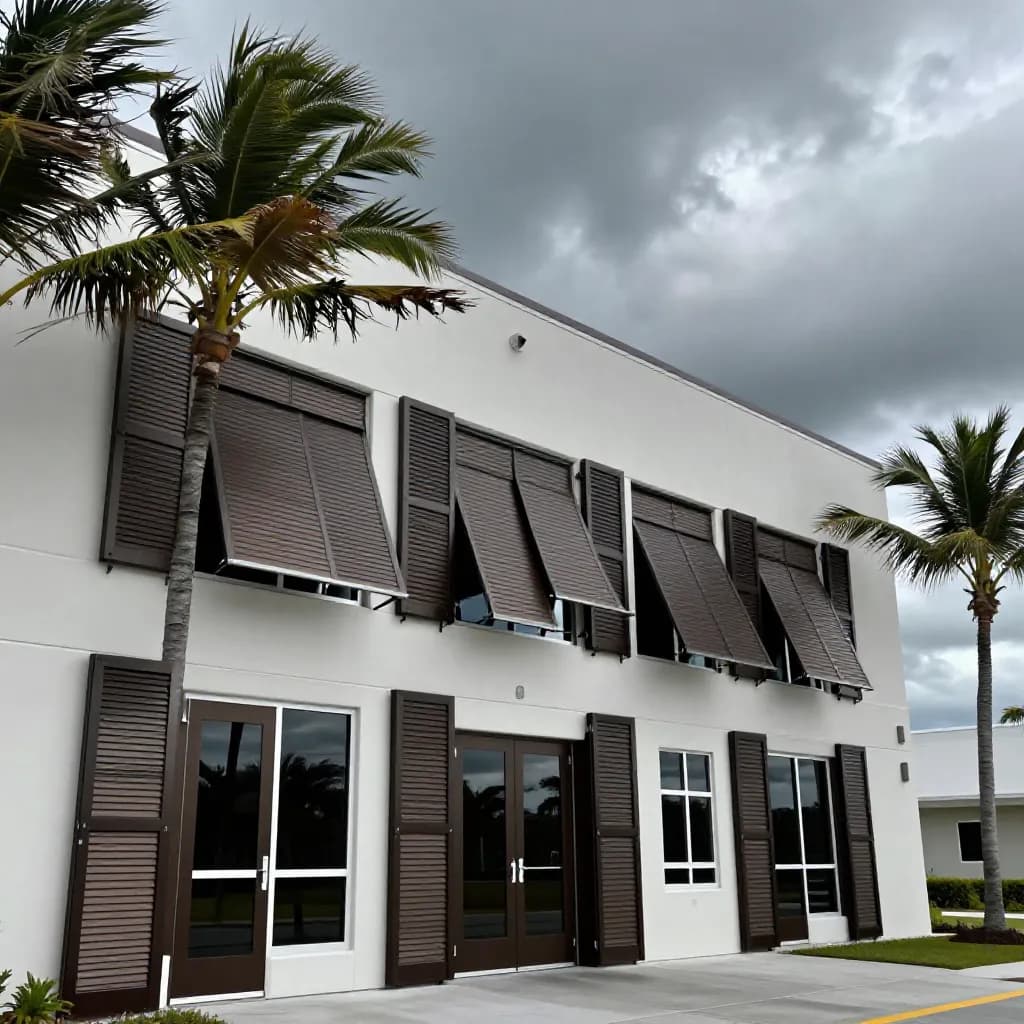
For powder-coated building envelopes, hurricanes create a multi-phase damage scenario. The pre-storm phase involves salt-laden rain and wind that deposits corrosive contaminants on all surfaces. The storm phase subjects the facade to extreme wind pressure (both positive and negative), wind-borne debris impact, and torrential rain driven horizontally at wind speed. The post-storm phase involves extended exposure of any damaged areas to salt-laden moisture, high humidity, and intense tropical UV — conditions that rapidly accelerate corrosion at coating damage points.
Ready to Start Your Project?
From one-off customs to 15,000-part production runs — get precise pricing in 24 hours.
On This Page
Hurricane Zones and Building Envelope Challenges
Building codes in hurricane zones — including the Florida Building Code, the International Building Code (IBC) with hurricane provisions, and Australian Standard AS 1170.2 — define wind load requirements and, in the most stringent zones, mandate impact resistance testing for building envelope components. These requirements directly influence the specification of powder-coated cladding, curtain wall, and fenestration systems.
The economic stakes are enormous. Hurricane damage to buildings in the United States alone averages tens of billions of dollars annually, and the condition of the building envelope — including its coating system — directly affects both the extent of damage and the cost of repair. Buildings with robust, well-maintained coating systems suffer less corrosion damage after storms and can be returned to service more quickly.
Wind-Borne Debris Impact Resistance
Wind-borne debris is the primary cause of building envelope failure during hurricanes. Roof tiles, tree branches, signage, construction materials, and other objects become projectiles at hurricane wind speeds, impacting building facades with kinetic energies that can penetrate glass, deform metal panels, and breach wall assemblies. The resulting openings allow wind and rain to enter the building, causing internal pressurization that can lead to catastrophic structural failure.
Impact resistance testing for hurricane zone building components follows standardized protocols. The large missile test (ASTM E1996) fires a 4.1 kg (9 lb) 2×4 lumber section at 15.3 m/s (34 mph) for basic wind speed zones, or at higher velocities for enhanced protection zones. The small missile test fires 2-gram steel balls at 39.6 m/s (130 ft/s) to simulate gravel and small debris. Building envelope components must withstand these impacts without penetration and then survive cyclic pressure loading simulating continued hurricane wind exposure.
Powder-coated aluminum panels and curtain wall systems can be designed to meet hurricane impact requirements through appropriate material thickness, panel attachment design, and backing systems. The powder coating itself contributes to impact resistance by providing a tough, energy-absorbing surface layer that distributes impact forces over a larger area of the substrate. Polyurethane powder coatings, with their superior impact resistance (typically 160+ inch-pounds direct impact per ASTM D2794), provide better debris impact performance than standard polyester formulations.
The coating's role in post-impact performance is equally important. After a debris impact that dents but does not penetrate the panel, the coating must maintain adhesion and barrier function around the impact site to prevent corrosion initiation in the salt-laden post-storm environment. Coatings with high elongation and strong adhesion accommodate the substrate deformation at impact sites without cracking or delaminating, maintaining corrosion protection at the most vulnerable points.
Wind Pressure and Coating Performance
Hurricane wind pressures impose extreme loading on building facades that can cause panel deformation, fastener failure, and joint opening — all of which stress the powder coating system. Design wind pressures in hurricane zones range from 1.5-4.0 kPa (30-80 psf) for low-rise buildings to 3.0-7.0 kPa (60-145 psf) for high-rise buildings in the most severe wind zones.
Negative wind pressure (suction) on leeward walls and roof edges is typically more critical than positive pressure for facade performance. Suction forces pull cladding panels outward from the building, stressing panel attachments and potentially causing panel flutter — rapid oscillation that fatigues both the panel material and the coating. Powder coatings on panels subject to flutter must resist fatigue cracking from thousands of rapid flexure cycles during a single storm event.
Wind-driven rain penetration during hurricanes exposes the back surface of cladding panels and the coating-substrate interface to salt water. Rainscreen facade systems, which are designed to manage water penetration through drainage and ventilation, perform better than barrier wall systems in hurricane conditions because they provide a controlled path for water to drain rather than relying on perfect sealing that is likely to be compromised during extreme wind events.
The powder coating on fasteners, brackets, and structural connections within the facade system is critical for hurricane performance. These components are subject to the highest stress concentrations during wind loading, and coating failure at connection points can initiate corrosion that weakens the structural capacity of the facade attachment system. Specifying enhanced coating thickness and coverage at all connection hardware — including bolt heads, washer faces, and bracket edges — improves the long-term structural integrity of the facade system in hurricane zones.
Post-hurricane wind pressure testing of facade systems — using air cannons or pressure chambers — can verify that the facade retains its structural capacity after storm exposure. This testing is particularly valuable for buildings that experienced near-design-level wind events, as it provides objective data for decisions about facade repair or replacement.
Salt Exposure and Post-Storm Corrosion
Hurricanes deposit massive quantities of salt on building surfaces. Storm surge, salt-laden rain, and sea spray carried inland by hurricane winds can deposit salt at rates 10-100 times higher than normal coastal exposure. Buildings 10-20 km inland that normally experience minimal salt exposure can receive salt deposition equivalent to waterfront exposure during a major hurricane.
This salt loading creates an acute corrosion risk for any powder-coated surface with pre-existing damage — scratches, chips, edge corrosion, or areas of thin coating. The concentrated salt solution that forms when deposited salt dissolves in post-storm humidity or rainfall is far more corrosive than normal coastal salt spray, and can initiate rapid corrosion at coating defect points within days of the storm.
Post-storm salt removal is the single most important maintenance action for powder-coated buildings after a hurricane. Thorough washing with fresh water — ideally within 48-72 hours of the storm — removes deposited salt before it can cause significant corrosion damage. This washing should cover all surfaces, including sheltered areas, back surfaces of cladding panels, and drainage channels where salt-laden water may have accumulated.
For buildings with significant coating damage from debris impact or wind loading, emergency corrosion protection should be applied to exposed metal surfaces immediately after salt washing. Temporary protective coatings — wax-based or oil-based rust preventatives — provide short-term protection while permanent repairs are planned and executed. The warm, humid post-hurricane environment accelerates corrosion rapidly, making prompt protective action essential.
The pre-storm condition of the powder coating significantly affects post-storm corrosion damage. Buildings with well-maintained coatings — no edge corrosion, no mechanical damage, adequate film thickness — suffer minimal corrosion even after heavy salt deposition because the intact coating prevents salt from reaching the substrate. This relationship between pre-storm maintenance and post-storm damage provides a strong economic argument for regular coating maintenance in hurricane zones.
Rapid Repair Strategies for Hurricane Damage
The ability to rapidly repair hurricane-damaged powder coatings is critical for minimizing business interruption, preventing progressive corrosion damage, and restoring building appearance for tourism-dependent economies. Repair strategies must account for the post-hurricane environment: high demand for repair services, potential supply chain disruptions, limited access to specialized equipment, and the urgency of protecting exposed substrates from the aggressive tropical coastal environment.
Triage-based repair prioritization is essential when damage is widespread. Priority 1 repairs address structural coating damage — areas where coating failure compromises the structural integrity of facade attachments or fire protection systems. Priority 2 repairs address corrosion-critical damage — exposed metal surfaces where corrosion will progress rapidly in the post-storm environment. Priority 3 repairs address cosmetic damage — scratches, chips, and abrasion that affect appearance but do not pose immediate structural or corrosion risks.
Field repair materials for hurricane-damaged powder coatings include two-component epoxy primers for bare metal protection, two-component polyurethane topcoats for color and UV protection, single-component moisture-cure polyurethane for rapid application in humid conditions, and aerosol touch-up coatings for small-area repairs. These materials should be pre-positioned in hurricane zone buildings as part of emergency preparedness planning.
For large-area damage, modular facade systems offer a significant advantage: damaged panels can be removed and replaced with pre-coated replacement panels without the need for field coating. Maintaining an inventory of spare panels — coated from the same powder batch as the original installation — enables rapid facade restoration. This replacement strategy is faster, provides better coating quality than field repair, and avoids the challenges of color matching aged coatings with new field-applied materials.
Color matching for hurricane repairs is a common challenge. The original powder coating may have undergone years of UV exposure and weathering, shifting its color from the original specification. Repair coatings applied to match the current (weathered) color rather than the original specification provide better visual consistency. Retaining reference panels from the original installation in protected storage enables accurate color matching for future repairs.
Insurance and Risk Management Considerations
The condition and specification of powder coatings on building envelopes has direct implications for insurance coverage, premium calculations, and claims settlement in hurricane zones. Insurance underwriters increasingly recognize that building envelope quality — including coating system specification and maintenance — significantly affects the extent and cost of hurricane damage.
Buildings with high-performance coating systems that meet or exceed local building code requirements may qualify for insurance premium reductions. The Florida Building Code's hurricane provisions, for example, define specific performance requirements for building envelope components, and buildings that demonstrably meet these requirements through certified products and documented installation quality may receive favorable insurance treatment.
Pre-storm documentation of coating condition — including photographic records, maintenance logs, and coating thickness measurements — provides essential evidence for insurance claims. This documentation establishes the pre-storm baseline against which hurricane damage is assessed, preventing disputes about whether observed coating deterioration was caused by the hurricane or by pre-existing neglect.
Maintenance records demonstrating regular cleaning, inspection, and repair of the coating system support insurance claims by showing that the building owner fulfilled their duty of care for the building envelope. Conversely, evidence of deferred maintenance — visible corrosion, peeling coating, or blocked drainage — may be used by insurers to reduce claim payments on the basis that pre-existing deterioration contributed to the storm damage.
Business interruption insurance — which covers lost income during building repair — is directly affected by the speed of coating repair. Buildings with pre-positioned repair materials, spare panel inventories, and pre-arranged repair contractor agreements can be restored to service faster, reducing business interruption losses and demonstrating proactive risk management to insurers.
The total cost of ownership analysis for hurricane zone buildings should include the insurance implications of coating specification choices. Higher-performance coating systems that reduce hurricane damage and enable faster repair may justify their additional upfront cost through reduced insurance premiums, lower claim deductibles, and shorter business interruption periods over the building's lifecycle.
Specification Best Practices for Hurricane Zone Buildings
Specifying powder coatings for hurricane zone buildings requires integrating standard architectural coating requirements with hurricane-specific performance criteria. The following best practices reflect lessons learned from decades of hurricane experience in the Gulf Coast, Caribbean, and western Pacific regions.
Coating system selection should prioritize impact resistance and adhesion over hardness. Polyurethane powder coatings, with their superior impact resistance and elongation, outperform standard polyester in hurricane conditions. For structural steel, polyurethane topcoats over zinc-rich epoxy primers provide both hurricane impact resistance and long-term corrosion protection in the aggressive coastal environment.
Film thickness should be specified at the upper end of the acceptable range — 80-100 microns for aluminum, 200-300 microns total system for steel — to provide a damage margin that accommodates minor abrasion and impact without compromising the minimum protective thickness. Edge coverage is particularly important, as edges are the most vulnerable points for both impact damage and corrosion initiation.
Pretreatment must meet coastal specifications — Qualicoat Seaside for aluminum, zinc phosphate for steel — because the post-hurricane salt exposure is equivalent to severe coastal conditions regardless of the building's normal distance from the coast. Under-specifying pretreatment for inland hurricane zone buildings is a common and costly mistake.
Facade design should incorporate hurricane-specific details: impact-resistant panel thicknesses, redundant panel attachments with corrosion-resistant fasteners, drainage provisions for wind-driven rain, and accessible panel replacement systems. The coating specification should be integrated with these design details, ensuring adequate coating at attachment points, edges, and drainage channels.
Maintenance programs should include annual pre-hurricane-season inspections (typically in May-June) to identify and repair any coating damage before the storm season. This proactive approach ensures that the coating system is in optimal condition when it is most needed, maximizing its protective function during hurricane events.
Frequently Asked Questions
How does powder coating resist hurricane debris impact?
Polyurethane powder coatings provide superior impact resistance (160+ inch-pounds per ASTM D2794) and high elongation that distributes impact forces and maintains adhesion around dent sites. Combined with appropriate aluminum panel thickness and attachment design, powder-coated systems can meet ASTM E1996 large missile impact requirements for hurricane zones.
What is the most important maintenance action after a hurricane?
Thorough washing with fresh water within 48-72 hours to remove deposited salt. Hurricanes deposit salt at 10-100 times normal coastal rates, even on inland buildings. Prompt salt removal prevents rapid corrosion at any coating damage points. Emergency protective coatings should be applied to exposed metal surfaces immediately after washing.
Does powder coating condition affect hurricane insurance?
Yes. Well-maintained coatings meeting building code requirements may qualify for premium reductions. Pre-storm documentation of coating condition supports claims. Maintenance records demonstrate duty of care. Pre-positioned repair materials and spare panels reduce business interruption losses, demonstrating proactive risk management to insurers.
What powder coating specification is best for hurricane zone buildings?
Polyurethane topcoats over zinc-rich epoxy primers for steel, Qualicoat Seaside-certified super-durable polyester or fluoropolymer for aluminum. Film thickness at 80-100 microns for aluminum, 200-300 microns total for steel. Coastal-grade pretreatment regardless of distance from coast, as hurricanes deposit severe salt loads inland.
How are hurricane-damaged powder coatings repaired?
Triage-based prioritization: structural damage first, then corrosion-critical areas, then cosmetic damage. Field repair uses two-component epoxy primers and polyurethane topcoats. Modular facade systems allow rapid panel replacement with pre-coated spares. Pre-positioned repair materials and pre-arranged contractor agreements accelerate restoration.
Ready to Start Your Project?
From one-off customs to 15,000-part production runs — get precise pricing in 24 hours.