Hotels and resorts are designed to create memorable experiences, and every surface contributes to the guest's perception of quality. From the moment a guest approaches the entrance canopy to the time they relax on a powder-coated balcony railing overlooking the sea, the surface finishes on the building's metalwork communicate the standard of the property. A luxury hotel with faded, chipped, or corroded metalwork sends an unmistakable message of decline — regardless of the quality of service within.
Architecture
Powder Coating for Hotel and Resort Architecture: Luxury Finishes, Coastal Durability, and Brand Consistency
Sundial Powder Coating·April 22, 2026·11 min
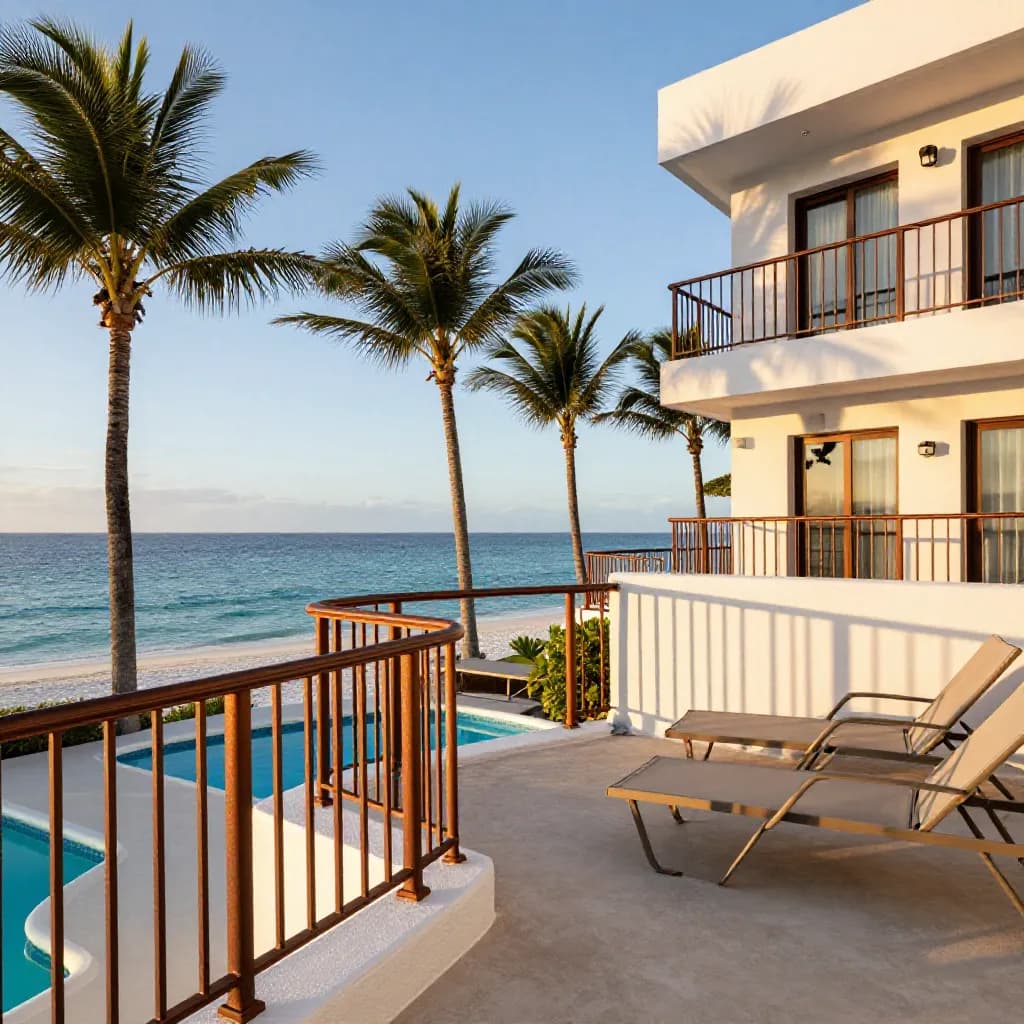
Powder coating has become the standard finishing technology for hospitality architecture because it delivers the premium aesthetic quality and long-term durability that the sector demands. The 60-120 micron film thickness provides a flawless, robust finish that maintains its appearance for 20-25 years — spanning multiple guest generations and reducing the frequency of the disruptive renovation work that takes rooms out of service and impacts revenue.
Ready to Start Your Project?
From one-off customs to 15,000-part production runs — get precise pricing in 24 hours.
On This Page
Hospitality Architecture: Where Guest Experience Begins with Surface Quality
The hospitality sector's adoption of powder coating is driven by both aesthetic and economic considerations. The factory-applied finish achieves a surface quality that on-site liquid painting cannot match, while the 95-98% material utilization efficiency and zero VOC emissions support the sustainability commitments that hotel brands increasingly promote to environmentally conscious travelers. This article examines how powder coating technology serves the specific needs of hotel and resort architecture across luxury finishes, coastal environments, pool areas, brand consistency, and renovation efficiency.
Luxury Finishes: Metallic, Textured, and Special Effects
Luxury hospitality design demands surface finishes that convey quality, sophistication, and attention to detail. Standard solid colors, while appropriate for many applications, may not achieve the visual richness expected in premium hotel environments. Powder coating technology offers an extensive palette of special-effect finishes that meet the aesthetic expectations of luxury hospitality design.
Metallic powder coatings — incorporating aluminum flakes, mica particles, or glass microspheres — create finishes with depth, luminosity, and directional reflectance that respond dynamically to changing light conditions. Champagne gold, brushed bronze, antique copper, and gunmetal are among the most popular metallic finishes for hotel metalwork, providing the warm, sophisticated tones that complement luxury interior design. Bonded metallic formulations ensure consistent flake distribution across large production runs, avoiding the batch variation that can affect liquid metallic paints.
Textured powder coatings add tactile dimension to hotel metalwork. Fine sand textures, leather-grain effects, and hammered finishes create surfaces that engage the sense of touch as well as sight — an important consideration in hospitality environments where guests physically interact with handrails, door handles, and furniture. These textures also provide practical benefits: they reduce the visibility of fingerprints and minor surface marks, maintaining a pristine appearance between cleaning cycles.
Wood-effect powder coatings achieved through sublimation transfer technology allow aluminum metalwork to replicate the appearance of natural timber. This capability is particularly valuable for resort architecture, where the warm aesthetic of wood is desired but the durability and fire performance of aluminum are required. Powder-coated wood-effect window frames, cladding, and pergola structures provide the visual warmth of timber with the 20-25 year maintenance-free performance of powder-coated aluminum.
Coastal and Tropical Durability
Many of the world's most desirable hotel and resort locations are in coastal and tropical environments where salt spray, high humidity, intense UV radiation, and tropical storms create extremely aggressive conditions for building metalwork. The surface finish must withstand this environmental assault while maintaining the premium appearance that guests expect from a beachfront or island property.
Qualicoat Seaside certified powder coatings provide the enhanced protection needed for coastal hospitality architecture. These coatings are tested to withstand 1,000 hours of neutral salt spray exposure (ISO 9227) without blistering, delamination, or corrosion creep beyond specified limits. Combined with marine-grade pretreatment systems — including multi-stage chromate-free conversion coatings or anodic oxidation — Qualicoat Seaside certified systems provide reliable protection for 20-25 years in coastal environments that would destroy standard coating systems within 5-7 years.
Tropical UV exposure is among the most intense on earth, and the color stability of facade and balcony finishes is critical for maintaining the property's visual appeal. Super-durable polyester powder coatings formulated for tropical exposure maintain color within Delta E values of less than 5 after 10 years of equivalent South Florida exposure, ensuring that the building's appearance remains consistent and attractive throughout its service life.
High humidity environments present additional challenges for coating adhesion and substrate protection. Moisture can penetrate inadequate coatings through micro-porosity, initiating corrosion beneath the film surface and leading to blistering and delamination. Powder coating's dense, non-porous thermoset film eliminates this failure mode, providing a continuous moisture barrier that maintains adhesion and protection even in environments with sustained relative humidity above 90%.
Pool Areas, Spas, and Water Feature Metalwork
Swimming pools, spas, and water features are central amenities in resort and hotel properties, and the metalwork surrounding these facilities — including pool fencing, balustrades, furniture frames, shower enclosures, and decorative screens — is exposed to one of the most corrosive environments in the hospitality sector. Chlorinated water, salt water, high humidity, sunscreen chemicals, and intense UV radiation combine to create conditions that rapidly degrade inadequate surface finishes.
Powder coating formulated for pool environments provides the chemical resistance needed to withstand chlorine and bromine-based water treatment chemicals. The fully cross-linked thermoset film resists degradation from chlorinated water splash, chlorine vapor in enclosed pool areas, and the elevated pH levels typical of pool water chemistry. The 60-120 micron film thickness provides a substantial barrier against chemical penetration, maintaining protection even under prolonged wet contact conditions.
For saltwater pools and ocean-adjacent pool areas, the combination of chloride exposure and UV radiation creates particularly aggressive conditions. Powder coatings certified to Qualicoat Seaside standards, applied on marine-grade pretreated aluminum, provide the enhanced protection needed for these environments. The coating system must resist not only the direct chemical attack of salt water but also the galvanic corrosion that can occur at connections between dissimilar metals in the pool structure.
Pool furniture frames — loungers, tables, and chairs — are among the most heavily used and chemically exposed items in the hotel environment. Powder-coated aluminum furniture frames resist the combination of sunscreen chemicals, chlorinated water, UV radiation, and mechanical stress from daily use and stacking. The hard, smooth powder film maintains its appearance through seasons of intensive use, while liquid-painted pool furniture typically shows visible degradation within 1-2 seasons, requiring annual refinishing that is both costly and disruptive to guest amenities.
Brand Consistency Across Property Portfolios
Hotel brands operate portfolios of properties across diverse geographic locations and climatic zones, and maintaining consistent brand identity across these properties is a core commercial objective. The metalwork finishes on hotel buildings — facade colors, entrance canopy finishes, signage, and interior metalwork — must present a consistent brand image regardless of location, climate, or the date of construction.
Powder coating's spectrophotometric color control ensures brand color consistency across properties. Custom brand colors are formulated to exact specifications and verified through instrumental measurement, ensuring that the entrance canopy of a new-build resort in Bali matches the facade of an established city hotel in London. This consistency is maintained across production batches and over time, with super-durable formulations retaining brand colors within specified tolerances for 20-25 years.
For hotel brands with properties in multiple climatic zones, the ability to specify the same color across different powder coating formulations is important. A brand color may be applied as a standard polyester in temperate climates, a super-durable polyester in high-UV locations, and a Qualicoat Seaside formulation in coastal environments — all matching the same color specification while providing climate-appropriate protection. This formulation flexibility ensures that brand consistency is maintained without compromising coating performance.
The design standards documents maintained by hotel brands increasingly specify powder coating as the required finishing technology for architectural metalwork, recognizing its advantages in color consistency, durability, and sustainability. These standards typically define approved colors, gloss levels, and performance specifications, providing a framework that ensures brand consistency while allowing local architects the design flexibility to respond to site-specific conditions and cultural contexts.
Renovation and Refurbishment Efficiency
Hotel renovation is a regular commercial necessity, with properties typically undergoing major refurbishment every 10-15 years to maintain competitive positioning and guest satisfaction. The efficiency of the renovation process directly impacts revenue, as rooms and facilities taken out of service during renovation generate no income. Surface finish renovation — recoating facades, balconies, and interior metalwork — is often the most visible and disruptive component of hotel refurbishment.
Powder coating's 20-25 year service life can extend the interval between facade renovations beyond the typical hotel refurbishment cycle, potentially allowing one or more refurbishment cycles to focus on interior upgrades without the need for external recoating. This reduces the scope, cost, and duration of renovation projects, minimizing the revenue impact of rooms taken out of service.
When metalwork recoating is required, the off-site powder coating approach minimizes on-site disruption. Removable elements — balcony railings, window frames, door hardware, and decorative screens — can be taken to a powder coating facility, stripped, pretreated, recoated, and returned for reinstallation. This approach delivers factory-quality finishes without the scaffolding, dust, fumes, and weather dependencies of on-site liquid painting.
For hotel brands undertaking portfolio-wide renovation programs, powder coating's production efficiency supports the rapid turnaround required. The fast curing cycle — 10-20 minutes at 180-200°C — and efficient color-change capability allow large volumes of metalwork to be processed quickly, supporting the tight renovation timelines that hotel operators demand. The 95-98% material efficiency reduces waste generation during renovation, supporting the sustainability reporting requirements that hotel brands maintain for their renovation activities.
Sustainability and Eco-Tourism Credentials
Sustainability has become a significant factor in hotel guest decision-making, with eco-conscious travelers actively seeking properties that demonstrate environmental responsibility. Green building certifications, environmental management systems, and visible sustainability measures all influence booking decisions and support premium positioning in the hospitality market.
Powder coating contributes to hotel sustainability credentials across multiple dimensions. Zero VOC emissions during application and curing support indoor air quality and eliminate a source of air pollution during construction and renovation. The 95-98% material utilization efficiency minimizes waste, with reclaimed overspray reused rather than disposed of. The absence of solvents eliminates hazardous waste streams and reduces the environmental risk associated with coating operations.
For hotels pursuing LEED, BREEAM, Green Globe, or other sustainability certifications, powder coating contributes to credits for low-emitting materials, waste reduction, and responsible resource use. The extended 20-25 year service life reduces the lifecycle environmental impact of building maintenance, supporting the long-term sustainability performance that certification schemes increasingly emphasize.
The visual quality of powder-coated metalwork also supports the sustainability narrative. A building that maintains its appearance for decades without recoating demonstrates the principle of durability as sustainability — the most environmentally responsible product is one that does not need to be replaced. For eco-resorts and nature-focused properties where environmental authenticity is central to the guest experience, the combination of low environmental impact and long-term visual quality makes powder coating the natural finishing choice for architectural metalwork.
Frequently Asked Questions
How does powder coating perform in coastal hotel environments?
Qualicoat Seaside certified powder coatings withstand 1,000 hours of salt spray testing and provide 20-25 years of protection in coastal environments. Combined with marine-grade pretreatment, these systems resist the salt spray, high humidity, and intense UV exposure typical of beachfront hotel locations.
Can powder coating withstand pool chemicals on hotel metalwork?
Yes. The fully cross-linked thermoset film resists chlorine, bromine, and elevated pH levels from pool water chemistry. The 60-120 micron film thickness provides a substantial barrier against chemical penetration, maintaining protection under prolonged wet contact conditions around pools and spas.
How does powder coating maintain brand consistency across hotel portfolios?
Spectrophotometric color control ensures exact brand color matching across properties worldwide. The same color can be formulated in standard, super-durable, and Seaside variants for different climates, maintaining visual consistency while providing climate-appropriate protection for 20-25 years.
What luxury finishes are available in powder coating for hotels?
Metallic finishes including champagne gold, brushed bronze, and antique copper; textured effects including leather-grain and hammered; and wood-effect sublimation transfers that replicate natural timber. All provide the visual richness expected in luxury hospitality with 20-25 year durability.
Does powder coating reduce hotel renovation disruption?
Yes. The 20-25 year service life can extend facade recoating beyond typical 10-15 year refurbishment cycles. When recoating is needed, removable elements can be powder coated off-site to factory quality, avoiding scaffolding, dust, and fumes that take rooms out of service.
Ready to Start Your Project?
From one-off customs to 15,000-part production runs — get precise pricing in 24 hours.