High-rise towers present unique challenges for facade coating systems that intensify with every additional floor of height. Wind speeds increase, UV exposure becomes more intense without the shading of surrounding buildings, temperature differentials between sun-exposed and shaded facades grow more extreme, and maintenance access becomes progressively more difficult and expensive. The coating system on a high-rise facade must deliver exceptional performance under these intensified conditions while maintaining visual consistency across facade areas that may span 200 meters or more of vertical height.
Architecture
Powder Coating for High-Rise Tower Facades: Wind Load, Thermal Movement, and Color Consistency at Height
Sundial Powder Coating·April 22, 2026·12 min
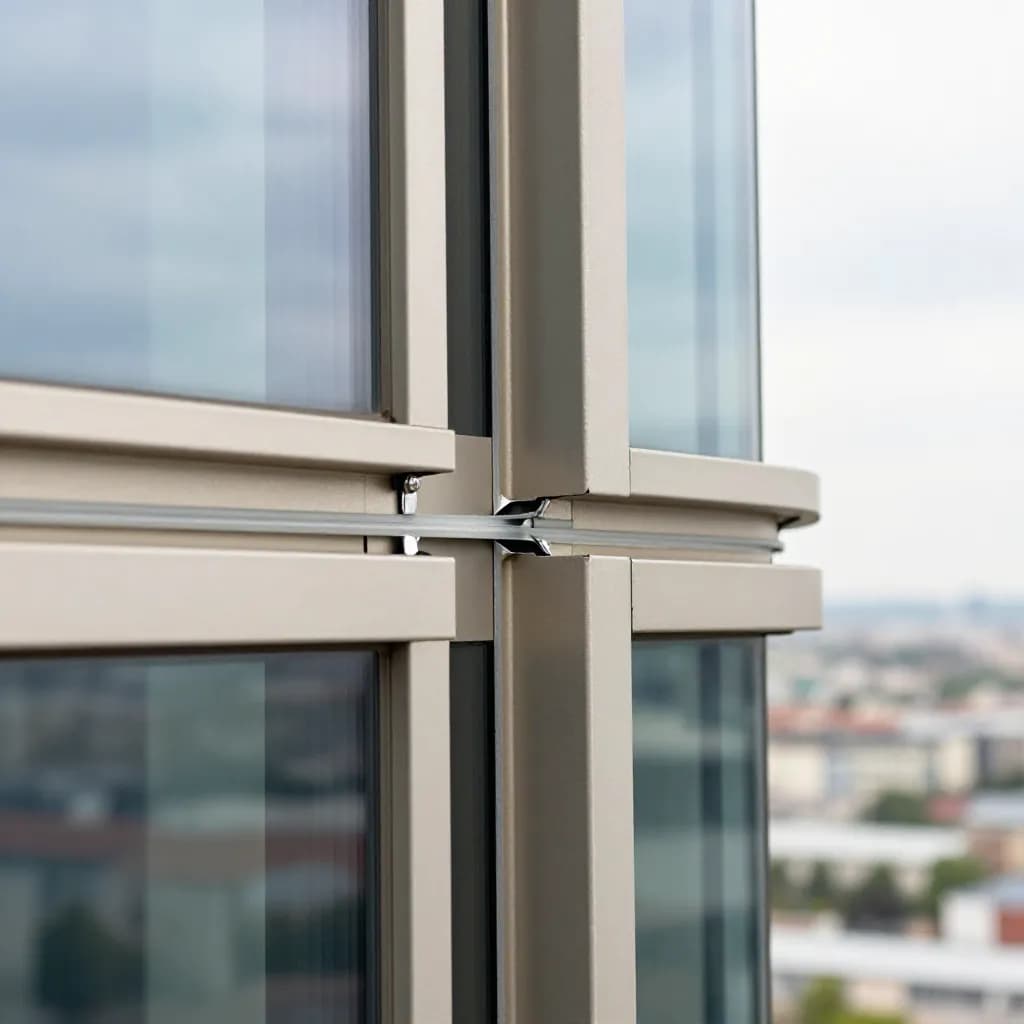
Powder coating has become the dominant finishing technology for high-rise aluminum facade systems because it delivers the performance, consistency, and lifecycle value that tower projects demand. The 60-120 micron film thickness provides a robust barrier against the intensified weather exposure at height, while the factory-controlled application process ensures the color and finish consistency needed across the thousands of identical facade panels that compose a tower's exterior.
Ready to Start Your Project?
From one-off customs to 15,000-part production runs — get precise pricing in 24 hours.
On This Page
High-Rise Facades: Coating Performance at Extreme Height
The economic case for powder coating on high-rise facades is particularly compelling. Facade maintenance on tall buildings requires building maintenance units (BMUs), rope access, or suspended scaffolding — all of which are expensive and operationally complex. A coating system that extends the interval between maintenance interventions from 8-12 years (liquid paint) to 20-25 years (powder coating) delivers enormous lifecycle cost savings on buildings where access costs dominate the maintenance budget.
Wind Load and Mechanical Performance at Height
Wind pressures on high-rise facades increase significantly with height, following a power law relationship defined by building codes such as EN 1991-1-4 and ASCE 7. At the upper levels of a tall tower, design wind pressures may be 2-3 times higher than at ground level, and the facade system must resist these pressures without structural failure, water ingress, or coating damage.
Powder coating's contribution to wind load resistance is primarily through its protection of the aluminum or steel substrate against corrosion that would reduce the structural capacity of facade components. The 60-120 micron film maintains a continuous corrosion barrier under the dynamic wind loading that high-rise facades experience, including the positive and negative pressure cycling that occurs during wind gusts. The coating's adhesion under dynamic loading — verified through impact testing to ISO 6272 and flexibility testing to ISO 1519 — ensures that the film maintains its integrity through the millions of pressure cycles that a high-rise facade experiences over its service life.
Wind-driven rain at height is more intense and more penetrating than at ground level, and the coating must resist the erosive effect of high-velocity water droplets carrying atmospheric particulates. Powder coating's hardness and abrasion resistance provide better protection against rain erosion than softer liquid paint films, maintaining surface quality and film thickness under the sustained rain exposure that upper-level facade panels experience.
For facades incorporating ventilated rainscreen systems — the dominant cladding approach for high-rise towers — the powder coating on the outer cladding panel must resist the pressure differentials across the panel that occur during wind events. The coating's adhesion to the substrate must be sufficient to prevent blistering or delamination under the suction forces that negative wind pressure generates on the outer face of rainscreen panels.
Thermal Movement and Facade Joint Performance
High-rise facades experience significant thermal movement as sun-exposed surfaces heat up during the day and cool at night. The temperature differential between a sun-exposed facade panel and a shaded panel on the same building can exceed 40°C, and individual panels may cycle through temperature ranges of 60-80°C between summer midday and winter night. This thermal movement must be accommodated by the facade system's joints and connections, and the coating must maintain its integrity through these movements.
Powder coating's thermoset polymer film accommodates thermal movement through its inherent elasticity. As aluminum cladding panels expand and contract with temperature changes — aluminum's coefficient of thermal expansion is approximately 23 × 10⁻⁶ per °C — the coating stretches and compresses in unison with the substrate. The elastic limit of powder coating is sufficient to accommodate the surface strains generated by the thermal movements typical of high-rise facade panels, maintaining film integrity without cracking or delaminating.
At facade joints — where panels meet and movement is concentrated — the coating must resist the localized stresses that occur as joint sealants and gaskets accommodate differential movement between adjacent panels. The coating at panel edges, where film thickness may be reduced due to the Faraday cage effect during electrostatic application, must still provide adequate protection and flexibility. Quality-controlled powder application with edge coverage verification ensures that panel edges receive adequate film build for long-term performance at these critical locations.
For unitized curtain wall systems — the standard facade technology for high-rise towers — the powder coating is applied to individual frame sections before unit assembly. The coating must withstand the assembly process, including the insertion of gaskets, application of sealants, and mechanical fixing of glass and spandrel panels, without damage. The hardness of the cured powder film resists the handling marks and minor abrasion that occur during unit assembly, delivering assembled units with pristine coating quality ready for installation.
Color Consistency Across Large Facade Areas
Color consistency is one of the most critical and challenging requirements for high-rise facade coatings. A tower facade may comprise thousands of individually coated panels and mullion sections, produced in multiple batches over weeks or months of manufacturing. Any variation in color between batches — or even within a single batch — is immediately visible on the completed facade, where panels are viewed side by side across vast, uninterrupted surface areas.
Powder coating's production quality control systems are designed to deliver the color consistency that high-rise facades demand. Spectrophotometric color measurement at every stage of production — from powder manufacture through application and curing — ensures that each coated component matches the approved color standard within tight Delta E tolerances. For critical high-rise projects, Delta E tolerances of 1.0 or less may be specified, requiring the highest level of production control.
The curing process is a critical variable in color consistency. Variations in oven temperature, air circulation, and cure time can cause measurable color shifts in the finished coating. Modern powder coating lines use automated oven control systems with multiple temperature zones and real-time monitoring to ensure consistent cure conditions across all components. For high-rise projects where color consistency is paramount, the coating applicator's oven calibration and monitoring procedures should be reviewed as part of the quality assurance process.
Color perception on high-rise facades is also influenced by viewing angle and distance. Panels at the top of a tower are viewed from a different angle and distance than panels at the base, and atmospheric haze can affect the perceived color of upper-level panels. While these perceptual effects cannot be eliminated through coating specification, the consistent starting point provided by tightly controlled powder coating production ensures that any perceived color variation is attributable to viewing conditions rather than actual coating differences.
Installation Logistics and Damage Prevention
The installation of facade panels on a high-rise tower is a complex logistical operation involving crane lifts, temporary storage at height, and precise positioning of components in exposed conditions. The coating on facade panels must survive this installation process without damage, as any coating defects identified after installation require costly remediation using building maintenance units or rope access.
Powder coating's hardness and scratch resistance provide significant advantages during the installation process. The thermoset film resists the handling marks, minor impacts, and abrasion that occur during crane attachment, lifting, positioning, and fixing of facade panels. This robustness reduces the incidence of installation damage compared to softer liquid paint films, which are more susceptible to scratching and marking during the same handling operations.
Protective films are typically applied over powder-coated facade panels during transport and installation, providing an additional barrier against damage. The adhesive used in protective films must be compatible with the powder coating — it must adhere sufficiently to remain in place during handling but must release cleanly without leaving residue or damaging the coating surface. Powder coating's smooth, chemically resistant surface facilitates clean protective film removal, even after extended application periods during construction.
Temporary storage of facade panels at height — on floor slabs or in staging areas — exposes the coating to construction site contamination including concrete dust, welding spatter, and chemical spills. Powder coating's chemical resistance and hardness provide better protection against these contaminants than liquid paint, but protective measures including covering and separation from construction activities remain essential. The coating specification should include guidance on storage, handling, and protection requirements to minimize the risk of installation damage.
Maintenance Access and Building Maintenance Units
Facade maintenance on high-rise towers is dominated by access costs. Building maintenance units (BMUs), rope access systems, and suspended scaffolding are expensive to deploy and operate, and each maintenance intervention requires careful planning, safety management, and coordination with building operations. The coating system's service life directly determines the frequency of these costly access operations, making coating durability the single most important factor in high-rise facade maintenance economics.
Powder coating's 20-25 year service life between recoating cycles delivers transformative lifecycle cost savings on high-rise buildings. For a 50-story tower, a single facade recoating project using BMU access may cost several million in direct costs alone, plus indirect costs from disruption to building operations, tenant inconvenience, and temporary loss of facade appearance during the work. Extending the recoating interval from 10-12 years (liquid paint) to 20-25 years (powder coating) eliminates one or more complete recoating cycles over the building's 50-60 year design life.
Routine facade cleaning — typically performed annually or semi-annually using BMU access — is simplified by powder coating's smooth, non-porous surface. Atmospheric soiling, including the carbon deposits from vehicle emissions and the biological growth that develops on building facades, is more easily removed from powder-coated surfaces than from rougher liquid paint surfaces. This ease of cleaning reduces the time and cost of each cleaning operation, and the coating's resistance to cleaning chemicals ensures that the cleaning process does not degrade the finish.
For localized coating repairs — addressing scratches, chips, or areas of damage identified during routine inspections — the options for high-rise facades are limited by access constraints. Touch-up using compatible liquid repair coatings can address minor damage, but the repair will not perfectly match the factory-applied powder coating. For more significant damage, individual facade panels can be removed and replaced with factory-recoated panels, maintaining the original coating quality. The modular design of modern curtain wall and rainscreen systems facilitates this panel replacement approach.
Fire Safety and Regulatory Compliance for Tall Buildings
Fire safety regulations for high-rise buildings have been significantly strengthened in recent years, with particular attention to the combustibility of facade materials. The tragic consequences of facade fires on tall buildings have driven regulatory changes worldwide, and the fire performance of every component in the facade system — including the surface coating — is now subject to rigorous scrutiny.
Powder-coated aluminum facade systems achieve A1 or A2 Euroclass fire ratings under EN 13501-1, classifying them as non-combustible. The thin organic powder film on a non-combustible aluminum substrate contributes negligible fuel load and does not produce toxic smoke or flaming droplets in a fire scenario. This performance meets the most stringent requirements of high-rise fire safety regulations, including the UK's Building Safety Act, the International Building Code's requirements for buildings above 12 meters, and equivalent regulations in other jurisdictions.
The fire testing of facade systems for high-rise buildings increasingly requires large-scale testing to standards such as BS 8414 or NFPA 285, which assess the fire performance of the complete facade assembly rather than individual materials. Powder-coated aluminum facade systems have demonstrated compliance with these large-scale test requirements, providing confidence that the system performs safely under realistic fire conditions.
For high-rise buildings, the fire safety advantage of powder coating over liquid paint extends beyond the coating's own fire performance. The zero VOC characteristic eliminates the fire and explosion risks associated with solvent-based liquid paints during the coating application process. For facade renovation projects on occupied high-rise buildings — where coating work may occur in proximity to occupied floors — the inherent safety of powder coating application is a significant practical advantage over solvent-based liquid painting.
Sustainability and Green Building Certification for Towers
High-rise towers are among the most resource-intensive building types, and their environmental performance is increasingly scrutinized by regulators, investors, and tenants. Green building certifications such as LEED, BREEAM, and WELL are now standard requirements for premium office towers and residential high-rises, and the specification of facade materials directly influences the credits achievable under these schemes.
Powder coating contributes to high-rise sustainability across multiple certification categories. Zero VOC emissions support credits for low-emitting materials and indoor environmental quality. The 95-98% material utilization efficiency supports waste reduction credits, with the scale of high-rise facade projects amplifying the absolute waste savings compared to liquid painting. The extended 20-25 year service life reduces the lifecycle environmental impact of facade maintenance, supporting the whole-life carbon assessments increasingly required for tall building projects.
The embodied carbon of the coating system is a growing consideration in high-rise sustainability assessment. Powder coating's lower material consumption per unit area (due to higher transfer efficiency), elimination of solvent production emissions, and reduced transport weight (dry powder versus liquid paint with solvent carrier) result in lower embodied carbon per square meter of coated facade. When multiplied across the vast facade areas of a high-rise tower, this per-unit advantage translates into meaningful reductions in the building's total embodied carbon.
For towers targeting the highest levels of green building certification — LEED Platinum, BREEAM Outstanding, or equivalent — the comprehensive sustainability credentials of powder coating support the ambitious environmental performance required. The combination of zero VOC, high material efficiency, long service life, and full end-of-life recyclability of the aluminum substrate positions powder-coated facade systems as the most sustainable finishing option for high-rise architecture.
Frequently Asked Questions
How does powder coating handle thermal movement on high-rise facades?
Powder coating's elastic thermoset film stretches and compresses with the aluminum substrate through temperature ranges of 60-80°C without cracking or delaminating. This flexibility, verified through ISO 1519 mandrel bend testing, accommodates the significant thermal movement that high-rise facade panels experience.
How is color consistency maintained across thousands of high-rise facade panels?
Spectrophotometric color measurement at every production stage ensures Delta E tolerances of 1.0 or less for critical projects. Automated oven control with real-time monitoring ensures consistent cure conditions, and batch-to-batch quality control maintains color accuracy across weeks of manufacturing.
What fire rating does powder-coated aluminum achieve on high-rise facades?
Powder-coated aluminum achieves A1 or A2 Euroclass fire ratings under EN 13501-1, classifying it as non-combustible. Complete facade assemblies have demonstrated compliance with large-scale fire tests including BS 8414 and NFPA 285, meeting the most stringent high-rise fire safety regulations.
How does powder coating reduce high-rise facade maintenance costs?
The 20-25 year service life eliminates one or more complete recoating cycles over a tower's 50-60 year design life. Each avoided recoating on a 50-story tower saves millions in BMU access costs, direct coating costs, and indirect costs from building disruption.
Can powder coating withstand high-rise wind loads?
Yes. Powder coating maintains adhesion under the dynamic wind loading at height, including positive and negative pressure cycling during gusts. The 60-120 micron film resists rain erosion from high-velocity wind-driven water, and impact testing to ISO 6272 verifies performance under mechanical stress.
Does powder coating survive the high-rise installation process?
Powder coating's hardness and scratch resistance reduce installation damage compared to liquid paint. The thermoset film resists handling marks during crane lifts and positioning, and the smooth surface allows clean removal of protective films after installation.
Ready to Start Your Project?
From one-off customs to 15,000-part production runs — get precise pricing in 24 hours.