High-rise buildings present a uniquely hostile environment for any surface coating. At elevation, facades are subjected to intensified UV radiation, higher wind speeds that drive abrasive particulates against surfaces, greater temperature differentials between sun-exposed and shaded faces, and increased moisture exposure from wind-driven rain. These conditions accelerate the degradation of coatings far more rapidly than at ground level, making the choice of finishing system a critical specification decision.
Architecture
Powder Coating for High-Rise Buildings: Performance at Height
Sundial Powder Coating·April 20, 2026·12 min
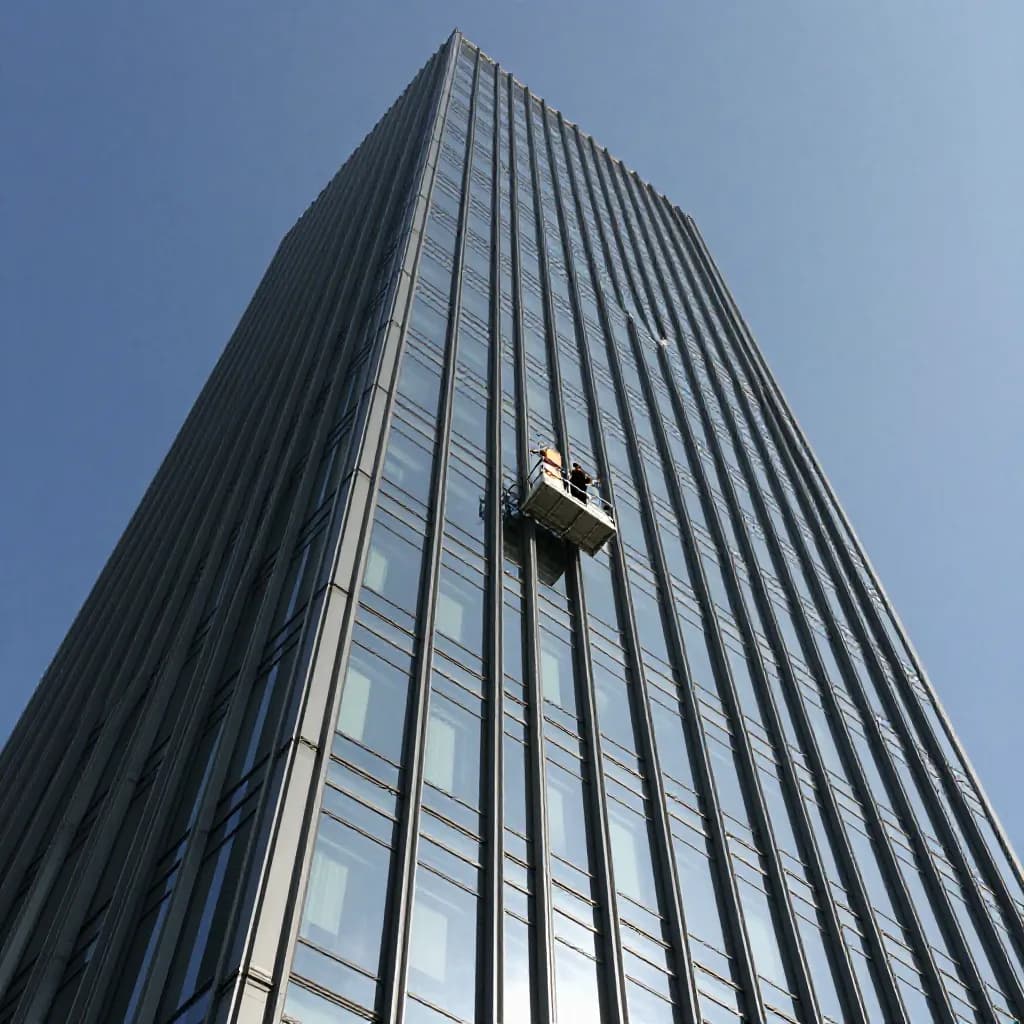
The consequences of coating failure on a high-rise are amplified by the sheer difficulty and cost of remediation. Accessing facades above 30 metres typically requires building maintenance units, rope access teams, or suspended scaffolding — all of which carry significant cost and logistical complexity. A coating that fails prematurely at height does not simply look poor; it triggers maintenance programmes that can cost millions and disrupt building operations for months.
Ready to Start Your Project?
From one-off customs to 15,000-part production runs — get precise pricing in 24 hours.
On This Page
Unique Challenges of Coating at Height
For these reasons, architects and facade engineers must specify coatings that are proven to withstand decades of extreme exposure without significant degradation. The coating must deliver consistent performance across every elevation of the building, from the sheltered ground-floor entrance to the fully exposed upper storeys where conditions are most severe.
Why Powder Coating Excels on High-Rise Facades
Powder coating is engineered to meet the extreme demands of high-rise applications. Applied at 60-120 microns in a single coat, powder delivers a film build two to three times thicker than liquid paint systems, which typically achieve only 25-50 microns. This substantial film thickness provides a more robust barrier against the intensified UV radiation, wind-driven rain, and thermal cycling that characterise conditions at height.
UV resistance is particularly critical for high-rise facades, where upper storeys receive unobstructed solar radiation for the majority of daylight hours. Modern super-durable polyester powder coatings are formulated to resist UV-induced chalking, fading, and gloss loss for 20-25 years, far exceeding the 8-12 year performance typical of liquid paint systems. This extended colour retention is verified through accelerated weathering tests and real-world South Florida exposure programmes required by standards such as AAMA 2605 and Qualicoat Class 3.
Fire safety adds another decisive advantage. Powder-coated aluminum achieves A1 or A2 Euroclass fire ratings, classifying the system as non-combustible. For high-rise buildings, where fire safety regulations are most stringent and the consequences of facade fire spread most severe, this non-combustible classification provides a straightforward path to regulatory compliance without the need for additional fire-retardant treatments.
Specifying Powder Coating for High-Rise Projects
Specification for high-rise powder coating should target the highest performance tiers available. In North America, AAMA 2605 is the benchmark specification, requiring coatings to pass 10 years of South Florida weathering exposure with strict limits on colour change, chalk, gloss loss, and film erosion. In Europe, Qualicoat Class 2 and Class 3 certifications provide equivalent assurance, with Class 3 representing the most demanding weathering requirements.
Pretreatment is equally important for high-rise performance. Chrome-free multi-stage pretreatment systems, including titanium or zirconium-based conversion coatings, provide the adhesion and corrosion resistance foundation that the powder topcoat relies upon. For coastal or heavily polluted urban environments, specifiers should consider Qualicoat Seaside certification, which adds salt spray and filiform corrosion resistance requirements beyond standard Class 2 or 3.
Specifiers should also require that powder coating is applied by certified applicators operating under Qualicoat, GSB, or AAMA-approved quality management systems. This ensures that every stage of the process — from pretreatment chemistry to cure temperature and film thickness measurement — is controlled and documented, providing traceability and accountability for the coating performance over the building's service life.
The Maintenance Problem with Liquid Paint on Tall Buildings
Liquid paint systems on high-rise buildings create a predictable and expensive maintenance burden. With typical film thicknesses of only 25-50 microns, liquid coatings provide a thinner protective barrier that degrades more rapidly under the intensified UV, wind, and moisture exposure at height. Chalking, fading, and micro-cracking typically become visible within 8-12 years, and in severe exposures, degradation can begin even sooner on upper storeys.
The cost of recoating a high-rise facade is substantial. Access alone — whether by building maintenance unit, rope access, or suspended scaffolding — can account for 40-60% of the total recoating budget. When this access cost is multiplied by the more frequent recoating cycles that liquid paint demands, the cumulative maintenance expenditure over a 50-year building life can reach several million pounds or dollars, dwarfing the initial coating cost difference.
Beyond direct cost, liquid paint recoating on occupied high-rise buildings creates disruption. Scaffolding obstructs views, access equipment generates noise, and solvent-based liquid paints introduce VOC emissions near occupied spaces and building air intakes. These operational impacts are avoided entirely when the original coating specification delivers the 20-25 year service life that powder coating provides.
Lifecycle Cost Analysis: Powder vs Liquid at Height
A lifecycle cost analysis over a typical 50-year building service life reveals the true economic advantage of powder coating on high-rise facades. While the initial cost of powder coating may be marginally higher than liquid paint, the extended service life of 20-25 years means that a powder-coated facade requires only one or two recoating interventions over 50 years, compared to three to five for liquid paint.
When access costs are factored in, the savings become dramatic. A single recoating programme on a 40-storey tower can cost between £2-5 million depending on building geometry and access complexity. Eliminating even one recoating cycle through superior initial coating performance represents a significant saving that far exceeds any premium paid for powder coating at the outset.
The environmental lifecycle also favours powder coating. With 95-98% material utilisation and zero VOC emissions, powder coating generates less waste and pollution per square metre of coated surface than liquid paint at 30-70% transfer efficiency. Over multiple recoating cycles, the cumulative environmental impact of liquid paint — including solvent emissions, overspray waste, and the carbon footprint of repeated access operations — substantially exceeds that of a single long-life powder coating system.
Color and Design for Iconic Towers
High-rise buildings are often landmark structures where colour and finish are integral to architectural identity. Powder coating offers the full RAL Classic and RAL Design colour ranges, along with custom colour matching to any reference sample. Metallic, matte, satin, textured, and high-gloss finishes are all achievable, allowing architects to create distinctive facade aesthetics that define a building's character on the skyline.
For towers with complex facade geometries — incorporating curtain wall mullions, spandrel panels, louvres, and feature cladding — powder coating provides consistent colour and finish across all component types. Because all elements can be coated using the same powder formulation and process, colour matching between different profile shapes and panel sizes is inherently more reliable than with liquid paint, where batch variation and application technique can introduce visible inconsistencies.
Dual-colour applications are also possible, with different colours on interior and exterior faces of window and curtain wall profiles. This allows architects to coordinate the external facade colour with interior design schemes, providing a cohesive aesthetic experience for building occupants while maintaining the bold exterior identity that defines the tower's presence in the urban landscape.
Frequently Asked Questions
Why is powder coating better than liquid paint for high-rise buildings?
Powder coating delivers 60-120 microns of film thickness compared to 25-50 microns for liquid paint, providing superior UV resistance and durability at height. It lasts 20-25 years versus 8-12 for liquid, dramatically reducing the costly facade access and recoating programmes that high-rise buildings require.
What specification should be used for powder coating on skyscrapers?
For the highest performance, specify AAMA 2605 in North America or Qualicoat Class 2 or Class 3 in Europe. These standards require extensive weathering exposure testing and ensure the coating will maintain colour and gloss retention for decades under severe UV and weather exposure at height.
How much does it cost to recoat a high-rise facade?
Recoating a high-rise facade typically costs £2-5 million per cycle, with access costs accounting for 40-60% of the total. Powder coating's 20-25 year service life means fewer recoating cycles over the building's life, potentially saving millions compared to liquid paint systems that need recoating every 8-12 years.
Is powder coating fire-safe for tall buildings?
Yes. Powder-coated aluminum achieves A1 or A2 Euroclass fire ratings, classifying it as non-combustible. This is critical for high-rise buildings where fire safety regulations are most stringent and the consequences of facade fire spread are most severe.
Ready to Start Your Project?
From one-off customs to 15,000-part production runs — get precise pricing in 24 hours.