Heritage building restoration presents a fundamental tension between two imperatives: preserving the historic character and material authenticity of the building, and providing effective modern protection that ensures its survival for future generations. The metalwork of historic buildings — cast iron columns, wrought iron railings, steel window frames, bronze entrance fittings, and decorative architectural ironwork — is particularly vulnerable to this tension, as inadequate protection leads to corrosion and material loss, while inappropriate modern finishes can compromise the building's historic character.
Architecture
Powder Coating for Heritage Building Restoration: Conservation Principles, Color Matching, and Listed Building Requirements
Sundial Powder Coating·April 22, 2026·12 min
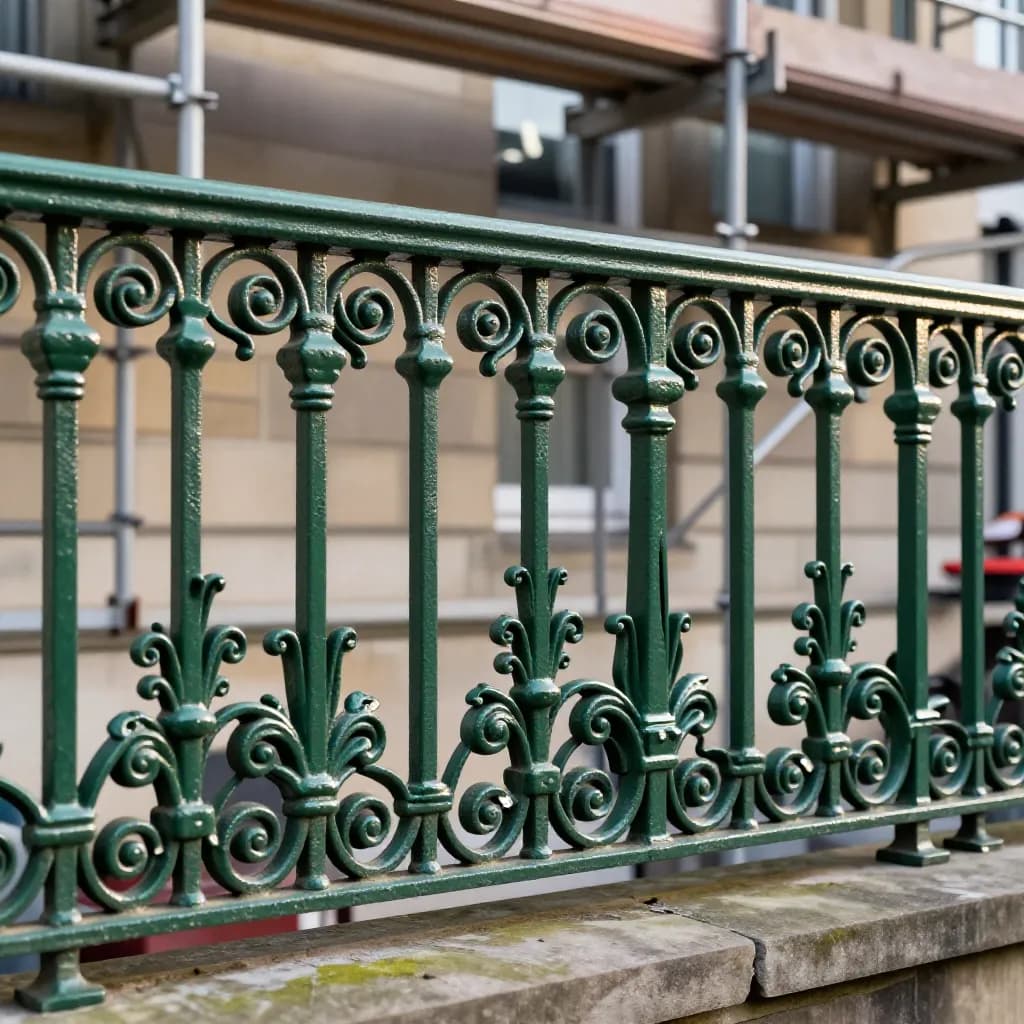
Powder coating has gained increasing acceptance among conservation professionals as a technology that resolves this tension. The ability to replicate historic paint colors and textures with precision, combined with the superior durability and corrosion protection of modern thermoset technology, allows heritage metalwork to be protected effectively while maintaining its authentic appearance. The reversibility of powder coating — it can be removed without damaging the underlying metal — satisfies a fundamental conservation principle and provides confidence that the treatment can be revised by future conservators.
Ready to Start Your Project?
From one-off customs to 15,000-part production runs — get precise pricing in 24 hours.
On This Page
Heritage Restoration: Balancing Preservation with Protection
This article examines the application of powder coating to heritage building restoration, covering the conservation principles that guide the approach, the techniques for historic color matching, the requirements for listed building consent, and the practical considerations for applying modern coating technology to historic metalwork. Whether restoring a Georgian townhouse, a Victorian industrial building, or an Art Deco commercial facade, the principles and techniques discussed here provide a framework for confident heritage coating specification.
Conservation Principles: Minimum Intervention and Reversibility
The conservation of historic buildings is guided by internationally recognized principles codified in documents such as the Venice Charter (1964), the Burra Charter (1979, revised 2013), and national guidance including Historic England's Conservation Principles. These principles establish the ethical framework within which all conservation work — including surface finishing — must be conducted.
Minimum intervention requires that conservation work should do only what is necessary to achieve the required outcome, avoiding unnecessary alteration of historic fabric. For metalwork coating, this means that the coating system should provide adequate protection without excessive film build that obscures surface detail, and that the pretreatment process should clean and prepare the surface without removing more material than necessary. Powder coating's ability to achieve effective protection at controlled film thicknesses — as low as 40-60 microns for interior applications — supports the minimum intervention principle.
Reversibility requires that conservation treatments should be removable without damaging the historic material, allowing future conservators to access the original fabric for examination, treatment, or alternative approaches. Powder coating satisfies this requirement: the cured thermoset film can be removed through controlled thermal stripping at temperatures (typically 350-400°C for short durations) that do not damage iron, steel, or bronze substrates. Chemical stripping using appropriate formulations provides an alternative removal method where thermal stripping is impractical.
Compatibility requires that conservation materials should not cause harm to the historic fabric through chemical interaction, physical stress, or other mechanisms. Powder coating's chemical inertness after curing ensures that the coating does not react with or corrode the underlying metal. The pretreatment process must be selected for compatibility with the specific metal — acid-based pretreatments that are appropriate for steel may be too aggressive for historic cast iron with its characteristic surface texture, requiring gentler preparation methods.
Historic Color Matching: Science and Sensitivity
Matching the colors of historic paint schemes is one of the most technically demanding aspects of heritage coating specification. Original paint colors may have been altered by decades of weathering, pollution, and previous overpainting, and the true original color must be determined through careful investigation before it can be reproduced in powder coating.
Paint archaeology — the systematic investigation of historic paint layers — is the starting point for color matching. Cross-sections of paint samples taken from representative locations on the metalwork are examined under magnification to identify the original paint layer and its color. This investigation may reveal multiple historic color schemes applied over the building's life, and the selection of which scheme to reproduce is a conservation decision that should involve the building's conservation architect and, for listed buildings, the heritage authority.
Once the target color is identified, spectrophotometric measurement of the historic paint sample provides the objective color data needed for powder coating formulation. The spectrophotometer measures the sample's reflectance across the visible spectrum, generating a color specification that can be reproduced in powder coating with high precision. However, the measured color of an aged paint sample may differ from the original color due to fading, yellowing, and surface degradation. Conservation judgment is required to determine whether to match the current aged appearance or to reproduce the estimated original color — a decision that depends on the conservation philosophy adopted for the project.
Powder coating manufacturers with heritage experience can produce custom formulations that match historic colors within Delta E tolerances of 1.0-2.0, which is generally indistinguishable to the human eye. Sample panels should be produced for approval by the conservation architect and heritage authority before production coating begins, and retained samples should be archived for future reference. The approved color specification, including spectrophotometric data and physical samples, should be documented in the building's conservation management plan.
Listed Building Requirements and Heritage Authority Approval
Listed buildings — those designated for their special architectural or historic interest — are subject to legal protections that require consent for works that would affect their character. In England and Wales, Listed Building Consent is required under the Planning (Listed Buildings and Conservation Areas) Act 1990. Scotland, Northern Ireland, and other jurisdictions have equivalent legislation. The application of a new coating system to listed building metalwork typically requires consent, as it affects the appearance and potentially the material character of the building.
The consent application should demonstrate that the proposed coating system is appropriate for the building's significance, that it will not harm the historic fabric, and that it represents the best available approach to the metalwork's long-term preservation. For powder coating applications, the submission should address the conservation principles of minimum intervention, reversibility, and compatibility, explaining how the proposed system satisfies each principle.
Heritage authorities — including Historic England, Cadw, Historic Environment Scotland, and local conservation officers — will assess the proposal against the building's statement of significance and the relevant conservation policies. Key considerations include the appropriateness of the proposed color scheme (does it reflect a documented historic scheme?), the impact of the pretreatment process on historic surface features, and the reversibility of the coating system.
For buildings of the highest significance — Grade I or Grade II* in England, Category A in Scotland — the heritage authority may require additional evidence including paint analysis reports, conservation method statements, and details of the applicator's experience with heritage metalwork. Trial applications on discrete areas of the metalwork may be requested to demonstrate the visual and physical outcome before full-scale application is approved.
The consent process should be initiated early in the project timeline, as heritage authority review can take 8-12 weeks and may require revisions to the proposed approach. Early engagement with the conservation officer — ideally through a pre-application discussion — can identify potential concerns and streamline the formal consent process.
Period Metalwork: Cast Iron, Wrought Iron, and Early Steel
Historic buildings contain metalwork produced by manufacturing processes that differ fundamentally from modern production methods, and these differences influence both the character of the metalwork and the approach to its coating. Understanding the specific properties of period metalwork is essential for appropriate coating specification.
Cast iron — the dominant structural and decorative metal of the Georgian and Victorian periods — has a characteristic surface texture resulting from the casting process. Sand casting produces a granular surface texture, while more refined casting methods produce smoother surfaces with sharper detail. The coating specification must preserve these surface characteristics, which are integral to the metalwork's historic character. Powder coating at controlled film thicknesses (60-80 microns for exterior, 40-60 microns for interior) provides effective protection while maintaining the visibility of casting texture and detail.
Wrought iron — used extensively for railings, gates, and decorative work from the medieval period through the nineteenth century — has a fibrous internal structure and a characteristic surface texture that records the blacksmith's working process. Hammer marks, fire scale, and forge welding lines are evidence of the craft process and should be preserved. Powder coating on wrought iron must be applied at a thickness that protects without obscuring these surface features, requiring skilled application technique and careful quality control.
Early mild steel — which replaced wrought iron from the 1880s onward — is more susceptible to corrosion than either cast iron or wrought iron due to its more uniform microstructure. Steel window frames, structural members, and architectural metalwork from the late nineteenth and early twentieth centuries require particularly effective corrosion protection. Powder coating's 60-120 micron film provides substantially better protection than the thin oil paint and red lead primer systems originally used on early steel, extending the maintenance interval and reducing the cumulative material loss from repeated stripping and recoating cycles.
Pretreatment of Historic Metalwork: Gentle but Effective
The pretreatment of historic metalwork before powder coating requires a more nuanced approach than the standard industrial pretreatment processes used for new metal. The objective is to remove corrosion products and previous coatings sufficiently to ensure powder adhesion, while preserving the historic surface character and minimizing material loss from the original metal.
Abrasive blast cleaning — the standard pretreatment for new structural steel — must be used with caution on historic metalwork. Aggressive blasting with hard abrasives can remove historic surface features, round sharp edges on decorative detail, and cause surface erosion that reduces the section thickness of slender elements. For heritage applications, gentler blasting media — including crushed walnut shell, sodium bicarbonate, and fine glass bead — provide effective cleaning with minimal surface damage. The blast pressure and nozzle distance must be carefully controlled, and trial cleaning on discrete areas should be conducted to establish the appropriate parameters.
Chemical stripping provides an alternative to abrasive blasting for the removal of previous coatings. Alkaline paint strippers are effective on most historic paint systems and do not damage the underlying metal. For cast iron with its porous surface structure, chemical stripping may be preferred over blasting to avoid driving abrasive particles into the casting surface. After chemical stripping, thorough rinsing and neutralization are essential to prevent chemical residues from compromising powder adhesion.
Thermal stripping — heating the metalwork to decompose and release the existing coating — is effective for removing multiple layers of historic paint. The temperature must be controlled to avoid damaging the metal: cast iron can tolerate temperatures up to 400°C without structural concern, but wrought iron and early steel should not exceed 350°C to avoid metallurgical changes. Thermal stripping has the advantage of revealing the original metal surface without the mechanical impact of blasting, and the heat treatment can also stabilize the metal surface against flash rusting during the interval before powder application.
Decorative Finishes: Replicating Historic Appearance
Historic metalwork was finished in a wide variety of decorative treatments that powder coating can replicate with varying degrees of fidelity. Understanding the original finish and selecting the appropriate powder coating approach is essential for achieving an authentic restoration outcome.
Traditional oil paint finishes — the most common historic coating for exterior ironwork — produced a relatively thick, glossy film in colors including black, dark green, dark blue, and various earth tones. Powder coating replicates these finishes effectively, with the ability to match both the color and the gloss level of the original paint. For buildings where the original paint scheme has been documented through paint analysis, powder coating can reproduce the specific color with spectrophotometric precision.
Bronze and copper effects were achieved historically through chemical patination of the actual metal or through the application of bronze powder in a varnish medium. Powder coating replicates these effects using metallic formulations containing bronze, copper, or brass-toned particles. The resulting finish provides the visual warmth and depth of traditional bronze finishes with the weather resistance and durability of modern thermoset technology. For interior applications, these metallic powder finishes maintain their appearance indefinitely, eliminating the periodic re-patination that traditional bronze finishes require.
Gilding — the application of gold leaf to decorative metalwork — was used on the most prestigious buildings for finials, crests, and ornamental highlights. While powder coating cannot replicate the unique optical properties of genuine gold leaf, gold-toned metallic powder coatings provide a durable alternative for elements where the cost and maintenance demands of traditional gilding are impractical. For the most significant heritage elements, traditional gilding may be retained for the primary decorative surfaces while powder coating protects the surrounding structural metalwork.
Japanning — the application of black lacquer to create a deep, lustrous finish — was used on high-quality ironwork from the eighteenth century onward. High-gloss black powder coating provides an excellent replication of the japanned finish, with the added benefit of superior weather resistance and durability compared to the original lacquer.
Documentation, Warranties, and Long-Term Maintenance Planning
Heritage coating work requires comprehensive documentation that serves both the immediate project and the long-term conservation of the building. The documentation package should provide future conservators with all the information needed to understand, maintain, and eventually renew the coating system.
The coating specification record should include the powder manufacturer and product reference, the color specification with spectrophotometric data, the pretreatment process and materials used, the target and achieved film thickness, and the curing parameters. Physical samples of the applied coating — both on test panels and as retained powder samples — should be archived with the building's conservation records for future color matching reference.
Photographic documentation of the metalwork before, during, and after coating provides a visual record of the work and the condition of the underlying metal. For significant heritage metalwork, this documentation may include detailed photography of surface features, corrosion patterns, and previous coating layers revealed during stripping — information that contributes to the understanding of the metalwork's history and condition.
Warranty terms for heritage powder coating should reflect the specific conditions of the application. Standard architectural powder coating warranties of 20-25 years may need to be adjusted for heritage applications where the substrate condition, surface preparation constraints, and film thickness limitations differ from standard architectural work. The warranty should clearly define the maintenance requirements — particularly cleaning frequency and method — that the building owner must follow to maintain warranty validity.
Long-term maintenance planning should be integrated into the building's conservation management plan. The plan should define the inspection frequency, cleaning regime, and repair procedures for the powder-coated metalwork, along with the trigger criteria for full recoating. By establishing a planned maintenance approach from the outset, the building owner can maximize the coating's service life and ensure that the heritage metalwork remains protected and visually authentic for decades to come.
Frequently Asked Questions
Is powder coating reversible for heritage building restoration?
Yes. Powder coating can be removed through controlled thermal stripping at 350-400°C or chemical stripping without damaging iron, steel, or bronze substrates. This reversibility satisfies the conservation principle that treatments should be removable by future conservators without harming the historic fabric.
How accurately can powder coating match historic paint colors?
Spectrophotometric measurement of historic paint samples enables powder coating reproduction within Delta E tolerances of 1.0-2.0, which is indistinguishable to the human eye. Sample panels are produced for heritage authority approval before production, and retained samples are archived for future reference.
Does powder coating require Listed Building Consent?
Typically yes. Applying a new coating system to listed building metalwork affects the building's appearance and may require Listed Building Consent. Early engagement with the conservation officer through pre-application discussion is recommended, as the formal review process can take 8-12 weeks.
Can powder coating preserve the surface texture of cast iron?
Yes. Controlled film thickness of 60-80 microns for exterior and 40-60 microns for interior applications provides effective protection while maintaining the visibility of casting texture, sand marks, and decorative detail that are integral to the metalwork's historic character.
What pretreatment methods are appropriate for historic metalwork?
Gentle abrasive media including crushed walnut shell, sodium bicarbonate, and fine glass bead provide effective cleaning with minimal surface damage. Chemical stripping and controlled thermal stripping are alternatives that preserve historic surface features. Trial cleaning on discrete areas establishes appropriate parameters.
Can powder coating replicate bronze and gilded finishes on heritage buildings?
Yes. Metallic powder coatings containing bronze, copper, and brass-toned particles replicate traditional patinated finishes. Gold-toned metallics provide a durable alternative to gold leaf for elements where traditional gilding is impractical. High-gloss black powder replicates historic japanned finishes.
Ready to Start Your Project?
From one-off customs to 15,000-part production runs — get precise pricing in 24 hours.