Healthcare buildings operate under some of the most demanding environmental conditions in the construction industry. Hospitals, clinics, and medical research facilities must maintain strict hygiene standards while enduring constant cleaning with aggressive chemical agents, high foot traffic from patients and staff, and exposure to biological contaminants. The surface finishes specified for these buildings are not merely aesthetic choices — they are critical components of infection prevention and control strategies.
Architecture
Powder Coating for Healthcare and Hospital Buildings: Infection Control, Antimicrobial Finishes, and Cleanroom Compatibility
Sundial Powder Coating·April 22, 2026·12 min
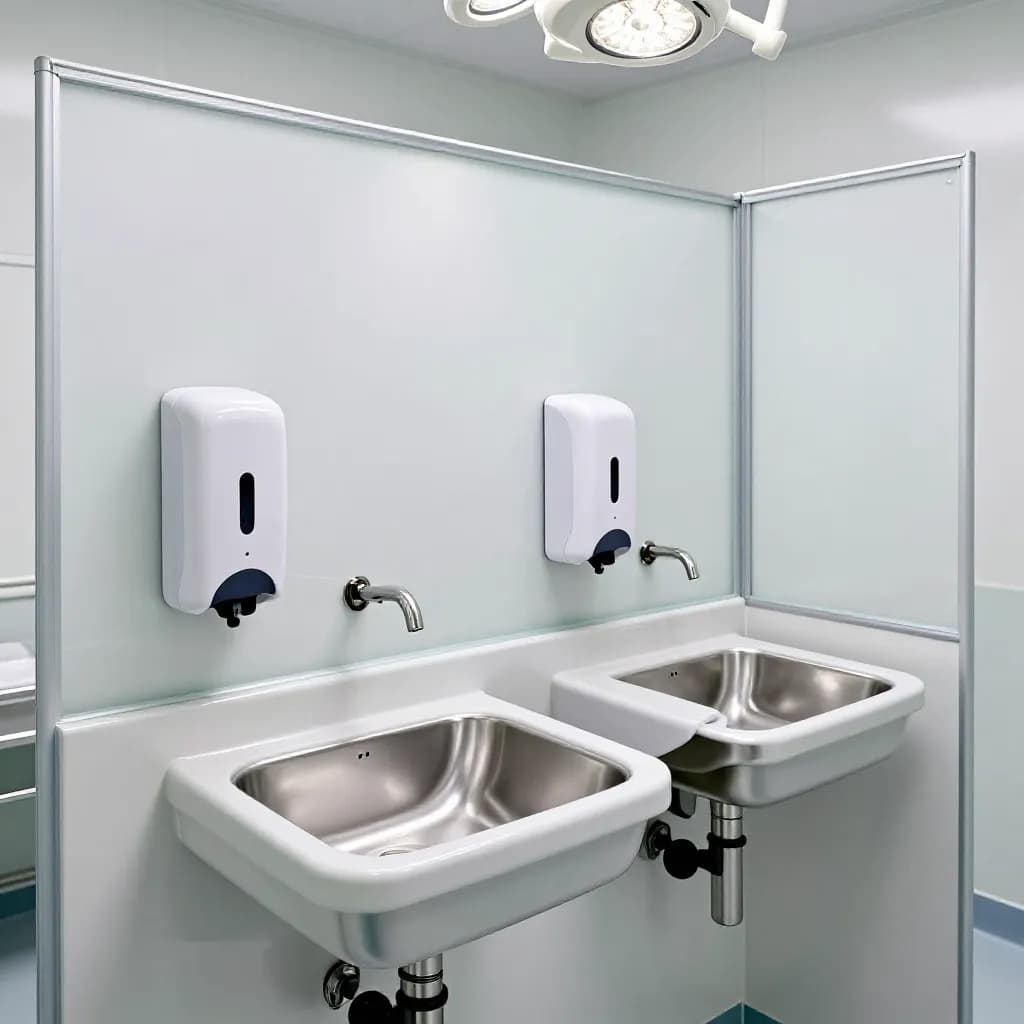
Powder coating has emerged as the preferred finishing technology for metalwork in healthcare environments. Applied at 60-120 microns in a single coat — compared to just 25-50 microns for liquid paint — powder coating creates a denser, more impervious barrier that resists bacterial colonization, chemical attack from disinfectants, and mechanical wear from frequent cleaning. The absence of volatile organic compounds during application and curing also aligns with the stringent indoor air quality requirements of medical facilities.
Ready to Start Your Project?
From one-off customs to 15,000-part production runs — get precise pricing in 24 hours.
On This Page
Why Healthcare Architecture Demands Superior Surface Finishes
From external cladding and curtain wall systems to internal door frames, handrails, ceiling grids, and medical equipment housings, powder-coated surfaces are now standard across modern hospital construction. This article examines how powder coating technology meets the unique challenges of healthcare architecture, covering antimicrobial formulations, cleanroom compatibility, sterilization resistance, and the lifecycle advantages that make it the rational specification choice for medical buildings.
Antimicrobial Powder Coatings: Technology and Performance
Antimicrobial powder coatings incorporate biocidal agents — typically silver ion technology or copper-based additives — directly into the coating matrix. Unlike topical antimicrobial treatments that wear away with cleaning, these integrated additives remain active throughout the coating's service life, providing continuous surface protection against bacteria, fungi, and mold. Independent testing to ISO 22196 and JIS Z 2801 has demonstrated bacterial reduction rates exceeding 99.9% within 24 hours on properly formulated antimicrobial powder coatings.
The mechanism of action varies by additive type. Silver ion antimicrobials disrupt bacterial cell membranes and interfere with enzymatic processes, while copper-based systems generate reactive oxygen species that damage microbial DNA. Both approaches are effective against common healthcare-associated pathogens including MRSA, E. coli, Pseudomonas aeruginosa, and Klebsiella pneumoniae.
It is important to understand that antimicrobial coatings are a supplementary measure, not a replacement for standard cleaning and disinfection protocols. They provide an additional layer of protection between cleaning cycles, reducing the bioburden on high-touch surfaces such as door handles, push plates, handrails, bed frames, and equipment trolleys. When combined with the inherent smoothness and chemical resistance of powder-coated surfaces, antimicrobial formulations create an environment that is both easier to clean and more resistant to microbial colonization between cleaning events. Healthcare facility managers report measurable reductions in surface contamination when antimicrobial powder coatings are deployed on frequently touched metalwork throughout clinical areas.
Cleanroom Compatibility and Controlled Environment Performance
Cleanroom environments in hospitals — including operating theatres, sterile processing departments, and pharmaceutical compounding areas — impose strict requirements on all surface materials. Finishes must not shed particles, must resist outgassing of volatile compounds, and must withstand repeated decontamination with hydrogen peroxide vapor, peracetic acid, and other aggressive sterilants without degradation.
Powder coating meets these requirements comprehensively. The thermoset curing process creates a fully cross-linked polymer film that is chemically inert and dimensionally stable. Unlike liquid paints, which can retain residual solvents that outgas over time, cured powder coatings produce no measurable volatile emissions, making them compatible with ISO 14644 cleanroom classifications from ISO Class 8 down to ISO Class 5. The dense, non-porous surface resists particle generation even under mechanical stress, maintaining cleanroom integrity over extended service periods.
For critical applications, powder coatings can be formulated to meet specific outgassing requirements defined by facility operators or equipment manufacturers. Testing to ASTM E595 or equivalent standards confirms that total mass loss and collected volatile condensable materials remain well within acceptable limits for controlled environments.
The smooth, continuous film formed by powder coating also eliminates the micro-crevices and surface irregularities that can harbor microorganisms in textured or multi-coat liquid paint systems. This surface quality is particularly valuable in sterile processing areas where instruments and equipment must be decontaminated to defined sterility assurance levels. Powder-coated shelving, storage systems, and equipment housings in these areas maintain their surface integrity through thousands of decontamination cycles, avoiding the flaking, peeling, and chalking that compromise hygiene in liquid-painted alternatives.
Chemical Resistance to Hospital-Grade Disinfectants
Healthcare facilities use a broad spectrum of chemical disinfectants, many of which are highly aggressive to conventional paint finishes. Chlorine-based solutions, quaternary ammonium compounds, alcohol-based sanitizers, hydrogen peroxide, and peracetic acid are all routinely applied to surfaces in clinical areas, often multiple times per day. A surface finish that degrades under this chemical assault quickly becomes a liability — cracking, discoloring, or delaminating paint creates harboring sites for pathogens and necessitates costly remediation.
Powder coatings formulated for healthcare applications are specifically engineered to resist this chemical environment. Polyester and polyester-epoxy hybrid formulations provide excellent resistance to the full range of hospital-grade disinfectants, maintaining gloss, color, and adhesion through accelerated chemical exposure testing equivalent to years of clinical use. The 60-120 micron film thickness provides a substantial barrier that resists penetration by even the most aggressive cleaning agents.
Standardized testing to EN ISO 2812-1 (immersion testing) and EN ISO 2812-4 (spot testing) confirms the chemical resistance of healthcare-grade powder coatings against specific disinfectant formulations. Specifiers should request chemical resistance data from powder manufacturers that covers the exact disinfectant products used in their facility's infection control protocols.
The practical benefit is significant: powder-coated surfaces in hospitals maintain their appearance and protective function for 20-25 years despite daily chemical exposure, while liquid-painted surfaces in the same environment typically show visible degradation within 3-5 years. This durability translates directly into reduced maintenance costs, fewer disruptions to clinical operations for repainting, and sustained hygiene performance throughout the building's service life.
Fire Safety and Regulatory Compliance in Medical Buildings
Fire safety in healthcare buildings is subject to the most stringent regulatory requirements in the construction industry. Patients may be immobile, sedated, or dependent on life-support equipment, making evacuation extremely difficult. Every material specified in a hospital must therefore meet demanding fire performance criteria, and surface finishes are no exception.
Powder-coated aluminum achieves A1 or A2 Euroclass fire ratings under EN 13501-1, classifying it as non-combustible. The thin organic powder film on a non-combustible aluminum substrate contributes negligible fuel load and does not produce toxic smoke or flaming droplets in a fire scenario. This performance meets or exceeds the requirements of healthcare-specific fire regulations including HTM 05-02 (Firecode) in the UK, NFPA 101 Life Safety Code in the United States, and equivalent standards in other jurisdictions.
Powder-coated steel similarly achieves excellent fire ratings, with the coating contributing minimal additional fire load to the inherently non-combustible steel substrate. For structural steel elements, powder coating can be combined with intumescent fire protection systems, with the decorative powder topcoat applied over the intumescent primer to provide both fire resistance and aesthetic finish.
The zero-VOC characteristic of powder coatings also eliminates fire and explosion risks during the coating application process itself — a significant safety advantage over solvent-based liquid paints, which require fire-rated storage, ATEX-compliant spray facilities, and solvent vapor extraction systems. For hospital construction and renovation projects where coating work may occur in proximity to occupied clinical areas, the inherent safety of powder coating application is a compelling practical advantage.
Interior Applications: Door Frames, Handrails, and Ceiling Systems
The interior metalwork of a hospital represents a vast surface area that must combine hygiene performance with durability and aesthetic quality. Door frames, handrails, grab rails, kick plates, corner guards, ceiling grid systems, light fittings, and signage all contribute to the overall infection control environment and must withstand the demanding operational conditions of a healthcare facility.
Powder-coated door frames and handrails are among the highest-impact applications in hospital interiors. These elements are touched thousands of times daily, cleaned multiple times per shift, and subjected to impact from trolleys, beds, and wheelchairs. The 60-120 micron powder coating film provides substantially better impact and abrasion resistance than the 25-50 micron films achievable with liquid paint, maintaining both appearance and hygiene performance under this punishing service regime.
Ceiling grid systems in clinical areas benefit particularly from powder coating's combination of smoothness, chemical resistance, and dimensional stability. Powder-coated ceiling grids do not absorb moisture, resist bacterial colonization, and can be cleaned with standard hospital disinfectants without degradation. In operating theatres and other critical areas, powder-coated ceiling systems contribute to the sealed, cleanable environment required by infection control standards.
Color coding is another important function of interior powder coating in hospitals. Wayfinding systems, department identification, and safety markings all rely on consistent, durable color that does not fade or discolor over time. Powder coating's excellent color retention — verified through accelerated weathering testing to ISO 11341 — ensures that color-coded elements remain clearly distinguishable throughout their service life, supporting both patient navigation and emergency response protocols. The full RAL color range and custom color matching capability allow precise alignment with hospital branding and wayfinding design standards.
Exterior Envelope: Cladding, Curtain Walls, and Entrance Systems
The external envelope of a hospital building must balance aesthetic quality with exceptional durability, as healthcare facilities are typically designed for service lives of 40-60 years with minimal facade intervention. Powder-coated aluminum cladding, curtain wall mullions, entrance canopies, and louvre systems provide the long-term performance required, with coating service lives of 20-25 years that align with planned maintenance cycles.
For hospital facades, super-durable polyester powder coatings certified to Qualicoat Class 2 or AAMA 2605 provide the highest level of weathering resistance. These formulations maintain color and gloss retention within specified limits after 10 years of South Florida exposure testing, ensuring that the building's appearance remains consistent and professional throughout its service life. This is particularly important for healthcare institutions where building appearance directly influences public confidence and institutional reputation.
Entrance systems — including automatic sliding doors, revolving doors, and canopy structures — are among the most heavily used elements of any hospital building. Powder coating provides the impact resistance, scratch resistance, and ease of cleaning required for these high-traffic components. The ability to apply antimicrobial powder coatings to entrance hardware extends infection control measures to the building's threshold, reducing pathogen transfer from external to internal environments.
The environmental credentials of powder coating also support the sustainability objectives increasingly required of healthcare construction. Zero VOC emissions, 95-98% material utilization efficiency, and the full recyclability of the aluminum substrate contribute to LEED, BREEAM, and other green building certification credits. For publicly funded healthcare projects, these environmental benefits often form part of the procurement evaluation criteria, giving powder-coated systems a competitive advantage over liquid-painted alternatives.
Lifecycle Value and Total Cost of Ownership in Healthcare
Healthcare buildings represent enormous capital investments, and lifecycle cost analysis is a standard part of the specification process. When the total cost of ownership is calculated for surface finishes — including initial application, maintenance cleaning, periodic recoating, and end-of-life disposal — powder coating consistently delivers the lowest cost per year of service among architectural finishing options.
The initial cost of powder coating is broadly comparable to high-quality liquid paint systems, but the lifecycle economics diverge dramatically. A powder-coated surface requiring recoating at 20-25 years versus a liquid-painted surface requiring recoating at 8-12 years means that over a 60-year building life, the liquid system will require 4-6 recoating cycles compared to 2-3 for powder coating. Each recoating event in a hospital carries not only the direct cost of materials and labor but also the indirect costs of clinical area closures, patient relocation, infection control measures during construction work, and operational disruption.
The 95-98% material efficiency of powder coating application also reduces waste disposal costs and environmental liability compared to liquid painting, where 30-70% of material may be lost as overspray requiring hazardous waste disposal. For healthcare organizations with sustainability commitments and environmental management systems certified to ISO 14001, this waste reduction is both a financial and reputational benefit.
Maintenance costs are similarly favorable. The hard, smooth, chemically resistant surface of powder coating requires less frequent cleaning to maintain hygiene standards, and the coating's resistance to disinfectants means that cleaning protocols can be followed without concern for finish degradation. Facility managers consistently report lower maintenance expenditure on powder-coated metalwork compared to liquid-painted equivalents, with the difference becoming more pronounced as the building ages and liquid paint systems begin to deteriorate.
Frequently Asked Questions
Are antimicrobial powder coatings effective against hospital superbugs?
Yes. Antimicrobial powder coatings incorporating silver ion or copper-based technology have demonstrated greater than 99.9% reduction in bacteria including MRSA, E. coli, and Pseudomonas aeruginosa when tested to ISO 22196. They provide continuous protection between cleaning cycles but are designed to supplement, not replace, standard disinfection protocols.
Can powder-coated surfaces withstand hospital-grade disinfectants?
Powder coatings formulated for healthcare applications resist the full range of hospital disinfectants including chlorine solutions, quaternary ammonium compounds, alcohol sanitizers, and hydrogen peroxide. The 60-120 micron film thickness provides a robust barrier, maintaining appearance and performance for 20-25 years despite daily chemical exposure.
Is powder coating suitable for hospital cleanroom environments?
Yes. Cured powder coatings produce no measurable volatile emissions and do not shed particles, making them compatible with ISO 14644 cleanroom classifications. The fully cross-linked thermoset film resists outgassing and withstands repeated decontamination with hydrogen peroxide vapor and peracetic acid without degradation.
What fire rating does powder-coated aluminum achieve in hospitals?
Powder-coated aluminum achieves A1 or A2 Euroclass fire ratings under EN 13501-1, classifying it as non-combustible. This meets the stringent fire safety requirements of healthcare buildings including HTM 05-02, NFPA 101, and equivalent international standards.
How does powder coating reduce lifecycle costs in healthcare buildings?
Powder coating lasts 20-25 years versus 8-12 years for liquid paint, reducing recoating frequency over a hospital's 60-year life from 4-6 cycles to 2-3. Each avoided recoating eliminates direct material costs plus indirect costs of clinical area closures, patient relocation, and infection control measures during construction work.
Ready to Start Your Project?
From one-off customs to 15,000-part production runs — get precise pricing in 24 hours.