Healthcare buildings impose a uniquely demanding set of requirements on every surface finish. Hygiene is paramount — surfaces must resist bacterial colonisation, withstand aggressive cleaning chemicals and disinfectants, and maintain their integrity through thousands of cleaning cycles over the building's service life. In an environment where healthcare-associated infections remain a significant patient safety concern, the coating on every wall panel, door frame, window profile, and furniture component plays a role in infection control.
Architecture
Powder Coating for Healthcare Buildings: Hygiene, Safety, and Design
Sundial Powder Coating·April 20, 2026·12 min
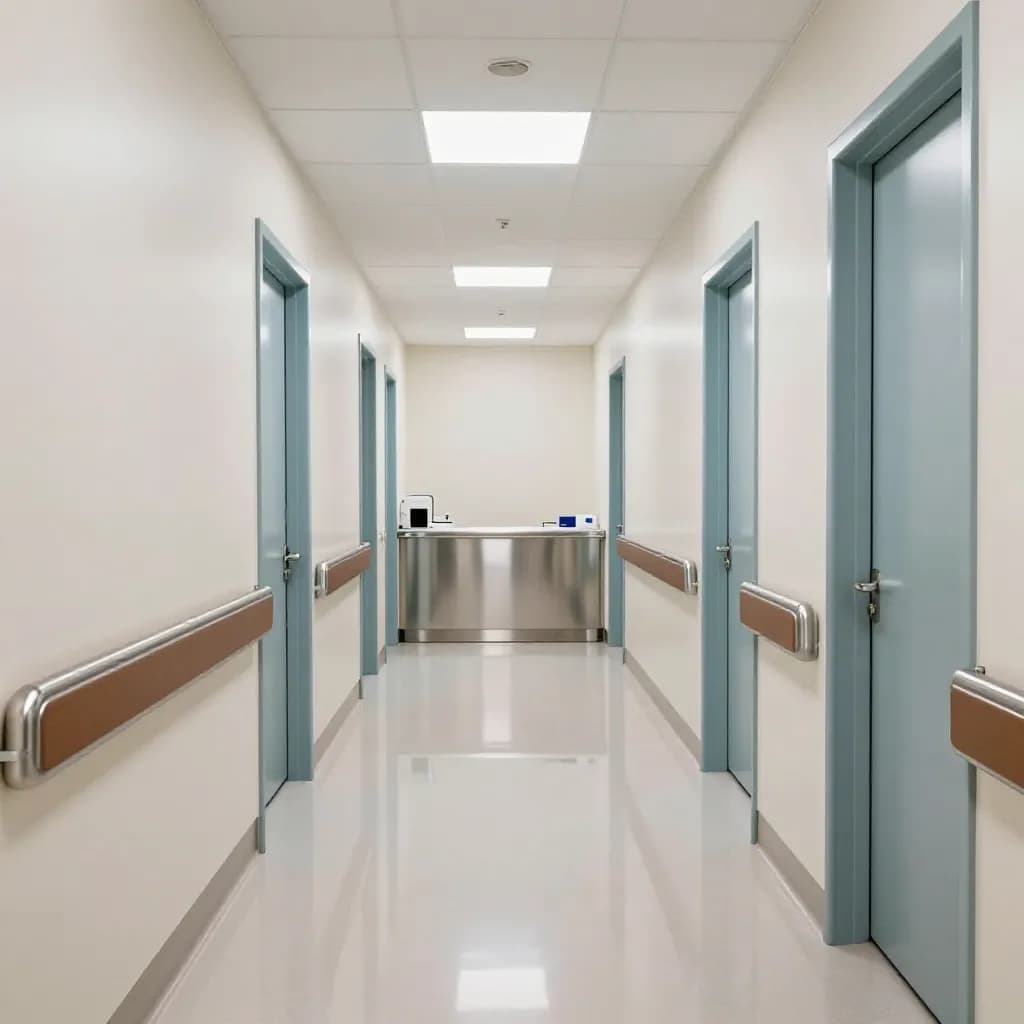
Cleanability goes beyond simple wipe-down capability. Healthcare surfaces are subjected to chlorine-based disinfectants, hydrogen peroxide solutions, quaternary ammonium compounds, and alcohol-based sanitisers — often multiple times per day. A coating that degrades under this chemical assault creates micro-cracks and surface roughness that harbour bacteria, undermining the very hygiene objective the cleaning regime is designed to achieve.
Ready to Start Your Project?
From one-off customs to 15,000-part production runs — get precise pricing in 24 hours.
On This Page
Unique Demands of Healthcare Coatings
Indoor air quality adds another critical dimension. Patients, many of whom have compromised immune systems or respiratory conditions, are particularly vulnerable to airborne pollutants. Coating systems that emit volatile organic compounds contribute to poor indoor air quality and can exacerbate respiratory symptoms. In healthcare environments, the coating specification must prioritise zero emissions to protect the most vulnerable building occupants.
Why Powder Coating Is Ideal for Hospitals
Powder coating meets every healthcare coating requirement with inherent performance advantages that liquid paint cannot match. The cured powder coating film is non-porous, creating a smooth, dense surface that resists bacterial adhesion and colonisation. Unlike liquid paint films, which can contain micro-porosity from solvent evaporation during curing, powder coating's solvent-free formulation produces a continuous, impermeable barrier that is fundamentally easier to clean and disinfect.
Zero VOC emissions are a defining advantage in healthcare environments. Because powder coatings contain no solvents, they produce no volatile organic compound emissions during application, curing, or throughout their entire service life. There is no off-gassing period, no residual solvent odour, and no contribution to indoor air pollution. This makes powder-coated components safe to install in occupied healthcare spaces, including patient rooms, operating theatres, and neonatal units where air quality standards are most stringent.
Durability against aggressive cleaning chemicals is the third critical advantage. The thick, cross-linked polymer film of cured powder coating — applied at 60-120 microns compared to liquid paint's 25-50 microns — withstands repeated exposure to hospital-grade disinfectants without softening, discolouring, or losing adhesion. This chemical resistance ensures that the coating maintains its protective and hygienic properties throughout the intensive cleaning regimes that healthcare environments demand.
Interior Applications in Healthcare Facilities
Inside healthcare buildings, powder-coated components are found throughout every department and clinical area. Wall protection panels, door frames, window profiles, cubicle track systems, and furniture components all benefit from powder coating's combination of hygiene, durability, and design flexibility. In high-traffic areas such as corridors, waiting rooms, and emergency departments, the impact resistance of the 60-120 micron powder film protects against damage from trolleys, wheelchairs, and medical equipment.
Door and frame systems are particularly demanding applications in healthcare. Doors in hospitals are opened and closed thousands of times per week, subjected to impacts from beds and trolleys, and cleaned with aggressive chemicals daily. Powder-coated steel and aluminum door systems withstand this combination of mechanical and chemical stress far more effectively than liquid-painted alternatives, maintaining both their appearance and their hygienic surface integrity over a 20-25 year service life.
Healthcare furniture — including bed frames, bedside cabinets, clinical workstations, and waiting room seating — increasingly specifies powder coating for its combination of cleanability, durability, and colour consistency. The ability to colour-match furniture components to wall finishes and wayfinding schemes creates a cohesive interior environment that supports both clinical function and patient wellbeing.
Exterior Applications for Healthcare Buildings
The exterior of healthcare buildings presents the same coating challenges as any architectural facade, with additional considerations specific to the healthcare context. Facades, window systems, entrance canopies, and signage must maintain a clean, well-maintained appearance that communicates professionalism and inspires confidence in patients and visitors. A hospital with a visibly degraded exterior creates anxiety rather than reassurance.
Powder-coated aluminum curtain walls, window frames, and cladding panels provide the 20-25 year exterior durability that healthcare buildings require. The thick film build of 60-120 microns resists UV-induced fading and chalking, maintaining the building's intended appearance for decades. This is particularly important for healthcare campuses where buildings are constructed in phases over many years — powder coating ensures that earlier phases still look fresh when later additions are completed.
Entrance systems deserve special attention in healthcare specification. Main entrances, emergency department entrances, and ambulance bay canopies are high-traffic, high-impact areas that must maintain both functional performance and visual quality under demanding conditions. Powder coating's superior impact resistance, edge coverage, and corrosion protection make it the natural choice for these critical building elements, where coating failure would create both aesthetic and functional problems.
Color Psychology for Healthcare Environments
Colour specification in healthcare buildings is informed by extensive research into the psychological and physiological effects of colour on patients, staff, and visitors. Soft greens such as RAL 6019 Pastel Green are widely used in patient areas for their calming, restorative associations. Blues including RAL 5024 Pastel Blue promote feelings of tranquillity and trust, making them popular for reception areas, consultation rooms, and mental health facilities.
Warm neutrals provide a welcoming, non-institutional atmosphere that supports patient comfort and dignity. Soft beiges, warm greys, and muted earth tones create environments that feel more like hospitality spaces than clinical facilities — an approach increasingly adopted in modern healthcare design to reduce patient anxiety and support recovery. Powder coating's ability to achieve precise colour matching ensures that these carefully selected therapeutic colours are reproduced exactly across every coated component.
Wayfinding through colour is another important application in healthcare buildings, where patients and visitors must navigate complex layouts under stressful circumstances. Colour-coded zones — using distinct powder coating colours for different departments or floor levels — provide intuitive navigation cues that reduce confusion and anxiety. The long-term colour stability of powder coating ensures that these wayfinding colours remain consistent and legible for the full service life of the building, unlike liquid paint which may fade to ambiguous tones within a few years.
Why Liquid Paint Fails in Healthcare Environments
Liquid paint is fundamentally unsuited to the demands of healthcare environments. The thin film build of 25-50 microns is rapidly degraded by the aggressive cleaning chemicals used in hospitals. Chlorine-based disinfectants and hydrogen peroxide solutions attack the paint film, causing softening, discolouration, and eventual loss of adhesion. Within 3-5 years of intensive cleaning, liquid-painted surfaces in clinical areas typically show visible signs of chemical damage that compromise both appearance and hygiene.
VOC off-gassing from liquid paint is a significant concern in healthcare buildings. Solvent-based liquid paints emit volatile organic compounds during application and for an extended period after curing. In healthcare environments where patients have compromised respiratory systems and where air quality directly affects clinical outcomes, these emissions are unacceptable. Even low-VOC liquid formulations produce measurably higher emissions than powder coating's absolute zero, and the distinction matters in sensitive clinical environments.
The frequency of repainting required in healthcare buildings creates operational disruption that directly impacts patient care. Repainting a hospital ward or clinical area requires decanting patients, relocating equipment, and managing paint fumes in an occupied building — a logistically complex and costly exercise that must be repeated every 5-8 years with liquid paint. Powder coating's 20-25 year service life reduces recoating frequency by 60-75%, minimising the disruption to clinical operations and the associated costs of temporary patient relocation.
Frequently Asked Questions
Why is powder coating better than liquid paint for hospitals?
Powder coating provides a non-porous surface that resists bacterial adhesion, produces zero VOC emissions for safe indoor air quality, and withstands aggressive hospital cleaning chemicals for 20-25 years. Liquid paint's thin film degrades under chemical cleaning within 3-5 years and emits VOCs that compromise air quality in sensitive clinical environments.
Does powder coating emit VOCs in healthcare buildings?
No. Powder coatings contain no solvents and produce zero volatile organic compound emissions during application, curing, or throughout their entire service life. There is no off-gassing period, making powder-coated components safe for immediate installation in occupied healthcare spaces including patient rooms and operating theatres.
What colours are recommended for healthcare powder coating?
Soft greens like RAL 6019 Pastel Green are used in patient areas for their calming effect. Blues such as RAL 5024 Pastel Blue promote tranquillity in reception and consultation areas. Warm neutrals create welcoming, non-institutional atmospheres. Distinct colours for wayfinding help patients navigate complex hospital layouts.
How often does liquid paint need repainting in hospitals?
Liquid paint in healthcare environments typically requires repainting every 5-8 years due to degradation from aggressive cleaning chemicals and mechanical wear. Powder coating lasts 20-25 years under the same conditions, reducing recoating frequency by 60-75% and minimising the costly disruption of decanting patients and relocating equipment during repainting.
Ready to Start Your Project?
From one-off customs to 15,000-part production runs — get precise pricing in 24 hours.