Powder coating is one of the safest industrial finishing technologies available — it eliminates the solvent exposure, fire, and explosion hazards associated with liquid painting. However, it is not hazard-free. Powder coating operations involve combustible dust, high-temperature equipment, chemical pretreatment processes, and electrical hazards that must be managed through proper engineering controls, safe work practices, and personal protective equipment.
Technical
Powder Coating Health and Safety Guide: Dust, Fire Prevention, and OSHA Compliance
Sundial Powder Coating·April 22, 2026·12 min
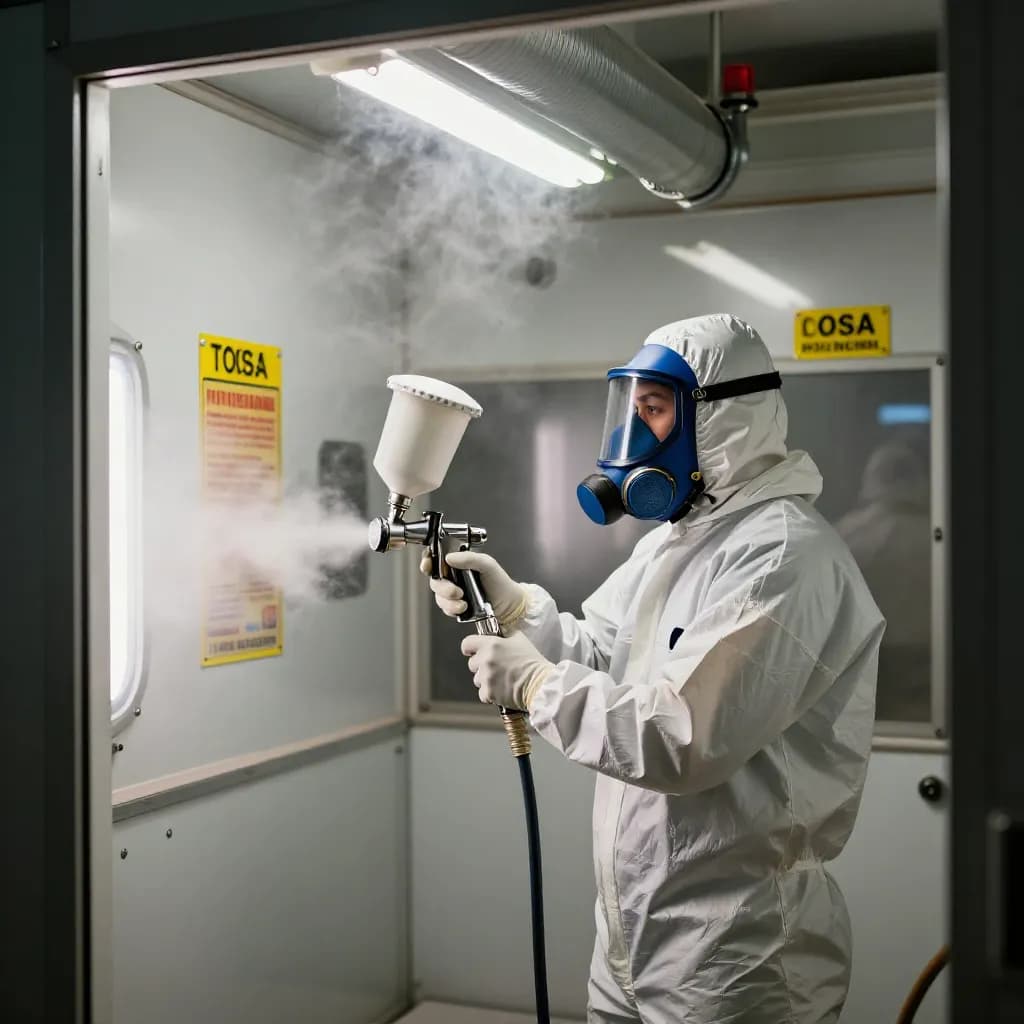
The primary health hazards in powder coating are respiratory exposure to airborne powder dust, skin and eye contact with powder and pretreatment chemicals, noise exposure from compressed air systems and ventilation equipment, and ergonomic risks from repetitive manual spraying and part handling. The primary safety hazards are fire and explosion risk from combustible powder dust, burns from hot ovens and freshly cured parts, chemical burns from pretreatment solutions, and electrical hazards from high-voltage electrostatic equipment.
Ready to Start Your Project?
From one-off customs to 15,000-part production runs — get precise pricing in 24 hours.
On This Page
Health and Safety Fundamentals in Powder Coating
A comprehensive health and safety program for a powder coating operation addresses all of these hazards through a hierarchy of controls: elimination or substitution of hazards where possible, engineering controls (ventilation, guarding, interlocking), administrative controls (procedures, training, supervision), and personal protective equipment as the last line of defense. This guide covers each major hazard category and provides practical guidance on compliance with occupational health and safety regulations.
Dust Exposure: Limits, Monitoring, and Control
Powder coating materials are classified as nuisance dusts or particles not otherwise regulated under most occupational exposure limit frameworks. In the United States, OSHA sets a permissible exposure limit (PEL) of 15 mg/m³ for total dust and 5 mg/m³ for the respirable fraction for particles not otherwise regulated. The American Conference of Governmental Industrial Hygienists (ACGIH) recommends lower threshold limit values (TLVs) of 10 mg/m³ for inhalable particulate and 3 mg/m³ for respirable particulate.
In practice, well-designed powder coating operations with proper booth ventilation maintain dust levels well below these limits during normal operation. However, exposure can increase significantly during booth cleaning, filter maintenance, powder handling (opening bags, filling hoppers), and equipment maintenance. These non-routine tasks often generate the highest dust exposures and require additional controls.
Engineering controls are the primary defense against dust exposure. The spray booth ventilation system should maintain adequate airflow to capture overspray and prevent powder from escaping into the general work area. Booth face velocity should be sufficient to contain powder within the booth enclosure — typically 0.3-0.5 m/s for manual booths. Powder handling areas should have local exhaust ventilation to capture dust generated during bag opening and hopper filling. Conduct periodic air monitoring to verify that exposure levels remain within acceptable limits, particularly after process changes, equipment modifications, or changes in production volume.
Personal Protective Equipment Requirements
Personal protective equipment (PPE) supplements engineering controls and safe work practices — it does not replace them. The PPE requirements for powder coating operations depend on the specific tasks being performed and the hazards present.
Respiratory protection is required when engineering controls alone cannot maintain dust levels below exposure limits — typically during booth cleaning, filter maintenance, and powder handling operations. A properly fitted half-face respirator with P2 (or N95 in the US) particulate filters is adequate for most powder coating dust exposure scenarios. For extended cleaning operations or work in confined spaces with elevated dust levels, a powered air-purifying respirator (PAPR) provides better protection and greater comfort. Ensure that all respirator users are included in a respiratory protection program that includes medical evaluation, fit testing, training, and equipment maintenance.
Eye protection (safety glasses or goggles) should be worn whenever there is a risk of powder or chemical contact with the eyes — during spraying, booth cleaning, pretreatment chemical handling, and maintenance activities. Skin protection includes gloves appropriate for the hazard (nitrile or chemical-resistant gloves for pretreatment chemicals, general-purpose gloves for powder handling) and coveralls or work clothing that prevents skin contact with powder and chemicals. Hearing protection may be required in areas where noise levels exceed 85 dB(A), which can occur near compressed air systems, ventilation fans, and some conveyor equipment.
Fire and Explosion Prevention
Powder coating materials are combustible organic powders that can form explosive dust-air mixtures under certain conditions. While the risk of a dust explosion in a properly designed and maintained powder coating operation is low, the consequences of an explosion are severe, making prevention a critical safety priority.
The conditions for a dust explosion require five elements simultaneously: combustible dust, an ignition source, oxygen, dispersion of dust in air at a concentration within the explosive range, and confinement. Powder coating operations inherently involve the first four elements — the spray booth is designed to disperse powder in air. Prevention therefore focuses on eliminating ignition sources and managing dust concentrations.
Ignition source control measures include proper grounding and bonding of all equipment, parts, and operators to prevent static discharge; interlocking the electrostatic charging system with booth airflow to prevent charging when ventilation is inadequate; maintaining electrical equipment in good condition to prevent sparking; prohibiting smoking, open flames, and hot work in powder handling and application areas; and ensuring that lighting fixtures in the booth area are rated for the environment.
Dust concentration management involves maintaining adequate booth ventilation to keep powder concentrations below the lower explosive limit (LEL), regular housekeeping to prevent accumulation of powder deposits on surfaces outside the booth, and proper maintenance of powder recovery and filtration systems to prevent blockages that could lead to dust release. Many modern powder coating systems include explosion relief panels or suppression systems as additional safeguards.
Housekeeping and Dust Accumulation Management
Effective housekeeping is one of the most important — and most frequently neglected — safety measures in a powder coating operation. Accumulated powder dust on floors, ledges, equipment surfaces, and overhead structures represents both a fire/explosion hazard and a contamination risk that can affect coating quality.
Establish a regular housekeeping schedule that covers all areas of the coating operation. The spray booth and immediate surroundings should be cleaned at every color change and at the end of each shift. Powder storage and handling areas should be cleaned daily. General production areas, including floors, walls, ledges, and overhead structures, should be cleaned at least weekly, with more frequent cleaning in areas where dust accumulates rapidly.
Use appropriate cleaning methods. Compressed air blow-down — a common but dangerous practice — should be prohibited or strictly controlled because it disperses settled dust into the air, creating both an inhalation hazard and an explosion risk. Instead, use vacuum cleaning with equipment rated for combustible dust (ATEX-rated in Europe, NFPA 652-compliant in the US). Wet cleaning methods are also effective for floor and surface cleaning. Ensure that vacuum cleaners and cleaning equipment are properly maintained and that filters are replaced according to the manufacturer's schedule.
Document your housekeeping program with a written schedule, assigned responsibilities, and verification records. Include housekeeping compliance in regular safety inspections and address deficiencies promptly. A clean, well-organized facility is not just safer — it also produces better coating quality, improves staff morale, and creates a positive impression on customers and auditors.
OSHA Compliance and Regulatory Requirements
Powder coating operations in the United States must comply with multiple OSHA standards, and equivalent regulations apply in other jurisdictions. Key OSHA standards relevant to powder coating include the General Duty Clause (Section 5(a)(1)), which requires employers to provide a workplace free from recognized hazards; the Hazard Communication Standard (29 CFR 1910.1200), which requires safety data sheets, labeling, and employee training for hazardous chemicals; the Respiratory Protection Standard (29 CFR 1910.134), which governs respirator use; and the Electrical Safety Standards (29 CFR 1910 Subpart S), which apply to electrostatic equipment.
NFPA standards are also relevant, particularly NFPA 33 (Standard for Spray Application Using Flammable or Combustible Materials), which covers spray booth design, ventilation, electrical classification, and fire protection requirements for powder coating operations. NFPA 652 (Standard on the Fundamentals of Combustible Dust) requires employers to conduct a dust hazard analysis (DHA) to identify and evaluate combustible dust hazards in their operations.
Compliance requires a systematic approach: identify the applicable regulations, assess your current compliance status, implement necessary controls and procedures, train employees, document your compliance program, and conduct regular audits to verify ongoing compliance. Many coating operations benefit from engaging a safety consultant with specific experience in powder coating to conduct an initial compliance assessment and help develop the safety management program. The investment in professional guidance is modest compared to the potential costs of regulatory citations, workplace injuries, or — in the worst case — a dust explosion.
Safety Data Sheet Management and Chemical Safety
Safety data sheets (SDS) are the primary source of hazard information for the chemicals used in a powder coating operation — including powder coating materials, pretreatment chemicals, cleaning agents, and maintenance products. Under the Globally Harmonized System (GHS) and OSHA's Hazard Communication Standard, employers must maintain current SDS for all hazardous chemicals in the workplace and ensure that employees can access them readily.
Organize your SDS collection systematically — by product type, by location, or alphabetically — and ensure that copies are available at the point of use as well as in a central location. Digital SDS management systems are increasingly popular and offer advantages over paper-based systems, including automatic update notifications, search functionality, and remote access. Whichever system you use, verify that SDS are current (manufacturers update SDS when formulations or hazard classifications change) and that new products are added to the collection before they are introduced into the workplace.
Use SDS information to inform your risk assessments, PPE selections, emergency response procedures, and employee training. Key SDS sections for powder coating operations include Section 2 (Hazard Identification), Section 4 (First-Aid Measures), Section 5 (Fire-Fighting Measures), Section 7 (Handling and Storage), Section 8 (Exposure Controls/Personal Protection), and Section 11 (Toxicological Information). Train employees to understand SDS content and to consult them when they have questions about the safe handling of materials they work with. Include SDS review in new employee orientation and in refresher training for existing staff.
Frequently Asked Questions
Is powder coating dust hazardous to health?
Powder coating materials are generally classified as nuisance dusts with low acute toxicity. However, prolonged inhalation of any dust can cause respiratory irritation, and some powder formulations may contain sensitizing ingredients. Maintain dust levels below occupational exposure limits through proper ventilation, housekeeping, and respiratory protection during high-exposure tasks.
Can powder coating dust explode?
Yes, powder coating materials are combustible organic powders that can form explosive dust-air mixtures if dispersed at concentrations within the explosive range and exposed to an ignition source. Proper booth ventilation, grounding, housekeeping, and ignition source control reduce this risk to very low levels in well-managed operations.
What PPE is required for powder coating operators?
Minimum PPE typically includes safety glasses, work gloves, and coveralls or work clothing. Respiratory protection (P2/N95 particulate respirator) is required during booth cleaning, filter maintenance, and powder handling. Chemical-resistant gloves and eye protection are required when handling pretreatment chemicals. Hearing protection may be needed in high-noise areas.
How often should powder coating areas be cleaned?
Spray booths should be cleaned at every color change and end of shift. Powder handling areas should be cleaned daily. General production areas should be cleaned at least weekly. Use vacuum cleaning with combustible-dust-rated equipment rather than compressed air blow-down, which disperses dust and creates explosion and inhalation hazards.
What fire suppression is needed in a powder coating booth?
Requirements depend on local fire codes and the booth design. Many jurisdictions require automatic fire detection and suppression in spray booths — typically dry chemical or clean agent systems. Explosion relief panels or venting may also be required. Consult NFPA 33 and your local fire authority for specific requirements applicable to your installation.
Ready to Start Your Project?
From one-off customs to 15,000-part production runs — get precise pricing in 24 hours.