Greenhouses and conservatories create controlled environments for plant cultivation, but the conditions that support plant growth — high humidity, elevated temperatures, condensation, and exposure to fertilizers and soil chemicals — are among the most challenging for surface finishes. The metalwork that forms the structural framework, glazing bars, ventilation systems, and internal fittings of these buildings must withstand sustained moisture exposure that would rapidly corrode unprotected or poorly protected metal.
Architecture
Powder Coating for Greenhouses and Conservatories: Humidity Resistance, Thermal Cycling, and Heritage Glass Houses
Sundial Powder Coating·April 22, 2026·11 min
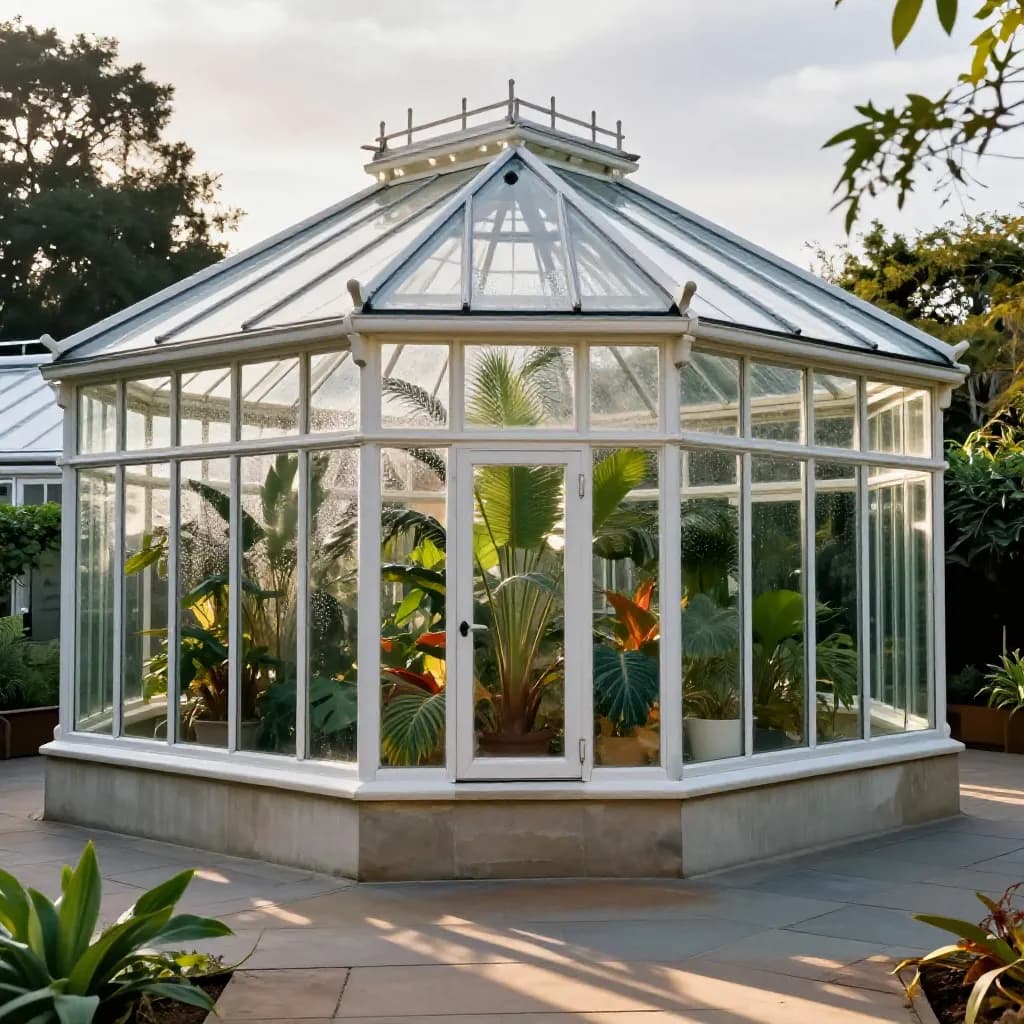
Powder coating has become the preferred finishing technology for greenhouse and conservatory metalwork because its dense, non-porous thermoset film provides an impervious barrier against the moisture that is the primary enemy of metal in horticultural environments. Applied at 60-120 microns — more than double the 25-50 micron film thickness of liquid paint — powder coating creates a robust moisture barrier that maintains its integrity through years of continuous humidity exposure, condensation cycling, and direct water contact.
Ready to Start Your Project?
From one-off customs to 15,000-part production runs — get precise pricing in 24 hours.
On This Page
Greenhouses and Conservatories: Where Coating Meets Extreme Humidity
From commercial production greenhouses and botanical garden conservatories to residential garden rooms and heritage glass houses, powder-coated metalwork provides the long-term protection and aesthetic quality these structures require. The zero VOC characteristic is particularly relevant for enclosed growing environments where airborne chemicals could affect plant health, and the 95-98% material efficiency supports the sustainability values of the horticultural sector.
Humidity Resistance and Condensation Management
The internal environment of a greenhouse or conservatory is characterized by sustained high humidity — often exceeding 80% relative humidity — with frequent condensation on metal surfaces as temperatures fluctuate between day and night. This condensation creates a persistent film of water on metalwork that, combined with dissolved carbon dioxide forming weak carbonic acid, creates mildly corrosive conditions that attack inadequately protected surfaces.
Powder coating's fully cross-linked thermoset film provides superior resistance to this humid environment compared to liquid paint. The dense molecular structure of the cured powder film eliminates the micro-porosity that allows moisture to penetrate liquid paint films through capillary action. This impermeability prevents the sub-surface corrosion and blistering that is the primary failure mode of liquid paint in greenhouse environments, where moisture penetration through the paint film initiates corrosion at the metal-coating interface.
The adhesion of powder coating under sustained wet conditions is maintained by the quality of the pretreatment system. Multi-stage chromate-free pretreatment processes — including alkaline cleaning, acid etching, and conversion coating — create a chemically bonded interface between the metal substrate and the powder film that resists the adhesion loss that moisture can cause at poorly prepared interfaces. For aluminum greenhouse structures, anodic oxidation pretreatment provides the highest level of adhesion security in humid environments.
Condensation management is also influenced by the surface properties of the coating. The smooth, low-porosity surface of powder coating promotes the formation of discrete water droplets that run off the surface rather than the continuous water films that form on rougher liquid paint surfaces. This self-draining characteristic reduces the duration of wet contact on metalwork surfaces, further reducing corrosion risk and minimizing the dripping of condensation onto plants below — a practical benefit for commercial growers.
Thermal Cycling: Daily and Seasonal Temperature Extremes
Greenhouses and conservatories experience extreme thermal cycling. Solar gain can raise internal temperatures to 40-50°C during summer days, while winter nights may see temperatures drop to near freezing in unheated structures. This daily temperature range of 30-50°C, repeated thousands of times over the building's service life, imposes severe thermal stress on both the metal structure and its surface finish.
Powder coating accommodates thermal cycling through the inherent flexibility of the thermoset polymer film. As the metal substrate expands and contracts with temperature changes, the coating must stretch and compress in unison without cracking, delaminating, or losing adhesion. Powder coating's elastic properties — verified through mandrel bend testing to ISO 1519 at temperatures from -20°C to +60°C — ensure that the film maintains its integrity through the full range of temperatures encountered in greenhouse environments.
The thermal expansion mismatch between aluminum glazing bars and glass panels creates particular stress at the glass-to-metal interface. The coating at this interface must accommodate differential movement without cracking, as any coating failure at this critical junction allows moisture ingress that accelerates corrosion and can lead to glazing seal failure. Powder coating's flexibility at this interface provides more reliable long-term performance than more rigid liquid paint films, which can develop micro-cracks at glass-to-metal junctions under repeated thermal cycling.
For heated greenhouses with supplementary heating systems, the coating on heating pipes and radiator surfaces must resist the elevated temperatures of the heating medium. Standard polyester powder coatings maintain their properties at continuous temperatures up to 120°C, which is adequate for hot water heating systems. For steam heating systems or high-temperature radiant heating, silicone-modified powder coatings provide enhanced heat resistance, maintaining color and adhesion at temperatures that would degrade standard formulations.
Horticultural Environment: Fertilizers, Pesticides, and Soil Chemistry
The chemical environment within greenhouses extends beyond humidity to include fertilizers, pesticides, fungicides, and the organic acids produced by decomposing plant material and growing media. These chemicals can be present as solutions, sprays, vapors, and aerosols, creating a complex chemical exposure that the coating must resist throughout its service life.
Powder coating's chemical resistance provides reliable protection against horticultural chemicals. The fully cross-linked thermoset film resists degradation from the nitrogen, phosphorus, and potassium compounds in common fertilizers, the sulfur and copper compounds in fungicides, and the organic solvents in some pesticide formulations. The 60-120 micron film thickness provides a substantial barrier against chemical penetration, maintaining protection even under repeated spray exposure during crop treatment operations.
Soil contact is another consideration for greenhouse metalwork. Bench supports, growing table legs, and ground-level structural members may be in direct contact with growing media, irrigation water, and soil-borne chemicals. Powder coating's impervious film prevents the moisture and chemical penetration that causes corrosion at soil contact points, and the smooth surface resists the adhesion of soil and organic matter that can create persistent wet conditions on metalwork surfaces.
For organic growing operations, the coating must not leach harmful compounds into the growing environment. Powder coatings, once fully cured, are chemically inert and do not release compounds that could contaminate organic produce or growing media. This inertness, combined with the zero VOC characteristic of the application process, makes powder coating compatible with organic certification requirements and the environmental standards of sustainable horticulture.
Heritage Glass Houses and Botanical Garden Conservatories
Historic glass houses and botanical garden conservatories are among the most architecturally significant greenhouse structures, combining horticultural function with architectural ambition. Victorian palm houses, Edwardian winter gardens, and early twentieth-century botanical conservatories are often listed buildings of national importance, and their restoration requires a sensitive approach that balances conservation principles with effective modern protection.
Powder coating offers significant advantages for heritage glass house restoration. The technology can replicate the appearance of historic paint finishes — including the specific whites, greens, and iron oxide reds traditionally used on greenhouse metalwork — through spectrophotometric color matching to historic paint samples. The resulting finish provides visual authenticity while delivering the superior durability and moisture resistance of modern thermoset technology.
For cast iron structures — common in Victorian glass houses — powder coating provides excellent adhesion and protection on the complex surface geometry of decorative columns, arched ribs, and ornamental brackets. The electrostatic application process achieves uniform coverage on these intricate forms, reaching the recesses and undercuts where corrosion typically initiates on liquid-painted cast iron. The 60-120 micron film provides substantially better protection than the thin liquid paint films historically applied to greenhouse ironwork.
The reversibility of powder coating satisfies conservation requirements. The coating can be removed through controlled thermal stripping without damaging the underlying iron or steel, allowing future conservators to access the original material. Documentation of the coating specification — color, formulation, film thickness, and pretreatment — in the building's conservation management plan ensures continuity of approach across future maintenance cycles.
For major heritage glass house restoration projects, the improved protection provided by powder coating can extend maintenance intervals from the 5-7 years typical of liquid-painted greenhouse metalwork to 15-20 years, significantly reducing the frequency of the disruptive and costly restoration campaigns that these complex structures require.
Ventilation Systems and Automated Opening Mechanisms
Ventilation is critical for greenhouse climate control, and the metalwork of ventilation systems — including ridge vents, side vents, louvre panels, and automated opening mechanisms — must function reliably in the humid, chemically active greenhouse environment. The surface finish on these moving elements must resist corrosion while maintaining the smooth operation of hinges, actuators, and sliding mechanisms.
Powder coating on ventilation components provides the corrosion resistance needed to maintain mechanical function in humid environments. Corroded hinges and actuator brackets are a common cause of ventilation system failure in greenhouses, leading to crop losses from overheating or inadequate air circulation. The 60-120 micron powder film prevents the corrosion that causes mechanical binding and failure, maintaining smooth ventilation operation throughout the system's service life.
Automated ventilation systems — including wax-actuated openers, electric linear actuators, and rack-and-pinion mechanisms — incorporate powder-coated housings and mounting brackets that must resist the greenhouse environment while protecting the mechanical and electrical components within. The smooth, continuous powder film contributes to the environmental sealing of actuator housings, preventing moisture and chemical ingress that could cause electrical faults or mechanical corrosion.
For commercial greenhouses with computer-controlled climate management systems, the reliability of ventilation components directly impacts crop quality and yield. Powder coating's long-term protection of ventilation metalwork supports the operational reliability that commercial growers require, reducing the frequency of component replacement and the associated disruption to growing operations. The 20-25 year coating life aligns with the typical replacement cycle of greenhouse ventilation hardware, ensuring that the coating outlasts the mechanical components it protects.
Residential Conservatories and Garden Rooms
Residential conservatories and garden rooms represent a significant market for powder-coated aluminum and steel structures. These spaces serve as extensions of the home, providing light-filled living areas that connect interior and exterior environments. The surface finish must combine the aesthetic quality expected in a domestic setting with the durability needed to withstand the elevated humidity and temperature cycling inherent in glazed structures.
Powder-coated aluminum conservatory frames are the standard specification for quality residential installations. The factory-applied finish provides a flawless surface quality that on-site liquid painting cannot match, with consistent color and gloss across all frame elements. The wide color range available — including the full RAL system, wood-effect sublimation transfers, and heritage colors — allows homeowners and architects to specify finishes that complement the existing building and garden setting.
The dual-color capability of powder coating is particularly valuable for conservatories, where the exterior finish must coordinate with the house facade while the interior finish complements the room's decor. Different colors on exterior and interior faces of the same profile create a seamless transition between the conservatory's two visual contexts, enhancing both the external appearance and the internal living experience.
Maintenance of residential conservatory metalwork is a practical concern for homeowners. Powder coating's 20-25 year service life eliminates the periodic repainting that liquid-painted conservatories require, reducing both the cost and the inconvenience of maintenance. Routine cleaning with mild detergent and water is sufficient to maintain the finish, and the smooth, non-porous surface resists the algae and mold growth that can develop on conservatory frames in humid conditions. For homeowners, the combination of aesthetic quality, low maintenance, and long service life makes powder coating the clear choice for conservatory metalwork.
Frequently Asked Questions
How does powder coating resist greenhouse humidity?
Powder coating's dense, non-porous thermoset film eliminates the micro-porosity that allows moisture penetration in liquid paint. The 60-120 micron film provides an impervious barrier against sustained humidity above 80% RH, preventing the sub-surface corrosion and blistering that is the primary failure mode of liquid paint in greenhouse environments.
Can powder coating withstand greenhouse thermal cycling?
Yes. Powder coating's elastic properties accommodate the 30-50°C daily temperature range in greenhouses without cracking or delaminating. Flexibility is verified through mandrel bend testing to ISO 1519 at temperatures from -20°C to +60°C, ensuring integrity through thousands of thermal cycles.
Is powder coating safe for organic greenhouse growing?
Yes. Fully cured powder coatings are chemically inert and do not leach compounds into the growing environment. The zero VOC application process and chemical inertness of the cured film make powder coating compatible with organic certification requirements and sustainable horticulture standards.
Can powder coating restore heritage Victorian glass houses?
Yes. Powder coating replicates historic paint colors through spectrophotometric matching and provides superior moisture resistance on cast iron structures. The coating is reversible through thermal stripping, satisfying conservation principles. Maintenance intervals extend from 5-7 years to 15-20 years.
How long does powder coating last on residential conservatories?
Powder coating on aluminum conservatory frames lasts 20-25 years, eliminating the periodic repainting that liquid-painted conservatories require. The smooth surface resists algae and mold growth, and routine cleaning with mild detergent maintains the finish throughout its service life.
Ready to Start Your Project?
From one-off customs to 15,000-part production runs — get precise pricing in 24 hours.