Green powder coating occupies a unique position in the color spectrum, bridging the gap between the natural world and the built environment. Green finishes connect metal structures to their landscape settings, evoke heritage and tradition, signal environmental responsibility, and serve critical functional roles in military, agricultural, and safety applications.
Design
Powder Coating Green Finishes: RAL 6005, 6009, 6028, Heritage Green, Military, and Agricultural
Sundial Powder Coating·April 22, 2026·11 min
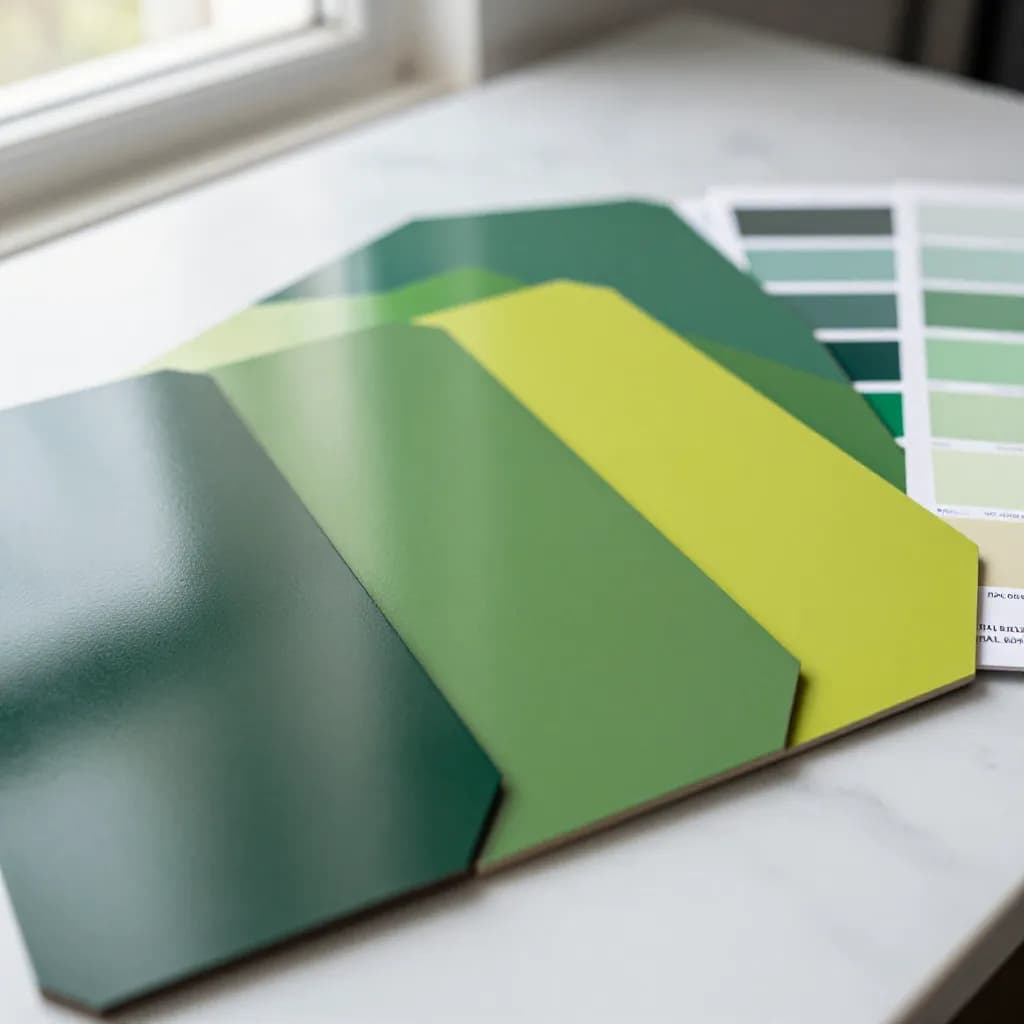
The RAL 6000 series contains over 35 distinct green shades, ranging from bright yellow-greens to deep blue-greens, and from vivid saturated greens to muted olive and sage tones. This diversity reflects the extraordinary range of greens found in nature and the equally diverse applications that green powder coating serves. A heritage park railing demands a very different green than a military vehicle or a contemporary architectural facade.
Ready to Start Your Project?
From one-off customs to 15,000-part production runs — get precise pricing in 24 hours.
On This Page
Green Powder Coating: From Heritage Railings to Modern Sustainability
Green has experienced a significant resurgence in architectural and interior design, driven by the biophilic design movement that seeks to incorporate natural elements and references into built environments. Muted, nature-inspired greens such as sage, olive, and forest tones are increasingly specified for building facades, interior metalwork, and furniture, replacing the dominance of grey and black in contemporary design palettes. This trend has expanded the demand for green powder coatings beyond their traditional strongholds in heritage, military, and agricultural sectors.
RAL 6005 Moss Green: The Heritage and Landscape Standard
RAL 6005 Moss Green is the most widely specified green in powder coating for heritage, landscape, and general architectural applications. This deep, rich green with a balanced blue-green undertone has become the default choice for park railings, garden furniture, fencing, gates, and any metalwork that needs to harmonize with natural green surroundings.
The appeal of RAL 6005 lies in its natural, unforced character. It reads as a genuine green that could belong in a forest or garden setting, without appearing artificial or overly vivid. This naturalistic quality makes it the instinctive choice for landscape architects, heritage conservation officers, and designers working in parkland, garden, and rural contexts.
RAL 6005 also has strong associations with heritage and tradition. In the United Kingdom and across Europe, dark green metalwork is a hallmark of Victorian and Edwardian public infrastructure, from park benches and lamp posts to bridge railings and bandstands. Specifying RAL 6005 for heritage restoration projects maintains this visual continuity while providing the superior durability and environmental performance of modern powder coating technology.
For exterior applications, RAL 6005 performs well in super-durable polyester formulations, maintaining its depth and character over extended service lives. The dark tone provides good dirt-hiding capability, reducing the frequency of cleaning required to maintain appearance. However, like all dark colors, RAL 6005 absorbs significant solar radiation, which should be considered for applications where thermal performance is critical.
RAL 6005 is available in all standard gloss levels, though satin and semi-gloss finishes are most commonly specified for heritage and landscape applications. These gloss levels provide a refined appearance without the industrial character of matte or the maintenance demands of high gloss.
RAL 6009 and RAL 6028: Deep Forest and Pine Greens
RAL 6009 Fir Green and RAL 6028 Pine Green represent the deepest, most saturated greens in common powder coating specification. These dark, rich greens approach black in low light conditions but reveal their full green character in daylight, creating finishes with exceptional depth and sophistication.
RAL 6009 Fir Green is a very dark green with a cool, slightly blue undertone. It is one of the darkest greens in the RAL system and is popular for premium architectural metalwork, high-end garden furniture, and applications where a green finish is desired with the visual weight and authority typically associated with black. RAL 6009 is particularly effective for entrance gates, balustrade systems, and facade elements on buildings set within landscaped grounds.
RAL 6028 Pine Green is similarly dark but carries a warmer, more yellow-green undertone than RAL 6009. This warmth gives RAL 6028 a more organic, natural character that connects it to the greens of coniferous forests and evergreen foliage. RAL 6028 is popular in Scandinavian and Northern European architectural traditions, where dark green buildings have a long cultural heritage.
Both RAL 6009 and RAL 6028 are excellent choices for applications where the designer wants a color that is clearly not black but maintains the same level of visual sophistication and gravitas. They pair beautifully with natural materials such as timber, stone, and copper, creating compositions that feel rooted in their landscape context.
The practical considerations for these deep greens mirror those for dark greys and blacks. Solar heat absorption is significant, substrate preparation must be thorough to avoid visible defects on the dark surface, and consistent film thickness is essential to prevent variations in depth and undertone. Metallic versions of these deep greens add a subtle sparkle that enhances the sense of depth and luxury.
Military and Defense Green Powder Coatings
Green powder coatings play a critical role in military and defense applications, where specific shades are mandated by national defense standards for vehicles, equipment, weapons systems, and infrastructure. Military greens are designed for camouflage effectiveness, durability under extreme conditions, and compliance with strict procurement specifications.
NATO green, often referenced as RAL 6031 Bronze Green or similar defense-standard shades, is the standard camouflage green used across NATO member forces. This muted, olive-toned green is designed to blend with temperate European vegetation and terrain. The specific shade and its infrared reflectance properties are defined by military specifications such as DEF STAN 00-133 in the United Kingdom and MIL-DTL-53072 in the United States.
Military powder coatings must meet performance requirements that go beyond standard commercial specifications. These include chemical agent resistance, resistance to hydraulic fluids and fuels, low infrared signature to reduce detectability, and extreme temperature cycling resistance. Specialized military-grade powder formulations are developed to meet these requirements while maintaining the specified camouflage color.
Olive drab, another iconic military green, is a warm, brownish-green that has been used by armed forces worldwide since the early twentieth century. In powder coating, olive drab shades such as RAL 6003 Olive Green and RAL 6014 Yellow Olive are specified for military vehicles, equipment housings, and field infrastructure.
Beyond active military use, military greens have crossed over into civilian applications. The rugged, utilitarian aesthetic of military green is popular for outdoor equipment, adventure vehicles, industrial furniture, and fashion-influenced product design. Powder coating in military green shades provides the authentic appearance with superior durability compared to the original liquid paint systems used on vintage military equipment.
Agricultural Green: Equipment and Machinery Applications
Green is the signature color of several major agricultural equipment manufacturers, making green powder coating a high-volume application in the farming and agricultural machinery sector. These brand-specific greens are instantly recognizable to farmers and equipment dealers worldwide, and maintaining precise color consistency across thousands of components is a critical quality requirement.
Agricultural equipment operates in some of the most demanding environments for any coating system. Exposure to UV radiation, rain, mud, fertilizers, pesticides, fuel, hydraulic fluid, and mechanical abrasion creates a multi-threat environment that tests coating durability to its limits. Powder coating has largely replaced liquid paint for agricultural equipment finishing because its thicker film build, superior chemical resistance, and better edge coverage provide significantly longer service life under these conditions.
The greens used in agricultural equipment tend to be bright, saturated shades that are easily visible in field conditions for safety reasons. These greens are typically custom-matched to the manufacturer's proprietary color standard rather than specified from the RAL system, though RAL 6010 Grass Green and RAL 6018 Yellow Green approximate some of the most common agricultural greens.
For agricultural applications, the powder coating specification must address chemical resistance as a primary performance requirement. Exposure to agricultural chemicals including fertilizers, herbicides, and animal waste products can attack coating systems that would perform adequately in less aggressive environments. Polyester powder coatings with enhanced chemical resistance formulations are the standard choice, with some manufacturers specifying polyurethane or acrylic powder coatings for components with the most severe chemical exposure.
Film thickness for agricultural equipment is typically specified at 80-120 microns, higher than many architectural applications, to provide the mechanical toughness needed to resist stone chips, branch scratches, and general field abuse. Edge coverage is particularly important because agricultural components often have sharp edges and complex geometries that are vulnerable to corrosion if inadequately coated.
Contemporary Green: Sage, Olive, and Biophilic Design Trends
The current wave of biophilic design has brought a new palette of greens into architectural and interior design specification. These contemporary greens are softer, more muted, and more nature-referenced than the traditional bright or dark greens, reflecting a design philosophy that seeks to create calming, restorative environments through connection to the natural world.
Sage green, approximated by RAL 6021 Pale Green or custom-matched to specific design references, has become one of the most sought-after colors in interior design and furniture. This soft, grey-green creates a serene, sophisticated atmosphere that works equally well in residential kitchens, hospitality spaces, and retail environments. Sage green powder-coated metal furniture and fixtures bring warmth and natural character to spaces without the maintenance demands of actual plant material.
Olive green, represented by shades such as RAL 6003 Olive Green and RAL 6013 Reed Green, offers a warmer, more earthy alternative to sage. Olive tones connect to Mediterranean landscapes, military heritage, and artisanal craft traditions, making them popular for restaurant interiors, boutique retail, and residential projects with a rustic or industrial aesthetic.
Dusty green and eucalyptus tones, falling between sage and olive, are increasingly specified for Scandinavian-influenced interiors where a muted, natural palette creates calm, uncluttered spaces. These greens pair beautifully with light timber, white surfaces, and natural textiles, creating the hygge-inspired atmospheres that continue to influence global interior design trends.
For these contemporary green applications, the finish quality is as important as the color. Matte and satin finishes are strongly preferred over high gloss, as they create the soft, tactile quality that aligns with the natural, handcrafted aesthetic these greens are intended to evoke. Fine textures can add additional tactile interest that reinforces the organic character of the color.
Specifying Green Powder Coating: Application-Specific Guidance
Green powder coating specification varies significantly depending on the application sector, and understanding these sector-specific requirements ensures that the finished product meets both aesthetic and performance expectations.
For heritage and conservation projects, specify the green by RAL code and verify it against any existing historic color references. Heritage authorities may have specific color requirements that differ from standard RAL shades. Provide physical samples for approval by the conservation officer before production coating begins. Satin or semi-gloss finishes are typically appropriate for heritage metalwork, and super-durable polyester ensures long-term color retention.
For military and defense applications, reference the applicable national defense standard rather than RAL codes. Military specifications define not only the visible color but also infrared reflectance properties, chemical resistance requirements, and testing protocols that standard commercial powder coatings may not meet. Use only powder formulations that have been tested and approved against the relevant military specification.
For agricultural equipment, prioritize chemical resistance and mechanical durability in the specification. Reference the equipment manufacturer's proprietary color standard for color matching, and specify minimum film thickness of 80 microns with enhanced edge coverage requirements. Include salt spray and chemical resistance testing requirements appropriate to the operating environment.
For architectural and interior design applications, focus on color accuracy, gloss level, and aesthetic quality. Specify the RAL code or provide a custom color reference, define the gloss level numerically, and reference the appropriate quality standard for the exposure environment. For interior applications, standard polyester or epoxy-polyester hybrid formulations are adequate. For exterior applications, super-durable polyester with Qualicoat Class 2 or AAMA 2605 certification provides the necessary long-term performance.
Regardless of application, always approve physical coated samples under representative lighting conditions before authorizing production coating. Green is susceptible to metamerism, and the undertone can shift noticeably between daylight, fluorescent, and LED illumination.
Frequently Asked Questions
What is the most common green for park railings and heritage metalwork?
RAL 6005 Moss Green is the standard choice for park railings, garden furniture, gates, and heritage metalwork. Its deep, natural green character harmonizes with landscape settings and maintains the visual tradition of Victorian and Edwardian public infrastructure.
What green is used for military equipment?
Military greens are specified by national defense standards rather than RAL codes. NATO green approximates RAL 6031 Bronze Green, while olive drab corresponds to RAL 6003 or RAL 6014. Military powder coatings must meet additional requirements for chemical resistance, infrared signature, and extreme temperature performance.
What sage green RAL code is best for interior design?
RAL 6021 Pale Green is the closest RAL approximation to sage green, though many designers prefer custom-matched formulations for precise color control. Sage green is best specified in matte or satin finish to achieve the soft, natural aesthetic that defines contemporary biophilic design.
Does green powder coating fade outdoors?
Green pigments generally offer moderate to good UV stability, but performance varies by shade and formulation. Specify super-durable polyester for exterior applications and request accelerated weathering data. Qualicoat Class 2 or AAMA 2605 certification provides assurance of long-term color retention.
What is the difference between RAL 6005 and RAL 6009 green?
RAL 6005 Moss Green is a medium-dark green that is clearly identifiable as green in all lighting conditions. RAL 6009 Fir Green is significantly darker, approaching black in low light and revealing its green character only in bright conditions. RAL 6009 offers more visual weight and sophistication for premium applications.
Ready to Start Your Project?
From one-off customs to 15,000-part production runs — get precise pricing in 24 hours.