Gold finishes in powder coating represent the pinnacle of decorative metal finishing, communicating luxury, prestige, and exceptional quality. From the gilded facades of Middle Eastern architecture to the champagne gold accents of contemporary European design, gold powder coating serves applications where visual impact and perceived value are paramount considerations.
Design
Powder Coating Gold Finishes: Metallic Gold, Anodized Gold Look, Luxury and Architectural Applications
Sundial Powder Coating·April 22, 2026·11 min
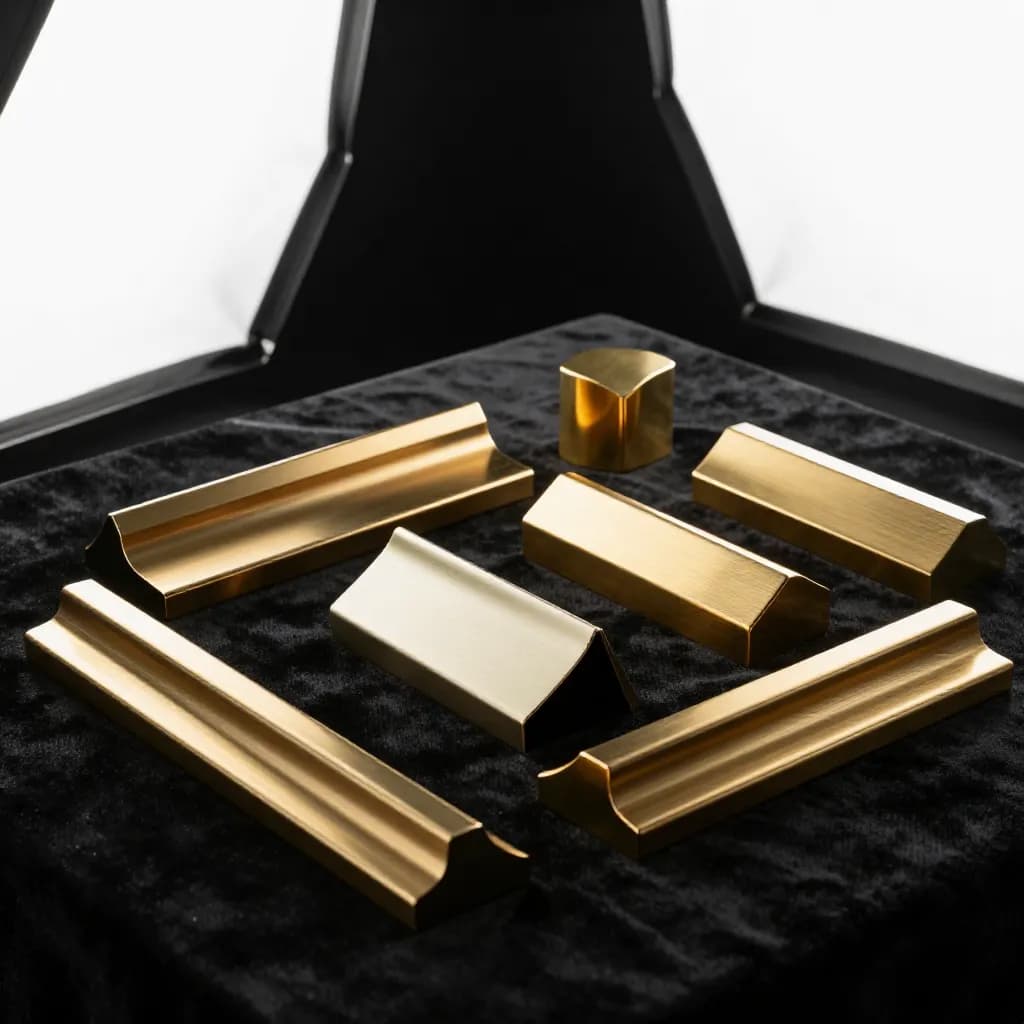
The range of gold tones achievable in powder coating has expanded dramatically with advances in metallic pigment technology. Modern gold powder coatings span the full spectrum from pale champagne and light gold through rich yellow gold to deep antique gold and rose gold, each creating a distinct aesthetic suited to different design contexts and cultural preferences.
Ready to Start Your Project?
From one-off customs to 15,000-part production runs — get precise pricing in 24 hours.
On This Page
Gold Powder Coating: Luxury, Prestige, and Architectural Statement
Gold powder coating offers significant practical advantages over traditional gilding, gold plating, and gold anodizing. It can be applied to a wide range of substrates including aluminum, steel, and stainless steel, providing consistent color across different base metals. The thick powder coating film provides excellent mechanical protection, and the finish can be maintained with simple cleaning rather than the specialized conservation treatments required for genuine gold leaf or plating. For architectural applications where the appearance of gold is desired at scale, powder coating is the most practical and durable solution available.
Metallic Gold Powder Coating: Achieving Authentic Gold Appearance
Creating a convincing gold appearance in powder coating requires sophisticated metallic pigment technology. The characteristic warmth, depth, and reflectivity of gold cannot be achieved with conventional solid pigments alone. Metallic gold powder coatings use carefully selected aluminum flakes coated with iron oxide or other tinting agents to create particles that reflect light with the warm, yellow-toned character of gold metal.
The quality of the metallic effect depends on several factors. Pigment particle size affects the coarseness or fineness of the metallic sparkle. Larger particles create a more pronounced, glittering effect, while finer particles produce a smoother, more refined metallic sheen. The concentration of metallic pigment in the powder formulation determines the intensity of the gold effect, from a subtle shimmer to a bold, highly reflective gold surface.
Bonded metallic technology, where the metallic pigment flakes are electrostatically bonded to the surface of the powder particles, produces the most consistent gold finishes. This bonding prevents the metallic pigments from separating during application, which can cause color variation and inconsistency in dry-blended metallic formulations. For premium gold finishes, bonded metallic powders are strongly recommended.
The base color of the powder formulation also influences the gold character. A warm yellow-brown base creates a rich, traditional gold. A lighter, more neutral base produces a champagne or pale gold. A reddish base creates rose gold tones. The interaction between the base color and the metallic pigment creates the final gold appearance, and this interaction must be carefully balanced during formulation development.
Gold powder coatings are inherently angle-dependent, meaning the color and reflectivity change as the viewing angle changes relative to the light source. This characteristic is desirable because it replicates the behavior of real gold metal, but it means that flat sample panels may not accurately represent the appearance on three-dimensional components. Always evaluate gold samples on representative component geometries.
Champagne Gold and Rose Gold: Contemporary Alternatives
While traditional yellow gold remains popular for classical and luxury applications, contemporary design has embraced softer, more subtle gold tones that integrate more easily into modern material palettes. Champagne gold and rose gold have emerged as two of the most specified gold variants in current architectural and interior design.
Champagne gold is a pale, warm metallic tone that sits between gold and silver on the color spectrum. It has a soft, understated character that communicates quality and refinement without the boldness of full yellow gold. Champagne gold is the most versatile gold tone for contemporary architecture, working well alongside cool greys, whites, natural stone, and glass. It is widely specified for curtain wall mullions, entrance systems, elevator interiors, and interior architectural metalwork in premium commercial and residential projects.
Rose gold, also known as copper gold or pink gold, incorporates a warm pink or copper undertone that gives it a distinctive, fashion-forward character. Rose gold has crossed over from jewelry and consumer electronics into architectural and interior design, where it adds warmth and personality to contemporary spaces. Rose gold powder coating is popular for furniture, lighting fixtures, decorative screens, and accent elements in hospitality and retail environments.
Light gold or pale gold tones offer another contemporary option, providing a warm metallic character that is more restrained than traditional gold but more colorful than champagne. These tones work well in Scandinavian and Japanese-influenced design contexts where subtlety and material honesty are valued.
For all contemporary gold tones, the finish quality is critical. Satin and matte metallic finishes are preferred over high gloss for contemporary applications, as they create a more refined, less ostentatious appearance. The metallic effect should be fine and uniform rather than coarse and sparkly, creating a smooth, luminous surface that suggests quality without demanding attention.
Anodized Gold Look in Powder Coating
Gold anodized aluminum has been a staple of architectural specification for decades, particularly in commercial building facades, curtain walls, and entrance systems. Powder coating technology can now replicate the anodized gold look with high fidelity, offering architects an alternative that provides greater color consistency and broader application flexibility.
Anodized gold aluminum achieves its color through the controlled oxidation of the aluminum surface, with the gold tone depending on the alloy composition, anodizing parameters, and electrolytic coloring process. This process inherently produces variation between batches and even within a single batch, which can be problematic for large architectural projects requiring precise color matching across hundreds of components.
Anodized-look gold powder coatings use translucent resin systems combined with metallic pigments to recreate the characteristic depth and warmth of anodized gold. The translucent resin allows light to penetrate the coating and reflect off the metallic pigments at different depths, creating the layered, dimensional appearance that distinguishes anodized finishes from simple surface coatings.
The primary advantage of anodized-look gold powder coating is consistency. Every component receives the same powder formulation applied under controlled conditions, eliminating the batch-to-batch variation inherent in anodizing. This consistency is particularly valuable for large facade projects where components may be produced over several months and must match precisely when installed.
Anodized-look gold powder coatings are available from major manufacturers in a range of gold tones, from light champagne gold to deep bronze-gold. These products are typically certified under Qualicoat standards, including specific requirements for anodized-look finishes that verify the metallic appearance is maintained through accelerated weathering testing. AAMA specifications also cover metallic and anodized-look powder coatings, providing North American performance benchmarks.
Gold in Luxury Architecture and Hospitality Design
Gold powder coating finds its most dramatic applications in luxury architecture and hospitality design, where the finish contributes to creating environments of exceptional quality and visual richness. From five-star hotel lobbies and high-end retail flagships to luxury residential developments and cultural institutions, gold metalwork establishes an atmosphere of prestige and sophistication.
In Middle Eastern architecture, gold is a culturally significant color that features prominently in both traditional and contemporary building design. Gold powder-coated aluminum cladding, mashrabiya screens, and decorative metalwork are specified at scale for commercial towers, hospitality developments, and institutional buildings. The durability of powder coating is particularly valuable in the harsh Gulf climate, where intense UV radiation and sand abrasion challenge all exterior finishes.
European luxury architecture tends toward more restrained gold applications, using champagne gold or light gold tones as accents within predominantly neutral facades. Gold-toned curtain wall mullions, entrance canopies, and feature panels add warmth and distinction to buildings without the visual intensity of full yellow gold. This approach reflects a design philosophy where gold suggests quality through subtlety rather than statement.
In hospitality interiors, gold powder-coated metalwork creates focal points and establishes the level of luxury that guests expect. Reception desks, staircase balustrades, decorative screens, lighting fixtures, and furniture frames in gold tones contribute to the overall atmosphere of refinement. The durability of powder coating ensures that these high-touch elements maintain their appearance through years of intensive use.
For luxury applications, the quality of the gold finish must be impeccable. Any inconsistency in color, metallic effect, or surface quality undermines the perception of luxury that the gold finish is intended to create. Specify tight quality tolerances, require sample approval on actual component geometries, and ensure that the coating applicator has demonstrated experience with premium metallic finishes.
Durability and Maintenance of Gold Powder Coatings
The long-term durability of gold powder coatings depends on the quality of the metallic pigments, the resin system, and the application quality. Understanding the specific durability considerations for metallic gold finishes ensures that the specified finish maintains its appearance throughout the intended service life.
Metallic pigment stability is the primary durability concern for gold powder coatings. The metallic flakes that create the gold effect can oxidize, tarnish, or lose their reflectivity over time if they are not properly protected within the coating matrix. High-quality gold powder formulations use encapsulated metallic pigments with protective surface treatments that resist oxidation and maintain their reflective properties under UV exposure and weathering.
The resin system provides the primary barrier protecting the metallic pigments from environmental degradation. Super-durable polyester formulations offer good protection for most exterior applications, maintaining the gold effect for 15-20 years under normal weathering conditions. For the most demanding applications, a clear topcoat applied over the gold base coat provides additional protection for the metallic pigments, extending the service life and maintaining the reflective quality of the finish.
Maintenance of gold powder-coated surfaces is straightforward. Regular cleaning with mild detergent and water removes surface contamination and maintains the reflective quality of the metallic finish. Avoid abrasive cleaning agents or tools that could scratch the surface and dull the metallic effect. For exterior applications, periodic cleaning at intervals of 6-12 months is typically sufficient to maintain appearance.
Touch-up of damaged gold powder coating is more challenging than solid colors because the metallic effect is difficult to replicate with touch-up paints. Minor damage can be addressed with color-matched touch-up products, but the metallic character will not perfectly match the original powder coating. For this reason, careful handling and protective packaging during transport and installation are particularly important for gold-finished components.
Specifying Gold Powder Coating: Key Parameters
Gold powder coating specification requires defining the gold tone, metallic character, gloss level, and performance standard with precision. The subjective nature of gold, where different people may envision very different shades when they hear the word, makes detailed specification essential.
Define the gold tone using a physical reference rather than verbal description. Provide a metal sample, anodized reference, Pantone metallic chip, or existing coated component for the powder manufacturer to match. If no physical reference is available, request the manufacturer's standard gold sample range and select the closest option as a starting point for refinement.
Specify the metallic intensity. A subtle, fine metallic shimmer creates a refined, contemporary gold. A bold, coarse metallic sparkle creates a more dramatic, traditional gold. The metallic intensity should be matched to the design context and the scale of the application. Large facade surfaces typically benefit from finer metallic effects, while smaller decorative elements can carry bolder metallic character.
Define the gloss level numerically. Satin finishes at 30-50 gloss units are most common for architectural gold applications. Matte metallic finishes at 10-20 gloss units create a contemporary, understated gold. Higher gloss levels above 60 units create a more reflective, polished gold appearance. The gloss level significantly affects the perception of the gold tone and metallic character.
Specify the performance standard appropriate to the application. For exterior architectural applications, require super-durable polyester with Qualicoat Class 2 or AAMA 2605 certification. For interior applications, standard polyester provides adequate performance. Include requirements for metallic pigment stability under weathering if the application is exterior.
Require sample approval on representative component geometries, not just flat panels. Gold metallic finishes can appear significantly different on curved, angled, and complex surfaces compared to flat samples. Evaluating samples on actual or representative components prevents specification disputes during production.
Frequently Asked Questions
Can powder coating achieve a realistic gold metallic appearance?
Yes, modern metallic gold powder coatings use specially coated aluminum flakes to create convincing gold effects ranging from pale champagne to rich yellow gold. Bonded metallic technology provides the most consistent results. The finish replicates the warmth and reflectivity of gold metal, though it is inherently angle-dependent like real gold.
What is champagne gold powder coating?
Champagne gold is a pale, warm metallic tone between gold and silver. It has a soft, understated character that communicates refinement without the boldness of yellow gold. Champagne gold is the most versatile gold tone for contemporary architecture, working well with cool greys, whites, and natural materials.
How durable is gold powder coating outdoors?
Gold powder coating in super-durable polyester provides 15-20 years of exterior performance. The metallic pigments must be properly encapsulated to resist oxidation under UV exposure. A clear topcoat over the gold base extends service life further. Specify Qualicoat Class 2 or AAMA 2605 for maximum durability assurance.
Can powder coating replicate anodized gold aluminum?
Yes, anodized-look gold powder coatings use translucent resins and metallic pigments to closely replicate anodized gold. The key advantage over actual anodizing is color consistency across all components, eliminating the batch variation inherent in the anodizing process.
What gold tone is best for contemporary architecture?
Champagne gold and light gold tones are most popular for contemporary architecture, offering warmth and metallic character without the visual intensity of traditional yellow gold. Satin or matte metallic finishes in fine particle sizes create the refined, understated aesthetic that suits modern design contexts.
Ready to Start Your Project?
From one-off customs to 15,000-part production runs — get precise pricing in 24 hours.