Gloss is one of the most immediately noticeable properties of a powder coated surface, and its loss is often the first visible sign that the coating is aging or has been damaged. Understanding what gloss is, how it is measured, and what causes it to change provides the foundation for effective monitoring and maintenance.
Technical
Powder Coating Gloss Loss: Weathering, Chemical Attack, Measurement, and Restoration Methods
Sundial Powder Coating·April 23, 2026·11 min
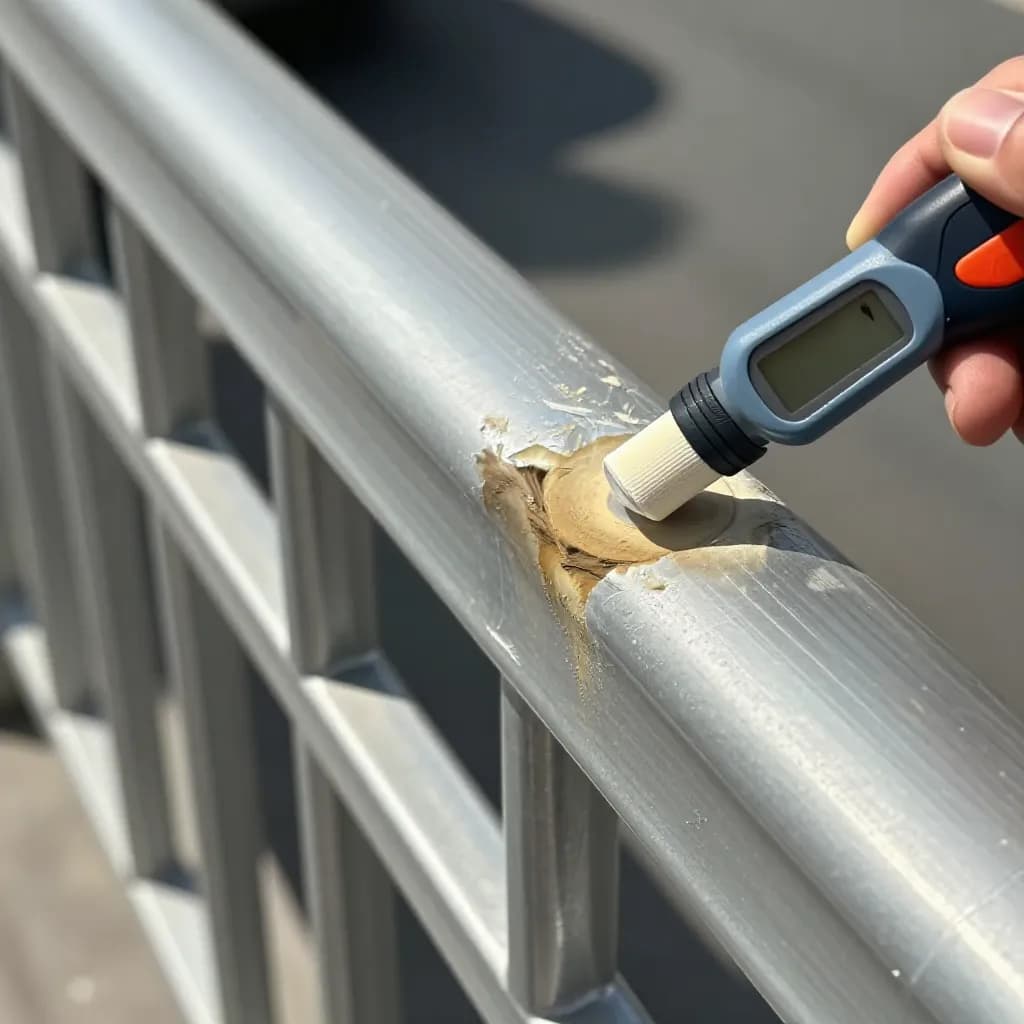
Gloss is a measure of how much light is reflected from a surface at a specific angle. A high-gloss surface reflects light in a concentrated, mirror-like manner, producing a bright, reflective appearance. A low-gloss or matte surface scatters reflected light in many directions, producing a flat, non-reflective appearance. The gloss level of a powder coating is determined by the formulation and is specified as part of the coating's design.
Ready to Start Your Project?
From one-off customs to 15,000-part production runs — get precise pricing in 24 hours.
On This Page
What Gloss Loss Means for Powder Coated Surfaces
Gloss loss occurs when the smooth surface of the coating becomes roughened at a microscopic level. This roughening scatters reflected light that would otherwise be reflected in a concentrated beam, reducing the measured gloss value. The roughening can be caused by UV degradation of the surface resin, chemical attack that etches the surface, mechanical abrasion that scratches the surface, or contamination that deposits a rough layer on the surface.
The significance of gloss loss depends on the application. For high-gloss architectural facades, automotive components, and consumer products, gloss loss is a significant aesthetic concern that may trigger maintenance or recoating. For industrial equipment, structural steel, and utilitarian applications, moderate gloss loss may be entirely acceptable as long as the coating continues to provide adequate protection.
Gloss loss is progressive and generally irreversible without intervention. Once the surface has been roughened by UV degradation or chemical attack, the original gloss cannot be restored by cleaning alone. Polishing can partially restore gloss by smoothing the roughened surface, but this removes coating material and is a temporary measure. Understanding the causes of gloss loss helps prevent it and plan for appropriate intervention when it occurs.
Weathering as the Primary Cause of Gloss Loss
Weathering, primarily driven by UV radiation, is the most common cause of gloss loss on exterior powder coated surfaces. The mechanism is the same photodegradation process that causes chalking and fading, but gloss loss is typically the earliest detectable sign of weathering, appearing before chalking or color change becomes visible.
UV radiation breaks down the resin binder at the coating surface, creating a microscopically rough texture as the degraded polymer erodes unevenly. This surface roughening reduces the coating's ability to reflect light in a specular manner, lowering the measured gloss value. The process is gradual and continuous as long as the surface is exposed to UV radiation.
The rate of weathering-induced gloss loss depends on the same factors that affect overall coating durability: resin chemistry, UV stabilizer content, pigment type, film thickness, and environmental exposure severity. Super-durable polyester coatings maintain gloss significantly longer than standard polyester, which in turn outperforms hybrids and epoxies.
Moisture accelerates weathering-induced gloss loss by facilitating the removal of degraded surface material. Rain washes away the loosened resin and pigment particles, continuously exposing fresh coating surface to UV attack. In dry climates, the degraded surface layer may remain in place longer, partially shielding the coating beneath, which is why some coatings in arid environments show less gloss loss than the same coating in a humid climate with equivalent UV exposure.
Temperature amplifies the rate of photochemical degradation. Higher surface temperatures increase the speed of UV-initiated reactions, which is why south and west-facing surfaces in the northern hemisphere typically show faster gloss loss than north and east-facing surfaces on the same building.
The combination of UV, moisture, and temperature cycling creates a synergistic weathering effect that is more aggressive than any single factor alone. This is why accelerated weathering tests use cycles of UV exposure, moisture, and temperature variation to simulate real-world conditions in a compressed timeframe.
Chemical Attack and Its Effect on Gloss
Chemical exposure can cause rapid gloss loss that is distinct from the gradual weathering process. Chemical attack damages the coating surface through direct chemical reaction rather than photodegradation, and it can occur on both interior and exterior surfaces.
Alkaline chemicals are among the most common causes of chemical gloss loss on powder coatings. Concrete dust, mortar splash, and cement residue are alkaline and can etch the coating surface if left in contact. Construction sites are a frequent source of alkaline contamination on newly installed powder coated elements. Cleaning products with high pH can also cause gloss loss if used improperly.
Acidic chemicals etch the coating surface from the opposite end of the pH scale. Bird droppings, tree sap, insect residue, and industrial acid fallout can all cause localized gloss loss through acid etching. The damage is typically localized to the contact area and may appear as dull spots or rings on an otherwise glossy surface.
Solvent exposure can soften the coating surface, causing it to swell, wrinkle, or become tacky. When the solvent evaporates, the surface may re-harden with a rough, low-gloss texture. Aggressive solvents such as acetone, MEK, and paint strippers cause the most severe damage, but even mild solvents can affect gloss if contact is prolonged.
Atmospheric pollutants including sulfur dioxide, nitrogen oxides, and ozone can cause gradual chemical degradation of the coating surface. This is distinct from UV weathering and can occur even on shaded surfaces. Industrial environments with high pollutant concentrations may experience chemical gloss loss that exceeds what would be expected from UV exposure alone.
Cleaning chemicals used improperly are a preventable cause of gloss loss. Abrasive cleaners, strong acids, strong alkalis, and aggressive solvents can all damage the coating surface. Using only approved cleaning products at recommended concentrations prevents this entirely avoidable form of gloss loss.
Chemical gloss loss is often more localized and irregular than weathering-induced gloss loss, which tends to be uniform across surfaces with similar exposure. Localized dull spots, drip marks, or splash patterns on the coating surface suggest chemical attack rather than weathering.
Measuring Gloss: Methods and Interpretation
Objective gloss measurement provides quantitative data that supports maintenance decisions, warranty assessments, and quality control. While visual observation can detect significant gloss changes, a gloss meter provides the precision needed for tracking gradual changes over time and comparing surfaces objectively.
Gloss is measured using a gloss meter, also called a glossmeter, which directs a beam of light at the surface at a specified angle and measures the intensity of the reflected light. The result is expressed in gloss units on a scale where a perfect mirror would read approximately 100 and a completely matte surface would read near 0.
The measurement angle is critical and must be appropriate for the gloss level being measured. The standard measurement angle for most powder coatings is 60 degrees, which provides good sensitivity across the full range of gloss levels. For high-gloss coatings above 70 gloss units at 60 degrees, the 20-degree angle provides better differentiation. For low-gloss coatings below 10 gloss units at 60 degrees, the 85-degree angle is more sensitive.
To obtain meaningful measurements, follow a consistent protocol. Clean the surface before measuring to remove dirt and contamination that can affect readings. Take multiple readings at each location and average them to account for surface variation. Measure at the same locations each time to enable direct comparison between inspections. Record the measurement angle, instrument model, and calibration date along with the readings.
Gloss retention is typically expressed as a percentage of the original gloss value. If a coating was originally specified at 80 gloss units and currently measures 56 gloss units, the gloss retention is 70 percent. Industry standards and warranty specifications typically define acceptable gloss retention thresholds at specific time intervals.
Qualicoat and AAMA specifications define gloss retention requirements for architectural powder coatings. Qualicoat Class 1 requires at least 50 percent gloss retention after 1 year of Florida exposure. Qualicoat Class 2 requires at least 50 percent retention after 3 years. AAMA 2605 requires at least 50 percent retention after 10 years of South Florida exposure. These benchmarks provide reference points for assessing whether a coating is performing as expected.
Compare gloss readings between surfaces with different orientations on the same structure. Significant differences between south-facing and north-facing surfaces confirm that UV exposure is the primary degradation mechanism. Similar gloss loss on all orientations suggests chemical attack or a coating quality issue rather than weathering.
Restoration Techniques for Gloss Recovery
Several techniques can partially or fully restore gloss to powder coated surfaces that have experienced gloss loss. The appropriate technique depends on the cause and severity of the gloss loss and the performance requirements of the application.
Thorough cleaning is always the first step. Surface contamination, chalked material, and atmospheric deposits can reduce apparent gloss without actually damaging the coating surface. A thorough wash with pH-neutral detergent followed by a clean water rinse may reveal that the coating's actual gloss is better than it appeared under the layer of contamination.
Polishing with automotive-grade compound is the most effective restoration technique for moderate gloss loss caused by weathering. The compound contains fine abrasive particles that remove the degraded, roughened surface layer, exposing smoother coating material beneath. Start with a fine-cut compound and progress to a coarser grade only if needed. Work in small sections with a soft foam pad, either by hand or with a dual-action polisher.
The improvement from polishing depends on the depth of surface degradation and the remaining coating thickness. If the degradation is limited to the outermost few microns of the coating, polishing can restore near-original gloss. If degradation has penetrated deeper, polishing will improve but not fully restore the gloss. Measure the film thickness before polishing to ensure that adequate coating remains after the degraded layer is removed.
Applying a gloss-enhancing wax or sealant after polishing fills microscopic surface irregularities and adds a smooth, reflective layer that boosts the apparent gloss. The improvement is temporary and requires periodic reapplication, but it provides an immediate visual enhancement that extends the time between more involved restoration efforts.
Clear coat application over the existing powder coating provides a new, glossy surface layer without the need for stripping and recoating. The clear coat must be compatible with the existing powder coating and properly adhered through appropriate surface preparation. This approach works well when the existing coating is structurally sound but has lost surface gloss.
Full stripping and recoating is the definitive restoration for severe gloss loss where the coating surface is extensively degraded. This produces a like-new result but is the most involved and costly option. It is appropriate when gloss loss is accompanied by other degradation indicators such as heavy chalking, significant color change, or adhesion problems.
Preventing Gloss Loss: Specification and Maintenance
Prevention of premature gloss loss begins with proper specification and continues through the life of the coating with appropriate maintenance practices.
Specify the coating chemistry appropriate for the expected UV exposure. Super-durable polyester coatings maintain gloss significantly longer than standard polyester in exterior applications. For high-visibility architectural surfaces where gloss retention is critical, super-durable polyester meeting Qualicoat Class 2 or AAMA 2605 is the appropriate specification.
Specify the initial gloss level with consideration for the expected service environment. A coating specified at 80 to 90 gloss units has more room to lose gloss before reaching an unacceptable level than a coating specified at 50 to 60 gloss units. However, higher initial gloss also makes gloss loss more visually apparent, so the specification should balance these factors.
Adequate film thickness supports gloss retention by providing a thicker barrier of UV-stabilized material at the surface. Thin coatings lose their UV stabilizers faster because there is less material to absorb UV energy before it reaches the deeper, less-stabilized layers. Specify and verify film thickness at or above the manufacturer's recommendation.
Regular cleaning removes contaminants that accelerate surface degradation. Atmospheric pollutants, industrial fallout, and biological deposits can interact with UV radiation to create reactive species that attack the coating surface faster than UV alone. Keeping the surface clean allows the coating's built-in UV protection to perform optimally.
UV-protective wax and sealant products provide a supplementary barrier that absorbs UV energy before it reaches the coating surface. Applied seasonally, these products measurably slow the rate of gloss loss. They are particularly valuable for standard polyester coatings that have less built-in UV protection than super-durable formulations.
Avoid chemical exposure that can damage the coating surface. Use only approved cleaning products at recommended concentrations. Protect coated surfaces from construction chemicals, industrial fallout, and aggressive cleaning agents. Prompt removal of bird droppings, tree sap, and other acidic or alkaline contaminants prevents localized gloss loss from chemical etching.
Gloss Loss in Quality Control and Warranty Context
Gloss measurement plays an important role in both production quality control and in-service warranty assessment. Understanding how gloss specifications are defined and verified helps both applicators and end users manage expectations and resolve disputes.
Production quality control should include gloss measurement on cured parts to verify that the coating meets the specified gloss range. Powder coatings are manufactured to a target gloss level with an acceptable tolerance, typically plus or minus 5 to 10 gloss units. The applicator should verify that cured parts fall within this range before releasing them for delivery or installation.
Gloss variation between parts in the same batch can result from differences in film thickness, cure conditions, or substrate surface preparation. Parts with thinner film may show slightly lower gloss. Parts that received more heat during cure may show gloss changes due to over-cure effects. Consistent process control minimizes batch-to-batch and part-to-part gloss variation.
In-service gloss monitoring provides objective data for maintenance planning and warranty assessment. Establish baseline gloss readings at the time of installation, measuring at defined reference points that can be re-measured at future inspections. Track gloss retention over time and compare it to the specification requirements and warranty thresholds.
Warranty claims based on gloss loss require objective measurement data. Visual impressions of gloss change are subjective and can be influenced by lighting conditions, viewing angle, and comparison references. Gloss meter readings provide the objective evidence needed to determine whether the coating has fallen below the warranted performance level.
When gloss loss exceeds warranty thresholds, the investigation should consider whether the loss is due to normal weathering that has exceeded the coating's capability, premature degradation due to a coating defect, or external factors such as chemical exposure or inadequate maintenance. Each scenario has different implications for warranty coverage and remedial action.
Document all gloss measurements with the date, location, instrument details, measurement angle, and environmental conditions. This documentation creates an objective record that supports informed maintenance decisions and provides evidence for warranty discussions. Consistent documentation over the life of the coating is far more valuable than a single measurement taken when a problem is suspected.
Frequently Asked Questions
What causes powder coating to lose its gloss?
The most common cause is UV weathering, which roughens the coating surface at a microscopic level. Chemical attack from alkaline or acidic substances, mechanical abrasion, and improper cleaning with aggressive products also cause gloss loss. The rate depends on the coating chemistry, UV exposure, and maintenance practices.
Can gloss be restored on powder coated surfaces?
Moderate gloss loss can be partially restored through polishing with automotive compound, which removes the degraded surface layer. Applying a gloss-enhancing wax provides temporary improvement. A clear coat over the existing coating provides longer-lasting gloss restoration. Severe gloss loss may require stripping and recoating.
How is gloss measured on powder coating?
Gloss is measured with a gloss meter that directs light at the surface at a specific angle and measures the reflected intensity. The standard angle is 60 degrees for most powder coatings. Results are expressed in gloss units where higher numbers indicate higher gloss. Multiple readings should be averaged for accuracy.
What gloss retention is considered acceptable for architectural powder coating?
Industry standards typically require at least 50 percent gloss retention at defined intervals. Qualicoat Class 1 requires 50 percent retention after 1 year of Florida exposure. AAMA 2605 requires 50 percent after 10 years of South Florida exposure. These benchmarks help assess whether a coating is performing within its design capability.
Does cleaning prevent gloss loss on powder coating?
Regular cleaning slows gloss loss by removing atmospheric contaminants that accelerate surface degradation. It cannot prevent gloss loss entirely because UV weathering is the primary cause and occurs regardless of cleaning. However, cleaned coatings consistently maintain gloss longer than uncleaned coatings in the same environment.
Ready to Start Your Project?
From one-off customs to 15,000-part production runs — get precise pricing in 24 hours.