Powder coating glass substrates represents one of the most innovative developments in surface finishing technology, extending the environmental and performance advantages of powder coating to a substrate that was previously the exclusive domain of liquid paints, ceramic frits, and screen-printed enamels. Glass powder coating is used for architectural spandrel panels, appliance surfaces (oven doors, refrigerator panels, range hoods), interior design elements (wall panels, partitions, tabletops), and specialty applications including automotive glass and solar panel components.
Technical
Powder Coating Glass: Architectural Panels, Appliance Surfaces, and Specialty Applications
Sundial Powder Coating·April 22, 2026·13 min
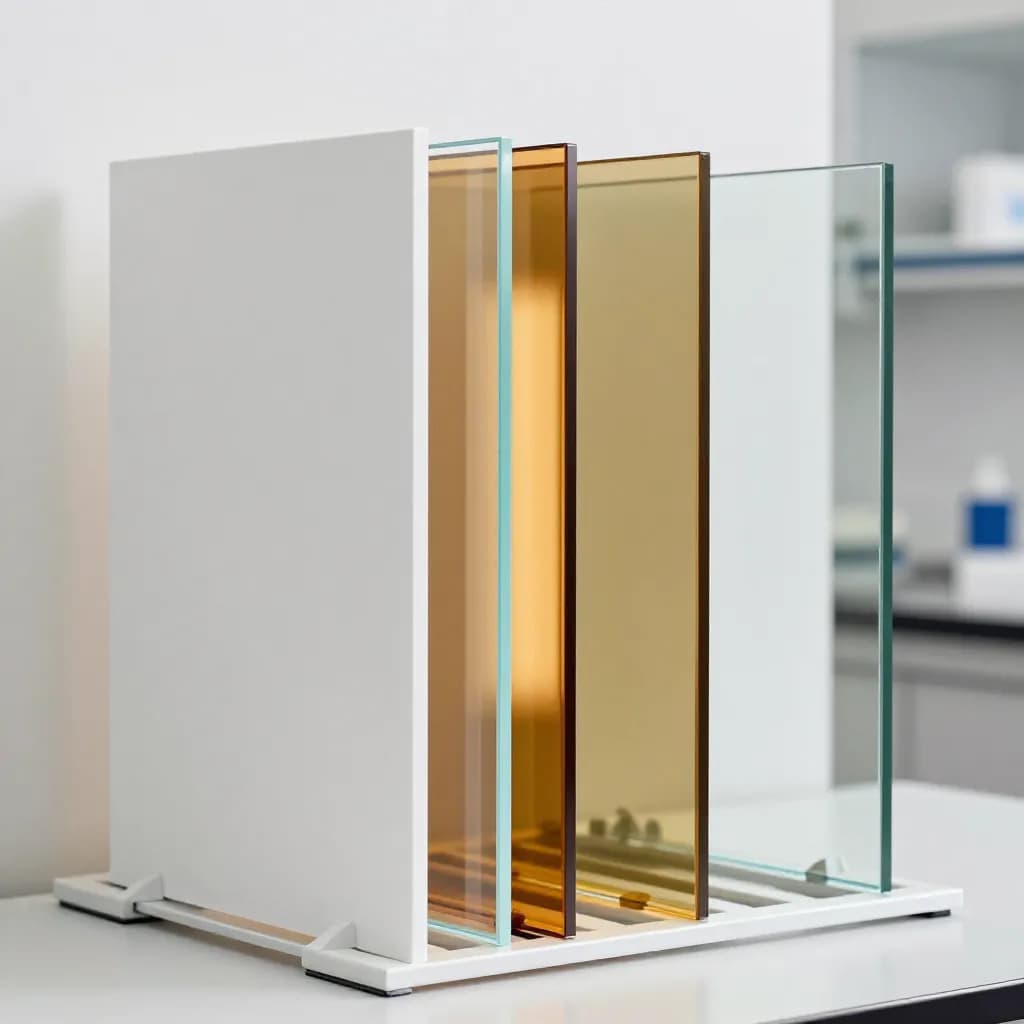
The appeal of powder-coated glass lies in the combination of glass's inherent properties — optical clarity, chemical inertness, dimensional stability, and fire resistance — with powder coating's advantages of zero VOC emissions, unlimited color options, and high material efficiency. For architectural applications, powder-coated glass spandrel panels provide an opaque, colored surface that conceals structural elements behind curtain wall facades while matching the color and texture of adjacent coated aluminum framing. The result is a seamless facade aesthetic that integrates glass and metal elements.
Ready to Start Your Project?
From one-off customs to 15,000-part production runs — get precise pricing in 24 hours.
On This Page
Powder Coating Glass: An Emerging Technology
The technical challenges of coating glass are fundamentally different from coating metals. Glass is an electrical insulator, preventing conventional electrostatic powder deposition. It is thermally fragile — rapid or uneven heating causes thermal stress fracture. Its surface is chemically inert and atomically smooth, providing no mechanical keying for coating adhesion. And its transparency means that any coating defect — pinhole, crater, or thickness variation — is visible from both sides. Overcoming these challenges requires specialized equipment, materials, and process knowledge that distinguish glass powder coating from conventional metal finishing.
Adhesion to Glass: Surface Chemistry and Primers
Achieving durable adhesion to glass is the central technical challenge in glass powder coating. The glass surface is composed primarily of silicon dioxide (SiO₂) with various metal oxide modifiers (sodium, calcium, magnesium, aluminum) depending on the glass composition. This surface is chemically stable, hydrophilic, and atomically smooth — characteristics that resist bonding with organic coatings. Without surface modification, powder coatings will delaminate from glass under thermal cycling, moisture exposure, or mechanical stress.
Silane coupling agents are the primary adhesion promotion technology for glass powder coating. These organosilicon compounds have a dual-functional molecular structure: one end contains alkoxy groups that hydrolyze and bond to the silanol (Si-OH) groups on the glass surface through condensation reactions, while the other end contains organic functional groups (amino, epoxy, methacrylate) that react with or are compatible with the powder coating resin. This molecular bridge creates a chemical bond between the inorganic glass surface and the organic coating, providing adhesion that withstands thermal cycling, moisture, and mechanical stress.
Silane primers are typically applied as dilute aqueous solutions (0.5-3% concentration) by spray, dip, or roller coat, then dried at 80-120°C to drive the condensation reaction and remove water. The resulting silane layer is extremely thin — 5-50 nanometers — and invisible, but it transforms the glass surface from a non-bondable to a highly bondable substrate. Some powder coating formulations for glass incorporate silane adhesion promoters directly into the powder resin, eliminating the need for a separate priming step. These 'self-priming' powders simplify the process but may not achieve the same adhesion levels as a dedicated silane primer on all glass types.
Electrostatic Deposition on Non-Conductive Glass
Glass's electrical insulating properties (surface resistivity of 10¹⁰-10¹⁴ ohm/square) prevent conventional electrostatic powder deposition, which relies on the substrate being grounded to attract and retain charged powder particles. Several approaches have been developed to overcome this limitation, each with advantages and trade-offs for different production scenarios.
Conductive coatings applied to the glass surface before powder application are the most common solution. Transparent conductive coatings based on indium tin oxide (ITO) or fluorine-doped tin oxide (FTO) reduce surface resistivity to 10²-10⁴ ohm/square while maintaining optical transparency — important for applications where the uncoated side of the glass must remain clear. For opaque applications (spandrel panels, appliance surfaces), less expensive conductive primers containing carbon black or metallic particles can be used, as transparency is not required.
Preheating the glass to 80-150°C before powder application provides an alternative to conductive coatings. The heated glass surface causes powder particles to melt on contact and adhere through thermal tack rather than electrostatic attraction. This 'hot glass' process eliminates the need for conductive coatings but requires precise temperature control — too cool and the powder does not adhere, too hot and it melts prematurely, causing runs and sags. The preheating approach works well for flat panels processed on horizontal conveyors, where gravity assists powder retention, but is less effective for vertically oriented or complex-shaped glass. Some production lines combine preheating with electrostatic application using a conductive primer, leveraging both thermal tack and electrostatic attraction for maximum powder retention and uniformity.
Thermal Management: Preventing Glass Breakage
Glass is susceptible to thermal stress fracture when subjected to rapid or uneven temperature changes. The coefficient of thermal expansion for soda-lime glass is approximately 9 × 10⁻⁶/°C, and the tensile strength is relatively low (approximately 40 MPa for annealed glass). When one area of a glass panel is heated faster than an adjacent area, the resulting differential expansion creates tensile stresses that can exceed the glass's strength, causing fracture. This thermal shock sensitivity is the primary constraint on the powder coating cure process for glass.
The cure cycle for powder-coated glass must use controlled, gradual heating to minimize thermal gradients across the panel. Ramp rates of 2-5°C per minute are typical, compared to 10-20°C per minute for metal substrates. The maximum cure temperature depends on the glass type: annealed soda-lime glass can safely reach 200-250°C (below its softening point of approximately 720°C), while tempered glass must not exceed 280-300°C to avoid relaxation of the tempering stresses that provide its strength. Borosilicate glass, with its lower thermal expansion coefficient (3.3 × 10⁻⁶/°C), is more resistant to thermal shock and can tolerate faster heating rates.
Oven design for glass powder coating differs significantly from metal coating ovens. Infrared heating elements provide more uniform, controllable heat input than convection heating, reducing the risk of hot spots and thermal gradients. Multi-zone IR ovens with independently controlled heating sections allow the temperature profile to be optimized for each glass thickness and size. Edge heating is particularly important — glass edges cool faster than the center due to radiation losses, creating tensile stresses at the edges where fracture typically initiates. Supplementary edge heaters or reflective edge shields equalize the temperature distribution and reduce breakage risk.
Architectural Glass Applications
Architectural spandrel panels are the largest application for powder-coated glass, used in curtain wall facades to conceal floor slabs, structural columns, mechanical equipment, and insulation behind an opaque, colored glass surface. Spandrel panels are typically located between vision glass areas and must match the color, reflectivity, and surface texture of the overall facade design. Powder coating provides precise color matching to any RAL, NCS, or custom reference, with consistent batch-to-batch color control that is difficult to achieve with ceramic frit or liquid back-painting.
The powder coating is applied to the interior (non-exposed) surface of the spandrel glass, which is then installed with the coated side facing inward. This back-coated configuration protects the coating from weathering, UV exposure, and mechanical damage, while the glass surface facing the exterior provides the weather barrier. The coating must be opaque enough to conceal the building structure behind it — typically requiring a film thickness of 80-120 micrometers with high-hiding pigmentation. Light-colored coatings may require higher film thickness or a two-coat system (opaque base plus color topcoat) to achieve complete opacity.
Insulated glass units (IGUs) incorporating powder-coated spandrel panels require the coating to be compatible with the IGU sealant system. Silicone and polysulfide secondary sealants must bond reliably to the powder-coated surface to maintain the hermetic seal of the IGU. Adhesion testing between the sealant and the powder coating — both initially and after accelerated aging — is a critical qualification step. Some powder formulations are specifically designed for IGU compatibility, with surface chemistry optimized for sealant adhesion. The coating must also withstand the temperatures encountered during IGU fabrication, including hot-melt butyl primary sealant application at 120-150°C.
Appliance and Interior Design Applications
The appliance industry has adopted powder-coated glass for oven doors, cooktop surfaces, range hood panels, refrigerator shelves, and microwave turntable plates. Glass provides a premium aesthetic, easy-clean surface, and heat resistance that plastic and painted metal cannot match. Powder coating adds color customization and branding opportunities — appliance manufacturers can offer glass components in any color to match their product lines, rather than being limited to the standard clear, white, or black glass options.
Oven door glass presents particular challenges due to the extreme thermal cycling it experiences — from ambient temperature to 250-300°C during self-cleaning cycles, repeated thousands of times over the appliance's life. The powder coating must maintain adhesion, color stability, and mechanical integrity through this thermal cycling without cracking, delaminating, or discoloring. High-temperature silicone-modified polyester or pure silicone powder coatings rated for continuous service at 250°C are specified for oven door applications. Adhesion testing after 1000+ thermal cycles between ambient and 300°C is a standard qualification requirement.
Interior design applications for powder-coated glass include wall cladding panels, room dividers, tabletops, countertop splashbacks, and decorative screens. These applications prioritize aesthetic quality — surface smoothness, color accuracy, and gloss uniformity are the primary quality parameters. The ability to produce large glass panels (up to 3000 × 6000 mm) in any color with a consistent, defect-free finish has made powder-coated glass a popular alternative to back-painted glass (which uses liquid paint) and colored laminated glass. The zero-VOC advantage of powder coating is particularly valued for interior applications where indoor air quality is a concern.
Quality Control and Performance Standards
Quality control for powder-coated glass must address both the coating performance and the glass integrity. Visual inspection is the primary quality gate — coated glass panels are inspected on a light table or against a uniform background for pinholes, craters, color variation, thickness variation (visible as opacity differences), and surface defects. The inspection criteria are typically more stringent than for metal substrates because the smooth, uniform glass surface amplifies the visibility of any coating defect.
Film thickness measurement on glass requires non-contact methods such as ultrasonic gauges, beta-backscatter gauges, or cross-section microscopy, as magnetic and eddy current gauges do not work on non-conductive, non-magnetic substrates. Adhesion testing per ISO 2409 (cross-hatch) should achieve classification 0, and pull-off testing per ISO 4624 should exceed 3 MPa. Adhesion testing should be performed both initially and after accelerated aging — boiling water immersion for 2 hours is a common accelerated test that stresses the coating-glass interface through thermal and moisture exposure.
Performance standards for architectural powder-coated glass include EN 12150 (thermally toughened glass), EN 1096 (coated glass), and project-specific facade specifications. Weathering resistance testing per ISO 16474 evaluates color and gloss retention under simulated UV and moisture exposure. For appliance applications, relevant standards include IEC 60335 (household appliance safety), which defines thermal endurance requirements for glass components. Chemical resistance testing with common household chemicals, cleaning agents, and food substances verifies the coating's suitability for kitchen and bathroom environments. Each application sector has its own performance benchmarks, and the powder coating system must be qualified against the relevant standards before production use.
Frequently Asked Questions
Can glass be powder coated?
Yes, glass can be powder coated using specialized techniques to overcome its non-conductive and thermally sensitive nature. Conductive primers or preheating enable electrostatic powder deposition, while controlled heating rates (2-5°C/minute) prevent thermal stress fracture. The technology is used commercially for architectural spandrel panels, appliance surfaces, and interior design elements.
How does powder adhere to glass without a metal surface?
Silane coupling agents create a molecular bridge between the glass and the coating. One end of the silane molecule bonds to silanol groups on the glass surface, while the other end bonds to the organic powder coating resin. This chemical bridge provides durable adhesion that withstands thermal cycling, moisture, and mechanical stress. Some powders incorporate silane adhesion promoters directly into the formulation.
Will glass break during the powder coating cure cycle?
Glass can fracture from thermal shock if heated too rapidly or unevenly. The cure cycle must use controlled ramp rates of 2-5°C per minute with uniform heating across the panel. Infrared ovens with multi-zone temperature control minimize thermal gradients. Annealed glass can safely reach 200-250°C, while tempered glass should not exceed 280-300°C to preserve its tempering stresses.
What is powder-coated spandrel glass?
Spandrel glass is the opaque glass used in curtain wall facades to conceal structural elements between vision glass areas. Powder coating is applied to the interior surface, providing precise color matching to any RAL or custom reference. Film thickness of 80-120 micrometers ensures complete opacity. The glass exterior provides the weather barrier while the coating is protected from the elements.
How do you make glass conductive for electrostatic powder coating?
Options include transparent conductive coatings (indium tin oxide or fluorine-doped tin oxide) for applications requiring one clear side, opaque conductive primers with carbon black or metallic particles for spandrel panels, or preheating the glass to 80-150°C so powder adheres through thermal tack. Some lines combine preheating with conductive primers for maximum powder retention.
Ready to Start Your Project?
From one-off customs to 15,000-part production runs — get precise pricing in 24 hours.