When new gates and railings are fabricated, powder coating is the finishing step that transforms raw steel or aluminum into a product ready for installation. The best results come from close coordination between the fabricator and the coater, ideally established before fabrication begins. This allows the fabricator to design with coating in mind, ensuring drainage holes are placed correctly, weld quality supports a smooth finish, and the design can be racked efficiently in the coating shop.
Local Info
Gate and Railing Powder Coating Services: New and Restoration
Sundial Powder Coating·April 20, 2026·8 min
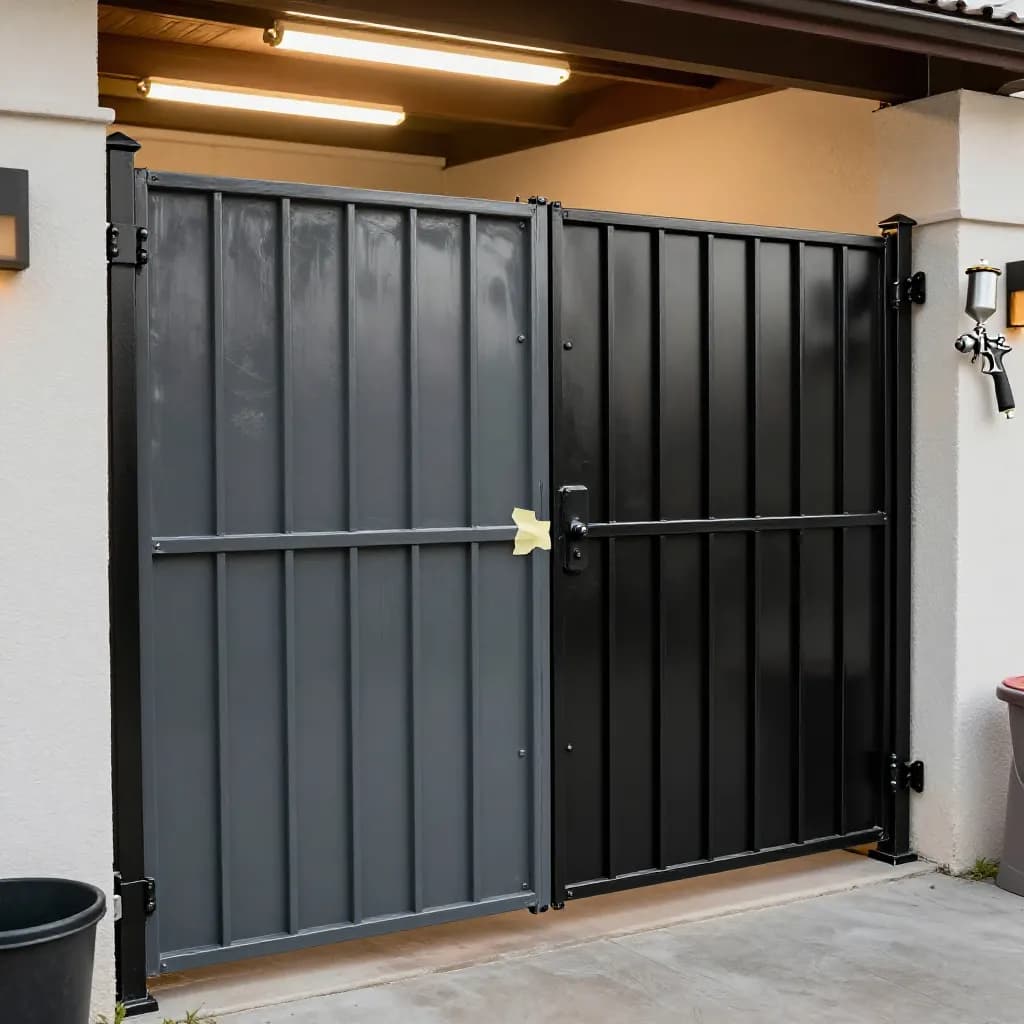
Coating before installation is standard practice and produces far better results than any on-site finishing method. In the controlled environment of a coating shop, pretreatment, application, and curing are all precisely managed. The finish is uniform, fully cured, and ready to face the elements from the moment it is installed. On-site painting, by contrast, is subject to weather, dust, limited access, and inconsistent application that compromise both appearance and durability.
Ready to Start Your Project?
From one-off customs to 15,000-part production runs — get precise pricing in 24 hours.
On This Page
New Fabrication Coating
For projects with specific performance requirements, the coater can advise on the appropriate specification. Residential garden gates may need a standard polyester finish with basic pretreatment, while commercial railings in a coastal environment may require enhanced pretreatment and a super-durable polyester powder rated for severe UV and salt exposure. Matching the specification to the environment ensures the finish performs for its intended lifespan.
Restoration of Existing Gates and Railings
Existing gates and railings that have deteriorated can be restored to like-new condition through professional powder coating. The process typically involves removing the metalwork from its installed position, transporting it to the coating shop, stripping the old finish, repairing any damage, blasting, pretreating, coating, and returning the finished pieces for reinstallation.
Removal and reinstallation add complexity to restoration projects but are necessary for a proper result. Gates need to be lifted from their hinges and posts, railings unbolted from their fixings, and all mounting hardware cataloged for reassembly. A good coater or their recommended installer will handle this carefully, documenting the original configuration so reinstallation goes smoothly.
During stripping, the true condition of the metalwork is revealed. Years of paint buildup may have been hiding rust, weakened joints, or structural damage. The coater assesses these issues and discusses repair options with you before proceeding. Weld repairs, replacement of corroded sections, and reinforcement of weakened areas are all common restoration tasks that ensure the metalwork is structurally sound before the new finish is applied.
Popular Colors for Gates and Railings
Black remains the most popular color for gates and railings by a significant margin. It is classic, versatile, and complements virtually any architectural style. Within the black family, there are choices to make: gloss black for a traditional, polished look, satin black for a more contemporary feel, or matte black for a modern, understated aesthetic. Each gloss level creates a distinctly different impression despite being the same base color.
Anthracite grey has become increasingly popular as a modern alternative to black. RAL 7016, the standard anthracite shade, offers a softer, more sophisticated appearance that works particularly well with contemporary architecture and grey-toned building materials. It is dark enough to provide definition without the starkness of pure black, making it a favorite among architects and homeowners alike.
Green, particularly dark racing green and moss green, remains a traditional choice for garden gates and estate railings. Bronze and copper-effect finishes add warmth and character, especially on ornate or period-style metalwork. Wood-grain effect powder coatings, achieved through a sublimation transfer process, allow metal gates and railings to mimic the appearance of timber while delivering the durability and low maintenance of powder-coated metal.
Specification for Outdoor Durability
Gates and railings live outdoors and face constant exposure to UV radiation, rain, temperature cycling, and in many locations, salt air or industrial pollutants. The coating specification must account for these conditions to deliver a finish that lasts. The three pillars of outdoor durability are pretreatment quality, powder type, and film thickness.
Pretreatment for outdoor metalwork should include a multi-stage process with a conversion coating that provides corrosion resistance at the metal-coating interface. Iron phosphate is the standard for most applications, while zinc phosphate or zirconium-based systems offer enhanced performance for severe environments. The pretreatment creates the foundation that the powder builds upon, and skipping or shortcutting this step dramatically reduces outdoor durability.
The powder itself should be a UV-stable polyester or super-durable polyester formulated for exterior exposure. Standard polyester powders offer good outdoor performance for most residential and commercial applications. Super-durable polyesters provide enhanced resistance to gloss loss and color change for projects in high-UV or severe environments. Film thickness should meet the powder manufacturer's recommendation, typically 60 to 80 microns for a single coat, to ensure adequate protection and appearance.
Coordinating with Your Fabricator and Installer
The best gate and railing projects involve clear communication between three parties: the fabricator who builds the metalwork, the coater who finishes it, and the installer who fits it on site. When these three work together with a shared understanding of the project requirements, the result is seamless. When communication breaks down between any two parties, problems arise.
Fabricators should deliver parts to the coater in a condition ready for coating. This means clean welds ground smooth, no mill scale left on hot-rolled steel, drainage holes in hollow sections to prevent trapped air and moisture during pretreatment and curing, and all fabrication complete before the parts arrive. Parts that need additional welding or modification after coating require the affected areas to be stripped and recoated, adding time and cost.
Installers need to handle coated metalwork with care during transport and fitting. Scratches, chips, and abrasion during installation are not coating defects and are not covered by the coater's warranty. Using protective wrapping during transport, rubber-lined clamps during fitting, and touch-up paint for any minor site damage ensures the finished installation looks as good as the day the parts left the coating shop.
Frequently Asked Questions
Can powder coating be applied to galvanized gates and railings?
Yes, but galvanized surfaces require specific pretreatment to ensure proper adhesion. The zinc layer must be cleaned and treated with an appropriate primer or conversion coating before powder is applied. A coater experienced with galvanized substrates will know the correct preparation process. Discuss the substrate with your coater when requesting a quote.
How long will powder-coated gates and railings last outdoors?
With proper pretreatment and a quality UV-stable polyester powder, gates and railings typically maintain their appearance for ten to fifteen years or more in normal outdoor conditions. Severe environments like coastal or industrial areas may reduce this lifespan. Regular cleaning and prompt attention to any damage extends the life of the finish significantly.
Can I get my gates coated without removing them?
Powder coating requires parts to be placed in an oven for curing, so gates must be removed from their installed position and taken to the coating shop. On-site coating is not possible with powder. The removal and reinstallation process is straightforward for most gate installations and is typically handled by the coater or a recommended installer.
What about touch-up for site damage during installation?
Minor scratches and chips from installation can be touched up with matching liquid paint provided by the coater or powder manufacturer. While touch-up paint does not have the same durability as the original powder coat, it protects the exposed metal from corrosion and is visually acceptable for small areas. Your coater can supply touch-up paint matched to your coating color.
Ready to Start Your Project?
From one-off customs to 15,000-part production runs — get precise pricing in 24 hours.