Combining hot-dip galvanizing with powder coating creates a duplex system that delivers corrosion protection far exceeding what either finish achieves alone. Research by the European General Galvanizers Association and independent testing laboratories has demonstrated that the service life of a duplex system is 1.5 to 2.3 times the sum of the individual lifetimes of the galvanized layer and the paint layer considered separately. This synergistic effect occurs because the organic coating shields the zinc from atmospheric attack, dramatically slowing the zinc corrosion rate, while the zinc provides galvanic (sacrificial) protection at any points where the organic coating is damaged or breached.
Technical
Powder Coating Galvanized Steel: Zinc Outgassing, Pretreatment, and Duplex Systems
Sundial Powder Coating·April 22, 2026·14 min
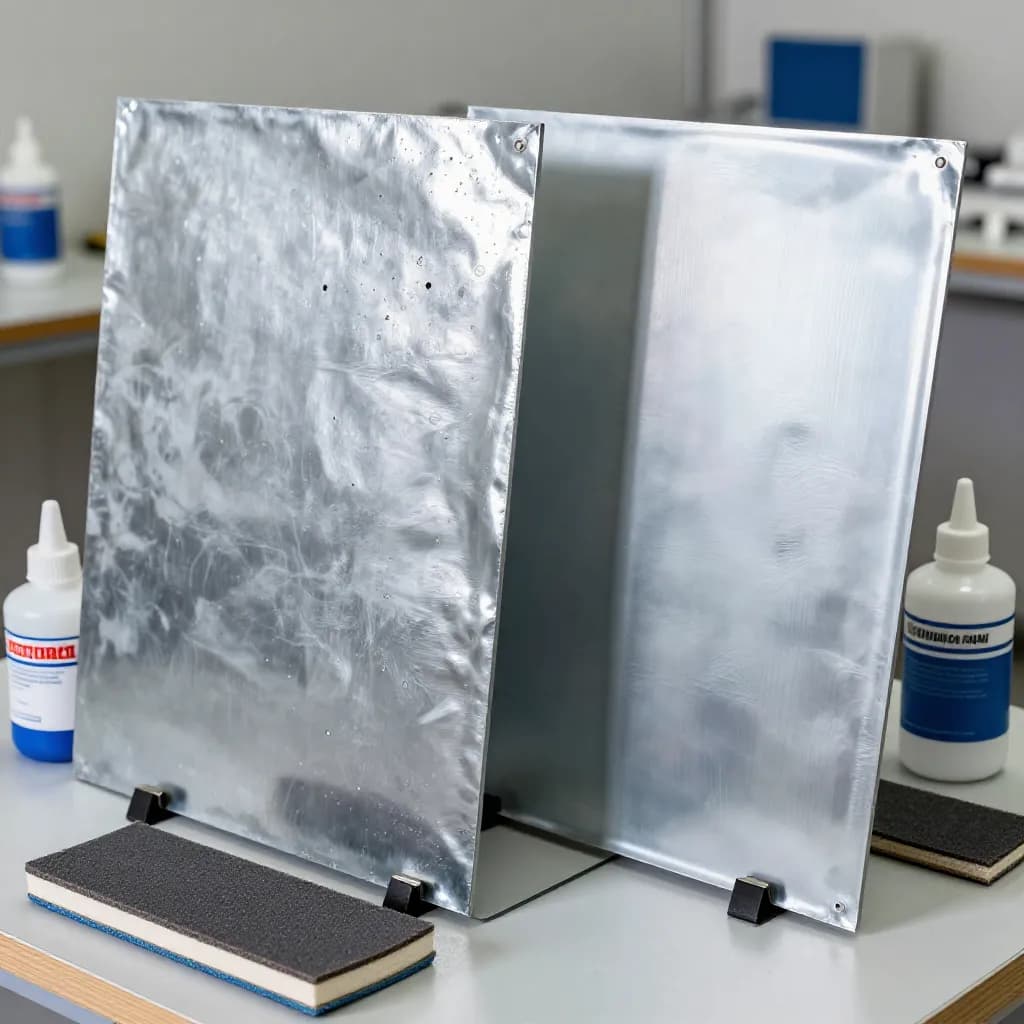
The practical implications are significant. A hot-dip galvanized coating that would last 40 years in a rural atmosphere, combined with a powder coating that would last 15 years on bare steel, does not simply deliver 55 years of protection — the duplex system can provide 80-120 years of maintenance-free service in the same environment. This makes duplex systems the specification of choice for infrastructure assets with long design lives: highway barriers, bridge railings, transmission towers, stadium structures, and railway infrastructure.
Ready to Start Your Project?
From one-off customs to 15,000-part production runs — get precise pricing in 24 hours.
On This Page
The Duplex Advantage: Why Coat Galvanized Steel?
Beyond corrosion performance, powder coating galvanized steel provides color and aesthetic customization that plain galvanizing cannot offer. The characteristic spangled or matte grey appearance of galvanized steel is acceptable for utilitarian applications but does not meet the aesthetic requirements of architectural, commercial, or consumer-facing projects. Powder coating transforms galvanized steel into a finished product with any desired color, gloss level, or texture while retaining the underlying galvanic protection as a safety net against coating damage.
Understanding Zinc Outgassing
Zinc outgassing is the primary technical challenge when powder coating galvanized steel, and it is the cause of most coating failures on this substrate. The mechanism is well understood: hot-dip galvanized coatings contain microscopic pores and channels within the zinc layer, and these voids trap air, moisture, and zinc chloride flux residues from the galvanizing process. When the part is heated during powder coating cure — typically to 180-200°C — these trapped substances expand and volatilize, escaping through the curing powder film and creating pinholes, craters, and bubbles.
The severity of outgassing depends on several factors. Coating thickness is significant — heavier galvanized coatings (typically 85-140 micrometers for structural steel) contain more porosity and produce more outgassing than thinner coatings. The galvanizing process parameters matter: bath temperature, immersion time, withdrawal speed, and zinc bath composition all affect the microstructure and porosity of the galvanized layer. Post-galvanizing treatments such as quenching, passivation, and storage conditions also influence outgassing behavior.
The age of the galvanized coating affects outgassing severity. Freshly galvanized steel — less than 24 hours old — tends to outgas more aggressively because moisture and flux residues have not yet fully evaporated from the zinc surface. Conversely, galvanized steel that has weathered for several months develops a stable zinc carbonate patina that partially seals surface porosity and reduces outgassing. However, weathered galvanizing presents its own challenges for coating adhesion, as the zinc carbonate layer must be removed or treated to achieve a bondable surface. The optimal window for coating galvanized steel is generally 24 hours to 2 weeks after galvanizing, when surface moisture has evaporated but heavy weathering products have not yet formed.
Sweep Blasting: The Critical Pretreatment Step
Sweep blasting — also called brush blasting or whip blasting — is the most effective pretreatment method for galvanized steel prior to powder coating. Unlike full blast cleaning, which removes the galvanized layer entirely, sweep blasting uses reduced air pressure (2-3 bar versus 4-6 bar for full blasting) and a wider nozzle distance to lightly abrade the zinc surface without significantly reducing its thickness. The objective is to remove surface contaminants, zinc oxide and zinc carbonate weathering products, and flux residues while creating a surface profile of 15-25 micrometers for mechanical adhesion.
The choice of blast media is critical. Fine angular aluminum oxide (120-180 mesh) or garnet (30-60 mesh) are preferred because they produce a controlled profile without excessive zinc removal. Steel grit is too aggressive for sweep blasting galvanized surfaces and will remove excessive zinc. Glass bead produces an insufficient profile for reliable adhesion. The blast angle should be 30-45 degrees to the surface rather than perpendicular, which further reduces zinc removal while still achieving adequate surface roughening.
Quality control of the sweep blasting process requires monitoring both the surface profile achieved and the zinc coating thickness remaining. Surface profile should be measured with a replica tape or stylus profilometer, targeting 15-25 micrometers Ra. Zinc thickness should be measured before and after blasting using a magnetic or eddy current gauge per ISO 2178, with the goal of removing no more than 10-15 micrometers of zinc. If the original galvanized coating is 85 micrometers, the post-blast thickness should be at least 70 micrometers to maintain adequate galvanic protection. Over-blasting that removes excessive zinc defeats the purpose of the duplex system and should be treated as a process nonconformance.
Chemical Pretreatment and Etch Primers
Chemical pretreatment provides an alternative or supplement to sweep blasting for galvanized steel. The most common approach is a multi-stage process consisting of alkaline degreasing, acid etching, and conversion coating. The alkaline stage removes oils, greases, and handling soils. The acid etch — typically a dilute phosphoric acid or proprietary zinc-compatible etchant — removes surface oxides and creates micro-roughness for adhesion. The conversion coating stage deposits a thin crystalline layer that enhances both adhesion and corrosion resistance.
Iron phosphate conversion coatings are the most widely used for galvanized steel in powder coating operations. The phosphating solution reacts with the zinc surface to form a zinc phosphate or mixed zinc-iron phosphate crystal layer weighing 1.5-4.0 g/m². This crystalline layer provides excellent mechanical keying for the powder coating and acts as a corrosion-inhibiting barrier at the coating-metal interface. For higher-performance requirements, tri-cation zinc phosphate systems incorporating nickel or manganese produce denser, more corrosion-resistant conversion coatings.
Etch primers represent another approach, particularly useful when sweep blasting is impractical or when coating weathered galvanized steel with heavy zinc carbonate deposits. These primers contain phosphoric acid or chromate-based etch components that chemically activate the zinc surface while simultaneously depositing an adhesion-promoting primer layer. Modern chrome-free etch primers based on silane or zirconium chemistry are increasingly specified to meet environmental regulations restricting hexavalent chromium. Etch primers can be applied by spray, dip, or flow-coat methods and are typically cured at low temperatures (80-120°C) before the powder topcoat is applied. The primer layer also helps to seal surface porosity in the galvanized coating, reducing outgassing during the powder cure cycle.
Powder Selection and Application for Galvanized Substrates
Powder selection for galvanized steel must account for the outgassing tendency of the substrate and the chemical compatibility between the powder and the zinc surface. Polyester powders are the standard choice for exterior applications on galvanized steel, offering excellent UV resistance, weathering performance, and good adhesion to zinc surfaces. Epoxy-polyester hybrids provide enhanced chemical resistance for interior industrial applications. Pure epoxy powders offer the best chemical and moisture resistance but are restricted to non-UV-exposed applications.
Powders formulated for galvanized substrates typically incorporate degassing additives and extended flow characteristics that allow trapped gases to escape through the liquid powder film before it gels and crosslinks. These formulations are sometimes marketed as 'outgassing-tolerant' or 'galvanized-grade' powders and represent a meaningful improvement over standard formulations when coating hot-dip galvanized steel. The extended gel time gives gas bubbles more opportunity to rise through the molten film and release at the surface, where the film can flow back together and heal before crosslinking locks the surface in place.
Application parameters require adjustment compared to bare steel. Film thickness should be targeted at 60-80 micrometers — thick enough to provide adequate barrier protection but not so thick that outgassing gases cannot escape before the film solidifies. Excessively thick films trap more gas and produce worse outgassing defects. Electrostatic voltage should be moderate (60-80 kV) to avoid back-ionization on the relatively smooth galvanized surface. The cure schedule should use a moderate ramp rate rather than rapid heating, allowing the part temperature to rise gradually and giving trapped gases time to escape before the powder reaches its gel point. A ramp rate of 5-8°C per minute through the 100-160°C range is generally effective.
Duplex System Specifications and Standards
Several international standards govern the specification and quality control of duplex galvanized-plus-powder-coating systems. ISO 12944 (Corrosion protection of steel structures by protective paint systems) provides the overarching framework for classifying corrosive environments and specifying coating systems, with duplex systems addressed in Part 5. EN 15773 (Powder organic coated galvanized and sherardized steel products for construction purposes) is the primary European standard specifically covering powder-coated galvanized steel, defining requirements for pretreatment, coating application, and performance testing.
The Qualisteelcoat quality label, administered by the European General Galvanizers Association, certifies applicators who meet defined quality standards for coating galvanized steel. Qualisteelcoat defines three performance classes — Interior, Exterior, and Heavy Duty — with progressively more demanding requirements for pretreatment, film thickness, adhesion, and accelerated weathering resistance. Certification requires regular third-party audits and testing, providing specifiers with confidence in the applicator's capability.
For infrastructure applications, national highway and rail authorities often specify duplex systems with defined minimum galvanized coating weights (typically 505-610 g/m² per ISO 1461 for structural steel) combined with powder coating systems meeting specific salt spray, humidity, and weathering requirements. The total system corrosion protection is calculated based on the zinc coating weight, the expected zinc corrosion rate for the installation environment, and the additional protection factor provided by the organic topcoat. Design life calculations for duplex systems in C3-C5 corrosive environments per ISO 12944-2 routinely demonstrate 60-100+ year service lives, making them the most cost-effective long-term corrosion protection strategy for steel infrastructure.
Common Defects and Prevention Strategies
Pinholing from zinc outgassing remains the most prevalent defect when powder coating galvanized steel. Prevention requires a multi-pronged approach: proper pretreatment to remove flux residues and surface contaminants, selection of outgassing-tolerant powder formulations, controlled cure ramp rates, and appropriate film thickness targets. When pinholes persist despite these measures, a pre-bake degas cycle at 200-230°C for 15-20 minutes before powder application can drive off residual volatiles. However, pre-baking galvanized steel accelerates zinc oxide formation, which must be removed by light re-blasting or chemical treatment before coating.
Adhesion failure on galvanized steel typically manifests as large-area delamination rather than the localized flaking seen on other substrates. The coating lifts away from the zinc surface in sheets, often triggered by moisture exposure, thermal cycling, or mechanical impact. Root causes include inadequate surface preparation (insufficient profile or residual contaminants), incompatible conversion coating chemistry, or excessive time between pretreatment and coating application. Cross-hatch adhesion testing per ISO 2409 should achieve classification 0-1 on galvanized substrates.
White rust — the formation of voluminous white zinc corrosion products — can develop on galvanized steel during storage between galvanizing and coating if parts are exposed to moisture in poorly ventilated conditions. White rust deposits are loosely adherent and must be completely removed before coating, as they prevent adhesion and continue to grow beneath the coating. Prevention through proper storage — dry, ventilated conditions with air circulation between stacked parts — is far more effective than remediation. If white rust has formed, sweep blasting is the most reliable removal method, followed by immediate chemical pretreatment and coating.
Frequently Asked Questions
Can you powder coat over hot-dip galvanized steel?
Yes, powder coating over hot-dip galvanized steel creates a duplex system with exceptional corrosion protection — 1.5 to 2.3 times the combined individual lifetimes. The key challenge is zinc outgassing, which requires proper pretreatment (sweep blasting or chemical etching), outgassing-tolerant powder formulations, and controlled cure ramp rates.
How do you prevent pinholes when powder coating galvanized steel?
Prevent pinholes by sweep blasting to remove flux residues, using outgassing-tolerant powder formulations with extended gel times, targeting 60-80 micrometer film thickness, and using moderate cure ramp rates of 5-8°C per minute. If pinholes persist, a pre-bake degas cycle at 200-230°C for 15-20 minutes before powder application can help.
What is sweep blasting for galvanized steel?
Sweep blasting is a light abrasive blasting process using reduced pressure (2-3 bar) and fine media (120-180 mesh aluminum oxide) to roughen the zinc surface without significantly reducing its thickness. It creates a 15-25 micrometer profile for adhesion while removing only 10-15 micrometers of zinc, preserving the galvanic protection of the underlying coating.
How long does a duplex galvanized and powder coated system last?
Duplex systems provide synergistic protection — the combined service life is 1.5 to 2.3 times the sum of the individual coating lifetimes. In moderate (C3) environments, a properly specified duplex system can provide 60-100+ years of maintenance-free corrosion protection, making it the most cost-effective long-term strategy for steel infrastructure.
Should galvanized steel be degassed before powder coating?
A degas cycle is not always required but is recommended when standard outgassing prevention measures are insufficient. Pre-baking at 200-230°C for 15-20 minutes drives off trapped volatiles. However, pre-baking accelerates zinc oxide formation on the surface, so light re-blasting or chemical treatment is needed before coating application.
Ready to Start Your Project?
From one-off customs to 15,000-part production runs — get precise pricing in 24 hours.