Furniture manufacturing demands a coating partner who delivers consistency above all else. When you produce hundreds or thousands of units, every frame, leg, and base must match in color, gloss, and texture. A coater who produces variable results from batch to batch creates quality control problems in your assembly line and risks customer complaints about mismatched components in the finished product.
Local Info
Powder Coating for Furniture Manufacturers: Production Partnership
Sundial Powder Coating·April 20, 2026·8 min
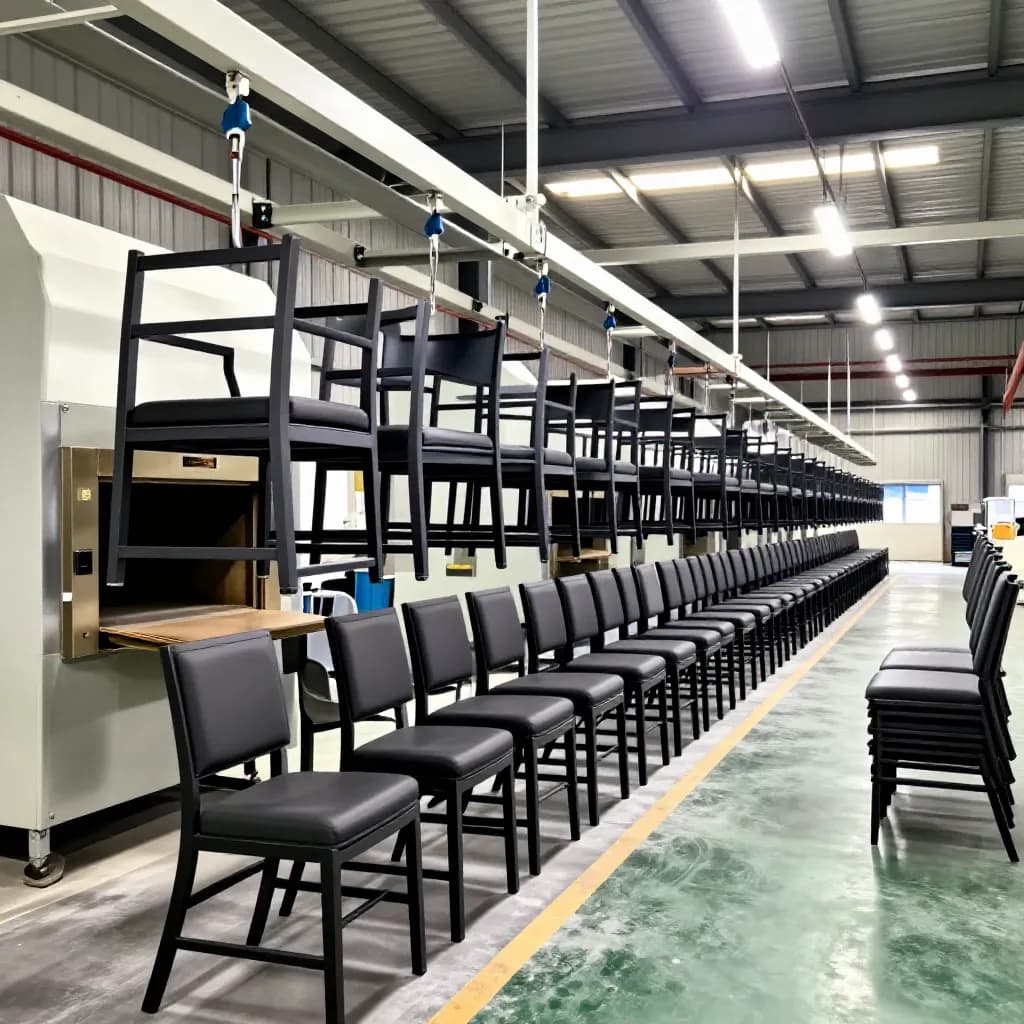
Capacity and reliability are equally critical. Your production schedule depends on coated components arriving on time and in full. A coater who misses delivery dates or cannot handle your volume requirements disrupts your entire manufacturing operation. The right coating partner has sufficient oven capacity, spray booth throughput, and staffing to handle your volumes consistently, including during peak production periods.
Ready to Start Your Project?
From one-off customs to 15,000-part production runs — get precise pricing in 24 hours.
On This Page
What Furniture Manufacturers Need from a Coater
Color range and finish capability determine how much design flexibility you can offer your customers. A coater with access to a broad palette of standard colors, the ability to develop custom colors, and experience with specialty finishes like textures, metallics, and matte effects enables you to differentiate your product line. Limited color capability from your coater limits your product offering.
Production Scheduling and Capacity Planning
Effective production scheduling between a furniture manufacturer and their coater requires open communication about volumes, timelines, and seasonal patterns. Share your production forecast with your coater so they can plan capacity, order powder, and schedule staff accordingly. Surprises in either direction, whether a sudden volume spike or an unexpected drop, are easier to manage when both parties have visibility into the pipeline.
Batch sizes should be optimized for both your production needs and the coater's process efficiency. Very small batches are less efficient for the coater due to color changeover time and oven utilization, while very large batches may exceed their daily capacity. Work together to find batch sizes and delivery frequencies that balance your assembly schedule with the coater's operational efficiency.
Peak season management requires advance planning. If your business has seasonal demand patterns, such as increased orders for outdoor furniture in spring or office furniture for back-to-school periods, discuss these peaks with your coater well in advance. They may need to adjust their own scheduling, bring in additional staff, or prioritize your work during busy periods. Early communication prevents capacity conflicts during your most important selling seasons.
Color and Finish Development
Staying current with color trends gives furniture manufacturers a competitive edge, and your coater should be a partner in this process. Powder manufacturers release new colors and effects regularly, reflecting trends in interior design, architecture, and consumer preference. A proactive coater will share new color releases with you, provide samples of trending finishes, and suggest options that could enhance your product line.
Custom color development allows you to create signature finishes that distinguish your brand. Whether you want a proprietary shade that no competitor can replicate or a curated palette that defines your collection, your coater can work with powder suppliers to develop bespoke formulations. This process involves trial batches, sample approval, and production validation to ensure the custom color meets your aesthetic and performance requirements.
The sample approval process should be formalized between you and your coater. Define how samples are produced, who approves them, what tolerances are acceptable, and how approved samples are stored for future reference. A documented approval process prevents disputes about color accuracy and ensures that production batches consistently match the approved standard. Retain physical reference panels for each color in your range.
Quality Standards for Furniture
Furniture coatings face a specific set of performance demands that differ from architectural or automotive applications. Film thickness must be sufficient for durability but controlled to avoid excessive buildup that affects fitment of components during assembly. Typical furniture coating specifications call for 60 to 80 microns, though this varies by product type and end use.
Adhesion is fundamental. The coating must bond firmly to the substrate and resist peeling or chipping during assembly, shipping, and end-user handling. Cross-hatch adhesion testing on sample parts from each batch verifies that the pretreatment and coating process is producing a properly bonded finish. Any adhesion failure at this stage indicates a process issue that needs correction before production continues.
Chemical resistance is particularly important for furniture that will be cleaned regularly. Office furniture encounters cleaning sprays and disinfectants, kitchen and dining furniture faces food and beverage spills, and healthcare furniture must withstand aggressive sanitizing agents. The powder specification should account for the cleaning chemicals the furniture will encounter in its intended environment, and the coater should test resistance to those specific agents.
Building a Long-Term Manufacturing Partnership
The most successful furniture manufacturer-coater relationships are true partnerships built on mutual understanding and shared goals. The coater understands your product, your quality standards, your production rhythm, and your customers' expectations. You understand the coater's capabilities, constraints, and what they need from you to deliver their best work. This mutual understanding develops over time and becomes increasingly valuable.
Invest in regular communication beyond day-to-day order management. Quarterly business reviews where you discuss quality performance, delivery metrics, upcoming product launches, and any process improvements create a framework for continuous improvement. Share customer feedback about finish quality with your coater so they can see the impact of their work and address any recurring issues.
Treat your coater as a strategic supplier rather than a commodity vendor. Include them in new product development discussions where finish is a factor. Seek their input on design decisions that affect coatability, such as part geometry, material selection, and assembly sequence. A coater who feels valued as a partner will go further to support your business than one who feels like an interchangeable service provider.
Frequently Asked Questions
How do you maintain color consistency across production batches?
Consistency is maintained through documented color specifications, approved reference panels, controlled process parameters, and regular instrumental color checks using a spectrophotometer. The coater sources powder from consistent manufacturing batches and verifies each production run against the approved standard. Any drift is caught and corrected before parts are released.
Can you handle seasonal volume fluctuations?
A coater set up for manufacturing partnerships plans capacity around their customers' seasonal patterns. Share your production forecast as early as possible so the coater can adjust staffing, powder inventory, and scheduling. With advance notice, most capable coaters can accommodate significant volume increases during peak periods.
What happens if a batch fails quality inspection?
A professional coater will strip and recoat any batch that fails to meet the agreed quality specification at no additional charge. The root cause of the failure should be investigated and corrective action implemented to prevent recurrence. Discuss the quality failure process and response expectations when establishing your partnership.
Can you coat components from multiple furniture lines in the same batch?
Yes, components from different product lines can be coated together if they share the same color and specification. This is actually more efficient for both parties, as it maximizes oven utilization and reduces color changeover frequency. Coordinate your production schedule to batch similar colors together whenever possible.
Ready to Start Your Project?
From one-off customs to 15,000-part production runs — get precise pricing in 24 hours.