Powder coating is a dry finishing process that applies a durable, protective, and decorative coating to metal and other surfaces. Unlike liquid paint, which uses a solvent to carry pigment and resin in liquid form, powder coating uses finely ground particles of resin and pigment that are applied as a dry powder and then cured with heat to form a hard, continuous film.
Reference
Powder Coating Frequently Asked Questions: The Definitive Consumer Resource
Sundial Powder Coating·April 22, 2026·18 min
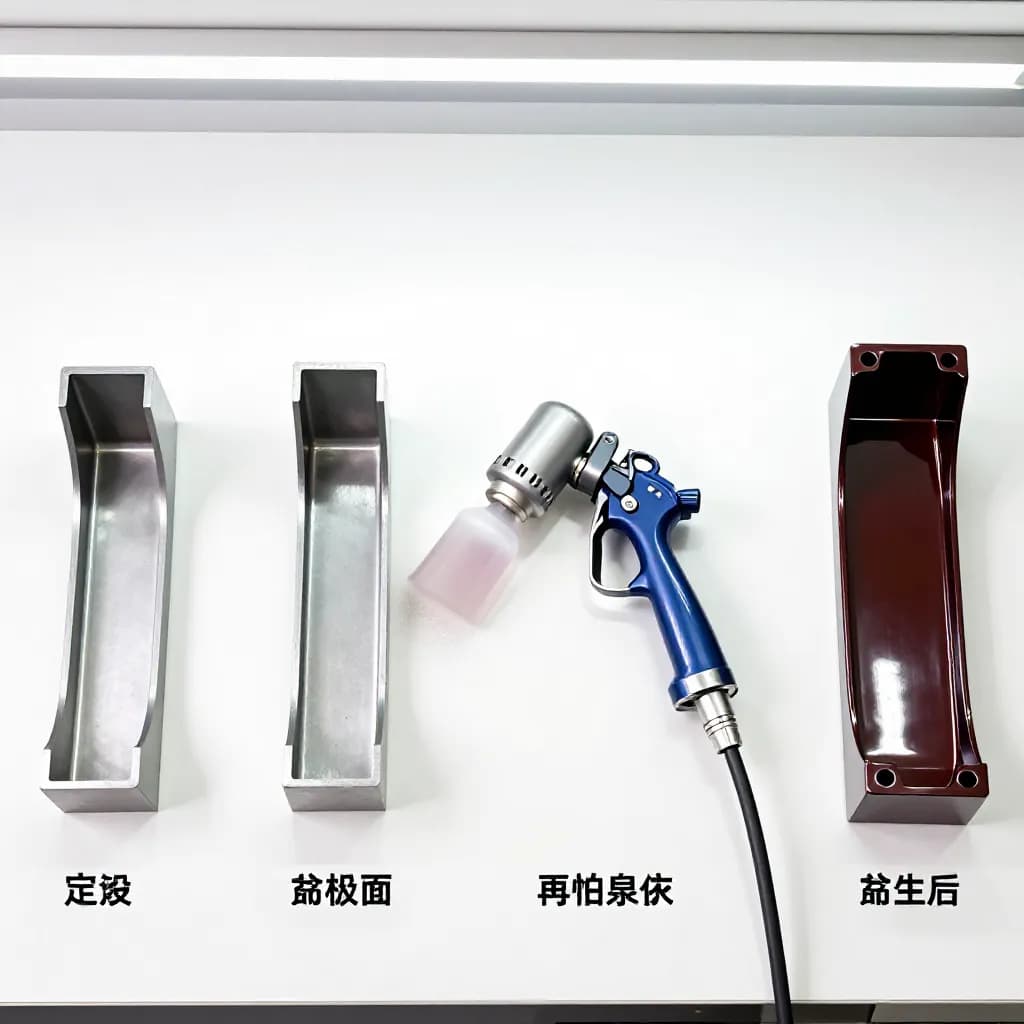
The process works through electrostatic attraction. A powder coating spray gun gives the powder particles a positive electrical charge as they leave the gun. The metal part being coated is grounded, creating a negative charge. The positively charged powder particles are attracted to the negatively charged part, adhering to the surface through electrostatic force. This attraction holds the powder in place until the part enters the curing oven.
Ready to Start Your Project?
From one-off customs to 15,000-part production runs — get precise pricing in 24 hours.
On This Page
The Basics: What Powder Coating Is and How It Works
In the curing oven, the part is heated to 180-200 degrees Celsius for 10-20 minutes. The heat causes the powder particles to melt, flow together into a continuous film, and chemically cross-link into a hard, durable coating. This cross-linking reaction is what gives powder coating its superior hardness, chemical resistance, and durability compared to air-dried paints.
The result is a coating that is typically 60-120 microns thick — two to four times thicker than most liquid paint applications — with excellent adhesion, uniform coverage, and consistent color and gloss. The process produces zero volatile organic compound emissions because there are no solvents, and overspray powder can be collected and reused, achieving material efficiency rates of 95-98 percent.
Materials and Substrates: What Can Be Powder Coated
The most common question consumers ask is what materials can be powder coated. The answer is broader than most people expect, though metal remains the primary substrate.
Steel and iron are the most commonly powder coated materials and produce excellent results. The electrical conductivity of steel makes electrostatic powder application straightforward, and steel withstands curing temperatures without any issues. Carbon steel, mild steel, cast iron, and wrought iron are all ideal substrates for powder coating.
Aluminum is the second most commonly powder coated metal, widely used in architectural, automotive, and consumer product applications. Aluminum requires different pretreatment than steel — chromate or zirconium conversion coating rather than iron phosphate — but produces excellent results with proper preparation. Aluminum's light weight and natural corrosion resistance make it an ideal partner for powder coating.
Stainless steel can be powder coated, though it requires more thorough surface preparation than carbon steel due to its passive chromium oxide layer that resists coating adhesion. With proper blasting and pretreatment, powder coating adheres reliably to stainless steel and provides color options and additional corrosion protection.
Brass, copper, and bronze can be powder coated to prevent tarnishing and provide color options. These softer metals require gentle preparation methods and may need a pre-bake cycle to prevent outgassing during cure. Clear powder coatings are popular on brass and copper to preserve the natural metal appearance while preventing tarnish.
Beyond metals, powder coating technology has expanded to include MDF and engineered wood using UV-cure or low-temperature cure powders, certain high-temperature plastics using conductive primers and low-cure formulations, and glass using specialized adhesion promoters and controlled thermal processes. These non-metal applications require specialized equipment and expertise that most standard powder coating shops do not have.
Durability and Performance: How Long It Lasts
Powder coating durability is one of its strongest selling points, and consumers frequently ask how long it lasts and how it compares to alternatives.
The service life of powder coating depends on the environment, the coating formulation, and the quality of surface preparation. In general terms, a properly applied powder coating on well-prepared metal will last 15-20 years in exterior exposure before significant degradation occurs. In interior environments, powder coating can last essentially indefinitely — the coating does not degrade without UV exposure and weather stress.
Super-durable polyester powder coatings, formulated with enhanced UV stabilizers, extend exterior service life to 20-25 years. Fluoropolymer powder coatings — the premium tier — can maintain their appearance for 25-30 years or more in exterior exposure. These high-performance formulations are specified for architectural applications where long-term appearance is critical.
Compared to liquid paint, powder coating lasts significantly longer. Spray paint on metal typically lasts 2-5 years in exterior exposure before noticeable fading, chipping, and corrosion. Professional liquid paint systems last longer — 5-10 years — but still fall short of powder coating's durability. The thicker film, superior adhesion, and cross-linked structure of powder coating all contribute to its longer service life.
Scratch resistance is measured by pencil hardness testing, with standard powder coatings achieving 2H-4H ratings — significantly harder than most liquid paints. Impact resistance is also excellent, with powder coatings absorbing impacts that would chip liquid paint. The combination of hardness and flexibility gives powder coating its characteristic toughness.
Corrosion protection depends heavily on surface preparation and pretreatment. A powder coating system with proper blast cleaning and chemical pretreatment on steel can achieve 1000-2000 hours of salt spray resistance, translating to decades of real-world corrosion protection. Without proper preparation, even the best powder coating will fail prematurely.
Colors, Finishes, and Appearance Options
The aesthetic possibilities of powder coating are vast, and consumers are often surprised by the range of options available.
The color range includes thousands of standard colors across the RAL Classic system (215 colors), RAL Design system (1,825 colors), RAL Effect system (490 colors), and manufacturer-specific collections from major powder producers. Custom color matching to any physical sample or color specification is also available, making the effective color range unlimited.
Finish options include high gloss (above 80 gloss units), semi-gloss (40-80 GU), satin (20-40 GU), and matte (below 20 GU). Each gloss level creates a different visual effect — high gloss is reflective and vibrant, while matte is subdued and contemporary. The trend in recent years has been strongly toward matte and satin finishes across most applications.
Texture options add another dimension. Smooth finishes are the standard, but textured powders create surfaces ranging from fine sand texture to heavy wrinkle, hammer-tone, and leather effects. Textured finishes are popular for their ability to hide surface imperfections, resist fingerprints, and provide a distinctive tactile quality.
Specialty effects include metallic finishes with aluminum, mica, or glass flake pigments; candy coat transparent colors over metallic bases; chrome-effect and super-mirror finishes; color-shifting chameleon powders; glow-in-the-dark formulations; and anti-microbial coatings. These specialty products expand the creative possibilities well beyond solid colors.
Wood-grain and stone-effect finishes are achieved through sublimation transfer technology, where a printed pattern is transferred onto a powder-coated surface using heat and vacuum. These finishes realistically replicate the appearance of natural materials on metal surfaces and are widely used in architectural applications.
When selecting colors and finishes, always evaluate physical samples under the actual lighting conditions where the coated item will be used. Screen and printed color representations are unreliable — the actual powder coating can look significantly different from digital or printed references.
Process and Logistics: What to Expect from a Coating Shop
Understanding the powder coating process and shop logistics helps consumers set realistic expectations and prepare their parts for the best possible results.
The typical shop process follows these steps: receiving and inspection, surface preparation (stripping, blasting, cleaning), chemical pretreatment, powder application, oven curing, cooling, quality inspection, and packaging for pickup or delivery. The entire process for a single part takes 1-2 hours of active processing time, but shop turnaround — including queue time — is typically 3-7 business days.
Surface preparation is the most critical step for coating quality and longevity. Professional shops use media blasting to remove old coatings, rust, and scale, creating a clean surface with the profile needed for powder adhesion. Chemical pretreatment — phosphate wash, conversion coating, or multi-stage wash — provides adhesion promotion and corrosion protection at the metal-coating interface. Shops that skip or shortcut preparation produce coatings that look good initially but fail prematurely.
Parts should be delivered to the shop as clean and prepared as possible. Remove all non-metal components — plastic, rubber, wood, fabric, glass — before delivery. Clean off heavy grease and oil. Disassemble multi-component items and label all parts. The less preparation work the shop needs to do, the faster the turnaround and the lower the cost.
Masking is used to protect areas that should not be coated — threads, bearing surfaces, electrical contacts, mating surfaces, and decorative elements that should remain uncoated. Discuss masking requirements with the shop before delivery and provide clear instructions, preferably with marked-up drawings or photographs.
Hang marks are small uncoated spots where the hanging hook or fixture contacts the part during coating. These are unavoidable — the part must be suspended somehow — but their location can be controlled. Discuss hang point placement with the shop to ensure marks are in inconspicuous locations.
Rush service is available from most shops for an additional fee, with same-day or next-day turnaround possible for urgent jobs. Bringing clean, ready-to-coat parts in common colors maximizes the chances of fast turnaround.
Maintenance, Repair, and Care
Proper maintenance extends the life and appearance of powder-coated surfaces, and knowing how to handle damage when it occurs prevents small problems from becoming big ones.
Routine cleaning requires only warm water with mild soap, applied with a soft cloth or sponge. Rinse thoroughly and dry to prevent water spots. This simple cleaning is sufficient for most interior and exterior powder-coated surfaces. Clean outdoor surfaces two to four times per year; more frequently in coastal or industrial environments.
Avoid abrasive cleaners, scouring pads, strong solvents (acetone, lacquer thinner), concentrated acids and alkalis, and ammonia-based products. These can scratch, soften, or chemically damage the powder coating. When in doubt about a cleaning product, test it on an inconspicuous area first.
Minor chips and scratches can be touched up with color-matched liquid paint. Touch-up paint pens and small bottles are available from powder coating manufacturers for standard colors. The touch-up will not perfectly match the original powder coating in texture and sheen, but it prevents corrosion at the damage site and makes the damage less noticeable.
For larger damage or coating failure, professional repair options include localized stripping and recoating of the damaged area, or full stripping and recoating of the entire part. Full recoating restores the factory-quality finish and is recommended when damage is extensive or when the coating has reached the end of its service life.
Faded or chalked powder coating can sometimes be improved through polishing with automotive cutting compound, which removes the degraded surface layer and exposes fresher coating underneath. Wax or polymer sealant applied after polishing provides temporary protection and improved appearance. When fading is severe, recoating is the only permanent solution.
For high-value items, applying a sacrificial clear coat over the color coat provides an additional layer of protection. The clear coat absorbs UV damage and scratches before they reach the color coat, and it can be reapplied when worn without stripping the entire system.
Specialty Applications and Common Concerns
Several specialty topics generate frequent questions from consumers considering powder coating for specific applications.
Food safety: Standard powder coatings are not food safe. Specific formulations made with FDA-acceptable ingredients are required for food contact applications. These food-safe powders comply with FDA 21 CFR 175.300 and may carry NSF/ANSI 51 certification for independent verification. Always specify food-safe formulation explicitly and request written compliance documentation.
Heat resistance: Standard powder coatings withstand continuous temperatures up to 150-200 degrees Celsius. For higher temperatures, specialty formulations are available: silicone-polyester powders handle 250-350 degrees, pure silicone powders handle 400-500 degrees, and ceramic-modified powders handle 500-650 degrees or higher. Match the coating to the actual service temperature with a safety margin.
Water resistance: Powder coating is highly water resistant, providing excellent protection against rain, humidity, and intermittent water exposure. It is not absolutely waterproof under continuous immersion, though quality coatings pass 500-1000 hours of water immersion testing. For marine and wet environment applications, specify appropriate coating systems with enhanced pretreatment.
Environmental impact: Powder coating is one of the most environmentally responsible finishing technologies. Zero VOC emissions during application, 95-98 percent material utilization through overspray reclamation, no hazardous solvent waste, and no fire risk from flammable solvents make it significantly more environmentally friendly than liquid painting.
DIY powder coating: Home powder coating setups are available and can produce good results on small parts. A basic setup includes a powder gun, a curing oven (or converted kitchen oven for small items), an air compressor, and powder. Results are limited by oven size, lack of professional pretreatment, and equipment quality. For anything beyond small parts and hobby projects, professional coating is recommended.
Powder coating removal: Methods include chemical stripping (most versatile), thermal burn-off (fast for steel, never for aluminum), and media blasting (effective for all metals). The choice depends on the metal type, part size, and whether the part will be recoated. Professional shops offer stripping services for parts that need old coating removed before recoating.
Making Informed Decisions: Choosing and Working with a Coater
The quality of a powder coating job depends as much on the shop that does the work as on the powder itself. Choosing the right shop and communicating effectively with them are the keys to a successful outcome.
Look for shops with clean, organized facilities, well-maintained equipment, and documented quality procedures. A shop that takes pride in its workspace typically takes pride in its work. Visit in person if possible and look at parts in process — the care with which parts are handled, hung, and inspected tells you a lot about the shop's quality standards.
Ask about pretreatment. This is the single best indicator of coating quality. A shop that uses chemical pretreatment — phosphate wash, conversion coating, or multi-stage wash — will produce coatings that last significantly longer than a shop that relies solely on solvent wiping or blasting. Pretreatment is the difference between a 5-year coating and a 15-year coating.
Communicate your requirements clearly. Specify the color (RAL number or physical sample), finish (gloss, matte, textured), any areas to mask, the intended use environment (indoor, outdoor, marine, chemical exposure), and any special requirements (food safety, heat resistance, electrical conductivity). The more information you provide, the better the shop can serve you.
Request references and examples of similar work. A shop that regularly handles the type of work you need — whether it is automotive parts, furniture, architectural elements, or industrial equipment — will have the experience and process knowledge to deliver consistent results.
Understand the pricing. Powder coating is typically priced based on part size, complexity, preparation requirements, and quantity. Get quotes from multiple shops to understand the market rate for your type of work. The cheapest quote is not always the best value — a shop that charges more but delivers superior preparation and quality control may provide a coating that lasts twice as long.
Build a relationship with your coating shop. Regular customers who provide consistent, well-prepared work and communicate clearly receive better service, faster turnaround, and more attention to quality. Treat your coating shop as a partner rather than a vendor, and the results will reflect that relationship.
Frequently Asked Questions
What is powder coating?
Powder coating is a dry finishing process that applies a durable protective and decorative coating to surfaces, primarily metal. Finely ground powder particles are electrostatically charged and sprayed onto a grounded part, then cured in an oven at 180-200 degrees Celsius to form a hard, continuous film. The result is a finish that is thicker, harder, and more durable than conventional paint.
What metals can be powder coated?
Steel, aluminum, stainless steel, brass, copper, bronze, zinc, and most other metals can be powder coated. Steel and aluminum are the most common substrates. Each metal requires specific surface preparation and pretreatment for optimal adhesion and performance.
Can non-metal materials be powder coated?
Yes. MDF and engineered wood can be powder coated using UV-cure or low-temperature cure powders. Certain high-temperature plastics can be coated using conductive primers and low-cure formulations. Glass can be coated using specialized adhesion promoters. These non-metal applications require specialized equipment and expertise.
How long does powder coating last?
Standard powder coating lasts 15-20 years in exterior exposure with proper preparation. Super-durable formulations last 20-25 years, and fluoropolymer coatings last 25-30 years or more. In interior environments, powder coating lasts essentially indefinitely. Service life depends on the coating formulation, surface preparation quality, and environmental exposure.
Is powder coating better than paint?
For most applications, yes. Powder coating provides a thicker film, higher hardness, better chip and scratch resistance, superior corrosion protection, and longer service life than liquid paint. It also produces zero VOC emissions and achieves higher material efficiency. Liquid paint has advantages in certain situations: very large parts, on-site application, and heat-sensitive substrates.
How many colors are available in powder coating?
Thousands of standard colors are available across the RAL system (over 2,500 colors across Classic, Design, and Effect collections) and manufacturer-specific ranges. Custom color matching to any physical sample or color specification is also available, making the effective color range unlimited.
What finishes can powder coating achieve?
Powder coating is available in high gloss, semi-gloss, satin, and matte finishes. Texture options include smooth, sand, wrinkle, hammer-tone, and leather effects. Specialty finishes include metallic, chrome-effect, candy coat, color-shifting, wood-grain, and stone-effect. The range of achievable finishes is broader than most consumers expect.
Is powder coating environmentally friendly?
Yes. Powder coating produces zero VOC emissions, achieves 95-98 percent material utilization through overspray reclamation, generates no hazardous solvent waste, and poses no fire risk from flammable solvents. It is one of the most environmentally responsible finishing technologies available and contributes to green building certifications.
How thick is powder coating?
Standard powder coating is applied at 60-120 microns, which is two to four times thicker than most liquid paint applications at 25-50 microns. This greater thickness provides better protection against impacts, scratches, moisture, and UV radiation, contributing to powder coating's superior durability.
What is the turnaround time for powder coating?
The actual coating process takes 1-2 hours per part. Shop turnaround, including queue time, is typically 3-7 business days for standard service. Rush service with same-day or next-day turnaround is available from most shops for an additional fee. Turnaround varies by shop workload, season, and job complexity.
Can I powder coat at home?
Basic home powder coating is possible with a powder gun, small oven, and compressor. Results are limited by oven size, lack of professional pretreatment, and equipment quality. Home setups work well for small parts and hobby projects. For furniture-sized items and professional-quality results, a commercial coating shop is recommended.
Is powder coating food safe?
Only specific formulations made with FDA-acceptable ingredients are food safe. Standard decorative powder coatings are not suitable for food contact. Food-safe powders comply with FDA 21 CFR 175.300 and may carry NSF/ANSI 51 certification. Always specify food-safe formulation explicitly and request written compliance documentation.
Is powder coating heat resistant?
Standard powder coatings withstand 150-200 degrees Celsius continuously. Specialty high-temperature formulations are available: silicone-polyester for 250-350 degrees, pure silicone for 400-500 degrees, and ceramic-modified for 500-650 degrees or higher. Match the coating to the actual service temperature with a safety margin.
Is powder coating waterproof?
Powder coating is highly water resistant, providing excellent protection against rain, humidity, and intermittent water exposure. Quality coatings pass 500-1000 hours of water immersion testing. It is not absolutely waterproof under continuous immersion, but for most applications including outdoor and marine-adjacent use, its water resistance is more than adequate.
How do you clean powder-coated surfaces?
Use warm water with mild soap, applied with a soft cloth or sponge. Rinse thoroughly and dry to prevent water spots. Avoid abrasive cleaners, scouring pads, strong solvents, concentrated acids and alkalis, and ammonia-based products. For outdoor surfaces, clean two to four times per year; more frequently in coastal or industrial environments.
Can you touch up powder coating?
Yes, using color-matched liquid touch-up paint. The repair will not perfectly match the original powder coating in texture and sheen, but it prevents corrosion and makes damage less noticeable. Touch-up paint is available from powder coating manufacturers for standard colors, or custom-matched by automotive paint suppliers.
How do you remove powder coating?
Methods include chemical stripping with paint strippers, thermal burn-off in specialized ovens at 370-430 degrees Celsius (steel only, never aluminum), and media blasting with abrasive materials. The choice depends on the metal type, part size, and intended next step. Professional shops offer stripping services.
Can you powder coat over existing paint?
It is not recommended. Existing paint should be removed before powder coating for best adhesion and finish quality. Old paint can outgas during curing, causing bubbles and defects, and the adhesion between powder coating and old paint is unreliable. Strip to bare metal, prepare properly, and apply powder coating to a clean surface.
Can you powder coat chrome?
Yes, but the chrome must be completely stripped first. Chrome plating is too smooth and chemically inert for powder coating to adhere to directly. After stripping via chemical, mechanical, or reverse electroplating methods, the exposed base metal is prepared and powder coated using standard processes.
What is the difference between powder coating types?
The main types are epoxy (best chemical and corrosion resistance, poor UV stability), polyester (best UV and weather resistance, good overall performance), hybrid epoxy-polyester (balanced properties for interior use), polyurethane (excellent smoothness and chemical resistance), and fluoropolymer (premium weather resistance for architectural use). The choice depends on the application environment.
Does powder coating add thickness to parts?
Yes. Powder coating adds 60-120 microns (0.06-0.12 millimeters) to each coated surface. For most applications this is insignificant, but for precision-fit components, the added thickness may need to be accounted for. Areas requiring exact dimensions — threads, bearing surfaces, mating faces — can be masked to prevent coating.
What are hang marks in powder coating?
Hang marks are small uncoated spots where the hanging hook or fixture contacts the part during the coating process. They are unavoidable since the part must be suspended, but their location can be controlled. Discuss hang point placement with the coating shop to ensure marks are in inconspicuous locations.
Can powder coating be applied to cast iron?
Yes. Cast iron is an excellent substrate for powder coating. However, cast iron is porous and can trap moisture and gases that cause outgassing during curing, leading to pinholes and bubbles. A pre-bake cycle — heating the part to cure temperature before powder application — drives out trapped gases and prevents these defects.
What causes powder coating to fail?
The most common cause of premature failure is inadequate surface preparation — insufficient cleaning, blasting, or pretreatment before coating. Other causes include under-curing or over-curing in the oven, contamination during application, incompatible coating chemistry for the environment, and coating damage that is not repaired promptly.
Is powder coating scratch proof?
No coating is scratch proof. Powder coating is highly scratch resistant, achieving pencil hardness ratings of 2H-4H, which is significantly harder than most liquid paints. It resists scratching from fingernails, wood, and soft metals, but can be scratched by steel tools, glass, ceramic, and abrasive particles.
Can you powder coat wheels?
Yes. Automotive and motorcycle wheels are one of the most popular consumer powder coating applications. Powder coating provides superior chip resistance against stone impacts compared to paint. Wheels can be coated in any color or finish, including metallic, gloss, matte, and custom effects. Proper preparation and masking of mounting surfaces is essential.
What is outgassing in powder coating?
Outgassing occurs when trapped gases, moisture, or volatile substances in the substrate escape through the coating during the curing process, creating pinholes, bubbles, or craters in the finished surface. It is common with cast metals, galvanized steel, and some plastics. A pre-bake cycle before powder application prevents outgassing by driving out trapped volatiles.
How do I find a good powder coating shop?
Visit shops in person to evaluate cleanliness and organization. Ask about their pretreatment process — chemical pretreatment indicates quality. Request references from similar customers. Get quotes from multiple shops. Look for shops with documented quality procedures and calibrated equipment. The cheapest quote is not always the best value.
Can powder coating be matte or textured?
Yes. Powder coating is available in the full range of gloss levels from high gloss to ultra-matte, and in numerous textures including sand, wrinkle, hammer-tone, and leather effects. Matte and textured finishes are increasingly popular for their contemporary aesthetic and practical advantages in hiding fingerprints and minor wear.
Does powder coating protect against rust?
Yes. Powder coating provides excellent rust protection by creating a thick, continuous barrier between the metal and the environment. With proper surface preparation and pretreatment, powder-coated steel resists corrosion for 15-20 years or more. The quality of preparation is the most important factor in long-term corrosion protection.
What is the minimum order for powder coating?
Most shops accept single parts, though minimum charges may apply that make very small jobs relatively expensive per piece. There is no industry-standard minimum order. For the best value, batch multiple items together in a single order, particularly items in the same color. Discuss minimum charges with the shop when requesting a quote.
Ready to Start Your Project?
From one-off customs to 15,000-part production runs — get precise pricing in 24 hours.